
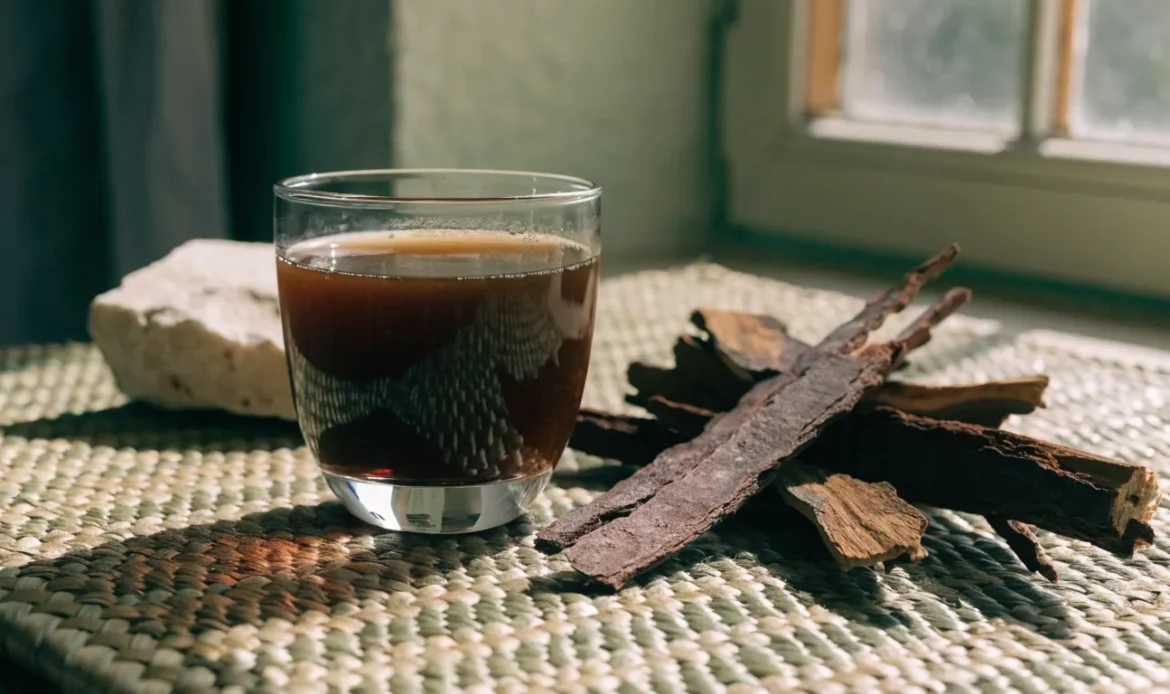
Short answer: Mavi (also called mauby or mabi) is a traditional Caribbean drink made from the boiled bark of Colubrina species, sugar, and spices. People value it for its flavor, its place in culture, and for traditional uses. Scientific proof that it provides medical benefits is very limited. Read on for what is known, what is not, and how to decide if you want to try it.
What is mavi (mauby, mabi)?
- Mavi is a bark-based beverage found across the Caribbean. It is called mauby in some islands, mavi in Puerto Rico, and mabi in parts of Hispaniola. (en.wikipedia.org)
- The drink traditionally uses the bark of small trees in the Colubrina genus, most commonly Colubrina elliptica or related species. The bark is boiled with water, sugar, and spices such as cinnamon, anise, or cloves. (en.wikipedia.org)
- It can be made as a non-fermented syrup or allowed to ferment a bit for a gently fizzy result. Both homemade and commercial bottled versions exist. (figaroshakes.com)
- Mavi is a food and cultural item first. Many islands have recipes passed down through families and street sellers historically sold it in local markets. (snackstack.net)
Short overview of claimed or traditional uses
People in Caribbean communities commonly mention these reasons they drink mavi:
- Refreshment and cooling on a hot day.
- A bittersweet, aromatic flavor they enjoy.
- Traditional or folk uses, passed down across generations.
These uses are cultural and culinary. They are not the same as proven medical treatments.
What the ingredients tell us (food composition)
- Bark: The bark carries the drink’s bitter, complex base. Chemical work on some Colubrina species shows compounds like saponins (a bitter, foaming plant group) are present in the bark. Saponins and similar plant compounds are common in many traditional beverages and spices. (revistas.upr.edu)
- Spices: Cinnamon, anise, clove, and similar spices add aroma, taste, and familiar food compounds. Spices are used in small food-level amounts in mavi recipes.
- Sugar: Many recipes add brown or raw sugar to balance the bitterness. Commercial versions often contain added sugar or sweeteners. Sugar affects calories and blood sugar the same way as any sweet drink.
What you can check on a product label or at a vendor:
- Which tree bark is used (Colubrina species are common).
- Whether the product is fermented or simply steeped and bottled.
- Total sugar per serving.
- Any added colors, preservatives, or other herbal extracts.
(If a label does not list ingredients, ask the seller or choose another product.)
What the science says (and does not say)
Clear distinction:
- Traditional use and food composition are not the same as clinical proof. People have drunk mavi for a long time. That shows it is a longstanding food in many Caribbean cultures. It does not prove that it prevents or treats disease.
About direct clinical evidence for mavi itself:
- There are few modern clinical trials testing health effects of mauby/mavi as a drink. Most available sources describe recipes, cultural history, or chemical analysis of the bark. (en.wikipedia.org)
Why that matters:
- A chemical analysis that finds saponins or other compounds in the bark tells us what is present. It does not tell us whether those compounds, in the amounts in a serving, improve health in people. For medical claims we need controlled human studies. Those are sparse or absent for mavi.
How this differs from seaweed or sea moss discussions:
- Seaweed (sea vegetables) and sea moss are different foods. They come from the ocean and have a distinct composition—including iodine—that raises specific safety questions. Any discussion that mixes mavi (a bark drink) with sea moss is confusing. Treat them separately. For background on seaweed and supplement safety, see the evidence from nutrition and supplement authorities. [See References: Harvard, Operation Supplement Safety, Smyth, Blikra.] [1][4][2][5]
Possible food-level benefits people report (anecdotal)
People report that mavi:
- Tastes satisfying and refreshing.
- Can be easier to digest than some sugary sodas because of its bittersweet profile.
- Fits into local diets as a traditional beverage.
These are subjective reports and food-experience claims. They are different from proven health outcomes. If you enjoy the taste and it fits your diet, that is a valid reason to try it.
Safety and when to ask a clinician
Mavi is a food, but there are safety points to note:
- Sugar and calories
- Many versions contain added sugar. If you watch calories or blood sugar, check sugar per serving.
- Fermentation risks
- Homemade, small-batch fermentation can give different flavors. If you ferment at home, follow safe food-handling steps: clean equipment, control fermentation time, refrigerate, and discard if it smells off. Commercially bottled products follow manufacturing rules; still check expiry dates.
- Bark source and purity
- Use bark from known species and suppliers. Some plants have natural compounds that can be strong in large amounts. Buy from trusted vendors or use bark that identifies the species. (en.wikipedia.org)
- Allergies and sensitivities
- If you have plant allergies, test a small amount first. If you have spice sensitivities, check which spices are used.
- Sea moss confusion — different safety issues
- Mavi is not sea moss. Sea moss and other seaweeds can contain high iodine levels. Excess iodine can affect the thyroid in some people. If you are considering sea moss products, consult reliable guidance. [1][2][4][5]
When to ask a clinician
- If you have thyroid disease or take thyroid medicines, ask your clinician before adding seaweed or iodine-rich supplements. [2][5]
- If you are pregnant, breastfeeding, or have a chronic condition, check with your clinician before trying a new herbal or fermented food regularly.
- If you notice new symptoms (rash, stomach upset, palpitations) after drinking mavi, stop and seek medical advice.
References that support iodine and seaweed cautions: Harvard’s nutrition pages on seaweed; reviews on iodine and seaweed’s effects on thyroid; supplement safety articles about sea moss. [1][2][4][5]
How to try mavi safely — a quick checklist
Use this before you buy, make, or taste mavi.
- Source check: Is the bark listed (Colubrina species)? If not, ask. (en.wikipedia.org)
- Sugar check: How much sugar per serving? Choose low or unsweetened if you limit sugar.
- Fermentation check: Is it fermented? If homemade, do you know the maker’s food-safety steps?
- Allergy check: Do you react to spices like cinnamon, clove, or anise?
- Medical check: Do you have a thyroid condition or are you pregnant? If yes, consult your clinician before adding new herbal or iodine-containing supplements. [2][5]
- Taste test: Start with a small cup to check flavor and tolerance.
Decision guide: Should you drink mavi?
| Question | If yes — next step | If no — next step |
|---|---|---|
| Do you enjoy bittersweet, spiced drinks? | Try a small serving from a trusted source. | Skip or sample another Caribbean beverage. |
| Are you avoiding added sugar? | Choose unsweetened or lightly sweetened versions. | Make at home with less sugar or ask vendor for sugar-free options. |
| Are you buying bottled or from a market? | Check ingredients and expiry. | Ask vendor for a sample or a clear ingredient list. |
| Do you have thyroid disease or take thyroid meds? | Ask your clinician before trying seaweed products; mavi itself is bark-based, but be cautious about other supplements. [2][5] | Follow clinician advice; avoid unsupervised herbal supplements. |
| Want a cultural food experience? | Enjoy; read a bit of island history first. (snackstack.net) | Explore another traditional drink from the region. |
How mavi fits into Caribbean food culture
- Mavi is more than a drink. It connects to local history and daily life. In some islands it was sold by street vendors and became part of community gatherings. (snackstack.net)
- Recipes vary by island and family. Some use different spices or add fruit extracts. This variety is natural for a traditional food.
Simple home method (food-only, non-medical)
This is a general outline of common steps people use for a homemade mavi-style drink. It is a food recipe concept — not medical advice.
- Boil pieces of dried mauby bark with water for 20–40 minutes to steep flavor. (figaroshakes.com)
- Strain the liquid. Add cinnamon, anise, or other spices to taste and simmer briefly.
- Sweeten with brown sugar or your choice of sweetener while warm.
- Cool, then refrigerate. For a naturally fizzy version, leave a small amount unrefrigerated to ferment briefly, then refrigerate once the desired fizz appears. Only ferment using clean bottles and equipment. Discard if off-smelling. (figaroshakes.com)
What you can check to separate fact from hype
If you read a product label, an ad, or an article that claims strong “health” effects from mavi, check these points:
- Is the claim based on traditional use or on clinical trials? Traditional use is cultural history, not proof.
- Are the study references human clinical trials? If a source cites only a lab or animal study, that does not prove benefit in people.
- Does the product mix mavi with other herbs, seaweed, or supplements? Ingredients added for other reasons can change safety and effects.
- Is the vendor clear about sugar content and fermentation? Hidden sugar or uncontrolled fermentation can matter for health.
If the product is mixed with sea moss or seaweed, separate the two issues: seaweed can bring iodine concerns that do not apply to the bark itself. [1][2][4][5]
How Zen Wholesalers can help you learn more
If you want to explore Caribbean botanical drinks and related products, see our Caribbean botanicals collection: Shop Caribbean Botanicals (/shop/caribbean-botanicals/). Learn more about traditional ingredients and food safety on our Learn pages: Learn with Zen Wholesalers (/learn/). To browse our wider catalog, visit Shop (/shop/). For questions about sourcing or wholesale options, visit our Contact page (/contact/) or learn about wholesale opportunities (/wholesale/). You can also return to our Home (/) anytime.
Conclusion
Mavi is a rooted Caribbean beverage with a long cultural history. It is made from tree bark, spices, and sugar. People enjoy it for taste and tradition. Scientific evidence for direct medical benefits is limited. If you like the taste, try it from a trusted source, watch sugar and fermentation, and ask your clinician if you have health conditions. If you are mixing mavi with sea moss or other supplements, treat those as separate decisions and check product labels carefully.
Frequently asked questions
Is mavi the same as sea moss or seaweed?
No. Mavi (mauby, mabi) is a drink made from the bark of Colubrina species. Sea moss and seaweed are ocean plants. They have different ingredients and different safety issues, such as iodine in seaweed. [1][2][4][5]
Are there proven medical benefits of mavi?
No strong clinical proof exists for medical benefits of mavi. Most support is cultural or based on ingredient analysis. That is not the same as proof in people.
Is homemade mavi safe to make?
Homemade mavi can be safe if you use clean equipment, known bark, and safe fermentation steps. Always discard a batch that smells off or shows signs of unexpected growth. If you have special health conditions, consult a clinician before making it part of your routine.
Can people with thyroid disease drink mavi?
Mavi is bark-based and does not inherently carry the same iodine issues as seaweed. Still, some products mix ingredients. If you have thyroid disease or take thyroid medicines, consult your clinician about any new herbal or fermented foods or if you are also using seaweed or supplements. [2][5]
Where can I buy authentic mavi?
Look for Caribbean specialty shops, ethnic groceries, or trusted online vendors that list Colubrina bark or “mauby”/“mavi” on the label. Ask the seller about sugar content and whether the drink is fermented or bottled.
How should I store mavi?
Follow the product label. For homemade versions, refrigerate after cooling. If fermented, chill promptly to slow fermentation and keep the drink fresh.
References
- [1] Harvard T.H. Chan School of Public Health, “Seaweed.” https://nutritionsource.hsph.harvard.edu/seaweed/
- [2] Smyth PPA. “Iodine, Seaweed, and the Thyroid.” European Thyroid Journal, 2021. https://pmc.ncbi.nlm.nih.gov/articles/PMC8077470/
- [4] Operation Supplement Safety, “Sea Moss in Dietary Supplements.” https://www.opss.org/article/sea-moss-dietary-supplements
- [5] Blikra MJ et al. “Consequences of acute and long-term excessive iodine intake: A literature review focusing on seaweed as a potential dietary iodine source.” 2024. https://doi.org/10.1111/1541-4337.70037
- (Additional web sources used for cultural, botanical, and recipe context are cited inline: e.g., encyclopedia and botanical resources on mauby/mavi and Colubrina species. (en.wikipedia.org (https://en.wikipedia.org/wiki/Mauby