
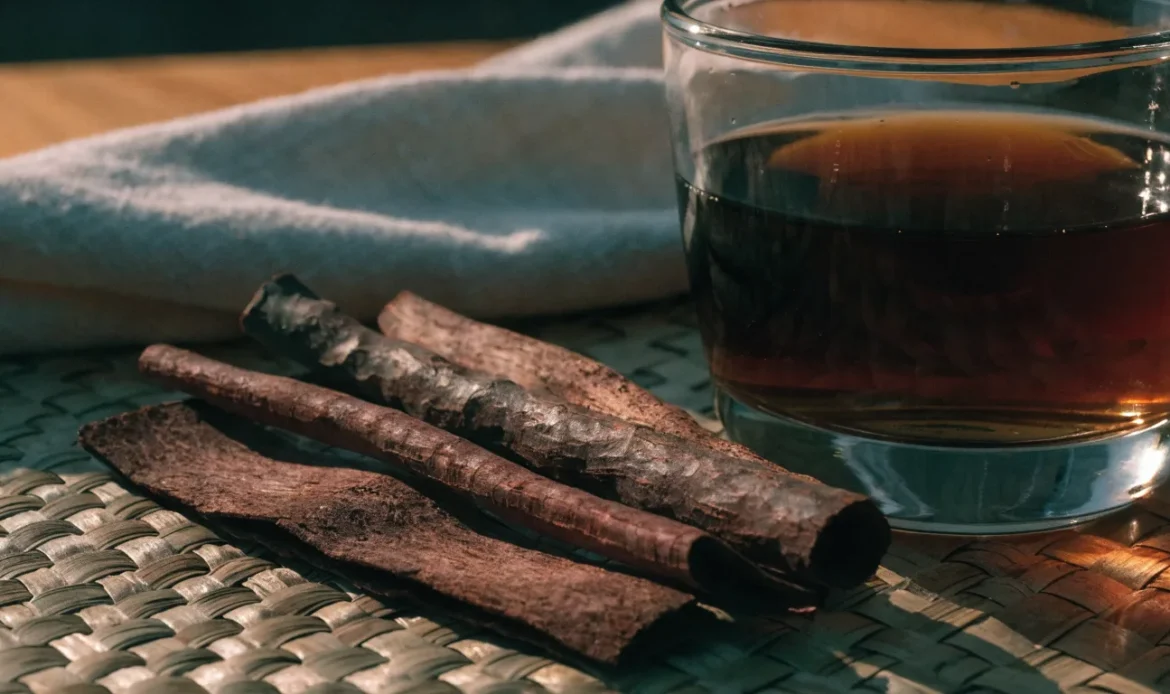
Short answer: The “mavi” or mauby tree refers to small Caribbean trees in the genus Colubrina whose bark (and sometimes fruit) is boiled with spices and sugar to make a traditional Caribbean drink called mauby or mavi. The bark is a culinary ingredient and flavoring — not the same thing as sea moss.
Why this matters: If you want to buy mavi tree bark, make mauby at home, or sell it, you need to know the species, how the bark is prepared, what to check on a label, and how to keep it safe and authentic.
What is the mavi (mauby) tree?
- Common names: mauby, mabi, mavi, mawby in different islands.
- Botanical identity: The bark used for the drink most often comes from Colubrina species, notably Colubrina elliptica and Colubrina arborescens. These are small trees native to the Caribbean, parts of Florida, and nearby tropical Americas. (powo.science.kew.org)
- Local use: People across the Caribbean boil the bark with spices (cinnamon, anise or star anise, cloves) and sweeten the liquid to make mauby — a cool, slightly bitter, spiced beverage popular in many islands. (en.wikipedia.org)
Note on names: Spelling and names vary by island and language. If a seller lists “mavi,” “mabi,” or “mauby,” ask which Colubrina species they mean. Different species and parts (bark vs fruit) can give different flavor and color.
What parts are used and how they are prepared traditionally
- Parts used: Mostly the dried bark. In some places the fruit or leaves may be used too. The bark is the traditional base for the beverage. (en.wikipedia.org)
- Typical preparation (summary): Dried bark is simmered in water to extract flavor. Spices like cinnamon, clove, or star anise are added. The mixture is strained and sweetened. Some people chill it and serve over ice. In some recipes the liquid is lightly fermented or allowed to age for additional flavor and mild carbonation. (en.wikipedia.org)
What you can check when preparing
- Use clean equipment and fresh water.
- Rinse the bark to remove dust.
- Simmer (not boil hard) to gently extract flavor; strain before sweetening.
- If fermenting, use clean glass or food-grade containers and watch for mold — discard if you see any. These are food-safety practices, not health claims.
A basic mauby (mavi) recipe — simple, traditional style
This is a culinary recipe for flavor and culture. Do not treat it as a health cure.
Ingredients
- Dried mavi/mauby bark (about a small handful per 1–2 liters, adjust to taste).
- 1–2 cinnamon sticks.
- 4–6 whole cloves or 1 small star anise.
- Fresh water.
- Sugar, brown sugar, or sweetener of choice (to taste).
- Optional: citrus peel (orange), vanilla, or ginger for variation.
Steps (short)
- Rinse the dried bark to remove dust.
- Place bark and spices in a pot with water. Bring to a gentle simmer for 20–60 minutes, longer for stronger flavor.
- Remove from heat, cool slightly, and strain into a clean container.
- Sweeten while warm to help dissolve the sugar. Adjust to taste.
- Chill and serve over ice. If you want mild fermentation, cover with a cloth or a loosely fitted lid at room temperature for 12–48 hours, then refrigerate; discard if off-odors or mold appear.
Tips: Tests and local recipes vary. If you are new, make a small batch to learn the flavor profile of the bark you bought.
How mavi tree bark is sold and what “mavi tree bark for sale” usually means
Common formats for sale
- Whole dried bark strips or chips (most traditional).
- Cut and sifted bark pieces.
- Powdered bark (ground).
- Blends: bark pre-mixed with spices or sweeteners.
What sellers should provide
- Botanical name (ideally).
- Clear photos of the product.
- Packaging and weight details.
- Storage instructions.
- Contact information for questions.
Legal and import notes: Some countries regulate the import of plant materials. If you import bark, confirm local rules for botanical imports and food ingredients with the seller or your customs authority.
How to choose mavi (mauby) bark — buyer decision guide
Use this decision guide to pick the right form of bark for your needs.
| Need | Best form | Check these points |
|---|---|---|
| Traditional drink making | Whole dried bark strips | Seller lists Colubrina species; visible bark pieces; photos; no added sugars |
| Small-batch testing | Cut pieces or small packet | Clear weight, return policy, clear prep instructions |
| Quick mixing or extracts | Powdered bark | Fine grind, no fillers, ingredient list shows 100% bark |
| Wholesale or retail resale | Bulk dried strips with traceability | Ask about species, harvest method, storage, and lot tracking |
| Culinary uses (infusions, syrups) | Whole or cut bark | Confirm quality, color, aroma, and absence of mold or rot |
Checklist — what to ask the seller before you buy
- Which species of Colubrina is this from?
- Are these bark-only (no fillers or sugar)?
- Where and how was the bark harvested?
- Do you have images of the product and lot?
- Can I get any lab or safety testing results (if you require them)?
- What is your return policy if the product is damaged or not as described?
Note: Sellers may not have all answers. If provenance or species identification is critical to you, ask for detailed photos and documentation, and consider buying smaller trial amounts first.
Whole bark vs powdered bark — pros and cons
- Whole bark: Easier to inspect visually. Good for traditional simmering and makes straining simpler. Preferred by many home cooks.
- Powdered bark: Easier to mix and extract quickly. Watch for fillers or inconsistent grind. Harder to visually verify species and quality.
- Blended products: Convenient, but check ingredient list to know exactly what’s included.
Preparing, storing, and safety
Preparation checks
- Rinse dried bark under running water to remove dust.
- Use food-safe equipment.
- Strain the liquid before sweetening or bottling.
Storage
- Store unopened dried bark in a cool, dry, dark place.
- Once opened, keep in an airtight container to limit moisture and pests.
- If powdered, keep the container sealed tightly.
Food safety note: If you plan to ferment the mauby, use clean fermentation practices and discard the batch if you see mold or detect unusual smells. These are standard food-safety precautions.
How mavi bark differs from sea moss (clear distinction)
Do not confuse mavi (mauby) bark with sea moss. They are completely different products:
- Mavi (mauby) is tree bark from Colubrina species used mainly as a flavor base for a beverage. (powo.science.kew.org)
- Sea moss is a seaweed (various species sold as “sea moss”) used for different culinary and supplemental purposes. Seaweeds contain minerals like iodine, and their composition is marine, not botanical bark. For general information on seaweed and risks like iodine content, see sources below. [See References: Harvard, Operation Supplement Safety, iodine reviews.] (fairchild.gardenexplorer.org)
Why this matters to buyers
- Labeling, storage, preparation, and regulatory rules differ for plant bark versus seaweed.
- If you see a product that mixes names or suggests “sea moss + mauby” ask the seller for clear ingredient lists and species names.
For seaweed safety notes and iodine context (not about mauby): Seaweeds can be high in iodine; buyers should check reliable guidance and product testing when consuming seaweed products. See the references for more. [Harvard T.H. Chan; Operation Supplement Safety; iodine literature.] [References at end.]
Sourcing, sustainability, and questions to ask
Sustainability concerns
- Wild-harvested bark can harm small trees if bark is stripped improperly. When buying, ask suppliers about sustainable harvest practices.
- If sustainability is important, ask whether bark comes from small-scale foraging, managed woodlots, or cultivated sources.
Questions to ask suppliers
- What Colubrina species is this?
- How is the bark harvested and dried?
- Is the lot traceable to a harvest location?
- Can you provide photos of trees, harvest, and drying methods?
- Do you offer wholesale quantities and terms? (Ask for minimums, lead times, and shipping details if you plan resale.)
If you want wholesale options, contact the seller’s wholesale team and request a sample lot before committing to a large purchase.
Where to buy mavi tree bark
- Local Caribbean markets and specialty stores: Good for small amounts and local knowledge.
- Online botanical shops selling Caribbean botanicals: Look for clear product photos and species names.
- Wholesalers: For larger quantities, ask for samples and supply chain details.
When searching online, use terms like “mavi tree bark for sale,” “mauby bark,” or “Colubrina bark.” Always confirm species, ask for photos, and check return or sample policies.
Practical decision guide: buy for flavor, for resale, or for research?
If you are deciding whether to buy mauby bark, use this short decision guide.
- You want to make traditional mauby at home: buy whole dried bark in small packs. Check species name and visual quality.
- You plan to flavor food or syrups commercially: buy consistent cut bark or powdered bark with batch traceability.
- You plan to resell in a shop: request bulk samples, specie identification, and clear labeling for your customers.
- You are researching botanicals: ask for precise species ID, collection notes, and, if needed, a voucher specimen or photos from the seller.
Conclusion
The mavi (mauby) tree is a cultural and culinary part of Caribbean foodways. Its dried bark is the traditional base of mauby/mavi, a spiced drink made across the islands. When buying bark, prefer sellers who give a botanical name (Colubrina spp.), clear photos, and straightforward product details. If you need larger amounts, ask for samples and supplier traceability. Remember: mavi bark and sea moss are different products with different supply and safety considerations. If you want help sourcing or a sample, reach out to the seller or wholesale source to get product photos and answers to the checklist items above.
Helpful links
- Visit our home page: Home
- Browse Caribbean botanicals: Caribbean Botanicals
- Learn more about botanical ingredients: Learn
- Shop our catalog: Shop
- Wholesale inquiries: Wholesale
If you have a supplier question or want help sourcing a sample, please Contact us (/contact/).
Frequently asked questions
Is “mavi” the same as “mauby”?
Yes. Spelling varies by island and language. Both refer to the traditional Caribbean drink and the trees (Colubrina species) used to make it.
Which Colubrina species make mauby?
The bark most commonly comes from Colubrina elliptica and Colubrina arborescens. Sellers should list the species if they can.
How can I tell if bark is good quality?
Look for whole or consistent cut pieces, no mold, clear photos from the seller, and an ingredient list that shows only bark (no fillers). Ask about harvest and drying if that matters to you.
Can I buy mavi bark in bulk?
Yes—many suppliers and some wholesalers sell bulk bark. Ask for a sample and documentation before a large order.
Is mauby the same as sea moss?
No. Mauby comes from tree bark (Colubrina species). Sea moss is a marine seaweed. They are different products with different uses and supply chains.
Are there any safety steps when making mauby at home?
Use clean equipment, rinse bark, simmer to extract flavor, strain the liquid, sweeten to taste, and discard any batch that develops mold or off-odors during storage or fermentation.
References
- Colubrina elliptica and Colubrina species distribution and use in the Caribbean — Kew / Plants of the World Online and botanical resources.
- Use of mauby bark for traditional Caribbean drink and culinary notes — regional botanical and horticultural sources (Fairchild Garden, UF/IFAS).
- Harvard T.H. Chan School of Public Health, “Seaweed.” https://nutritionsource.hsph.harvard.edu/seaweed/
- Smyth PPA. “Iodine, Seaweed, and the Thyroid.” European Thyroid Journal, 2021. https://pmc.ncbi.nlm.nih.gov/articles/PMC8077470/
- Food Standards Australia New Zealand, “Survey of iodine levels in seaweed and seaweed containing products,” updated 2025. https://www.foodstandards.gov.au/science-data/monitoring-safety/surveyofiodinelevels
- Operation Supplement Safety, “Sea Moss in Dietary Supplements.” https://www.opss.org/article/sea-moss-dietary-supplements
- Blikra MJ et al. “Consequences of acute and long-term excessive iodine intake: A literature review focusing on seaweed as a potential dietary iodine source.” 2024. https://doi.org/10.1111/1541-4337.70037