
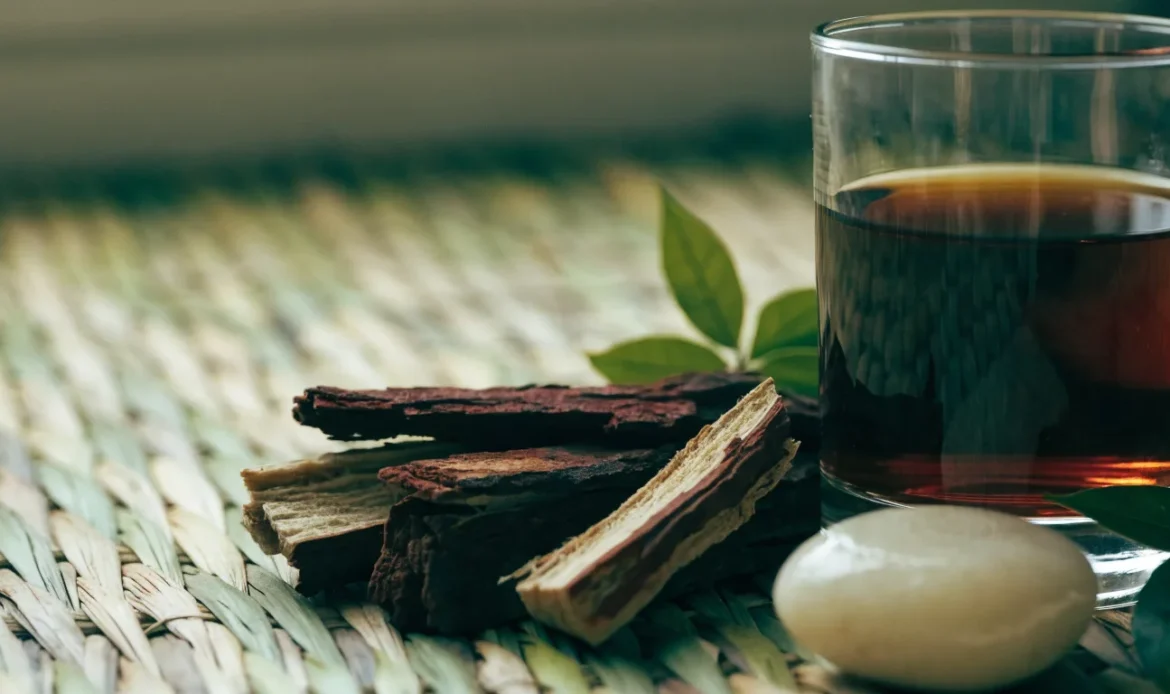
Short answer — Mauby (also spelled mabi or mabí) is a traditional Caribbean drink made by brewing the dried bark (and sometimes fruit) of certain Colubrina trees with spices and sugar. It is a bittersweet, non-seaweed beverage that appears across Barbados, Trinidad, Jamaica, Guyana, Puerto Rico, and other islands.
Why this guide — If you want to buy mauby bark, try a bottled mauby, or make a batch at home, this article explains what to look for, how the drink is prepared, the common formats sold, and the safety and labeling checks to make. It also explains how mauby is different from sea moss products so you can choose what’s right for you.
What is mauby? (short definition and names)
- Mauby is a Caribbean beverage made from the bark of trees in the Colubrina genus (often Colubrina elliptica or Colubrina arborescens). The bark is brewed, flavored with spices, sweetened, and served chilled. (en.wikipedia.org)
- Common local names: mauby, mabi, mabí, and in some places “soldierwood” or “sweetwood.” Regional spellings and recipes vary across islands. (figaroshakes.com)
- Forms: home-brew concentrate (from dried bark), bottled non-fermented mauby, carbonated commercial versions (sometimes called “Mauby Fizz”), and syrup concentrates for mixing. (en.wikipedia.org)
Short cultural background
Mauby has deep roots in Caribbean foodways. Indigenous Arawak and Carib peoples used local bark and plant ingredients for drinks. Over time, mauby became a common street-sold beverage and a homemade refreshment across islands. Each island and household adapted spices, sugar levels, and brewing time to local taste.
What bark makes mauby? Botanical ID and sourcing
- Primary botanical source: trees in the genus Colubrina, notably Colubrina elliptica and Colubrina arborescens. These are small trees or shrubs in the Rhamnaceae family. The bark is the main ingredient used for the traditional brew. (en.wikipedia.org)
- Important note: “Colubrina” covers several species. Different islands may use different local Colubrina species or even other bitter barks for similar drinks. If botanical origin matters to you (for taste, sourcing, or conservation), check the seller’s product details or ask the supplier for the exact species. (en.wikipedia.org)
What to check from suppliers
- Does the product label or vendor state the species name (for example, Colubrina elliptica)?
- Is the bark whole, chipped, powdered, or in a pre-mixed syrup?
- Does the vendor describe how the bark was harvested and processed? If not, ask. Vendors who sell raw botanicals should be able to say whether the bark is whole or processed. If you’re buying online, request photos or a detailed description.
How mauby is made — simple overview (what to expect in recipes)
A typical home-style method (common pattern across recipes):
- Rinse dried mauby bark and any dried spices.
- Simmer the bark in water for 20–60 minutes to extract color and flavor. Spices often include cinnamon, clove, aniseed (or star anise), and citrus peel. (thisbagogirl.com)
- Cool and strain out the bark and spices.
- Sweeten with sugar or simple syrup to taste. Some people ferment the sweetened brew lightly for a few days for added tang; other preparations are kept unfermented and served immediately chilled. (figaroshakes.com)
Notes on variation
- Trinidad and Barbados versions may be more bitter and spice-forward. Puerto Rican and Dominican styles sometimes use less bark and more sugar, producing a sweeter drink. Brewing time, bark quantity, and sugar change the final flavor. (figaroshakes.com)
Flavor profile and serving
- Taste: bittersweet, with a woody or tannic backbone. Spices add warming notes (cinnamon, clove), citrus peel brightens, and sugar balances bitterness. Texture can be slightly astringent depending on how long the bark boiled. (thisbagogirl.com)
- Serving: chilled over ice. Some people add milk or plant milk for variation; others use it as a mixer in cocktails or mocktails. Commercial carbonated versions are served like soda.
Common product formats you’ll find for sale
- Dried mauby bark (whole pieces or chips) — sold for home brewing.
- Concentrate or syrup — prepared by a producer; mix with water.
- Bottled mauby (non-fermented or lightly fermented) — drink-ready.
- Carbonated commercial mauby sodas (e.g., “Mauby Fizz” style) — sold in cans or bottles. (en.wikipedia.org)
Each format suits different users. Dried bark gives control over strength and spices. Bottled and canned products are ready-to-drink convenience.
How mauby differs from sea moss and other Caribbean botanicals
- Mauby is a bark-based drink from trees in the Colubrina genus. Sea moss (often called Irish moss or grays seaweed in Caribbean commerce) is a marine algae product. They are different plant groups, harvested in different environments, and used for different recipes. Do not assume mauby contains sea moss. (en.wikipedia.org)
- If you are shopping from a botanical retailer, check product labels carefully. A product named “Caribbean botanicals” can include both sea moss and mauby bark, but each product listing should show the ingredient list and form. If the listing is vague, ask the vendor for an ingredient statement.
Safety and regulatory note about seaweeds and iodine (not mauby)
- Seaweeds can contain elevated levels of iodine and other minerals. People who are concerned about iodine intake or who take thyroid medication should treat seaweed/sea moss separately and consult a clinician or reliable guidance. For general information about seaweed and iodine, see sources such as the Harvard T.H. Chan School of Public Health and reviews on iodine in seaweed. (en.wikipedia.org) (en.wikipedia.org)
- For science-focused resources on iodine and seaweed, see the reference list at the end of this article. (These references concern seaweeds and sea moss products and do not imply that mauby itself shares the same mineral profile.) (en.wikipedia.org)
Practical checklist for buying or making mauby
Use this checklist when choosing mauby products or ingredients. It’s short and practical.
- Product form: Dried bark / Syrup / Bottled / Carbonated?
- Ingredient list: Is it only mauby bark and spices, or are there preservatives, artificial flavors, or added juices? Ask for full ingredient details.
- Species ID: Does the label or vendor list the Colubrina species (e.g., Colubrina elliptica)? If botanical identity matters, ask for the species. (en.wikipedia.org)
- Processing: Whole bark, chipped, or powdered? Whole bark often brews more cleanly.
- Sugar and calories: If you are watching sugar, check the nutrition facts or ask how much sugar the producer adds (labeling required for commercial products).
- Storage instructions: Does the product require refrigeration after opening? For dried bark, look for a cool, dry storage recommendation.
- Source transparency: Can the seller say where the bark was harvested and how it was dried/cleaned? Sellers who provide clear photos or a brief process description are easier to evaluate.
- For ready-to-drink bottles or cans: Check for bottling date, best-by date, and whether the product is pasteurized or preservative-free.
- Wholesale needs: If you need larger quantities, ask a vendor for lead time, packing format, and whether lab or safety data are available (for food businesses). See /wholesale/ for wholesale inquiries.
If you want a printable table or short decision guide for in-store or online buying, use the table below.
| Buying goal | Best format | Key checks |
|---|---|---|
| Home brewing and control | Dried whole bark | Species name, bark condition, shipping weight |
| Quick mixing at home | Syrup concentrate | Ingredient list, sugar type, dilution ratio |
| On-the-go convenience | Bottled mauby | Nutrition facts, bottling/pasteurization info |
| Carbonated soda taste | Canned/bottled ‘Mauby Fizz’ | Sugar/carbonation, preservative listing |
| Bulk purchase for resale | Wholesale packs | Supply lead time, packaging, buyer documentation (/wholesale/) |
How to make mauby at home — a simple recipe framework
This is a general outline. Local recipes will vary.
Ingredients (per ~2 liters starting water):
- 20–40 g dried mauby bark (adjust for stronger or milder brew)
- 1–2 cinnamon sticks, 1–2 whole cloves, 1–2 star anise (optional)
- Peel of 1 citrus (orange or lime), optional
- Sugar or simple syrup, to taste
Steps:
- Rinse the bark briefly in cold water to remove dust.
- Place bark and spices in a pot with 2 liters of water. Bring to a gentle simmer for 20–45 minutes. Do not boil aggressively; a simmer extracts flavor while reducing bitter over-extraction. (thisbagogirl.com)
- Remove from heat and allow to cool to room temperature. Some people leave it to cool in the pot for several hours to settle sediments. (thingsguyana.com)
- Strain into a container, pressing solids to extract liquid. Discard solids.
- Sweeten to taste with sugar or syrup. Chill and serve over ice. Optional: a light fermentation (leave sweetened brew at room temperature for 1–3 days) will produce a tangy profile — only do this with clean containers and attention to sanitation. (figaroshakes.com)
Notes
- Measurements, simmer times, and sugar are flexible. Adjust to taste. If you are new to mauby, start with a smaller bark amount and add more next time.
- If you are unsure about fermentation, keep the sweetened brew refrigerated and consume within a few days.
Label reading: what sellers should disclose (and what you should ask)
When buying mauby or mauby products, confirm these items:
- Full ingredient list (including any preservatives, colorings, or added juices).
- Product form (dried bark, syrup, bottled, carbonated).
- Any allergen statements if items were processed in facilities with other ingredients.
- Storage and shelf-life guidance (refrigeration after opening, best-by date, etc.).
- For bulk or wholesale: lot coding and packing information. If you are reselling, ask whether the supplier provides certificates of analysis or food-safety paperwork.
If the product page does not list these items, contact the seller before buying.
Buying for events or business (short practical notes)
- For larger quantities, request a sample first. Brewing from dried bark can yield a wide range of flavors depending on bark quality and brewing method.
- Ask about packaging (bulk bags vs. retail packs), lead time, and return policy. See /wholesale/ for a place to start wholesale conversations.
- If you want branded bottled mauby for resale, check labeling requirements for food products in your market and confirm whether the supplier can provide the needed documentation.
Where to learn more and where to buy
- If you want to browse mauby bark and related Caribbean botanicals, see our product collection at /shop/caribbean-botanicals/.
- For broader botanical background and food-safety guidance, visit our learning hub at /learn/.
- To view our shop’s range of Caribbean beverages and ingredients, go to /shop/.
- Wholesale inquiries and bulk buying start at /wholesale/.
- For specific product questions, contact our team via /contact/.
- Or return to our home page at / to explore more categories.
What this article can and cannot prove
What you can check from a product page or vendor:
- Ingredient lists, product form, and whether the product is ready-to-drink or requires brewing.
- Whether the seller discloses the botanical species and basic processing.
- Labeling facts like nutrition panels, best-by dates, and storage.
What this article cannot prove for a specific product:
- Exact mineral or contaminant levels in a particular batch (these require lab testing).
- Claims about safety for specific medical conditions (talk to a qualified clinician about individualized advice).
- The exact origin of bark unless the seller documents it.
If you need lab data, ask the vendor for certificates or third-party testing, especially if you plan to resell or use the ingredient in commercial food production.
Conclusion — next steps for a buyer or maker
- If you want to try mauby at home, start with a small pack of dried bark and a simple spice mix. Adjust sugar and simmer time to taste. (thisbagogirl.com)
- If you prefer convenience, try a bottled mauby or syrup concentrate and read the label for ingredients and storage. (caribsoulbites.com)
- If you need bulk supplies or product documentation, contact wholesale channels and ask specific questions about species, processing, and packing. See /wholesale/ and /contact/ to begin.
- Remember: mauby is a bark-based Caribbean drink, not a seaweed product. If you’re concerned about mineral intake from seaweed products like sea moss, consult the references below for background on iodine and seaweed. (en.wikipedia.org)
Continue reading
Frequently asked questions
Is mauby alcoholic?
Mauby is usually a non-alcoholic bark beverage. Some traditional home preparations are lightly fermented for a day or two, which can create a tangy profile, but many commercial and home recipes are prepared and consumed unfermented.
Does mauby contain sea moss or seaweed?
No. Mauby is made from tree bark (Colubrina species). Sea moss is a marine algae and is a separate product. Always check the ingredient list if a packaged product claims multiple botanicals.
Is mauby the same across the Caribbean?
The core idea—bark brewed with spices and sweetener—is common. But islands and households vary in bark type, spice mix, sweetness, and whether the drink is fermented. Expect taste differences between Trinidadian, Jamaican, Puerto Rican, and Guyanese styles.
How should I store mauby concentrate or dried bark?
Store dried bark in a cool, dry place. Concentrates and bottled mauby usually specify refrigeration after opening. For ready-to-drink bottles, follow the bakery/producer’s label for best-by guidance. If a product page lacks storage instructions, ask the seller. (Do not assume indefinite shelf-life.)
I’m watching my sugar intake. Can I make mauby less sweet?
Yes. When you brew mauby from bark, you control how much sugar to add. If buying bottled or canned mauby, check the nutrition facts for sugar content or ask the vendor for a nutrition label. Commercial sodas are often sweetened and may not be suitable if you need low-sugar options.
Can I use mauby in cocktails or mocktails?
Yes. Mauby’s bittersweet and spiced profile makes it a useful mixer in both alcoholic and non-alcoholic drinks. Treat it like a botanical syrup or spiced tea when blending flavors.
References
- Mauby. Wikipedia.
- Colubrina elliptica. Wikipedia.
- Mauby Recipe and cultural notes (various Caribbean recipe pages and guides documenting preparation and regional differences). Examples: Figaro Shakes; This Bago Girl; That Girl Cooks Healthy; Jigger & Joy.
- Smyth PPA. “Iodine, Seaweed, and the Thyroid.” European Thyroid Journal, 2021. https://pmc.ncbi.nlm.nih.gov/articles/PMC8077470/ [Reference bank entry].
- Harvard T.H. Chan School of Public Health, “Seaweed.” https://nutritionsource.hsph.harvard.edu/seaweed/ [Reference bank entry].
- Food Standards Australia New Zealand, “Survey of iodine levels in seaweed and seaweed containing products,” updated 2025. https://www.foodstandards.gov.au/science-data/monitoring-safety/surveyofiodinelevels [Reference bank entry].
- Operation Supplement Safety, “Sea Moss in Dietary Supplements.” https://www.opss.org/article/sea-moss-dietary-supplements [Reference bank entry].
- Blikra MJ et al. “Consequences of acute and long-term excessive iodine intake: A literature review focusing on seaweed as a potential dietary iodine source.” 2024. https://doi.org/10.1111/1541-4337.70037 [Reference bank entry].