
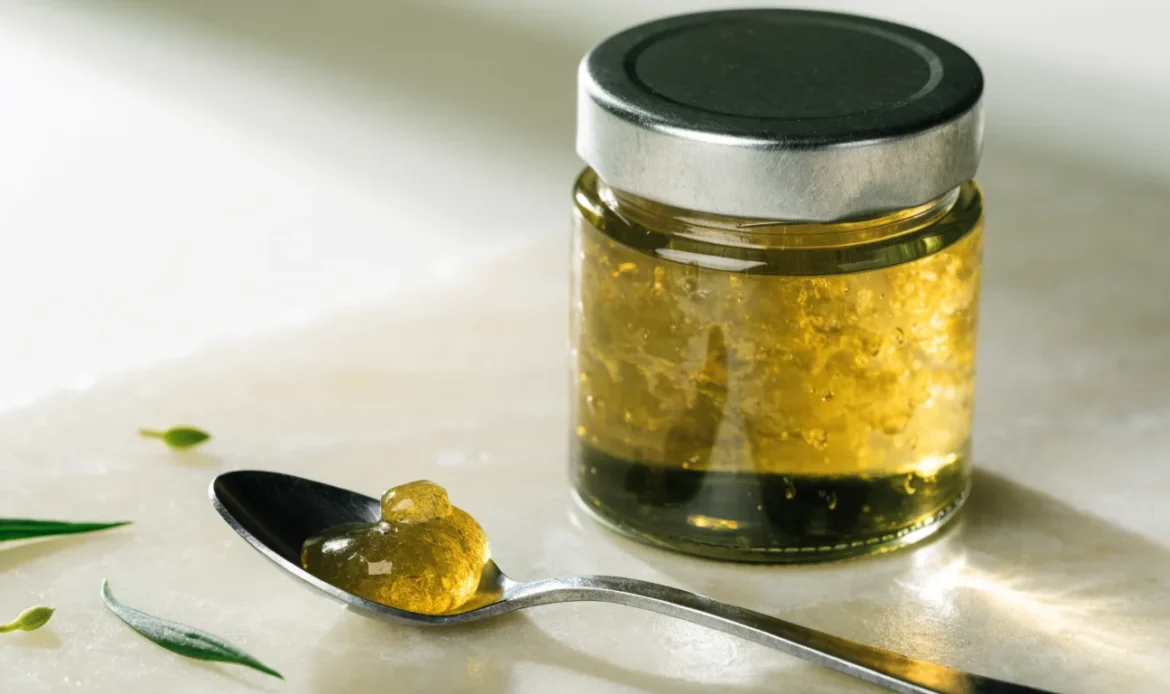
Short answer: Sea moss can cause stomach upset, allergic reactions, and—most importantly—iodine-related effects on the thyroid when intake is high or inconsistent. Supplements and concentrated products carry higher uncertainty and greater risk than eating small amounts of whole seaweed. If you have thyroid disease, take certain medicines, are pregnant, or have other health concerns, talk with a clinician before using sea moss products.
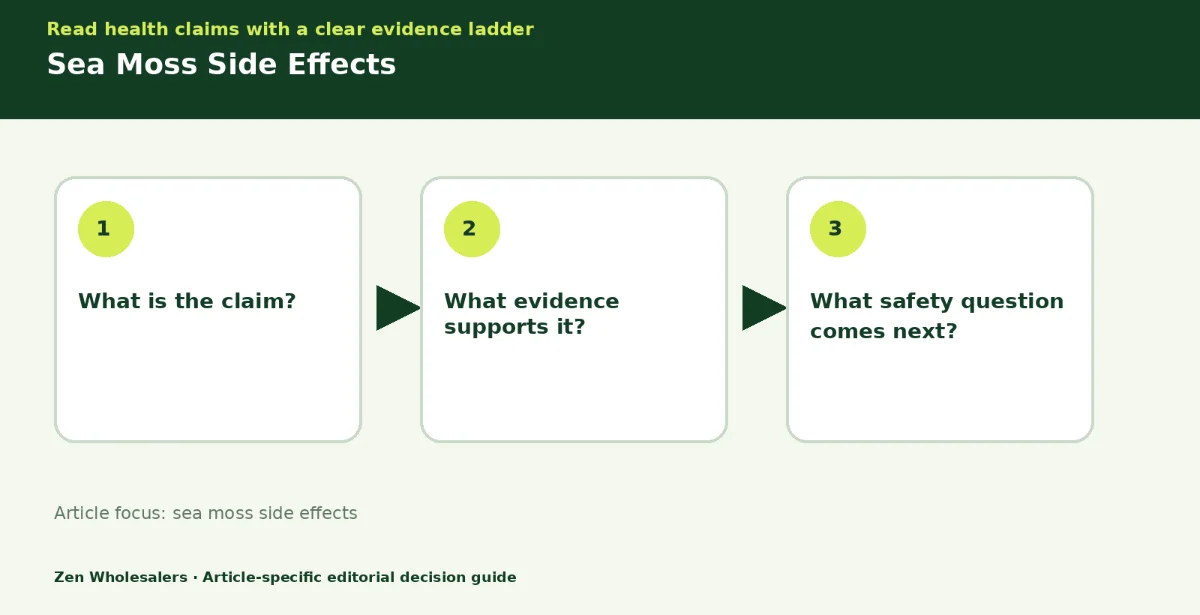
What this guide covers (quick)
- The commonly reported side effects of sea moss.
- Why iodine and product form matter.
- How sea moss supplements differ from food.
- A clear checklist to help you decide what to do next.
- When to contact a clinician.
We clearly separate food tradition, early lab work, and what clinical proof exists. The evidence is limited and does not prove benefits or cures.
What sea moss is and why evidence is limited
Sea moss is a type of red seaweed used as food in parts of the Caribbean and elsewhere. Seaweeds vary a lot in minerals and compounds depending on where they grow, how they are harvested, and how they are processed. Studies about seaweed and health are often small or look at seaweed in general rather than a single product like “sea moss.” Because of this, we cannot make broad medical claims about sea moss. General seaweed nutrition and safety reviews are available and show wide variability across species and products [1].
Commonly reported side effects
Below are effects people report after eating or taking sea moss or related supplements. Not everyone will have them. The strength of evidence varies by item.
- Gastrointestinal upset. Some people report bloating, gas, cramping, or diarrhea after eating sea moss or taking concentrated forms. This is common with many new foods or fiber sources.
- Iodine-related thyroid effects. Seaweeds can be high in iodine. Too much iodine, or a big change in iodine intake, can affect thyroid function for some people. This is a main safety concern for regular or high intake of seaweed products [2][5].
- Allergic reactions. As with any seafood or algae, allergic responses are possible. These range from mild skin rashes to more serious reactions in sensitive people.
- Contaminants and heavy metals. Wild-harvested seaweed may accumulate metals or other ocean contaminants depending on the harvest site. Product testing and source tracing reduce but do not eliminate this risk [4][5].
- Interactions with medicines. Because seaweed can change iodine intake and contain active compounds, sea moss might interact with thyroid medicine or other drugs. This is a theoretical risk that depends on dose and product form.
- Variable effects from mixed products. Prepared gels, powders, or “advanced” blends that add other herbs, sweeteners, or fillers can cause additional side effects tied to those added ingredients.
Where scientific reviews exist, they emphasize that iodine levels and other nutrient content in seaweeds vary widely and so do potential risks [1][2][5].
Iodine and the thyroid: the clearest risk to watch
Iodine is an essential mineral. It helps the thyroid make hormones. Many seaweeds are rich in iodine. That can be helpful when iodine is low in the diet. But too much iodine can also cause thyroid problems in some people. Sudden large increases in iodine can trigger thyroid hormone changes or disorders in sensitive individuals. This risk is the best-documented safety concern with high seaweed intake [2][5].
What we can say with confidence:
- Seaweed is a major dietary source of iodine for people who eat it regularly [1][2].
- Excessive iodine intake from seaweed can lead to abnormal thyroid function in some people [2][5].
What we cannot say:
- We cannot say a specific serving size of sea moss is “safe” or “unsafe” for everyone. Iodine content varies a lot by species, location, and processing.
Sea moss detox side effects — what “detox” claims miss
Many products or posts describe a “sea moss detox.” The term “detox” is not a medical term and has no single meaning. Eating certain foods can change bowel habits, fluid balance, or nutrient intake. Those changes can feel like a “detox” to some people. However, there is no clear clinical proof that sea moss removes toxins from the body in a measurable, health-changing way.
Reported “detox” side effects often include:
- Increased bowel movements or loose stool.
- Temporary fatigue or headache (often tied to changes in diet or fluids).
- Changes in urine color or smell.
These are non-specific effects. They may come from fiber, added ingredients, or simply changing your routine. They are not proof of toxin removal.
Sea moss pills and supplements: why risks can rise
Sea moss sold as capsules, powders, or highly concentrated extracts can be more unpredictable than eating seaweed as food. Manufacturers may concentrate minerals, add other herbs, or mix batches from many sources. This changes both how much iodine you might consume and the chance of contamination. Regulatory oversight for dietary supplements is limited in many places, so labeling and quality vary [4].
Common concerns with pills and supplements:
- Concentrated iodine or other minerals that exceed typical food levels.
- Inconsistent label accuracy. Third-party testing is not always done.
- Added ingredients that change safety and side-effect profiles.
- Less long-term data on safety compared with traditional food use.
Operation Supplement Safety highlights that product quality and variable contents are major concerns for sea moss dietary supplements [4].
Sea moss side effects for women (including pregnancy and breastfeeding)
Women may have specific safety questions about sea moss. Pregnancy, breastfeeding, and certain hormonal or thyroid conditions require extra caution because iodine affects fetal and infant thyroid development. There is limited research on sea moss in pregnancy or breastfeeding, and some medical groups advise caution with high iodine intake during these periods.
If you are pregnant, breastfeeding, or trying to conceive, do not rely on sea moss for nutrient claims. Ask a clinician about iodine in your diet and any supplements before starting seaweed products. We cannot provide individual medical advice here.
“Advanced” sea moss products and blended formulas
Products labeled as “advanced” often add multiple ingredients—vitamins, herbs, or extracts. That creates new safety questions:
- Each added ingredient may have its own side effects.
- Herbal blends may interact with medicines.
- The total concentration of minerals like iodine may be higher.
Because blends change the product, their safety cannot be inferred from traditional seaweed food use alone.
How product form changes risk
- Raw or whole seaweed (food): risk depends on species and source. Eating small amounts occasionally is generally lower risk than concentrated forms.
- Sea moss gel (culinary): often used as a food ingredient. Risk depends on concentration and any added ingredients. Perishable if not stored properly.
- Dried powder: concentrates some components. Quality depends on processing and source.
- Capsules/pills and extracts: may concentrate minerals and other constituents and are more likely to have variable labeling.
Supplements can produce “sea moss pills side effects” that differ from food. The more processed or concentrated the form, the more cautious you should be.
Evidence strength ladder — how strong is the proof?
Use this ladder to read studies and claims more clearly:
- Tradition and culinary use: strong historical use in certain cultures, safety generally observed at low, occasional intakes.
- Food composition studies: strong data that seaweeds vary in minerals and iodine content [1].
- Case reports and small studies: show possible thyroid effects or heavy metal concerns after high intake of certain seaweeds [2][5].
- Clinical trials on sea moss specifically: sparse. There are few controlled trials that test sea moss products for health outcomes.
- Large, long-term safety trials: largely missing for most sea moss supplements.
This means safety signals are plausible, but firm clinical proof for most claims is not available.
Practical decision checklist: Should you try sea moss or a sea moss product?
Use this checklist before you try sea moss or a new sea moss product. It helps you weigh risk and next steps.
| Step | What to check or do | Why this matters |
|---|---|---|
| 1 | Know your health background (thyroid disease, pregnancy, medicines). | These increase risk from iodine or interactions. |
| 2 | Check product form (raw, gel, powder, capsule). | More processed = more variable concentration. |
| 3 | Read the label for source, tests, or third-party verification. | Testing reduces but does not remove contamination risk [4]. |
| 4 | Ask: is iodine content listed? | If not listed, iodine intake is unknown. Iodine is the clearest risk factor [2][5]. |
| 5 | Start small and monitor for GI upset or allergic signs. | Many side effects show up early (stomach, rash). |
| 6 | Stop if you get strange symptoms and seek care if severe. | Severe reactions need clinical attention. |
| 7 | If you take thyroid medicine or are pregnant, consult a clinician first. | Iodine can alter thyroid treatment needs [2]. |
This checklist does not replace medical advice. It helps you make a safer decision.
Safety and when to ask a clinician
Ask a clinician before using sea moss if you:
- Have known thyroid disease or abnormal thyroid tests.
- Take thyroid hormone replacement or anti-thyroid medications.
- Are pregnant, planning pregnancy, or breastfeeding.
- Take blood thinners or other prescription medicines where interactions are possible.
- Have a seafood allergy or history of strong allergic reactions.
- Plan to use concentrated supplements, capsules, or “advanced” blends.
Seek urgent medical care if you have:
- Trouble breathing, swelling of face or throat, or severe rash (possible severe allergy).
- Severe abdominal pain, ongoing vomiting, or high fever.
- Sudden signs that could reflect thyroid storm or severe thyroid dysfunction (these are rare but serious).
We cannot give dose advice here. A clinician can interpret your lab tests and medicines and advise on risk.
What you can check on a product label
- Ingredient list and full species name if present.
- Source or harvest location.
- Certificate of analysis or third-party testing claims.
- Batch or lot number for traceability.
- Storage and use instructions.
If these are missing or vague, the product has more uncertainty.
How to report a bad reaction
If you think a sea moss product caused harm, follow local guidance to report adverse events. In many places, adverse events from supplements are reportable to regulatory agencies. Keep packaging and any labels. Tell your clinician about the product and dose.
Next steps and useful internal guides
- For more background on sea products and nutrition, visit our learning center: /learn/
- If you want product types and safe sourcing tips, see our guide at /learn/
- To browse products and see typical product pages, visit /shop/
- For businesses or bulk purchases, check our wholesale options at /wholesale/
- To ask us a question about sources or products, contact our team: /contact/
- Back to the homepage: /
These links point to general resources. They are not a substitute for clinical care.
Limitations and uncertainty
- Studies on seaweed are often about seaweed groups, not sea moss alone.
- Iodine and contaminant levels vary by species, harvest site, and processing.
- Supplements are less regulated than medicines, so quality varies.
- Large clinical trials on sea moss supplements are limited or absent.
Because of these limits, decisions should be cautious for people with medical risks.
Conclusion
Sea moss can be a part of food traditions. The main safety concerns are stomach upset, allergic reactions, contamination risk, and especially iodine-related effects on the thyroid when intake is large or inconsistent. Supplements, pills, and “advanced” blends raise extra uncertainty because they concentrate ingredients and can vary in quality. Use the practical checklist above and consult a clinician if you have thyroid disease, are pregnant or breastfeeding, or take important medicines. For more on seaweed nutrition and product safety, start at our learning center: /learn/ and contact us at /contact/ for product questions.
Continue reading
Frequently asked questions
What are the most likely side effects of sea moss?
The most commonly reported effects are stomach upset (gas, bloating, loose stool), possible allergic reactions, and changes connected to iodine intake that can affect the thyroid in some people [1][2].
Can sea moss cause thyroid problems?
Seaweed can be high in iodine. Sudden or large increases in iodine intake can change thyroid function in some people. This is the most documented safety concern with high seaweed intake [2][5]. Talk to a clinician if you have thyroid disease.
Are sea moss pills safer than raw sea moss?
Pills and concentrates are not inherently safer. They can concentrate minerals and may have inconsistent labeling. That makes their iodine content and contamination risk harder to predict [4]. Always check for third-party testing and clear labeling.
Is “detox” from sea moss a medical effect?
“Detox” is not a medical term with a fixed meaning. Some people report changes in bowel movements or energy when they change their diet. These are not proof that sea moss removes toxins from the body.
Can pregnant women use sea moss?
Because iodine affects fetal and infant thyroid development, pregnant and breastfeeding people should be cautious. Ask a clinician before using sea moss or supplements during pregnancy or lactation.
What should I do if I have a bad reaction to sea moss?
Stop using the product. For mild reactions, call your clinician. For severe reactions—trouble breathing, swelling, or severe rash—seek emergency care. Report serious adverse events to the appropriate regulatory body in your country.
References
- [1] Harvard T.H. Chan School of Public Health, “Seaweed.” https://nutritionsource.hsph.harvard.edu/seaweed/
- [2] Smyth PPA. “Iodine, Seaweed, and the Thyroid.” European Thyroid Journal, 2021. https://pmc.ncbi.nlm.nih.gov/articles/PMC8077470/
- [4] Operation Supplement Safety, “Sea Moss in Dietary Supplements.” https://www.opss.org/article/sea-moss-dietary-supplements
- [5] Blikra MJ et al. “Consequences of acute and long-term excessive iodine intake: A literature review focusing on seaweed as a potential dietary iodine source.” 2024. https://doi.org/10.1111/1541-4337.70037