
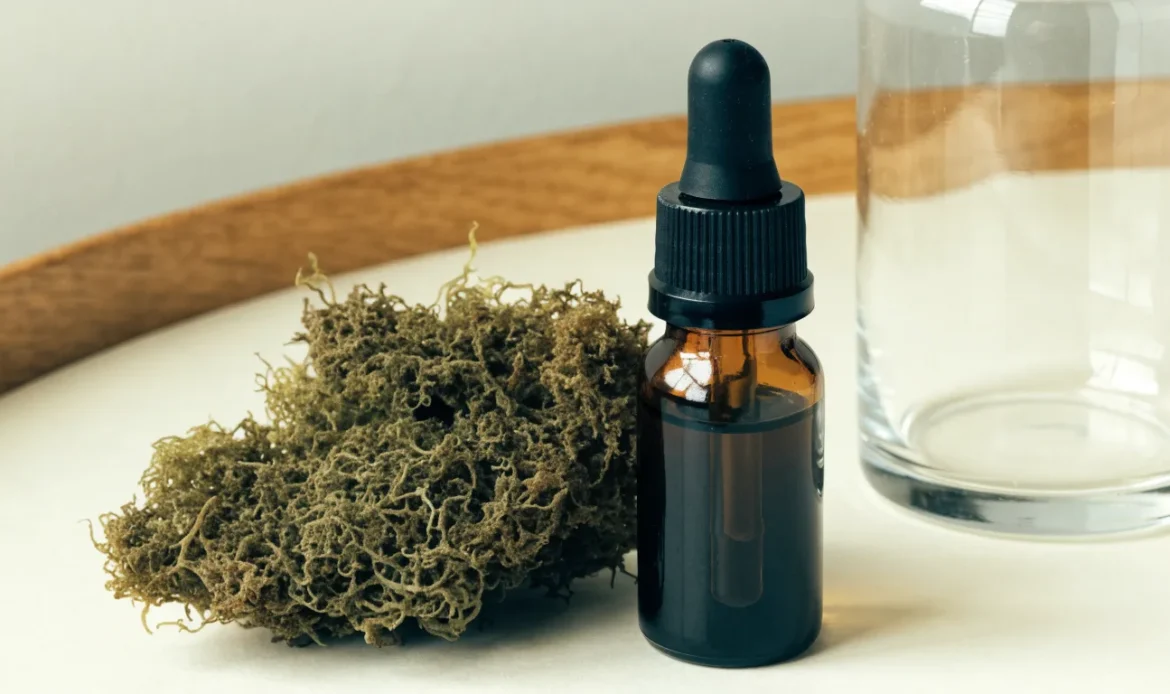
Short answer first: A sea moss tincture is a liquid extract made by soaking sea moss (a seaweed) in a solvent such as alcohol, glycerin, or vinegar. The solvent pulls out certain soluble compounds so you get a concentrated liquid form you can add to drinks or take directly.
This page explains what a sea moss tincture is, how tinctures differ from other sea moss formats, what to check on a product label, safety points, and a practical decision checklist to help you pick or make a tincture. If you want to shop or learn more about formats, links at the end will help.
What “tincture” means and how it applies to sea moss
- A tincture is a concentrated liquid made by extracting compounds from plant material into a solvent. The word often implies alcohol is used, but some tinctures use glycerin or vinegar instead.
- For sea moss, the plant material is the dried or fresh seaweed. The solvent pulls out water-soluble and alcohol-soluble components from the sea moss.
- The final tincture is a liquid you store in a small bottle. It is different from powdered sea moss or the cooked gel many people make at home.
What a tincture is not:
- It is not the same as raw sea moss, which you might rinse and soak before cooking.
- It is not identical to a powdered extract or a freeze-dried powder. The extraction method changes what ends up in the bottle.
How extraction changes what’s in the bottle:
- Alcohol tends to extract both water-soluble and some alcohol-soluble plant compounds.
- Glycerin or vinegar will extract different mixes of compounds.
- The solvent, plant part, plant freshness, and extraction time all shape the tincture’s final content.
We cannot say a tincture contains a specific nutrient level unless a lab test shows it. Labels and product claims do not prove nutrient amounts without testing.
Common solvents and what to expect
- Ethanol (alcohol): Common for herbal tinctures. It preserves the liquid and extracts a wide range of compounds. It may not be suitable for children, those avoiding alcohol, or certain medical conditions.
- Glycerin: A non-alcohol option. It extracts some compounds and is sweeter. It can be a good alternative for those avoiding alcohol.
- Vinegar: Used for “acetums.” Good for certain minerals and acids. It has a strong taste.
- Water or hydroalcohol: Some makers combine water with alcohol to target water-soluble compounds.
Which solvent is best? That depends on your needs:
- If you need an alcohol-free option, look for glycerin or vinegar extractions.
- If you want a wide extraction range, alcohol or hydroalcohol is common.
- No solvent extracts everything. Different solvents capture different parts of the seaweed.
How tinctures compare with other sea moss formats
Short list comparison:
- Tincture: liquid extract in solvent. Easy to dose and mix into drinks.
- Gel: made by blending cooked sea moss with water. Thick, culinary use.
- Powder/capsule: dehydrated and milled sea moss. Measured by weight.
- Whole dried sea moss: can be soaked and used in cooking or turned into gel.
A simple decision guide:
- Want a shelf-stable liquid to add to drinks? Consider a tincture.
- Want a cooking thickener or smoothie ingredient? Choose gel.
- Want convenience and travel-friendly form? Powder or capsules may work.
- Want to control processing at home? Buy dried sea moss.
See the Buying vs DIY Checklist below for more practical points.
What a label can tell you — and what it cannot prove
What you should look for on a tincture label:
- Full ingredient list (including solvent type and any added flavors or sweeteners).
- Net volume and suggested serving size.
- Alcohol percentage if alcohol is the solvent.
- Batch or lot number and an expiration or best-by date.
- Contact information for the maker.
- Storage instructions.
What a label cannot prove:
- Exact levels of specific minerals or iodine without a lab Certificate of Analysis (COA).
- The absence of contaminants unless third-party testing is available.
- The exact plant species or how the sea moss was handled prior to extraction unless documented.
Why testing matters:
- Seaweeds can vary a lot in their mineral and iodine content. Surveys and reviews show wide variability in iodine and mineral levels across seaweed products [1][3][5].
- Some seaweed-based supplements have shown variable composition or contamination in market reviews [4]. A label claim alone does not replace independent testing.
If a seller provides a third-party COA for iodine or contaminants, that gives you more concrete information. If they do not, you only have their label claims to go by.
Safety points to consider
Iodine and thyroid caution:
- Seaweeds can be high in iodine, but amounts vary widely by species and where they were harvested [1][3][5].
- Very high or very low iodine intake can affect the thyroid in sensitive people. If you have a thyroid condition, talk with a clinician before using seaweed products, including tinctures [2][5].
Alcohol content and suitability:
- If a tincture uses alcohol, it will contain ethanol. This may matter for children, pregnant people, people avoiding alcohol, or those on certain medications.
- Sellers should list alcohol percentage. If they do not, ask.
Contaminants and sourcing:
- Seaweed can pick up environmental contaminants. Testing helps, but not all products are tested [4].
- If you are concerned, ask the seller for test results or a COA.
Drug interactions and medical conditions:
- Seaweed extracts can interact with certain medicines. If you take prescriptions or have a medical condition, check with a clinician.
Pregnancy and nursing:
- Because iodine levels can be high and variable, people who are pregnant or breastfeeding should consult a clinician before using concentrated seaweed products.
Dosage caution:
- There is no universal tincture dose for sea moss. Follow the product label or a clinician’s advice.
- Avoid guessing or taking large amounts of concentrated extracts.
How to evaluate a sea moss tincture product
Practical steps when you consider buying:
- Read the ingredient list. Is it just sea moss and a solvent? Or are there added herbs or sweeteners?
- Check for solvent type and alcohol content.
- Look for batch numbers and a best-by date. These help track quality.
- Ask for a Certificate of Analysis (COA) if you want lab results for iodine, heavy metals, or microbiological safety.
- Check seller transparency. Do they give contact info and sourcing details? Can they answer questions?
- Consider your own needs: alcohol-free, vegan, gluten-free, or allergen statement.
- If you need clinical guidance (thyroid, pregnancy, medications), consult a clinician before buying.
Decision questions to ask a vendor:
- What solvent do you use?
- Do you have third-party lab testing? May I see the COA?
- What species of sea moss is in the tincture?
- Where was the sea moss harvested or sourced?
- What is the recommended serving size and how should I store the bottle?
Buying vs DIY: a short practical decision checklist
Use this checklist when deciding to buy or make a sea moss tincture.
| Question | Buy if… | Make if… |
|---|---|---|
| You want lab-tested iodine/contaminant info | The seller provides a COA | You will pay for independent testing |
| You need alcohol-free product | Seller uses glycerin or vinegar | You can source glycerin/vinegar and control ingredients |
| You want consistent servings | Seller lists dose and volume clearly | You can measure weight and make consistent batches |
| You need a fast solution | Buying saves time | You enjoy kitchen experiments and have time |
| You want full control over solvent and harvest | Seller shares sourcing and testing | You can source the sea moss and control processing |
| You want a lower upfront cost for small amounts | Buying small bottles can be economical | Making larger batches may be cheaper long-term |
How to use the checklist:
- Mark each row based on your priorities.
- If most “Buy if…” boxes match you, look for a tested product.
- If many “Make if…” boxes match, consider a DIY tincture and plan for safety testing if needed.
Simple overview: how a DIY sea moss tincture is commonly made
A brief, general outline. This is informational. If you try this at home, follow safe food-handling and local laws. We do not provide exact medical or dosage advice.
- Prepare sea moss: Clean dried or fresh sea moss well to remove debris and salt.
- Chop or grind: Increase surface area so the solvent can extract more compounds.
- Choose solvent: Alcohol (ethanol), glycerin, or vinegar are typical choices.
- Macerate: Soak the sea moss in the solvent for a period of time in a sealed jar. Times, ratios, and temperatures vary by recipes.
- Strain: Remove solids and keep the liquid extract.
- Bottle and label: Use dark glass bottles. Label with date, solvent, and ratio.
Safety notes for DIY:
- Use food-grade solvents.
- Store bottles in a cool, dark place and follow safe storage timelines.
- If you want to know nutrient or iodine levels, send a sample to a lab for testing.
- If you are unsure about solvent safety, consult a reliable herbal reference or a clinician.
How to store and use a tincture safely
- Store in a cool, dark place. Many tinctures are kept in amber dropper bottles.
- Follow the product’s storage instructions where present.
- Keep out of reach of children.
- Note the solvent type on the bottle. If it contains alcohol, handle accordingly.
- If you see clouding, off smells, or mold, do not use the tincture.
- Follow suggested serving size on the product label. If making your own, be conservative and consult an expert for dosing.
Practical next questions to ask and where to go
- If you want to buy a ready-made tincture: ask the vendor for solvent type, COA, batch number, and storage instructions.
- If you want to make one: decide on solvent, document your process, and consider third-party testing if you plan to use it long-term.
- If you have a thyroid condition, are pregnant, or have medication interactions: consult a clinician before starting.
Useful pages:
- Learn more about sea moss and formats on our Learn hub: Learn
- Browse formats and products in our shop: Shop
- Interested in bulk or wholesale? See our wholesale options: Wholesale
- Have questions or need help? Contact us: Contact
- Back to home page: Home
Conclusion
A sea moss tincture is a liquid extract of sea moss in a solvent. It offers a convenient, concentrated form of seaweed material for those who prefer a liquid format. However, seaweed products vary a lot in their mineral and iodine content. Labels give useful information, but they do not replace laboratory testing. If iodine, contaminants, pregnancy, thyroid conditions, or alcohol are concerns for you, ask sellers for COAs and consult a clinician.
Use the checklist above to decide whether to buy a tested product or make a tincture yourself. If you need more on formats or want to browse options, visit our Learn hub or Shop, or get in touch.
Explore our resources:
Frequently asked questions
Is a sea moss tincture the same as sea moss gel?
No. A tincture is an extract in a solvent like alcohol, glycerin, or vinegar. A gel is made from cooked and blended sea moss with water. They are different formats with different textures and uses.
Will a tincture tell me how much iodine it has?
Not always. Only a laboratory test (COA) can show exact iodine levels. Ask the seller for this document if iodine is a concern [1][3][5].
Are tinctures safe during pregnancy?
Because seaweed products can have variable iodine, talk with your clinician before using concentrated seaweed extracts during pregnancy or breastfeeding [2][5].
What does a Certificate of Analysis (COA) show?
A COA can show lab-tested levels of specific minerals, iodine, heavy metals, or microbiological results. A COA gives verified data beyond label claims. If you do not see one, ask the seller for it [4].
Can I give a sea moss tincture to children?
It depends on the solvent, alcohol content, and the child’s health. Many tinctures contain alcohol, which may not be appropriate for children. Check the label and consult a clinician.
How long does a tincture last?
Shelf life depends on solvent, processing, and storage. Alcohol-based tinctures are often more shelf-stable than water-based liquids. Always follow the product label and manufacturer guidance.
References
- Harvard T.H. Chan School of Public Health, “Seaweed.” https://nutritionsource.hsph.harvard.edu/seaweed/
- Smyth PPA. “Iodine, Seaweed, and the Thyroid.” European Thyroid Journal, 2021. https://pmc.ncbi.nlm.nih.gov/articles/PMC8077470/
- Food Standards Australia New Zealand, “Survey of iodine levels in seaweed and seaweed containing products,” updated 2025. https://www.foodstandards.gov.au/science-data/monitoring-safety/surveyofiodinelevels
- Operation Supplement Safety, “Sea Moss in Dietary Supplements.” https://www.opss.org/article/sea-moss-dietary-supplements
- Blikra MJ et al. “Consequences of acute and long-term excessive iodine intake: A literature review focusing on seaweed as a potential dietary iodine source.” 2024. https://doi.org/10.1111/1541-4337.70037