
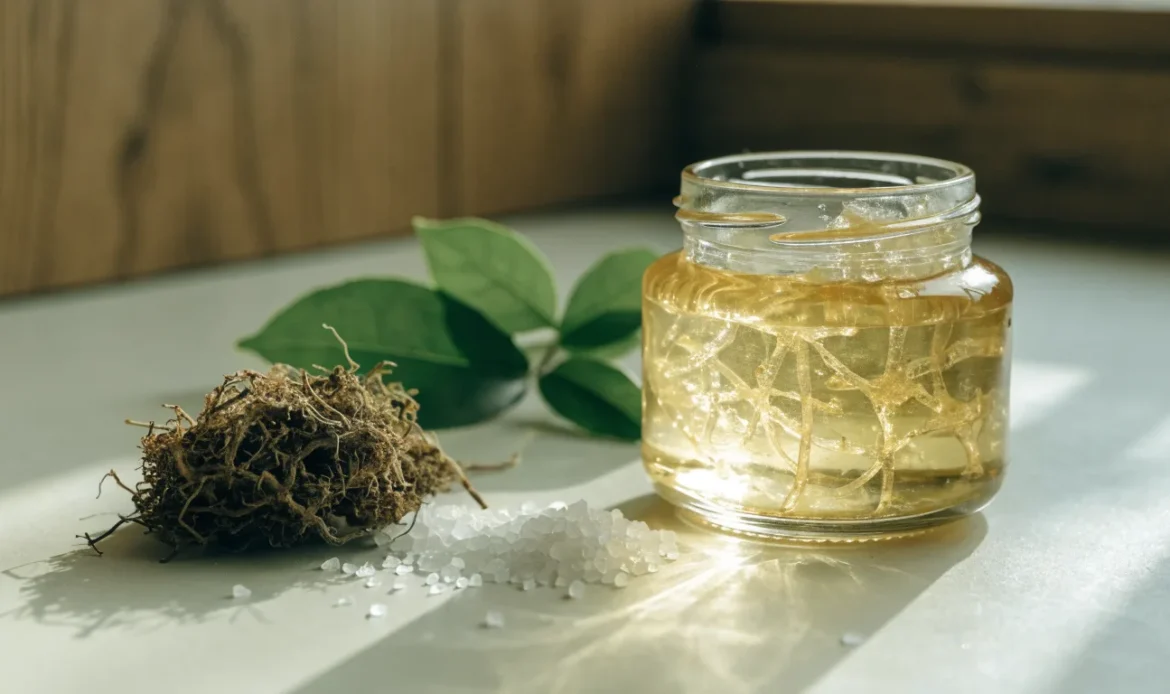
Short answer: Mango sea moss is sea moss combined with mango flavor or real mango. It appears in many formats—gels, powders, gummies, and more. Read the rest of this guide to learn the differences, what to check on labels, and how to choose a product safely.
Why this guide? Many products call themselves mango sea moss. The words can mean different things. This guide explains the formats, the label checks that matter, and the safety questions to ask before you buy.
What “mango sea moss” usually means
- At its simplest, it is sea moss paired with mango flavor or real mango fruit.
- It can be a flavored sea moss gel, a powder mix with mango, a gummy that uses sea moss and mango flavor, or a blended fresh product that mixes soaked sea moss with mango puree.
- The term tells you the product includes two things—sea moss and mango flavor—but it does not prove the amount or quality of either ingredient.
What you can check right away: read the ingredient list. It will tell you whether a product uses whole mango, mango puree, natural mango flavor, or artificial flavor. It will also show any sweeteners or preservatives.
Common formats of mango sea moss
Each format works a little differently for storage, use, and dose control.
Gel or prepared puree
- Often made by soaking raw sea moss, cooking or blending it, and mixing in mango puree or mango flavor.
- Typically sold refrigerated or frozen if fresh.
- Good when you want to use it straight into smoothies or bowls.
Powder or instant mix
- Sea moss is dried and ground. Mango may be added as fruit powder or flavoring.
- Easier to store at room temperature.
- You mix it into drinks or recipes when you want more control over thickness.
Gummies
- Sea moss is used as an ingredient in gummy candies or supplements.
- Mango flavor can come from real fruit or from flavorings.
- These are a convenient, ready-to-eat form with variable added sugars.
Capsules or tablets
- Sea moss is processed into a powdered extract or dried powder inside capsules.
- Mango flavor is rare here; products labelled “mango” may have mango flavoring elsewhere in the product line.
- Good for people who want a fixed dose and minimal preparation.
Fresh blended or raw mixes
- Some makers blend soaked sea moss with fresh mango and sell it fresh or frozen.
- These are perishable and often need refrigeration or freezing.
How mango is added: real fruit vs. flavoring
Look for clear language on the label:
- “Mango puree” or “mango concentrate” means real fruit was used.
- “Natural mango flavor” usually means concentrated flavor from fruit or other natural sources.
- “Artificial mango flavor” is a lab-made flavor.
- Fruit powders can be freeze-dried mango, which keeps more fruit fiber and flavor than simple flavorings.
Knowing which one is used matters for taste, sugar, and how “natural” the product feels to you.
How mango sea moss is made (overview)
Homemade or small-batch methods:
- Soak raw sea moss in clean water to rehydrate.
- Rinse to remove sand and debris.
- Blend with fresh mango, a sweetener if desired, and water until smooth.
- Store in the fridge or freeze in portions.
Commercial methods:
- Dried sea moss may be rehydrated, heat-treated, and blended with mango puree or flavor.
- For powders, sea moss is dried and milled. Mango may be added as a powder or separate flavor packet.
- Gummies use sea moss extracts or powders mixed with gelling agents, sweeteners, and flavor.
What commercial labels can and cannot prove:
- A label can list ingredients and storage instructions.
- It cannot prove how much active nutrient is in each batch unless the maker provides lab results.
- For safety and accuracy, ask the brand for a batch Certificate of Analysis (COA) or third-party testing.
What to check on the ingredient label
Simple checks that tell you a lot:
- Ingredient order: items are listed by weight. The first few ingredients are the largest parts.
- Mango presence: is it mango puree, concentrate, powder, or “flavor”?
- Sweeteners: sugar, syrup, honey, or sugar alcohols affect flavor and calories.
- Additives: preservatives, colorings, and gelling agents will be listed.
- Allergens: check for tree nuts, dairy, soy, or other potential allergens.
- Storage notes: refrigerated? Keep frozen? Shelf-stable?
If labels are vague, contact the seller for details. Clear labels are a sign of transparent manufacturing.
Safety, testing, and what the science says
Seaweed products, including sea moss, vary a lot in what they contain. That includes nutrients and other elements. Because of that variability, testing matters.
- Seaweed can be a source of nutrients that vary widely by species, place harvested, and processing (nutrient content is not the same across products) [1].
- Seaweed is also a source of iodine. Amounts can be high enough to affect people who are sensitive to iodine, such as those with thyroid conditions [2]. If you have a thyroid condition, ask a healthcare provider before using seaweed products.
- Seaweed may accumulate minerals or contaminants from the water where it grew. That means heavy metal or contaminant levels may vary. Some national surveys monitor iodine and contaminants in seaweed products to guide safety recommendations [3].
- Consumer supplements and foods labeled as sea moss vary in their testing and labeling. Look for third-party testing or clear Certificates of Analysis (COAs) from the seller [4].
What testing can show:
- Lab tests can show iodine levels, heavy metals, microbial contaminants, and nutrient content for a batch.
- A COA tied to a batch lot number is the clearest proof the product was tested.
What testing cannot prove:
- One COA does not guarantee every batch will be identical. Ask how often the product is tested and whether each lot is tested.
- A label claim alone does not prove purity or safety without linked lab documentation.
Practical safety steps:
- Ask the brand for third-party COAs that match the product lot.
- If you have thyroid issues, talk with a provider before use because iodine in seaweed can affect thyroid function [2][5].
- If you are pregnant, nursing, or taking medication, consult a healthcare provider before trying a new supplement or concentrated seaweed product.
References in this section: Harvard (seaweed variability and nutrients) [1]; iodine and thyroid caution [2]; national monitoring of iodine in products [3]; supplement safety and variable products [4]; review on excessive iodine and seaweed [5].
Choosing a format: short pros and cons
Here is a quick comparison guide. Use it to match product features to what you need.
| Format | Ease of use | Storage | Sugar/added ingredients | Dose control | Best if you want |
|---|---|---|---|---|---|
| Gel / prepared puree | High — ready to add | Often refrigerated or frozen | Can have added sugar | Medium — spoonfuls vary | Fresh texture in smoothies or bowls |
| Powder / instant mix | Medium — needs mixing | Shelf-stable if dry | Varies — check label | High — you measure scoops | Long storage and DIY control |
| Gummies | Very easy | Shelf-stable | Often has added sugar | Low — single gummy doses | Convenience and portability |
| Capsules / tablets | Very easy | Shelf-stable | Low (usually none) | High — fixed dose | Easy dosing, no prep |
| Fresh blended | Fresh taste | Needs refrigeration/freezing | Can be low if unsweetened | Medium | Fresh fruit-sea moss blend |
Notes:
- “Storage” depends on the product’s processing. Always follow the label.
- “Dose control” refers to how easy it is to measure an amount of sea moss per serving.
- This table helps you weigh taste, convenience, and storage.
Practical buying checklist
Use this checklist before you buy mango sea moss. Check items off as you evaluate a product.
- Ingredient list is clear and specific (e.g., “mango puree,” “sea moss (Chondrus crispus)” or similar).
- Sugar and sweeteners are listed and acceptable to you.
- Label shows storage instructions (refrigerate, freeze, or room temp).
- The seller offers batch COAs or third-party lab results for contaminants and iodine.
- The product lists a lot number or batch number tied to testing documents.
- Packaging shows best-by or manufacturing date and clear lot tracking.
- The brand lists processing methods (dried, rehydrated, blended, heated) or responds when asked.
- If you have allergies or medical concerns, ingredient and allergen statements are clear.
- The seller explains whether mango is real fruit or flavoring.
- Return policy and contact info are easy to find on the product page.
- For bulk or wholesale purchases, ask about consistent testing across lots and sample availability.
Use the checklist to compare two or three products side by side.
Questions to ask the seller
If product pages are vague, send these short questions before buying:
- Can you provide the Certificate of Analysis for the lot I would receive?
- Is the mango real fruit puree, concentrate, or flavor?
- Where was the sea moss harvested or sourced? (Note: companies vary in what they can share; source location is one piece of transparency.)
- How is this product processed and preserved?
- What storage conditions do you recommend after opening?
- Are there added sugars or preservatives? If so, what are they?
- Do you have a shelf-life or best-by date for opened product?
Clear answers to these questions help you judge transparency and risk.
How to use mango sea moss safely
- Follow the serving size on the product label. Labels reflect how the product maker designed it.
- If you are new to seaweed products, start with a small amount and wait several days to see how you tolerate it.
- If you take thyroid medication or have a thyroid condition, speak with your healthcare provider. Seaweed can be a significant source of iodine and affect thyroid function in some people [2][5].
- Keep perishable products refrigerated or frozen as the label instructs.
- Avoid mixing multiple concentrated seaweed products at once without checking total iodine intake.
Do not rely on product labels for medical advice. For personal medical questions, talk to a licensed provider.
Storage and basic shelf tips
- Dry powders: store in a cool, dry place away from sunlight. Use within the time recommended by the maker.
- Prepared gels and fresh blends: usually need refrigeration or freezing. Follow the label and use within the recommended time after opening.
- Gummies and capsules: follow the manufacturer’s storage recommendations; most are shelf-stable but can degrade if heat or humidity are extreme.
- If smell, color, or texture changes unexpectedly, stop using and check the brand’s guidance or contact the seller.
Where to buy — a quick buying path
- Local natural food store or market: you can often inspect labels in person and ask staff questions.
- Online brand store: look for full product pages, clear labels, and COAs.
- Wholesale suppliers: if buying bulk, request lot testing and sample testing schedules.
Before buying, compare at least two products using the checklist above.
Helpful next guides
- Learn more about sea moss basics and preparation on our main learning page: Learn.
- Browse product formats and current offerings: Shop.
- If you buy in bulk, contact our wholesale team for product and testing details: Wholesale.
- Have questions or need more specifics? Reach out via our contact page: Contact.
You can also return to our home page for more resources: [/].
Conclusion
Mango sea moss means sea moss plus mango flavor or fruit. It comes in many formats: gels, powders, gummies, capsules, and fresh blends. Know what you want—taste, convenience, or strict dose control—and check clear labels. Ask for batch Certificates of Analysis if iodine or contaminants are a concern. If you have a thyroid condition or other medical concerns, talk to a healthcare provider before using seaweed products. Use the checklist and format guide above to compare products and make a safer choice.
Frequently asked questions
Is mango sea moss the same as plain sea moss?
No. Mango sea moss includes mango flavor or fruit in addition to sea moss. Plain sea moss has only sea moss and perhaps water or a preservative. Read the ingredient list to see what is added.
Does mango sea moss contain iodine?
Seaweed can contain iodine. The exact amount varies by species and batch. If iodine content matters to you, ask the seller for batch testing or a COA. People with thyroid issues should talk to their provider before using seaweed products [2][5].
Can I make mango sea moss at home?
Yes. A common method is to soak raw sea moss, rinse it, and blend with fresh mango until smooth. If you make it at home, use clean water and good food hygiene. Store it in the fridge or freeze in portions and use promptly.
How long does mango sea moss last?
Shelf life depends on format and processing. Dry powders last longer at room temperature. Prepared gels or fresh blends usually need refrigeration or freezing. Follow the maker’s storage instructions and use-by date.
Are there hidden sugars in mango sea moss products?
Some products add sweeteners or syrup. Check the ingredient list and nutrition facts to see total sugars. Products marked “mango” may include sweeteners for taste.
How can I tell if a product is tested for contaminants?
Look for a Certificate of Analysis (COA) linked to a lot number or ask the brand to provide lab reports. COAs show what tests were done and the results. If a seller cannot or will not share testing details, consider that when making your choice [4].
References
- Harvard T.H. Chan School of Public Health, “Seaweed.” https://nutritionsource.hsph.harvard.edu/seaweed/
- Smyth PPA. “Iodine, Seaweed, and the Thyroid.” European Thyroid Journal, 2021. https://pmc.ncbi.nlm.nih.gov/articles/PMC8077470/
- Food Standards Australia New Zealand, “Survey of iodine levels in seaweed and seaweed containing products,” updated 2025. https://www.foodstandards.gov.au/science-data/monitoring-safety/surveyofiodinelevels
- Operation Supplement Safety, “Sea Moss in Dietary Supplements.” https://www.opss.org/article/sea-moss-dietary-supplements
- Blikra MJ et al. “Consequences of acute and long-term excessive iodine intake: A literature review focusing on seaweed as a potential dietary iodine source.” 2024. https://doi.org/10.1111/1541-4337.70037