
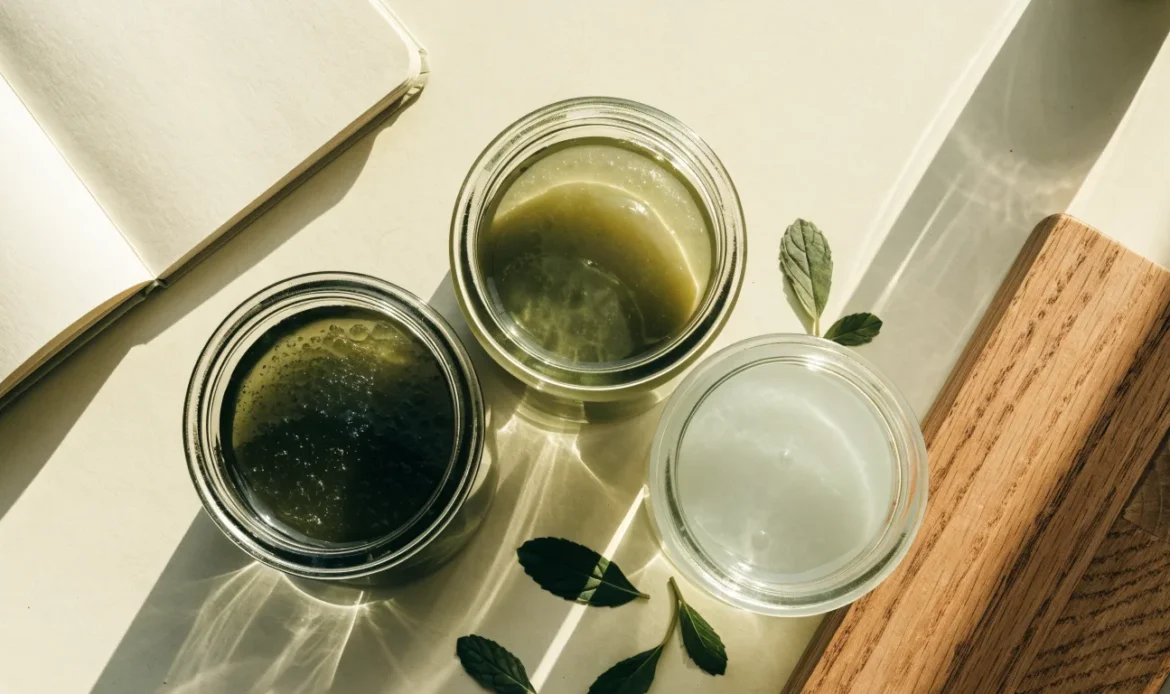
Short answer: “cgi sea moss” is not a standard industry name for a sea moss product. It most often appears as a label, image tag, or shorthand used by sellers. If you see the term, ask the seller what they mean: is it a photo style (computer-generated imagery), a brand shorthand, or a specific product code? The right questions and a few checks will help you decide if the product suits your needs.
This article explains common meanings of the phrase, the main sea moss formats you may find, how to check product claims, what labeling and lab tests matter, and a practical checklist to guide your next step.
What people mean when they say “cgi sea moss”
“CGI” commonly stands for computer-generated imagery. In that case, “cgi sea moss” might refer to a stylized image of sea moss used in product marketing. It could also be:
- A product name or brand initials that use CGI in their label.
- A seller shorthand for a specific batch or processing method.
- A mis-typed or abbreviated term on a marketplace listing.
There is no universal definition for “cgi sea moss” in trade or scientific literature. If the term appears on a product page, it does not by itself prove anything about the sea moss’s origin, quality, processing, or safety.
What you can check right away
- Look for a clear product description near the term. Does the seller explain what “CGI” means?
- Look for lab tests, ingredient list, and photos of the real product.
- If you find only stylized images and no specs, that is a reason to ask more questions before buying.
Why clarity matters
Sea moss products vary by format, processing, and labeling. Those differences affect how you prepare, store, and use the product. Some seaweed types can contain high and variable iodine or other naturally occurring compounds. The scientific literature and food-safety agencies show wide variation among seaweed products and recommend measuring content rather than assuming levels. See the Harvard nutrition overview and several reviews about iodine and seaweed for more context [1][2][5].
A label that uses shorthand like “cgi” without detail makes it hard to assess the product. Good sellers provide clear, testable claims or direct answers to questions about origin, processing, and safety testing.
Common sea moss formats and how to tell them apart
Sea moss is sold in several formats. Below is a simple table to help you compare formats and what to look for in a product description.
| Format | What it looks like | Typical uses | Storage & buyer checks |
|---|---|---|---|
| Raw / fresh sea moss | Wet clumps or strands; feels slippery | Make fresh gel, cook in recipes | Ask about harvest date, storage, refrigeration; request photos of the actual batch |
| Dried whole sea moss | Shriveled strands or pieces | Rehydrate for gel or cooking; long shelf life when dry | Confirm drying method; ask for origin and handling notes |
| Sea moss gel | Smooth, spreadable gel in jars | Drink, mix into foods | Check ingredient list (pure sea moss + water vs added ingredients); ask for refrigeration guidance |
| Powder | Fine dried powder | Smoothies, capsules, baking | Verify grind method and if anything added; ask for particle size and solubility notes |
| Capsules / tablets | Pills in bottles | Convenience supplement format | Ask for ingredient list, dose per capsule, third-party testing |
| Blends (sea moss + herbs) | Powder or mixed gel | Combination uses | Check full ingredient breakdown, and allergen info |
This table helps you match what you see on a product page to what you actually want. For example, a listing that says “cgi sea moss – gel” should explain whether the gel is made from whole sea moss, extracts, or added gums.
How to tell if product images are CGI (computer-generated imagery)
If “cgi” means a marketing image, you may want to know whether the product photos are real or digitally created. Real product photos matter when you want to confirm texture, color, and packaging.
Signs that an image may be CGI
- The object looks too perfect: identical texture and lighting across different photos.
- Repeating patterns or cloned areas in the image.
- Lighting and shadows that don’t match a normal product photo (hard shadows or overly diffuse glow).
- No packaging details like lot numbers, seals, or labels shown clearly.
Limitations: Visual checks cannot prove product identity, safety, or composition. A photo that is real-looking could still be a product with undisclosed additives or with different origin than claimed. The only reliable proofs for composition and safety are documents such as batch certificates and lab reports.
What the science and food agencies say about seaweed and iodine
Seaweeds, including those sold as sea moss, can contain varying levels of iodine and other nutrients. Iodine levels vary by species, location, and processing. Several reviews and surveys highlight this variability and potential for high iodine in some seaweed products. Key points from reputable sources:
- Seaweed contains iodine and other minerals, but the amount varies widely by type and harvest [1].
- High or inconsistent iodine intake can affect thyroid function; scientific reviews discuss the link between seaweed iodine and thyroid outcomes [2][5].
- Food-safety surveys find that iodine levels in seaweed and seaweed products can be highly variable, and testing can help identify high-iodine items [3].
- Guidance on sea moss supplements notes variability in supplements and the importance of proper labeling and testing [4].
Because of this variability, it is reasonable to ask a seller for lab results if you have concerns about iodine or other contaminants.
Practical buyer checklist: what to ask or look for about “cgi sea moss”
Use this checklist when a product page says “cgi sea moss” or you are uncertain about a listing.
- Product identity
- Ask: What species (scientific name) is this sea moss?
- Ask: Is the product whole seaweed, gel, powder, or capsule?
- Origin and harvest
- Ask: Where was it harvested? Is location approximate or a specific region?
- Ask: Was it wild-harvested or farmed?
- Processing and handling
- Ask: How was it processed (sun-dried, oven-dried, freeze-dried, blended)?
- Ask: Are there any added ingredients or preservatives?
- Safety testing
- Ask: Is there a certificate of analysis (COA) or third-party test for heavy metals, microbes, and iodine?
- Request: If provided, are the test dates and batch numbers visible?
- Packaging and labeling
- Check: Is there a lot number, harvest or pack date, and a clear ingredient list?
- Check: Are storage instructions present?
- Photos and marketing
- Ask: Are the product photos of the actual batch or are they stylized/CGI?
- Request: Can you get a new photo of your specific lot before purchase?
- Returns and support
- Ask: What is the return policy if the product is not as described?
- Ask: Is there a contact person or phone number for follow-up?
This checklist helps you separate marketing from product facts. If the seller cannot answer these questions, proceed with caution.
How to read a lab report or certificate of analysis (COA)
If a seller provides a COA, a few simple checks help you judge its usefulness.
- Match: Does the COA show a batch or lot number that matches the product you would receive?
- Tests: Look for tests for iodine, heavy metals (lead, cadmium, mercury), and microbial screening. The presence of these tests is useful information.
- Date: Is the COA recent and within a reasonable range of the product’s pack date?
- Lab accreditation: Is the testing lab named and accredited? Accreditation lends credibility, though absence does not automatically mean the product is unsafe.
- Values: Remember that numerical results are useful only if you understand the units and serving size. If unsure, ask the seller to explain.
No COA is a guarantee of safety, but it is a stronger signal than no testing at all.
Format decision guide: which sea moss format might suit you?
Use this short guide to decide which format fits your plans. This is not advice for health outcomes. It’s a practical match of format to use.
- You want to make your own gel and control ingredients → Choose dried whole or fresh sea moss.
- You want convenience and measured doses → Choose capsules or standardized powder from a seller who supplies COAs.
- You plan to use sea moss in cooking or smoothies regularly → Powder or gel may be easiest.
- You need bulk for resale or manufacturing → Ask about wholesale options and batch traceability.
If you are buying for resale, ask for wholesale documentation and bulk sampling. For personal use, small pack sizes let you test quality before committing.
Storage and basic preparation tips
General, practical notes—follow the seller’s instructions first.
- Dried sea moss: Store in a cool, dry place. Rehydrate in clean water before use.
- Fresh sea moss: Keep refrigerated and use by the date given by the seller.
- Sea moss gel: Keep refrigerated; check ingredient list for other additions. Discard if smells off or shows visible mold.
- Powder and capsules: Store per label, typically in a cool, dry place away from direct sunlight.
Avoid leaving perishable products at room temperature for extended periods. If a product lacks storage instructions, contact the seller before using.
What the available information cannot prove
- A photo, even of the exact product, cannot prove safety or composition. Only appropriate lab analyses can measure iodine, heavy metals, or microbial contamination.
- A label can state an origin or species, but without verification it is a claim, not proof.
- The term “cgi sea moss” alone does not reveal processing methods or nutrient content.
When in doubt, request supporting documents and, when necessary, consult a qualified tester or food-safety adviser for interpretation.
Next questions that help narrow the choice
After you read a product page, these questions help you move forward:
- Do I need a product tested for iodine or heavy metals for my situation?
- Do I prefer raw seaweed I can prepare myself, or a convenient finished product?
- Will I use sea moss occasionally or regularly? (This helps decide format.)
- Do I want to buy a small sample first before larger quantities or wholesale?
If you are ready to shop or want more learning:
- Explore our learning hub at /learn/ for format guides and preparation tips.
- Browse available products at /shop/ to compare formats.
- For larger orders, look at /wholesale/ for bulk options.
- If you need help clarifying a listing, reach out via /contact/.
- Return to our homepage for an overview: /.
Conclusion
“cgi sea moss” is a label with no single meaning. It may refer to marketing imagery, a brand shorthand, or a product code. The best way to decide if a listing is right for you is to ask clear, specific questions. Request the species name, processing details, batch numbers, and any lab testing for iodine or contaminants. Use the format comparison and checklist here to match a product to your needs. If you need help next, our pages at /learn/, /shop/, and /wholesale/ can help you compare formats and ask the right follow-up questions, or contact us at /contact/ for direct support.
Continue reading
Frequently asked questions
Is “cgi sea moss” a different species of seaweed?
Not necessarily. “CGI” is not a species name. It is usually a label or image shorthand. Ask the seller for the scientific name or species if you need to know.
Could “cgi” mean the picture is computer-generated?
Yes. “CGI” often stands for computer-generated imagery. If a seller uses CGI images, request photos of the actual product or ask for more details.
Does sea moss contain iodine?
Seaweeds can contain iodine, and levels vary widely by species and source [1]. If iodine intake is a concern for you, ask the seller for lab test results that state iodine content [3][5].
Should sea moss supplements have lab testing?
It is best practice for supplements to be tested and for sellers to provide COAs that match batch numbers. Guidance on variability in supplements underscores the value of testing and clear labeling [4].
Can I tell quality from the price or product photo?
Price and photos alone are not reliable indicators of quality. Use the checklist in this article to request batch-specific information and lab tests.
What if a seller refuses to provide product or test information?
If a seller cannot or will not answer reasonable questions about origin, processing, or testing, consider choosing another seller who is transparent.
References
- [1] Harvard T.H. Chan School of Public Health, “Seaweed.” https://nutritionsource.hsph.harvard.edu/seaweed/
- [2] Smyth PPA. “Iodine, Seaweed, and the Thyroid.” European Thyroid Journal, 2021. https://pmc.ncbi.nlm.nih.gov/articles/PMC8077470/
- [3] Food Standards Australia New Zealand, “Survey of iodine levels in seaweed and seaweed containing products,” updated 2025. https://www.foodstandards.gov.au/science-data/monitoring-safety/surveyofiodinelevels
- [4] Operation Supplement Safety, “Sea Moss in Dietary Supplements.” https://www.opss.org/article/sea-moss-dietary-supplements
- [5] Blikra MJ et al. “Consequences of acute and long-term excessive iodine intake: A literature review focusing on seaweed as a potential dietary iodine source.” 2024. https://doi.org/10.1111/1541-4337.70037