
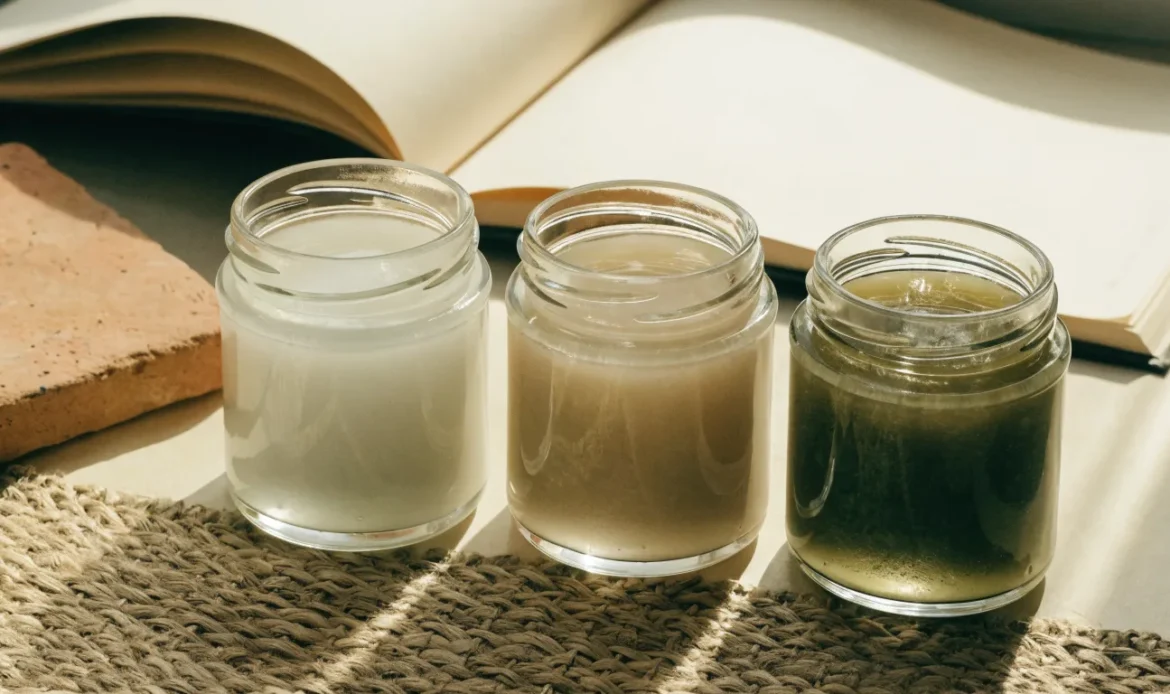
Short answer first: “Cardinal green sea moss” is a market name you might see on product labels. It usually points to a greenish seaweed sold for food or supplements. The name alone does not prove species, harvest location, or safety. If you plan to buy it, ask for the scientific name, harvest and handling details, and lab reports. These help you make a clearer choice.
This page shows what to check. It explains what information helps and what it cannot prove. Use the checklist below to guide questions you ask suppliers or farmers.
What people mean by “cardinal green sea moss”
- “Cardinal green” is a descriptive label. It refers to the color and may be used for marketing.
- Sellers use common names for many seaweeds. The same name can mean different species in different places.
- A color or trade name does not guarantee a species, harvest method, or safety.
Why this matters: species and environment affect what is in the seaweed. Iodine and mineral levels can vary a lot by species and place. Heavy metals and microbes can also vary. To judge a product, you need more than the name.
(For general background on seaweed nutrition and safety, see Harvard’s overview on seaweed [1].)
How to evaluate origin and species
Here are direct, practical steps to check what you are buying.
Ask for the scientific name
- Request the Latin name (for example, a name like Gracilaria sp. or Chondrus sp.). Many sellers label products with the common name but not the scientific name.
- Why it helps: the scientific name gives a starting point for research on typical traits and risks for that species.
- What it cannot prove: a name on a label does not prove that every batch contains only that species.
Ask how origin is documented
- Ask for harvest location details: region, water body, GPS coordinates if available, and harvest date or season.
- Ask if the supplier keeps harvest logs or lot records.
- What this tells you: where it was collected and when.
- What it cannot prove: a location on a label can be wrong or incomplete unless backed by chain-of-custody records.
Look at the product visually
- Fresh or dried pieces show different features. Leaves, branch patterns, and texture can hint at species.
- Color alone is not reliable. Green tones can occur in different species and at different times of year.
Ask about species verification methods
- Some suppliers use morphological identification (looking at the shape and structure).
- Others use lab methods like DNA barcoding to confirm species. Ask if they used this and for a report.
- What DNA tests prove: they can confirm species for the tested sample.
- What they do not prove: a single test may not represent all batches unless routine testing is done.
How handling can affect quality
Handling from sea to package matters. Here are the points to ask about.
Harvest method
- Was the seaweed hand-harvested or machine-harvested?
- Was it wild-harvested or farmed?
- Why it matters: harvest method affects damage to the plant and the risk of mixing in sand, other seaweeds, or debris.
Washing and cleaning
- Ask how the product is cleaned after harvest.
- Good practice: multiple rinses in clean water to remove sand and small organisms.
- What to check: whether freshwater or seawater was used and if the process is documented.
Drying and handling
- Ask if the seaweed was sun-dried, air-dried, or heat-dried.
- Drying method affects shelf stability and the chance for microbial growth if not done properly.
- Ask how long after harvest drying began, and at what temperature if heat-dried.
Storage and packaging
- Ask about storage conditions before sale. Look for lot numbers and dates.
- Packaging that keeps seaweed dry and away from sunlight helps keep quality.
- Cold storage is used for fresh or living seaweed. Dried seaweed is often stored at ambient temperature if dry and sealed.
Forms you may see
- Raw or fresh: short shelf life. Often needs cold storage.
- Dried whole: most common for long transport.
- Powder or flakes: ground dried seaweed.
- Gel or prepared foods: made from soaked or cooked seaweed.
- Each form has different handling and testing needs.
Documentation and lab testing to request
A supplier can provide documents that help you assess safety and consistency. Here is what to ask for and why.
Certificate of Analysis (COA)
- A COA shows lab results for a tested sample or lot.
- Typical tests include heavy metals, microbial counts, and sometimes iodine.
- What a COA proves: results for the tested sample at the time of testing.
- What a COA does not prove: it does not guarantee every lot or every package unless testing is routine and covers each lot.
Heavy metals testing
- Heavy metals such as arsenic, cadmium, lead, and mercury are commonly tested.
- Ask for specific test results and detection limits.
- Note: total arsenic and inorganic arsenic are different tests. Ask which was measured.
Iodine testing
- Seaweed can contain high and variable iodine levels. This is especially true for some species and locations [2][5].
- Ask for iodine concentration on the COA. If not shown, request the lab to test for it.
- Regulatory bodies study iodine variability in seaweed. For example, food safety surveys track iodine levels across products [3].
Microbiology
- Tests for bacteria, yeast, and molds are common for products that may be eaten raw or minimally processed.
- Ask if the sample was tested for pathogens relevant to food safety.
Sampling and dates
- Check the date of the lab report and the lot number tested.
- A COA dated years ago is not proof of current lots.
- Ask how frequently the supplier tests and how they select samples.
Independent labs and methods
- Ask which lab performed the tests and what standards or methods were used.
- Results from an accredited lab are more transparent and easier to interpret.
- A lab name and method lets you follow up and verify.
(See Operation Supplement Safety for general notes on sea moss product safety and labeling [4]. The scientific literature also documents risks from excessive iodine in some seaweeds [2][5].)
What a buyer can check vs. what cannot be proven
Things you can check:
- Scientific name on the label.
- Harvest date and location details.
- Cleaning and drying methods.
- COA with lot number, test dates, and lab name.
- Photos of product and packaging.
- Storage and packing conditions.
Things that documents cannot fully prove:
- That every bag or jar matches the tested sample.
- Exact years of continuous testing unless the supplier provides regular reports.
- Absence of contamination between harvest and packaging without chain-of-custody records.
- Long-term stability unless the supplier provides shelf-life studies.
Next useful question: ask for the most recent COA showing the lot number on the product you will receive and the date the sample was taken.
Practical decision checklist: what to ask a supplier before you buy
Use this checklist when evaluating a product labeled “cardinal green sea moss.”
| Question to ask | Why it matters | Red flag |
|---|---|---|
| What is the scientific name (Latin name)? | Helps identify species traits and typical risks. | Only a common name is given. |
| Where and when was this lot harvested? | Location and date affect composition and safety. | No harvest date or vague location (e.g., “Caribbean”). |
| Can you provide a COA with lot number and test date? | Shows lab results for that sample. | COA missing or lab not named. |
| What tests are on the COA? (Iodine, heavy metals, microbes) | Some tests matter more depending on use. | COA only lists nutritional info, no safety tests. |
| Which lab did the testing and what methods were used? | Identifies method quality and traceability. | No lab name or non-accredited lab with unknown methods. |
| How was the seaweed cleaned and dried? | Cleaning and drying affect safety and shelf life. | No details or conflicting answers. |
| Do you do routine batch testing? How often? | Ongoing testing reduces uncertainty. | No routine testing program. |
| Can you show photos of the product with lot number date-stamp? | Visual match of product to documents. | Supplier refuses or no photo with lot info. |
| Are there chain-of-custody or harvest logs? | Helps verify origin and handling steps. | No records kept. |
| What storage and shipment conditions do you use? | Poor storage can damage product. | No packaging or storage info provided. |
Use this table when comparing two or more suppliers. Score them on each item. Choose the supplier that answers clearly and shows documents.
How to read a lab result (COA) simply
- Check the sample or lot number and the date of testing.
- Look for tests you care about: iodine, heavy metals, and microbiology.
- See if the lab is named and accredited.
- Note units and detection limits. If a value is “<” (less than), check the detection limit.
- If something looks odd, ask the supplier for an explanation or for a repeat test.
Remember: a COA is a picture of one sample at one time. It does not guarantee every package unless the supplier tests each lot.
Practical handling tips after you buy (simple and safe)
- Keep dried seaweed in a cool, dry place. Seal it well.
- If it smells bad or has visible mold, do not use it.
- For fresh or raw forms, follow storage advice on the package. Fresh products usually need refrigeration.
- Rinse dried seaweed before use if the producer recommends it. Rinse to remove sand and debris.
- If you plan to use it in foods or supplements, follow good manufacturing practices and local regulations.
Note: If you have medical questions about iodine or diet, talk to a health professional. Seaweed can contain high iodine in some species and places [2][5]. Food safety surveys also track iodine levels across seaweed products [3].
Conclusion
“Cardinal green sea moss” is a useful label only if it comes with clear facts. Names and color do not tell the whole story. Ask for the scientific name, harvest and handling details, and a recent COA with lot number and lab name. Check for tests that matter to you, especially iodine, heavy metals, and microbiology. Remember that a COA represents the tested sample and not every package unless testing is routine. If you buy wholesale, ask for batch testing and chain-of-custody records.
If you want to learn more about our farm practices, visit /our-farm/. For general guides about seaweed and safety, see /learn/. To see product forms and buying options, visit /shop/ or /wholesale/. If you have questions, contact us at /contact/. You can also return to our home page at /.
Continue reading
Frequently asked questions
Is “cardinal green sea moss” a species name?
No. It is a trade or common name. Ask the seller for the scientific (Latin) name to learn more about the species.
How can I tell if a batch is safe to eat?
Ask for a recent COA with lot number, and check for tests for heavy metals, iodine, and microbes. Also ask about harvest and handling. A COA shows the tested sample, not every package.
Can seaweed have too much iodine?
Yes. Some seaweeds can contain high iodine. This varies by species and place. Ask for an iodine test on the COA if you are concerned [2][5].
Does color tell me anything about safety or nutrition?
Color tells you little about safety or exact species. Color is affected by season, drying, and species. Use documents and tests instead of color alone.
Should I get independent testing?
Independent testing can help, especially for large purchases. If you plan to resell or use a lot, test the specific lot you will receive.
What if a supplier has no documents?
Treat that as a red flag. Lack of documentation increases uncertainty. Consider finding a supplier who provides harvest details and lab reports.
References
- [1] Harvard T.H. Chan School of Public Health, “Seaweed.” https://nutritionsource.hsph.harvard.edu/seaweed/
- [2] Smyth PPA. “Iodine, Seaweed, and the Thyroid.” European Thyroid Journal, 2021. https://pmc.ncbi.nlm.nih.gov/articles/PMC8077470/
- [3] Food Standards Australia New Zealand, “Survey of iodine levels in seaweed and seaweed containing products,” updated 2025. https://www.foodstandards.gov.au/science-data/monitoring-safety/surveyofiodinelevels
- [4] Operation Supplement Safety, “Sea Moss in Dietary Supplements.” https://www.opss.org/article/sea-moss-dietary-supplements
- [5] Blikra MJ et al. “Consequences of acute and long-term excessive iodine intake: A literature review focusing on seaweed as a potential dietary iodine source.” 2024. https://doi.org/10.1111/1541-4337.70037