
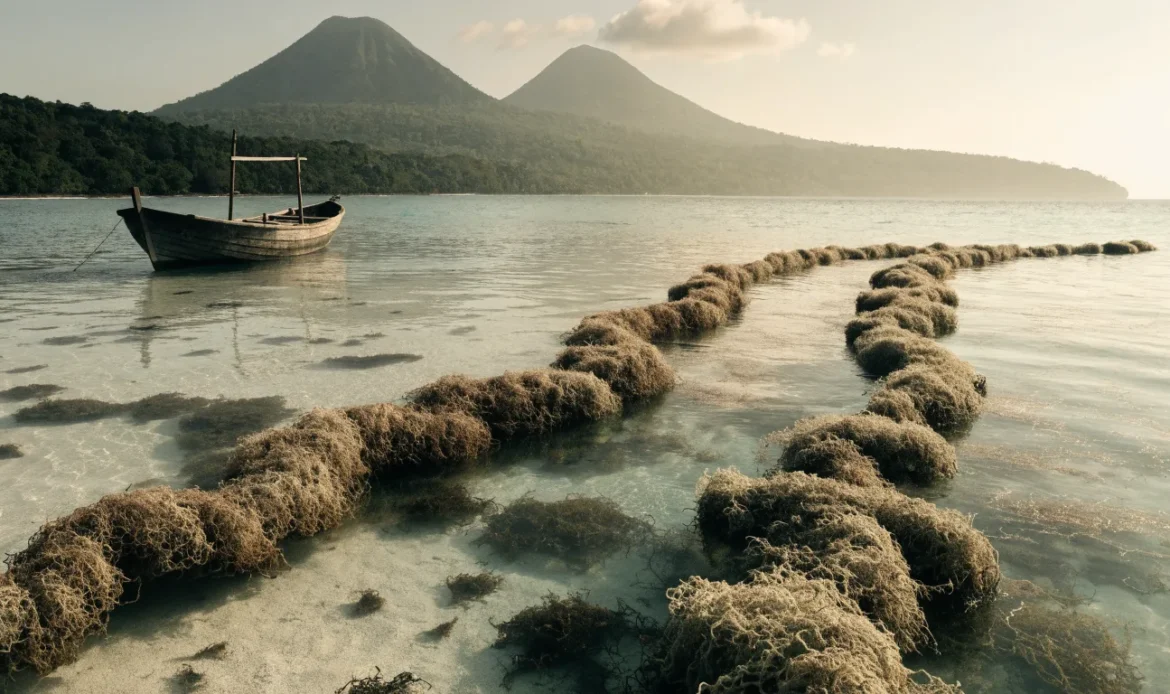
Short answer: When you see a product or story that cites the “Saint Lucia Sustainable Sea Moss Farming Project 2023 trial locations,” look for verifiable details. Ask for species name, trial dates, site maps or photos, batch numbers, handling steps, third‑party lab reports, and local permits. These items let you check the claim. If they are missing, treat the claim as incomplete and ask more questions before you buy.
This article explains what “trial locations” usually means. It gives a step‑by‑step way to check claims. It shows what tests matter and what they do not prove. It ends with a practical checklist and clear next steps.
What a “trial location” usually means
A trial location is a place used to test a new way to farm sea moss. Trials help people see if a method works in local water and weather. Trials may test:
- which species grow best,
- how to attach plants or seed to ropes or frames,
- how harvest timing affects yield,
- how to handle sea moss after harvest.
A trial can be small. It can be run by a farmer, a community group, a university, or a government agency. The name “trial locations 2023” tells you the year. It does not tell you the site, method, or results. You need more detail to judge the claim.
Why the name of the site and details matter
Where sea moss grows changes how it looks and how it should be handled. Site details matter for safety and for the buyer’s expectations. Key reasons include:
- Water flow and waves. Sheltered bays and open coasts give different growth.
- Nearby activities. Boats, fish farms, or construction can affect water quality.
- Species mix. Different seaweed species look alike to a casual eye. A Latin species name gives clearer identity.
- Handling needs. How fast sea moss moves from harvest to clean rinse matters for microbes and quality.
But site info alone does not prove safety or sustainability. You also need chain‑of‑custody notes and lab tests for real proof.
How to verify a claim step by step
Below is a clear path you can follow when a product or seller cites the Saint Lucia 2023 trials. Use these steps to ask for proof and to compare vendors.
- Ask for species ID.
- Request the Latin name (scientific name). Common names are often mixed up.
- If the seller cannot name the species, the claim is weak.
- Ask for trial dates in 2023.
- Trials done in a month or season can affect growth and quality.
- Dates help you match photos and lab reports.
- Ask for site evidence.
- Maps, GPS coordinates, or named bays/landmarks are useful.
- Dated photos of the site and the harvest should match the reported dates.
- Ask for handling steps.
- How was the sea moss rinsed?
- Was it sun‑dried, shade‑dried, or machine‑dried?
- How was it packed and stored?
- Ask for batch or lot numbers.
- A batch number links the product you buy to a harvest.
- Without it you cannot be sure the product came from the trial lot.
- Ask for third‑party lab reports.
- Look for a lab name and date on the report.
- Confirm the lab is accredited or recognized.
- Common useful tests include microbial screens and contaminant panels. Iodine testing is also important because iodine can vary a lot by species and site [1][2][5].
- Ask for permits or partner contacts.
- Was the trial run with local authorities or partners?
- A named partner or permit can be checked.
- Ask for a chain‑of‑custody or supply chain note.
- This shows how the sea moss moved from harvest to your product.
A seller who provides many of these items is easier to verify. If a seller refuses to provide any detail, it is harder to trust the claim.
What testing is useful — and what it cannot prove
Testing helps you assess safety and contents. But tests have limits. Here is a plain view.
Useful tests:
- Microbial tests. These show whether common bacteria are present after harvest and drying.
- Heavy metals (lead, cadmium, mercury). These check for contamination from water or human activity.
- Iodine measurement. Iodine levels can vary widely in seaweed. Batch testing tells you the iodine in that specific lot [1][2][3][5].
- Species ID, if available. DNA or expert ID helps avoid mislabeling.
What tests cannot prove:
- A test on one batch does not prove future batches are the same.
- A test report without a clear chain of custody does not tie to your product.
- Lab tests do not prove sustainability practices unless paired with documented methods and oversight.
Why iodine testing matters
- Seaweed can be a large source of iodine in a diet. Some species and sites have much more iodine than others. Public health groups and literature show iodine varies with species and location. For safety and diet reasons, batch testing for iodine is the correct step before you eat or use large amounts [1][2][5].
References on testing and iodine are available from public health and scientific sources [1][2][3][5]. These sources show why testing and caution are sensible.
How to read a lab report
A lab report can be short or detailed. Here is how to read it.
Look for:
- Name of the lab. Check if it is recognized or accredited.
- Date of the test. It should match the product lot date.
- Sample ID or lot number. This must match the batch or product you will buy.
- Methods used. Good reports list test methods. This helps you tell if the test is thorough.
- Numerical results and units. Check that the report shows numbers and units, not just “pass” or “fail.”
- Limits of detection. The report should show what the lab could detect.
Red flags:
- No lab name or no date.
- No matching lot number.
- Results that do not show units.
- Scans that are cut off or hard to read.
If you cannot read or verify a report, ask the seller to provide contact info for the lab or a clearer copy.
Species identity and labelling
Naming the species helps buyers know what they get. Sea moss or “Irish moss” are common labels. These labels do not always identify the species.
Ask for:
- The Latin name (for example, Chondrus crispus, Gracilaria spp., etc.). A Latin name is clearer than a local or market name.
- A note on whether the product is wild‑harvested or farmed. Farming and wild harvest have different practices.
- Photos of raw and dried product, so you can compare with known species images.
Why this matters
- Species differ in texture, color, and how they react to drying and cooking.
- Species also differ in natural chemistry, such as mineral and iodine content. Only testing will show composition for a given batch [1][2][5].
Handling and processing to ask about
How the product was handled after harvest is key. Poor handling can increase microbial load. Good handling helps preserve quality.
Ask for details on:
- Rinsing: Was the sea moss rinsed with clean sea water or fresh water?
- Cleaning: Were any foreign bits removed by hand or mechanical means?
- Drying: Was it sun‑dried, shade‑dried, or machine‑dried? Drying method affects shelf handling and microbial control.
- Packing: Was it packed in sealed bags, mesh bags, or open boxes?
- Storage: Where and how long was it stored before shipping?
These steps can be simple. Even small notes help you judge the seller’s care. But remember: documents about handling are not the same as lab numbers for safety. Both matter.
Environmental and legal checks to request
Trials that use coastal space should follow local rules. Ask for:
- Mention of permits or community agreements.
- Any environmental review or study notes.
- Names of local partners or authorities that were involved.
Why this matters
- Using coast space affects communities and habitats.
- Local rules exist to protect space and resources.
- A trial that follows local rules is easier to check and verify.
Absence of permits does not always mean harm. But it does mean the project documentation is incomplete.
A practical checklist you can use before buying
Use this checklist when a product claims the Saint Lucia 2023 trials as origin. Mark Yes or No. If you get several Yes answers, confidence is higher.
- Species Identification
- Latin name given: Yes / No
- Photo of raw plant provided: Yes / No
- Trial Timing and Site
- Trial dates in 2023 given: Yes / No
- Site map or GPS coordinates provided: Yes / No
- Dated photos of site and harvest: Yes / No
- Batch and Traceability
- Batch/lot number on product: Yes / No
- Document linking product to trial lot: Yes / No
- Chain of custody available: Yes / No
- Handling and Processing
- Rinsing method described: Yes / No
- Drying method described: Yes / No
- Storage/packing described: Yes / No
- Tests and Reports
- Third‑party lab report provided: Yes / No
- Lab name and date included: Yes / No
- Tests include microbial and contaminant panels: Yes / No
- Iodine testing included (if dietary concern): Yes / No
- Legal and Community
- Local permits or partner names given: Yes / No
- Community consultation mentioned: Yes / No
How to act on the checklist
- If most answers are Yes: the claim is stronger. You can still ask for copies of key documents.
- If many answers are No: ask the seller for more detail or choose a different product.
Questions to ask a seller — short scripts
Use these short scripts when you contact a seller. They are clear and polite.
- “Can you tell me the species by its Latin name and show a photo of the raw harvest?”
- “Do you have a batch or lot number that ties my product to the 2023 trial?”
- “Can you share dated photos or a map of the trial site?”
- “Do you have a third‑party lab report for this lot? Which lab and what date?”
- “How was the sea moss rinsed and dried after harvest?”
- “Were local permits or partners involved in the trial? Can you share contact details?”
Sellers who care about informed buyers will usually respond to these questions.
Decision guide: When to buy and when to wait
Buy when:
- The seller provides clear species ID.
- There is a batch number tied to the trial.
- You see matching lab reports with the lab name and date.
- Handling steps are reasonable and clear.
Wait or do not buy when:
- The seller refuses to provide photos, batch numbers, or tests.
- Lab reports are missing or do not match your lot.
- The seller uses vague buzzwords like “sustainable” with no documentation.
If you have specific health or dietary needs, ask your health or nutrition professional before using seaweed products. Public health sources explain the need for caution with iodine and potent minerals [1][2][3][5].
Conclusion
A label that says “Saint Lucia Sustainable Sea Moss Farming Project 2023 trial locations” can be a useful sign. But the phrase alone is not enough. Ask for species names, trial dates, site photos or maps, batch numbers, handling steps, third‑party lab reports, and any permits. Use the checklist to compare offers. If a seller provides clear, dated documents, you can check the claim for yourself. If details are missing, ask more questions or consider other products.
For more reading on how seaweed varies and why testing matters, visit our learning pages. To learn about our farm practices, see our Our Farm (/our-farm/) page. To browse products, visit Shop (/shop/). For wholesale inquiries, see Wholesale (/wholesale/). To learn more about seaweed science and safety, check our Learn (/learn/) resources. For direct questions, use our Contact (/contact/) page or return to Home (/).
Frequently asked questions
Does “Saint Lucia” on a label prove origin?
No. A country name tells you where a product claims origin. It does not show the exact site, species, or handling. Ask for batch info, photos, and lab reports.
Can I trust sun‑dried or natural drying?
Sun drying is common. It can be done well or poorly. Ask how drying was done and check microbial tests if you have safety concerns.
Is iodine in sea moss always high?
Iodine varies by species and site. Some seaweeds have higher iodine. Only batch testing shows iodine for a given lot [1][2][3][5].
What if a seller gives a lab report from 2022 or earlier?
Old reports do not prove the safety of a current batch. Ask for a report that matches the batch or the harvest date.
Are community and permit notes necessary?
They help show the project followed local rules. They also make verification easier. Lack of permits is a sign to ask more questions.
References
- Harvard T.H. Chan School of Public Health, “Seaweed.” https://nutritionsource.hsph.harvard.edu/seaweed/
- Smyth PPA. “Iodine, Seaweed, and the Thyroid.” European Thyroid Journal, 2021. https://pmc.ncbi.nlm.nih.gov/articles/PMC8077470/
- Food Standards Australia New Zealand, “Survey of iodine levels in seaweed and seaweed containing products,” updated 2025. https://www.foodstandards.gov.au/science-data/monitoring-safety/surveyofiodinelevels
- Operation Supplement Safety, “Sea Moss in Dietary Supplements.” https://www.opss.org/article/sea-moss-dietary-supplements
- Blikra MJ et al. “Consequences of acute and long-term excessive iodine intake: A literature review focusing on seaweed as a potential dietary iodine source.” 2024. https://doi.org/10.1111/1541-4337.70037