
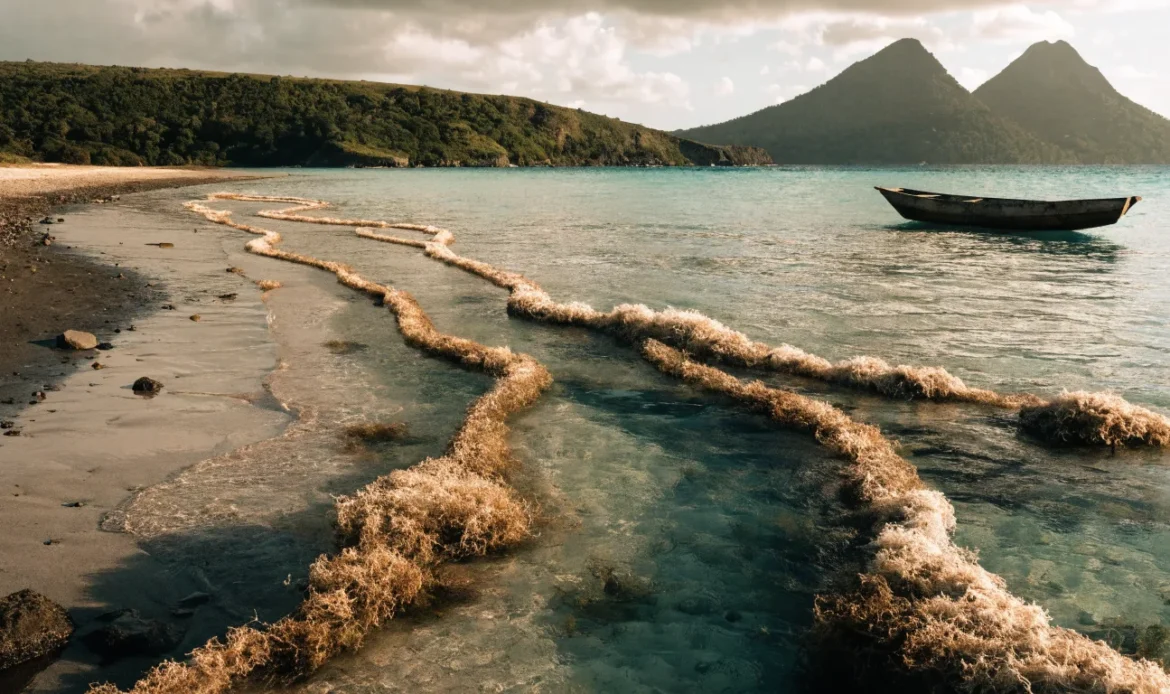
Short answer first: “St Lucia sea moss” refers to sea moss that is claimed to come from Saint Lucia. To judge that claim, look for clear harvest records, species ID, handling notes, and third-party testing. Color or name alone (for example “St Lucia gold sea moss”) does not prove origin or safety.
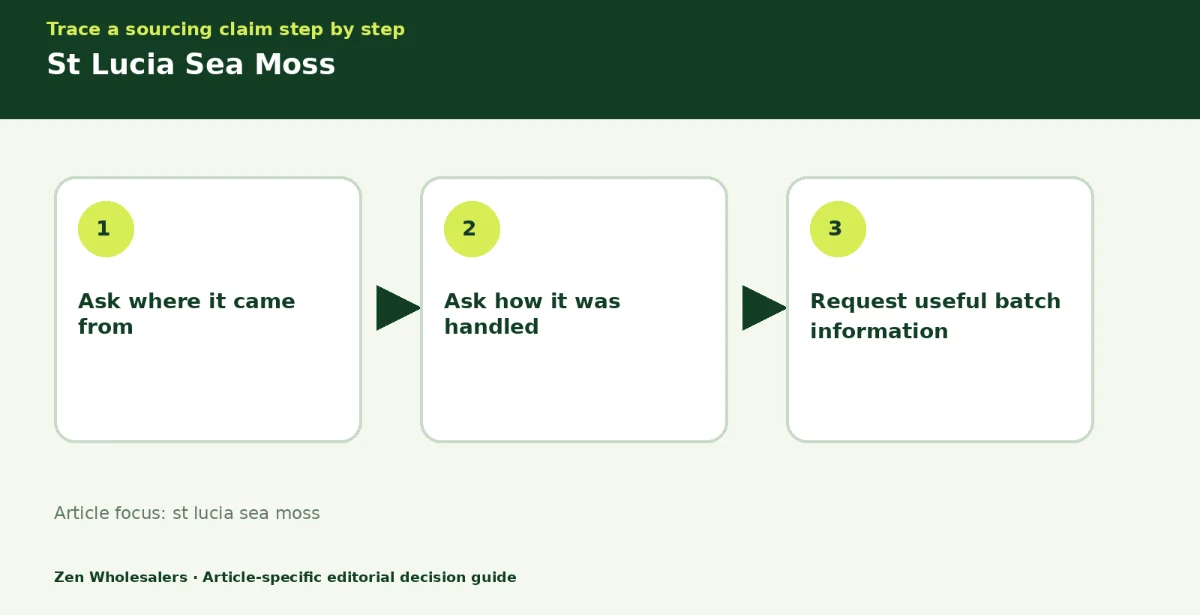
This page explains how to evaluate claims, what to ask sellers, and how products like dried sea moss, sea moss gel, and capsules are usually handled. The goal is to help you decide whether a supplier’s origin claim is believable and whether a product fits your needs.
What people mean by “St Lucia sea moss”
- The name usually points to the island Saint Lucia as the harvest location.
- Sellers may use phrases like “sea moss from St Lucia,” “sea moss St Lucia,” or product names such as “St Lucia gold sea moss.”
- These terms describe origin or marketing, not a regulated standard. Names can describe where sea moss was harvested, how it looks, or how it was processed.
Why this matters: origin affects local handling, harvest rules, and potential environmental conditions. But origin alone does not guarantee quality. What matters next are species ID, harvest and handling steps, and testing.
How to verify origin: records and traceability
You cannot verify origin by color or a label alone. Ask for documentation and clear answers. Reliable signs include:
- Harvest records: dates, specific harvest locations, and who did the harvest.
- Chain-of-custody notes: how the product moved from harvest to drying, to storage, to seller.
- Photos or GPS coordinates of harvest zones (note: photos alone can be copied; coordinates paired with dates are stronger).
- Packing and shipment notes showing point of export.
What these documents can and cannot prove:
- They can show a consistent story about where material came from.
- They cannot fully prove every batch without third-party audits or independent testing.
- If a seller cannot provide any harvest or handling information, treat origin claims as weak.
Species, appearance, and naming
Sea moss is a common name for several species of red algae. Different species can grow in the Caribbean. Things to check:
- Species identification: Ask the seller which species they harvest and how they identify it (visual ID, botanist report, or DNA test).
- Local names and product names: “Gold” often refers to a yellow-gold color in dried moss. Color is affected by species, water, and drying methods, not only by origin.
- Why species matters: Different algae have different textures, and some buyers prefer one species for how it behaves when turned into gel or powder.
Note: A color or trade name like “St Lucia gold sea moss” is a marketing description. It should be backed by a species ID or clear photos of the raw product and drying method if the seller claims that color is unique to a place.
Harvesting, handling, and drying — what to ask
Good handling reduces contamination risk and preserves the raw material. Ask these questions:
- How is the sea moss harvested? Hand-harvest is common for selective picking; mechanical methods are different and may be disclosed.
- How soon is it rinsed after harvest? Prompt rinsing reduces surface sand and debris.
- How is it dried? Sun-drying and low-heat drying are common. Ask for drying temperatures and time if available.
- Where is it processed? Local processing vs. export processing can change when and how the moss is handled.
- How is it stored? Look for temperature and humidity control notes.
What you can expect to be shared:
- General descriptions of harvest and processing steps.
- Photos or short videos of harvest and drying setups.
- Certificates that indicate standard food-safety processes, if the processor chooses to obtain them.
What sellers cannot prove easily:
- Exact harvest conditions for every batch unless they run traceability programs.
- Absence of environmental contamination without specific testing.
Testing and documentation to request
Testing provides specific, verifiable data. Useful documents include:
- Third-party lab testing for heavy metals, microbial contamination, and iodine content. This helps buyers assess product safety risks [1][2][4][5].
- Batch-level test reports rather than generic company statements.
- Certificates of analysis (CoA) showing the sample tested matches the batch number.
- Processing certificates showing temperature/time controls, if relevant.
Notes about iodine and seaweed:
- Seaweeds can contain high levels of iodine. This varies widely by species and location [1][2]. Excessive iodine intake can have effects on the thyroid, so knowing iodine content matters if a product is a regular part of a diet [2][5].
- Food-safety agencies often monitor iodine and other contaminants in seaweed products. Surveys and studies show variation in iodine across products and regions [3].
What testing cannot prove:
- That a product will always be the same across future batches. Ongoing batch tests are the only way to maintain confidence.
- That a product is better because it is from a specific island. Testing only shows the composition of that tested batch.
Cite and ask for lab reports. If a seller hesitates to share batch-level CoAs, consider that a risk.
From raw sea moss to gel and capsules — processing checkpoints
Different forms require different steps. Ask the right questions for the product you are buying.
Dried sea moss:
- How was it dried and stored?
- Is it labeled with a harvest date and batch number?
Sea moss gel:
- How is the gel made? Commonly, cleaned dried sea moss is soaked and blended with water. Ask about water quality and equipment sanitation.
- Is the gel made in small batches? How is it packaged and stored?
- Does the seller provide a “use-by” or refrigeration guideline?
Capsules and powdered extracts:
- How is the powder produced? Spray drying, freeze-drying, or milling change texture and concentration.
- Are binders or fillers used? Request a full ingredient list.
- Ask for CoAs that show the finished capsule product was tested, not just the raw sea moss.
Operation Supplement Safety notes that sea moss sold as supplements should be handled as dietary ingredients, with attention to labeling and testing rules [4].
Practical checklist: How to evaluate a St Lucia sea moss seller
Use this checklist when sourcing. If you are a buyer or a wholesale partner, treat missing items as red flags.
- Identity and origin
- [ ] Harvest dates recorded for the batch
- [ ] Harvest location details (general area, ideally GPS + date)
- [ ] Chain-of-custody notes from harvest to seller
- Product information
- [ ] Species name or description provided
- [ ] Clear photos of raw product and dried product
- [ ] Product form specified (dried, gel, capsule, powder)
- Handling and processing
- [ ] Description of harvest method (hand-harvest, mechanized, etc.)
- [ ] Drying method and storage conditions explained
- [ ] Processing facility location and hygiene practices described
- Testing and documentation
- [ ] Batch-level third-party lab reports for heavy metals and microbes
- [ ] Batch-level iodine measurement or statement about iodine variability
- [ ] Certificate of Analysis (CoA) matching batch numbers
- [ ] Ingredient list for finished products, including fillers
- Business and trade
- [ ] Clear pricing and minimum order terms for wholesale
- [ ] Return or dispute process documented
- [ ] Contact details for follow-up questions
Decision guide table (quick view)
| Question to ask | Why it matters | Evidence to request |
|---|---|---|
| Where was this harvested? | Origin shapes handling and risks | Harvest location, date, chain-of-custody |
| What species is this? | Species affects texture, iodine range | Species name, photos, ID method |
| Was this batch tested? | Shows current safety profile | Batch CoA for metals/microbes/iodine |
| How was it processed into gel/capsules? | Processing affects shelf-life and quality | Process description, ingredient list |
| Can you supply wholesale terms? | Needed for buying decisions | Written terms, minimums, lead times |
Wholesale considerations
If you are buying in larger quantities, add these checks:
- Regular sampling and batch testing schedule.
- Traceability systems and willingness to provide batch CoAs with each shipment.
- Ability to provide export paperwork and origin documentation for customs.
- Clear lead times and a written quality agreement that defines how disputes are handled.
Ask for references from other wholesale clients if appropriate. Be cautious with suppliers that cannot share consistent batch testing or an export history.
How to read a Certificate of Analysis (CoA) simply
- Check the batch number. It should match the product you will receive.
- Look for third-party lab contact info, not just an in-house lab name.
- Find the listed tests: heavy metals, microbial counts, and iodine are common tests for seaweed products.
- Note test dates. Older tests may not reflect the current batch.
If the CoA lacks batch info or lists only general company claims, ask for a batch-specific report.
What the available information cannot prove
- A label or photo cannot fully prove origin. Only traceable records and third-party verification can build confidence.
- A single CoA shows one tested sample, not all future or past batches.
- Color or names like “gold” are not reliable proofs of origin or safety.
- Even documented origin does not mean a product is safer than others without testing.
The right approach is to use documents, testing, and repeatable handling practices to build trust over time.
Where to go next
If you want to learn more about our farm practices, our sourcing, or wholesale options, visit:
- Home: Zen Wholesalers
- Our farm information: Our Farm
- Educational resources: Learn
- Shop products: Shop
- Wholesale and partnership details: Wholesale
If you have specific questions or need documentation, please contact us through our contact page (/contact/) for batch-level details and procurement support.
Conclusion
“St Lucia sea moss” is a useful search term. But origin claims need verification. The best buyers check species name, traceability records, drying and handling steps, and batch-level lab reports. Color and product names are not proof. Ask for clear documentation and CoAs. For repeat purchases or wholesale, require an ongoing testing and traceability system before you commit.
Frequently asked questions
Does “St Lucia gold sea moss” mean it came from Saint Lucia?
Not always. The phrase may describe color or be a brand name. Ask for harvest location details and batch documentation to confirm origin.
Is color a reliable sign of quality?
No. Color reflects species, water conditions, and drying. It does not replace documentation or lab testing.
What tests should I ask for when buying sea moss?
Ask for batch-level third-party tests for heavy metals and microbial contamination, and for iodine content if you plan to consume seaweed regularly. Also request a CoA matching the batch number.
Can I trust sellers who only provide general statements but no CoA?
General statements are useful but not sufficient for safety assurance. If you plan to use or resell sea moss regularly, insist on batch-specific CoAs and harvest records.
Are sea moss gels and capsules the same test-wise?
No. Finished products should be tested as finished goods, since processing can change composition and introduce other ingredients. Ask for CoAs for the finished gel or capsule product.
Where can I learn more about seaweed safety and iodine?
Trusted sources include public health and food-safety organizations. See the references below for more detail [1][2][3][4][5].
References
- [1] Harvard T.H. Chan School of Public Health, “Seaweed.” https://nutritionsource.hsph.harvard.edu/seaweed/
- [2] Smyth PPA. “Iodine, Seaweed, and the Thyroid.” European Thyroid Journal, 2021. https://pmc.ncbi.nlm.nih.gov/articles/PMC8077470/
- [3] Food Standards Australia New Zealand, “Survey of iodine levels in seaweed and seaweed containing products,” updated 2025. https://www.foodstandards.gov.au/science-data/monitoring-safety/surveyofiodinelevels
- [4] Operation Supplement Safety, “Sea Moss in Dietary Supplements.” https://www.opss.org/article/sea-moss-dietary-supplements
- [5] Blikra MJ et al. “Consequences of acute and long-term excessive iodine intake: A literature review focusing on seaweed as a potential dietary iodine source.” 2024. https://doi.org/10.1111/1541-4337.70037