
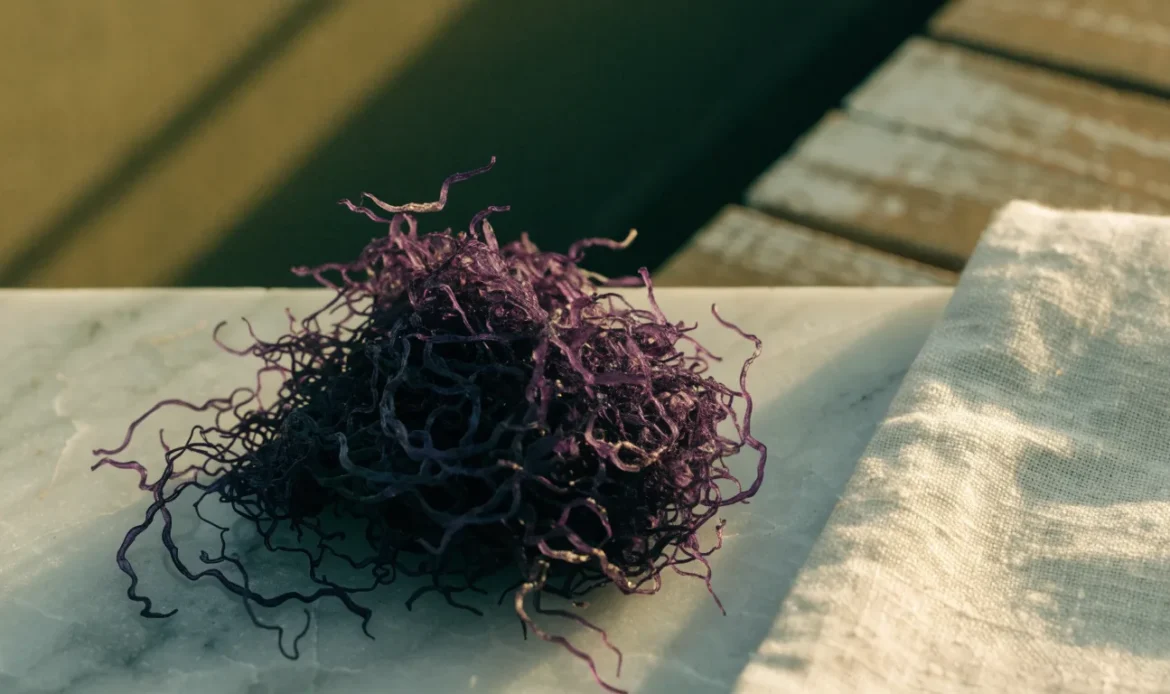
Short answer: Purple seamoss is a color variety of edible seaweed sold as raw, gel, or powder. Color alone does not prove where it came from or what is in it. If you plan to buy, check species, harvest and handling, and recent lab tests. Use a short checklist to compare suppliers.
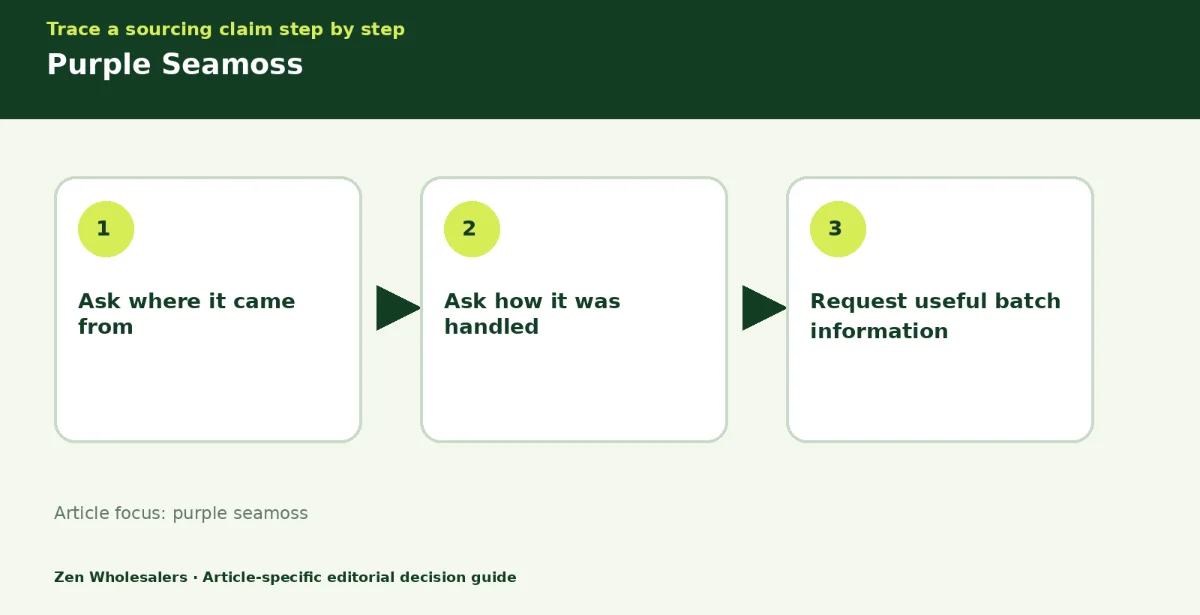
What is purple seamoss?
Purple seamoss is a name people use for seaweed that shows purple tones. Some of these plants are members of the red algae group. Purple color can come from species traits. It can also come from the water, light, or growing stage.
People sell purple seamoss as:
- raw (dried or fresh),
- gel (soaked and blended), and
- powder (dried and milled).
These are product forms, not guarantees of safety or quality. How the seamoss was handled matters more than color for safety and consistency.
Quick note about names and species
Common product names like “purple seamoss” or “gold seamoss” describe color. They do not always name the exact species. Different sellers may use the same name for different species. If species matters to you, ask the supplier for the scientific name. That helps link an item to known growing and handling practices.
Why color is not a full measure of value
Color can suggest something about the seamoss, such as variety or growing conditions. But color does not reliably tell you:
- which species it is,
- how it was harvested or dried,
- what nutrients or elements it contains.
You need more information to judge quality. A purple seamoss sample might have different mineral or iodine levels than another purple sample. The only way to know is testing.
Forms: raw purple seamoss, purple seamoss gel, and powder
- Raw purple seamoss: Often dried and sold loose. Raw seamoss can look purple when fresh or when partially dried. Check how it was harvested and dried. Slow drying and shade drying keep color but may affect microbes. Fast sun drying can bleach or break down pigments.
- Purple seamoss gel: Made by soaking cleaned seamoss and blending it with water. Gel is convenient for cooking and topical use. Gel can hide handling issues if not made carefully. Ask about water source, cleanliness, and time between harvest and blending.
- Purple seamoss powder: Made by dehydrating and milling. Powder is easy to measure. Drying method and temperature can change color and nutrient stability.
Terms like “organic purple seamoss” can be used. But “organic” has regulatory meanings only when certified by an authorized body. If a seller claims organic, ask for the certifier and a copy of the certificate.
Purple sea moss vs gold: what to expect
Buyers often ask, “Purple vs gold sea moss—what is better?” Color differences are mostly cosmetic or related to growing conditions. Here is what to check rather than assuming one is best:
- Texture and feel when soaked.
- Taste and aroma.
- Harvest date and batch code.
- Lab tests for contaminants and for elements like iodine.
- Species name and images of the harvest site.
Both purple and gold seamoss can be fine when they are handled well. Color alone is not proof of superior nutrition or safety.
Sourcing and origin: what you can check
When you buy seamoss, the origin matters for traceability. But you will often see vague claims like “Caribbean” or “wildcrafted.” Those words need follow-up questions. Here is what you can actually check and why it matters.
- Supplier transparency
- Can the seller name the farm or co-op?
- Do they show photos or videos of harvesting?
- Do they provide a harvest date or batch number?
- Location details
- Exact coordinates are rare but useful.
- More useful: region, local water quality reports, and known harvesting practices.
- A supplier should be able to say whether seamoss was farmed or wild-harvested.
- Species identification
- Ask for the scientific name (genus and species if known).
- If the supplier cannot provide a name, it may be a mixed or unverified harvest.
- Handling and processing steps
- How was the seamoss cleaned?
- Was it rinsed in clean water? How many times?
- Was it sun-dried, oven-dried, or freeze-dried?
- When was it processed relative to harvest?
- Lab testing and certificates
- Ask for recent lab test results or a certificate of analysis (COA).
- Request tests for heavy metals, microbes, and key elements like iodine.
- Ask for dates and lab contact information to confirm authenticity.
You cannot prove safety only by pictures. But suppliers who share clear, dated documents and processing steps give buyers better evidence.
Harvesting and handling: what affects quality
How seamoss is harvested and handled changes its color, smell, and safety. Key points to check:
- Harvest timing. Freshness matters. Ask for a harvest or packing date.
- Rinsing and cleaning. Multiple rinses reduce sand and debris.
- Drying method. Slow, shaded drying preserves color. Fast drying may turn seamoss brittle.
- Storage. Dried seamoss should be kept dry and sealed. Gel should be refrigerated and used quickly unless made with safe preservatives.
Ask for step-by-step handling notes from the supplier. These notes help you judge how careful they were.
Testing: what tests to ask for and why
Seaweed can take up elements from seawater. That can include iodine and trace metals. These elements vary by location and species. Testing helps you know what you are buying.
Tests to ask for:
- Heavy metals: common metals tested include arsenic, lead, cadmium, and mercury.
- Iodine content: seaweed may have high iodine. Levels can vary widely by species and location.
- Microbiology: total plate count, yeast/mold, E. coli, and Salmonella.
- Moisture content: shows how dry a product is and if it risks spoilage.
- Identity test, if available: to confirm species.
Why test iodine and metals?
- Seaweed is a known source of iodine. Iodine can be beneficial in small amounts and high in other cases. Several reviews note that iodine levels vary by species and source. For example, iodine in seaweed is discussed by thyroid experts and public health reviews and surveys [2][3][5]. These sources emphasize variability and recommend awareness.
- Public health surveys and reviews note that testing helps manage risk and inform safe use [1][2][3][5].
Notes about lab reports:
- Look for a recent date and a recognized lab name.
- Check that the report lists the sample code or batch number.
- If numbers are listed, ask what units and methods the lab used.
- If you see very old results, ask for updated tests.
Operation Supplement Safety and other groups have called for testing and transparency for sea moss products used in supplements [4]. That does not mean one supplier is safe or unsafe. It means testing helps buyers decide.
How to read a certificate of analysis (COA)
A COA is a lab report for a specific sample. It should say:
- The sample ID or batch code.
- The date tested.
- Tests run and the results.
- The lab name and contact.
- Methods used (sometimes).
If numbers are shown, ask what they mean. A supplier should explain how many samples were tested and whether the COA applies to your batch.
A COA without a sample code or date is less useful. Always ask follow-up questions.
Decision guide: choose between purple and gold seamoss
Use this table to decide what matters for your purchase. This is a small decision guide. Check the boxes that matter to you.
| Question to ask | Why it matters | What to accept |
|---|---|---|
| Can you name the species? | Tells you what plant you have | Yes — species or clear answer |
| Is it farmed or wild? | Farming has different risks than wild harvest | Clear statement of method |
| Is there a harvest or packing date? | Freshness and traceability | Recent date or batch code |
| Can I see a COA (heavy metals, iodine, microbes)? | Safety and element levels vary | Recent COA with lab name |
| How was it dried? | Drying affects color and shelf life | Method described (sun/oven/freeze) |
| Is it certified organic? | “Organic” requires certifier | Provide certifier and certificate |
| Are photos of the farm/harvest available? | Helps verify origin and practices | Photos or video with date |
| Do you offer sample sizes? | Try before you buy a lot | Small sample available |
| Do you provide storage/usage instructions? | Helps keep product safe | Clear written instructions |
Use this guide to compare two or more suppliers. The supplier that answers more of these clearly is easier to trust.
Practical checklist to request from a supplier
Use this short checklist when contacting a seller. Copy it into a message or email.
- [ ] Species name (scientific if possible)
- [ ] Farm name or harvest region
- [ ] Harvest/packing date and batch code
- [ ] Drying and processing steps
- [ ] Photos of recent harvest and processing
- [ ] Certificate of analysis (COA) for heavy metals, iodine, and microbes (with lab name and date)
- [ ] Organic certificate (if claimed)
- [ ] Storage and handling instructions
- [ ] Sample availability and sample policy
- [ ] Return or complaint policy
Keep answers on file. They help you compare suppliers later.
Red flags to watch for
- No harvest or batch information.
- No lab tests or refusal to share them.
- Vague terms like “wildcrafted” with no proof.
- No clear storage or shelf instructions.
- Pressure to buy large amounts without samples.
None of these prove a product is unsafe. But they make it harder to verify quality.
How to store and prepare purple seamoss at home
Storage and prep depend on form.
- Raw/dried seamoss: Keep in a dry, cool place. Use an airtight container.
- Gel: Keep refrigerated. Use per supplier instructions. Gel can spoil if left warm.
- Powder: Keep sealed and dry to avoid clumping or moisture.
To make gel at home from raw seamoss:
- Rinse seamoss several times until water runs clearer.
- Soak in clean, filtered water for several hours or overnight.
- Blend with fresh water to the texture you want.
- Store in a clean jar and refrigerate.
Do not use unclean tools or unfiltered water. If you are unsure about microbial safety, follow conservative handling and ask for more supplier info.
Pricing, labels, and organic claims
If a seller claims “organic,” ask for the certifying body and the certificate. Organic claims have legal meaning only if backed by a recognized certifier. If a seller cannot produce a certificate, treat the claim as unverified.
Do not rely on price as a safety measure. Low price does not prove safety and high price does not prove better testing.
How to test a new supplier on a small scale
If you find a supplier you like, take these steps before large orders:
- Order a small sample or a small retail pack.
- Check the paperwork: COA, harvest date, batch code.
- Inspect the product for smell, color, and cleanliness.
- Make a small test product (gel or powder) and see how it stores.
- Consider sending a sample to an independent lab if you need specific assurance.
These steps cost time and maybe a bit more money. They reduce the chance of surprises on a larger order.
Where to learn more and next steps
If you want more background on seaweeds and safety:
- Read general seaweed nutrition and safety advice at Harvard’s nutrition site [1].
- For iodine and thyroid-specific discussion, see a recent review [2] and a literature review on iodine risks [5].
- For consumer guidance on sea moss supplements and labeling, see Operation Supplement Safety [4].
- For public surveys on iodine levels in seaweed products, see national monitoring programs [3].
If you would like to learn more about how seamoss is grown and handled on a working site, visit our farm page and learn about our practices. You can also browse products or ask about wholesale options:
If you have a specific question about a product you saw, ask the seller for the checklist items above. If you want help evaluating documents, a local food safety lab or a trusted consultant can help.
Conclusion
Purple seamoss is an appealing product name and a useful form of seaweed. But color is only one clue. To make a wise buy, ask for species names, harvest dates, processing steps, and lab tests. Use the checklist and decision guide to compare sellers. If a supplier shares clear, dated documents and answers your questions fully, you will have better evidence to base your choice on. If they do not, ask for more information or consider another supplier.
If you want help asking suppliers the right questions, you can start by using the checklist above and by visiting our farm page to see the kind of information to expect. Good sourcing is about traceability, testing, and clear handling steps.
Frequently asked questions
Is purple seamoss more nutritious than other colors?
Color alone does not prove nutrient differences. Nutrient and element content vary by species, place, and processing. Ask for a certificate of analysis to learn about specific levels.
How can I tell if purple seamoss is organic?
Ask for the organic certificate and the name of the certifier. A legitimate certifier will have public records. Without a certificate, “organic” is an unverified claim.
Should I worry about iodine in seamoss?
Seaweed can contain iodine, and levels vary a lot. If iodine is important to you, ask for iodine testing on the COA. Health questions about iodine are best discussed with a health professional. See sources about iodine variability and monitoring [2][3][5].
Can I make gel from raw purple seamoss safely?
Yes, with care. Rinse thoroughly and use clean, filtered water. Blend in clean containers and refrigerate promptly. If you have doubts about microbes, buy from suppliers who share testing and handling steps.
What lab tests are most important?
Common useful tests are heavy metals, microbiology, iodine, and moisture content. Which tests matter most can depend on how you plan to use the seamoss.
How do I verify a COA is real?
Check for a lab name, test date, and a sample or batch code. Contact the lab if you need confirmation. A recent COA tied to a batch code is more useful than an undated, generic report.
References
- Harvard T.H. Chan School of Public Health, “Seaweed.” https://nutritionsource.hsph.harvard.edu/seaweed/
- Smyth PPA. “Iodine, Seaweed, and the Thyroid.” European Thyroid Journal, 2021. https://pmc.ncbi.nlm.nih.gov/articles/PMC8077470/
- Food Standards Australia New Zealand, “Survey of iodine levels in seaweed and seaweed containing products,” updated 2025. https://www.foodstandards.gov.au/science-data/monitoring-safety/surveyofiodinelevels
- Operation Supplement Safety, “Sea Moss in Dietary Supplements.” https://www.opss.org/article/sea-moss-dietary-supplements
- Blikra MJ et al. “Consequences of acute and long-term excessive iodine intake: A literature review focusing on seaweed as a potential dietary iodine source.” 2024. https://doi.org/10.1111/1541-4337.70037