
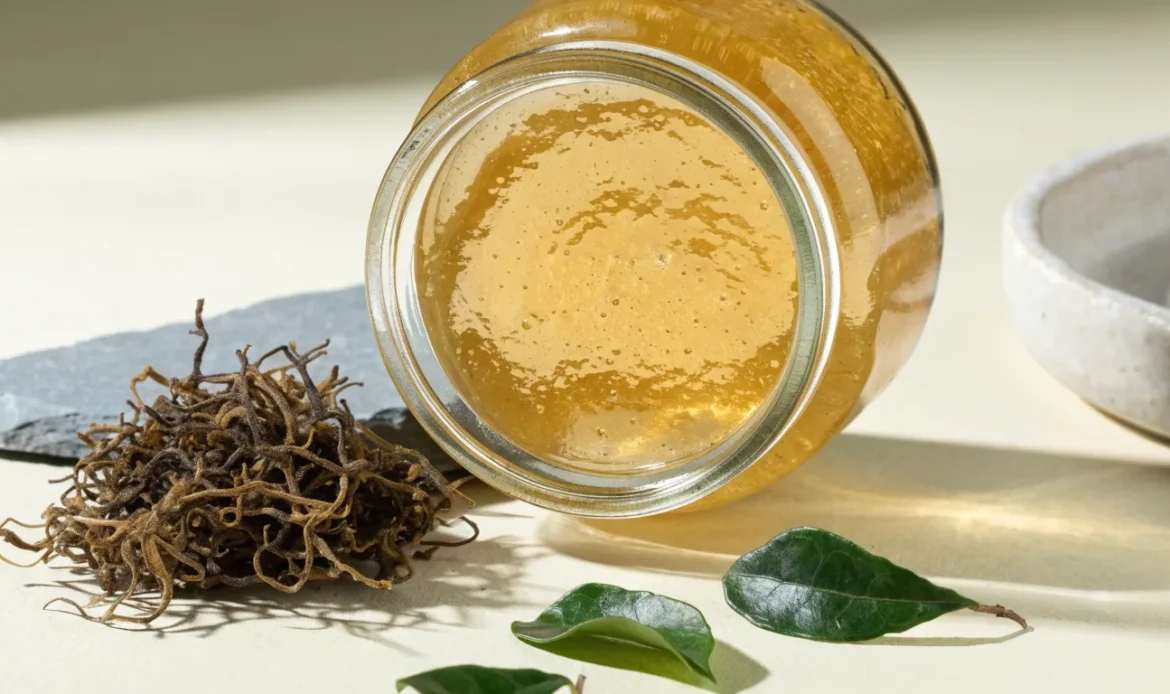
Short answer first: Sea moss is a natural seaweed that contains minerals and fiber. It can be a healthy food for some people. But strong clinical proof that it gives specific health benefits is limited. Safety depends on iodine levels, how the product is made, and your own health. Read the checks below to decide if sea moss is a sensible choice for you.
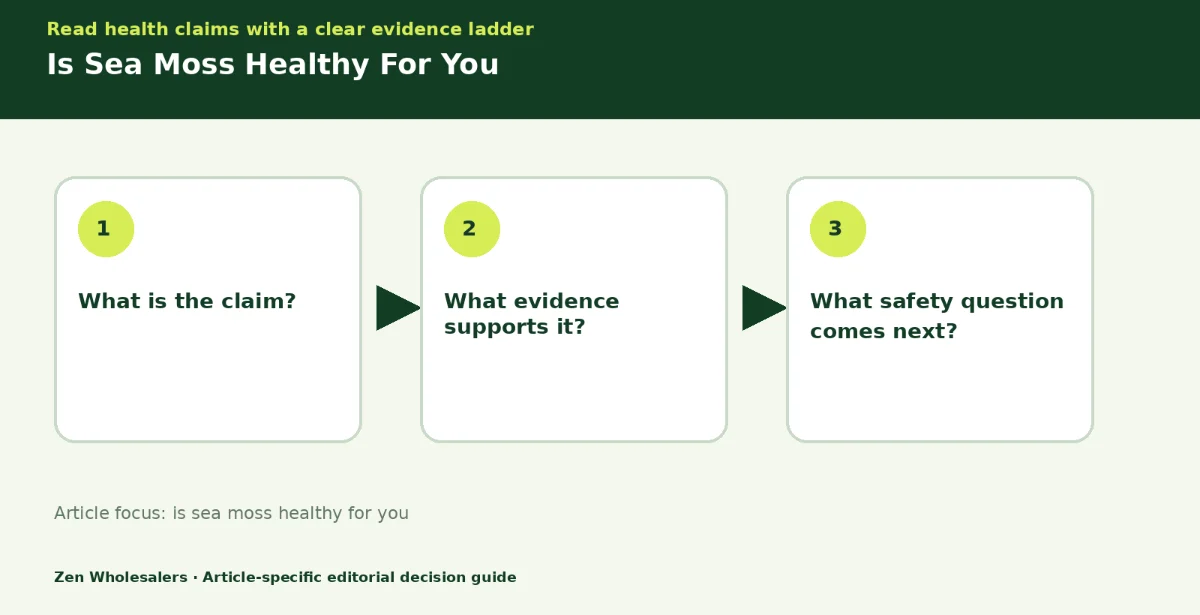
Why this matters
- People ask about sea moss because it is a plant food with nutrients.
- Many products now sell sea moss as gels, powders, or capsules.
- The same word covers both simple food and concentrated supplements. They are not the same for safety or evidence.
What sea moss is
- Sea moss is a common name for certain types of red seaweed. It grows in cold and warm ocean waters.
- People have used it as food in coastal communities for a long time. This is part of food tradition, not modern clinical proof.
What we can check and what we cannot prove
- We can check what nutrients are in seaweed and how variable levels are. [1]
- We can review early lab or small human studies. These sometimes suggest possible effects. But small studies are not proof.
- We cannot prove that sea moss will produce specific medical results for any person. There is not enough clinical trial evidence to claim cures or guaranteed health outcomes.
How sea moss compares to other seaweeds (food composition)
- Seaweeds generally contain minerals like iodine, some iron, calcium, and magnesium. They also contain fiber and complex carbohydrates found in the seaweed cell wall. [1]
- Nutrient content varies widely by species, where it was harvested, and how it was processed. One batch can be very different from another. [1]
Evidence types: tradition, lab studies, and clinical proof
- Traditional use: People eat seaweed and use sea moss as food in many cultures. Tradition shows it can be part of a diet. This is different from scientific proof.
- Lab and early human studies: Some small studies or lab work examine molecules in seaweed. These give ideas for future research. They do not prove benefits for people.
- Clinical proof: Large, well-designed human trials are mainly lacking for most asserted health claims about sea moss. That means we should be cautious about claims that it will do specific things for health.
Key safety topic: iodine and the thyroid
- Seaweeds, including many forms of sea moss, can contain high and variable iodine levels. This variability can be large between species and processing methods. [1][3]
- Both low and very high iodine intakes can affect thyroid function. Too much iodine can cause problems for some people, especially those with preexisting thyroid conditions or those taking thyroid medication. [2][5]
- Because iodine levels vary, you cannot assume every sea moss product has a safe iodine amount. Some can be high enough to be a concern. [2][3][5]
Product quality and unknowns in supplements
- Commercial sea moss supplements may differ in what they contain. Some have added ingredients. Manufacturing and sourcing matter.
- Labeling and quality testing are uneven in the supplement market. Some products may not list iodine or test for contaminants. Independent testing or third-party verification is more reliable. [4]
- The safety of a given sea moss product depends on where it came from, how it was processed, and whether it was tested for contaminants like heavy metals, microbes, and high iodine. [4]
Other safety concerns
- Heavy metals and environmental contaminants: Seaweed can absorb metals like arsenic, cadmium, or lead from water. Testing matters because levels depend on source and species. [1]
- Allergies and sensitivities: Some people may react to seaweed or to ingredients added to commercial products.
- Interactions with medicines: Sea moss could interact with thyroid medicines or other drugs. Ask a clinician if you take prescription medicines.
What the studies actually show (summary)
- Studies on seaweed foods show they can be a source of minerals and fiber. [1]
- Some small studies explore biological effects of molecules in seaweed. These are preliminary and do not prove benefits for long-term human health.
- Regulatory and scientific bodies call for more research. Meanwhile, safety concerns—especially iodine—are the clearest potential risk. [2][3][4][5]
A practical decision guide
Use this short checklist and table to pick a safe path. Do not use it as medical advice. If you have health conditions, ask a clinician.
Checklist: Quick checks before you try sea moss
- Are you pregnant, breastfeeding, or taking thyroid medication? If yes, talk with a clinician first. (See the Safety section.)
- Is the product clearly labeled with species and origin? Prefer products that list both.
- Does the product show third-party testing or a lab certificate (COA)? This helps with safety for contaminants and iodine.
- Is the product sold as food (fresh/dried seaweed) or a concentrated supplement? Food forms differ from extracts or capsules.
- Is there any added ingredient you do not want (sweeteners, fillers, unnecessary additives)? Read the ingredient list.
Decision table: Food vs supplement and what to check
| Your goal or risk | Choose this form | What to check and why |
|---|---|---|
| You want sea moss as a food ingredient | Fresh, dried, or whole seaweed sold as food | Check origin, species, and visible cleanliness. Food forms give whole-food context and raw nutrient mix. [1] |
| You want a convenient daily product | Pre-made gel, powder, or capsule (supplement) | Check for third-party testing, ingredient list, and whether iodine is listed. Supplements can vary in concentration and quality. [4] |
| You have thyroid disease or take thyroid medicine | Avoid any new seaweed products until you consult your clinician | Iodine in seaweed can affect thyroid function. Testing and clinical advice are needed. [2][5] |
| You are pregnant or breastfeeding | Consult a clinician before use | High iodine or contaminants may be harmful to mother or infant. [3][5] |
| You are concerned about contaminants | Look for COA and source near low-contaminant waters | Testing can show heavy metals and microbial contamination. [4] |
Steps to reduce risk
- Treat sea moss like any foraged or imported food. Check origin and processing.
- Prefer products with a certificate of analysis (COA) from a reputable lab.
- If you buy fresh or dried seaweed for eating, ensure it was harvested from clean waters and prepared properly.
- Avoid products that make medical claims. Those claims are not backed by strong clinical proof and are a red flag for overselling.
Safety and when to ask a clinician
- Ask a clinician if you have a history of thyroid disease, are on thyroid medication, are pregnant or breastfeeding, or have chronic medical conditions.
- Ask especially if you plan to use sea moss regularly or as a supplement rather than as an occasional food.
- If you have signs of thyroid trouble (rapid heart rate changes, sudden weight changes, neck swelling, new fatigue), seek medical advice before or after using seaweed products.
- If you experience allergic reactions, digestive upset, or unusual symptoms after using sea moss, stop use and consult a clinician.
Suggested shopping and product questions
When you read a product page or label, look for:
- Species name and harvest region. This is more informative than just “sea moss.”
- Food vs supplement statement. Food products and dietary supplements are regulated differently.
- Testing information: a COA for iodine and contaminant testing is best.
- Processing details. Sun-dried, air-dried, heat-treated, or washed—each affects quality.
- Clear contact information for the seller so you can ask questions.
How to evaluate claims
- If a product claims it will treat or cure a disease, be skeptical. There is not enough clinical evidence for disease treatment claims.
- If labels say “supports general health” or “rich in minerals,” those are food-style claims. They are less specific but more realistic.
- Look for balanced descriptions that mention nutrient content and safety. Avoid products that promise quick fixes.
Next useful questions to ask
- How often will you use sea moss—occasionally as a food or daily as a supplement?
- Do you have medical conditions that could interact with high iodine?
- Do you want convenience or control (fresh/dried food vs. concentrated supplement)?
- Is independent lab testing available for the product?
Where to learn more
- For general seaweed nutrition and food safety, public health resources describe what nutrients to expect and what risks exist. [1]
- For guidance on iodine and thyroid interaction, clinical reviews explain the role of iodine and risks of high intake. [2][5]
- For product safety in supplements, expert outlets discuss the variability and testing needs of sea moss supplements. [4]
Useful next steps on this site
- Learn more about sea moss basics: Learn about sea moss
- See product categories and decide between food or supplement: Shop sea moss
- If you are a retailer or need large quantities: Wholesale inquiries
- General company information: Zen Wholesalers home
- Contact us with sourcing or testing questions: Contact Zen Wholesalers
Frequently asked questions
Is sea moss the same as other seaweeds?
Sea moss refers to certain red seaweeds. Other seaweeds like kelp or nori are different species with different nutrient profiles. Nutrient and iodine levels differ by species and place of harvest. [1][3]
Can sea moss cause thyroid problems?
Sea moss can contain significant iodine. High iodine intake can affect thyroid function in some people. Those with thyroid disease or on thyroid medicine should consult a clinician. [2][5]
Are sea moss supplements tested for safety?
Testing varies by manufacturer. Some sellers provide third-party lab reports or COAs. Many do not. Look for clear testing and lab results when safety is a concern. [4]
Is eating sea moss daily safe?
Safety depends on the product and your personal health. Daily use of products high in iodine could pose risks for people with thyroid issues. Discuss regular use with a clinician, especially if you take medications. [2][3][5]
How do I choose between food form and supplements?
Food forms (fresh or dried) keep the product in a traditional food context. Supplements can concentrate specific compounds and vary widely in quality. Choose food if you want whole food; choose supplements only with clear testing and reliable labeling. [1][4]
What should I do if a product claims it will cure or treat illness?
Be skeptical. There is not enough clinical evidence to support cures. Avoid products that make medical claims and consult a clinician for health concerns. Conclusion Sea moss can be a nutrient-containing seaweed that fits into some diets. The clear facts are that it contains minerals and fiber, and that iodine levels can be high and variable. Evidence that sea moss produces specific health effects in people is limited. If you choose to use sea moss, prefer clearly labeled food products or supplements with third-party testing. Ask a clinician if you have thyroid disease, take thyroid medicine, are pregnant, or have other health concerns.
References
- Harvard T.H. Chan School of Public Health, “Seaweed.” https://nutritionsource.hsph.harvard.edu/seaweed/
- Smyth PPA. “Iodine, Seaweed, and the Thyroid.” European Thyroid Journal, 2021. https://pmc.ncbi.nlm.nih.gov/articles/PMC8077470/
- Food Standards Australia New Zealand, “Survey of iodine levels in seaweed and seaweed containing products,” updated 2025. https://www.foodstandards.gov.au/science-data/monitoring-safety/surveyofiodinelevels
- Operation Supplement Safety, “Sea Moss in Dietary Supplements.” https://www.opss.org/article/sea-moss-dietary-supplements
- Blikra MJ et al. “Consequences of acute and long-term excessive iodine intake: A literature review focusing on seaweed as a potential dietary iodine source.” 2024. https://doi.org/10.1111/1541-4337.70037