
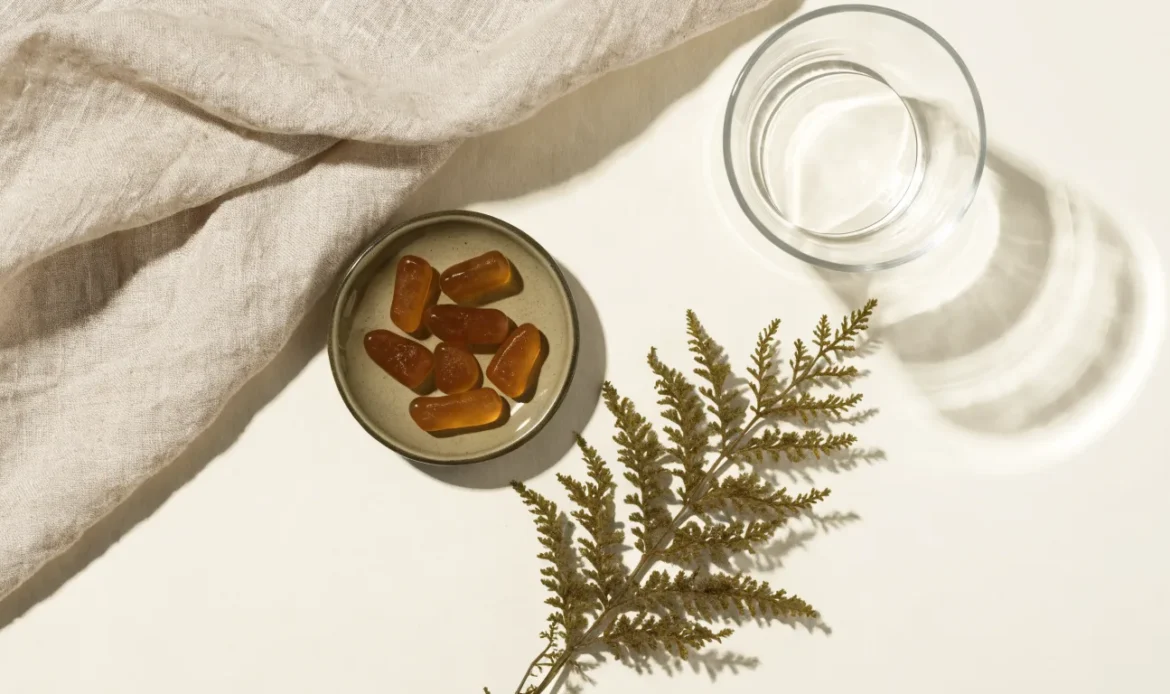
Short answer: A sea moss gummy is a chewable supplement that contains sea moss extract or sea moss-derived ingredients combined with a gelling agent and sweetener. Gummies make sea moss easy and portable. They also add extra ingredients you should check for, such as sugar, pectin or gelatin, and any listed iodine content. Read labels, ask for test results if needed, and talk with a clinician about thyroid or medication questions.
Why this guide: This page explains what sea moss gummies are. It compares formats. It shows what to check on a label and what labels cannot prove. It gives a clear checklist and next steps for buying or selling. The goal is to help you make an informed choice.
What is a sea moss gummy?
A sea moss gummy is a soft, chewy supplement. It usually includes:
- Some form of sea moss (an extract, powder, or concentrate).
- A gelling agent such as pectin (plant-based) or gelatin (animal-based).
- A sweetener and flavoring.
- Other minor ingredients such as fruit juice, citric acid, or preservatives.
Gummies are made to be shelf stable and easy to take. They are popular when someone prefers a chewable form over a liquid gel, capsule, or dried seaweed. The exact composition depends on the maker.
What the label might say
- “Sea moss,” “Irish moss,” or the scientific name (if provided).
- A supplement facts panel showing serving size and listed amounts.
- Ingredient list and allergen warnings.
- Storage instructions and expiration date.
What the label may not say
- How much of the sea moss ingredient is genuine whole seaweed versus an extract or blend.
- The exact species of seaweed used unless the maker states it.
- Levels of iodine, heavy metals, or microbes unless the company provides a lab result.
How sea moss gummies compare to other sea moss formats
People choose a format based on convenience, taste, and how they plan to use sea moss. Here is a simple comparison.
- Gummies
- Pros: Easy, portable, palatable, pre-dosed by serving.
- Cons: Often contain sweeteners and extra ingredients. Dosing and sea moss content can vary.
- Gel (fresh or shelf-stable)
- Pros: Leaves fewer added ingredients if homemade. Can be mixed into drinks.
- Cons: Shorter shelf life when fresh. Requires refrigeration if not shelf-stable.
- Powder
- Pros: Flexible dosing. Mixes into foods and drinks. Often lighter on added sugars.
- Cons: Texture can be gritty. Some powders are blends rather than pure sea moss.
- Capsules or tablets
- Pros: No sugar or flavor. Simple ingredient lists are common.
- Cons: Less convenient to taste or mix. May contain fillers.
What changes by format
- Ingredient list: Gummies usually add the most non-sea moss ingredients.
- Shelf life and storage: Gummies are often shelf-stable. Gels may need refrigeration.
- Transparency: Powders and capsules sometimes list extracts and concentrations. Gummies often give less detail per serving.
- Use case: Gummies are suited to those who want a chewable routine. Powders suit people mixing into smoothies.
What to check on the label before buying a sea moss gummy
If you are shopping, look for clear information. The checklist below helps you quickly see what matters and why.
Decision guide: label items, why they matter, and action to take
| Label item | Why it matters | What to do |
|---|---|---|
| Exact ingredient name for sea moss | Shows whether product uses whole seaweed or an unspecified extract | Prefer clear naming (e.g., “Chondrus crispus” or “sea moss extract”); ask seller if vague |
| Supplement facts (serving size and amount) | Lets you know how much of the product you would take | Check serving size and count servings per container |
| Iodine content listed or “contains iodine” | Seaweeds can contain variable iodine levels | If you see iodine listed, note the value; if not listed, ask for test results |
| Additives (sugar, flavors, preservatives) | Affects sugar intake and dietary preferences | Watch for sugar content if you limit sugar; check for allergens |
| Gel agent (pectin vs gelatin) | Tells you if product is vegan | Choose based on diet (vegans often prefer pectin) |
| Batch number and expiration date | Important for traceability and freshness | Avoid products without batch numbers |
| Third-party testing or Certificate of Analysis (COA) | Shows recent lab checks for contaminants and ingredient levels | Ask for a COA if you are concerned about iodine, heavy metals, or microbes |
| Manufacturer contact info and address | Allows follow-up questions | Confirm you can contact the company for more detail |
| Manufactured in a facility with quality systems | Good manufacturing practices reduce error risk | Look for facility info; ask about GMP audits if needed |
| Country of origin or sourcing details | Offers context but not proof of safety or iodine levels | Country info helps narrow questions but needs lab testing for safety claims |
Quick buyer checklist (one-line steps)
- Read the ingredient list.
- Verify serving size and servings per container.
- Check for sugar and sweeteners.
- Look for pectin vs gelatin.
- Confirm allergen statements.
- Find batch number and expiration date.
- Ask for a COA or third-party test for iodine/metals if you need it.
- Check manufacturer contact info and ask questions.
- If you have thyroid issues or take medication, consult a clinician before use.
Safety considerations: what labels and marketing do — and do not — prove
Sea moss as an ingredient comes from marine algae. That means two important facts:
- Natural levels of elements like iodine vary widely by species, place, and harvest time.
- Sea plants can also collect metals and other substances from their environment.
Iodine and thyroid safety
- Seaweeds can contain high levels of iodine. High or sudden increases in iodine intake can affect thyroid function in some people. This is discussed in clinical reviews of iodine and seaweed. [2] [5]
- A label that says “sea moss” does not prove how much iodine is in the product. The only way to know the iodine content per serving is a reliable lab test. Some regulatory surveys have measured iodine in seaweed products and found wide variation. [3]
Contaminants and testing
- Seaweed products can vary in heavy metal content and microbial load. A product label alone cannot prove it is free from contaminants.
- A Certificate of Analysis (COA) from a qualified lab can show tests for specific contaminants and nutrient levels. Ask to see a COA that matches the batch number on the product. [4]
Regulatory context and limits of labels
- Dietary supplements are regulated differently than prescription drugs in many countries. Labels and marketing claims are subject to rules, but the presence of a label does not equal independent safety testing.
- A company may state third-party testing. Verify what tests were done, which lab did them, and that the COA matches the batch you plan to buy.
What a Certificate of Analysis (COA) can and cannot show
A good COA lists lab test results for a specific lot number. It can include tests for:
- Iodine content.
- Heavy metals (e.g., arsenic, lead, cadmium, mercury).
- Microbial limits (e.g., total aerobic count, yeast, mold).
- Identity testing to confirm the seaweed species.
What a COA cannot do by itself
- Prove long-term safety for your individual health status.
- Guarantee future batches are the same unless you get COAs for each batch.
- Replace clinical advice about medicine interactions, pregnancy, or chronic conditions.
Action step: If iodine or contamination is a concern, request a COA for the exact batch you will receive. If the seller cannot provide one, consider a different product or format.
How to use sea moss gummies responsibly
Gummies are a convenient form, but responsible use means being aware of dose, other iodine sources, and medical context.
Simple safety steps
- Follow the product’s serving suggestion unless a clinician advises differently.
- Check other iodine sources in your diet — for example, iodized salt, seaweed products, or multivitamins — and discuss total intake with a clinician if you are concerned.
- If you have thyroid disease, take thyroid medication, are pregnant, or nursing, talk to a healthcare provider before starting any seaweed-based supplement. Seaweed can affect thyroid hormone levels in some people. [2] [5]
- If you experience unusual symptoms after starting a supplement, stop use and consult a clinician.
What to ask your clinician
- Do my thyroid tests or medications require me to avoid extra iodine?
- Could ingredients in a gummy interact with my medicines?
- Is a gummy the best format for me compared with a capsule or powder?
Buying sea moss gummies wholesale or in bulk
If you are a retailer or buyer, your priorities will include reliability, labeling compliance, and storage.
Key commercial checks
- Request COAs for each incoming batch and verify batch numbers.
- Confirm shelf-stability, best-by dates, and storage needs.
- Ask about minimum order quantities, lead times, and packing.
- Verify labeling meets local regulatory requirements for supplement claims and ingredient listings.
- Request copies of insurance, facility audits, or audits for Good Manufacturing Practices if needed.
If you want to learn more about sourcing and options for resellers, visit our wholesale page or contact our team for basic next steps. (See links below for ways to reach us.)
Evaluating marketing claims
Common claims you may see:
- “Supports” or “promotes” general health (these are broad statements).
- “Pure” or “wild-harvested” (these describe sourcing but don’t validate safety).
- “Lab tested” (ask which lab and for what).
How to test claims
- Ask for a COA and confirm the tests listed.
- Compare ingredient lists and serving sizes.
- Ask for traceability details: where the seaweed was harvested, how it was processed, and the species used.
What marketers cannot prove without data
- Exact iodine per serving (unless on label and verified by COA).
- Lack of contaminants (unless verified per batch).
- Specific health outcomes for an individual.
Quick decision guide: How to choose a sea moss gummy (short flow)
- Check ingredient list for sea moss and gelling agent.
- Read the supplement facts panel for serving size.
- Look for sugar content and allergens.
- Find batch number, expiration date, and manufacturer contact.
- Ask the seller for a COA for iodine and heavy metals if you have concerns.
- If you have thyroid issues or take medication, consult a clinician before use.
- If buying wholesale, request COAs for each lot and verify labeling compliance.
Useful links and next steps
- Explore our shop to see formats and options: /shop/
- Learn more about seaweed and nutrition basics: /learn/
- If you are a reseller or need bulk options: /wholesale/
- Contact us with questions about sourcing or COAs: /contact/
- Return to our home page for site navigation: /
If you need help comparing labels, save product photos and COAs and send them with your questions. We can point out where to look.
Conclusion
Sea moss gummies are a convenient and tasty way to take a sea moss supplement. They also add ingredients and may hide variability in iodine or contaminant levels. The best buyers check ingredients, serving sizes, batch numbers, and ask for a Certificate of Analysis when iodine or contaminants are a concern. If you have thyroid disease, take medication, are pregnant, or are otherwise at risk, talk with a clinician before starting. If you plan to resell, require COAs per batch and confirm labeling meets local rules. Use the checklist above to make a clearer decision.
Continue reading
Frequently asked questions
Are sea moss gummies the same as fresh sea moss gel?
No. Gummies are processed and contain added sweeteners and gelling agents. Fresh gels are often made from cooked, blended sea moss and can have fewer added ingredients if homemade. Check labels to compare.
Can a label tell me how much iodine is in a gummy?
Only if the manufacturer lists iodine content on the label. Labels often do not list iodine. To know iodine per serving, ask for a lab report (COA) for the batch you will buy. [3] [5]
Are sea moss gummies safe for people with thyroid problems?
Seaweed can influence iodine intake, which may affect thyroid function in some people. If you have thyroid disease or take thyroid medication, consult a clinician before starting any seaweed-based supplement. [2] [5]
How do I know if a gummy contains real sea moss?
Look for specific ingredient names and ask the seller for a COA or an identity test. Labels can say “sea moss” without showing how much is present. A COA can confirm presence and quantity for a batch. [4]
Should I choose pectin or gelatin gummies?
It depends on your diet. Pectin is plant-based and suitable for vegans. Gelatin is animal-based. Both can form a gummy texture. Check the ingredient list if you follow a specific diet.
What lab tests are most useful for sea moss gummies?
Useful tests include iodine content, heavy metals, and microbial limits. Also ask for identity testing to confirm the species or the presence of the seaweed ingredient. [4]
References
- Harvard T.H. Chan School of Public Health, “Seaweed.” https://nutritionsource.hsph.harvard.edu/seaweed/
- Smyth PPA. “Iodine, Seaweed, and the Thyroid.” European Thyroid Journal, 2021. https://pmc.ncbi.nlm.nih.gov/articles/PMC8077470/
- Food Standards Australia New Zealand, “Survey of iodine levels in seaweed and seaweed containing products,” updated 2025. https://www.foodstandards.gov.au/science-data/monitoring-safety/surveyofiodinelevels
- Operation Supplement Safety, “Sea Moss in Dietary Supplements.” https://www.opss.org/article/sea-moss-dietary-supplements
- Blikra MJ et al. “Consequences of acute and long-term excessive iodine intake: A literature review focusing on seaweed as a potential dietary iodine source.” 2024. https://doi.org/10.1111/1541-4337.70037