
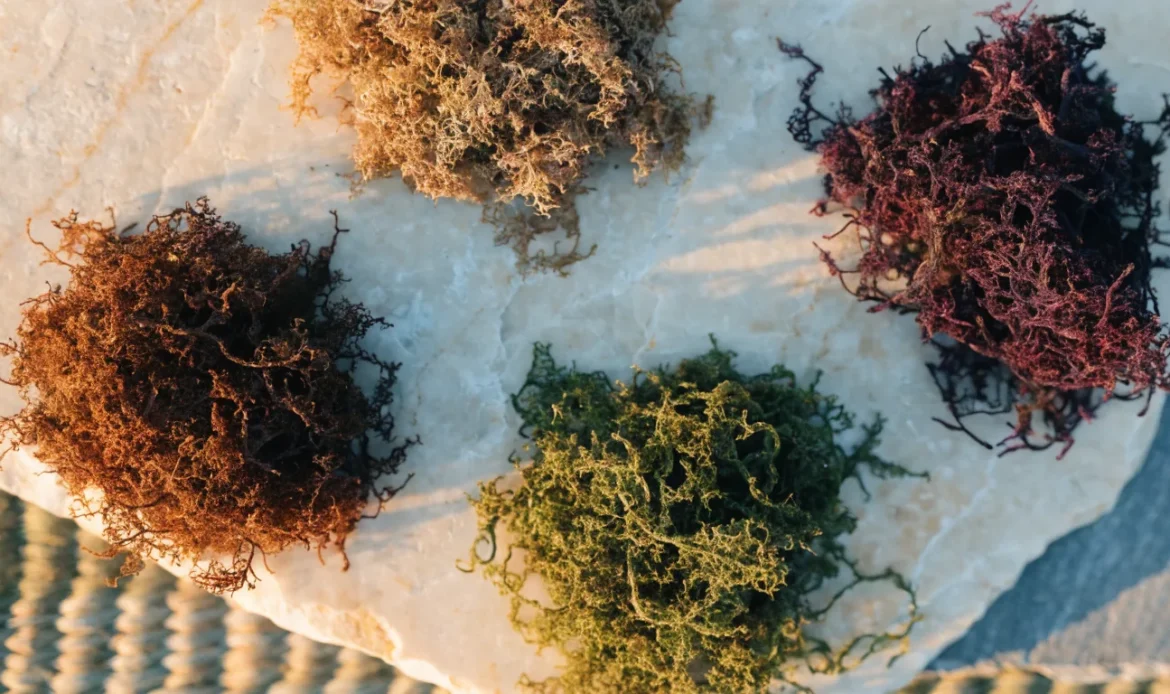
Short answer: A pic of sea moss can show color, texture, and visible debris. It cannot prove safety, iodine level, or processing details. Use photos as one part of a buying check, not the sole proof.
Why this matters: many people first see sea moss in a photo. Pictures help you compare types and forms. But photos have limits. This guide shows what to check in a pic and what to ask next. It also gives a short decision guide so you can move forward with confidence.
What a pic of sea moss can show
A clear photo can give useful clues. Here are the main things you can see in a good image:
- Color and shade. Photos show whether the sea moss looks green, red, yellow, brown, or mixed. Color can come from species, age, or how it was dried. Color alone does not prove quality.
- Shape and size. You can see whether pieces are whole, shredded, or powder. That helps you know if you are looking at raw strands, dried clumps, or processed powder.
- Texture and moisture hints. Shiny, glossy pictures may show wet moss or gel. Dull, papery pictures usually show fully dried moss.
- Visible debris. Dirt, sand, shells, or seaweed fragments that are easy to see may show up in a close photo.
- Packaging and labeling. A photo of sealed packaging can show label claims, batch codes, or a best-by date—if they are shown clearly.
Use photos to set expectations. If the seller’s pictures are blurry, staged, or overly edited, treat them with caution.
What a pic cannot prove
Photos are helpful. They are not proof. Here is what you cannot tell from an image:
- Chemical content or nutrient levels. You cannot measure iodine, minerals, or contaminants from a picture. Lab tests are required for that. See references on variable iodine levels and safety considerations [2][3][5].
- Microbial safety. Bacteria, viruses, and some molds are invisible in photos.
- Harvest and processing controls. A picture cannot show how the sea moss was harvested, rinsed, dried, or stored.
- Trace contamination. Heavy metals or pollutants cannot be identified visually.
- Freshness beyond surface appearance. A moss that looks fresh in a photo may still be old or improperly stored.
When a seller or source relies only on pictures, ask for more written or lab information. A photo should start a conversation, not end it.
Common sea moss formats you’ll see in pictures
Sellers use photos to show common product formats. Each format has different photo clues.
- Raw/dried whole strands
- Photo clues: visible fronds or branches, clumps, natural shapes.
- What to check: even drying, absence of large debris, consistent color.
- Dried chips or pieces
- Photo clues: small uniform pieces, often packed in bags.
- What to check: look for dust or powder that might indicate breakage.
- Gel or blended gel
- Photo clues: shiny, smooth, jarred product. Often a spoon with gel shows texture.
- What to check: jar labeling, separation (water layer), and jar seals.
- Powdered sea moss
- Photo clues: fine powder in bags or jars.
- What to check: color uniformity, clumping, and packaging seals.
- Capsules or finished supplements
- Photo clues: labeled bottles, capsule look.
- What to check: ingredient list and any third-party testing claims.
Remember: pictures can show format, but not whether processing met safety standards.
How to read a seller photo: practical steps
When you open a product page, use this short camera-to-check routine:
- Zoom in. Look at texture and edges.
- Find a clear shot of the product outside its pack.
- Check a close-up for visible debris or mold-like spots.
- Look for a label or batch number in another image.
- Compare multiple photos to ensure consistency (e.g., raw and packaged shots match).
If photos are missing or staged (identical stock scenes for many products), ask the seller for fresh images.
Decision guide: Can you trust a pic of sea moss?
Use this table to decide if the photo gives you enough info to move on.
| What a photo shows | Good photo signs | What to ask next |
|---|---|---|
| Color/appearance | Natural, close-up images showing whole pieces or clear gel | Ask: Is this the actual batch photo? When taken? |
| Packaging/labels | Clear label with lot code or production date in photo | Ask: Can you provide the full label image and ingredient list? |
| Visible debris | Clean-looking pieces, no large sand or shell bits | Ask: How is the moss cleaned and rinsed? |
| Form (dried, gel, powder) | Multiple images that match the listed form | Ask: Is this a blended/processed product? What is the processing method? |
| Proof of safety or tests | No visual proof — photos only show packaging | Ask: Do you have lab test results or certificates of analysis (COA)? |
| Freshness and storage | No clear proof — only packaging may show seals | Ask: How was it stored and shipped? Any refrigeration needed? |
If a photo checks several of the “Good photo signs,” it is useful. But still request non-photo proof for safety or chemical questions.
Questions to ask the seller after seeing a pic
Photos help you start clear questions. Here are specific, practical requests:
- Is this a photo of the exact batch you would ship? If not, ask for a recent batch photo.
- Can you provide a clear image of the full label, including lot or batch code?
- Do you have a certificate of analysis (COA) or lab test results for iodine, heavy metals, or microbes?
- How was this sea moss cleaned and dried? Where and when did that happen?
- What species or common name is this product listed under?
- What are the storage and shelf-life instructions?
Ask for answers in writing. A seller who cannot provide these basics is a risk for someone who needs more than a pretty picture.
What to request if you need safety information
If you want safety information that a photo cannot supply, ask for:
- Lab test results (COA) from an accredited lab for iodine and contaminants. A photo cannot replace this.
- Details on harvest practices, such as hand-harvested vs. farmed, and what rinsing steps were used.
- Processing notes: dried at low heat, freeze-dried, or sun-dried? Each method affects texture and appearance but must be confirmed by the seller.
- Storage and packaging details: sealed bags, oxygen absorbers, or jars.
Note: even where lab reports are provided, interpret them carefully. Iodine levels in seaweed can vary widely and may require careful reading [2][3][5].
How lighting and photo work can mislead
Photos can exaggerate or hide features. Watch for these common issues:
- Color shifts from lighting. Warm lamps or filters can change green to yellow or red to brown.
- Gloss and shine from oils or water. Wet moss may look fresher than it is.
- Close-up cropping hides debris or labeling problems.
- Stock photos or repeats. If many listings use the same picture, this may not be a photo of the seller’s actual product.
If a pic looks too perfect, ask for an unedited batch photo taken in natural light.
Practical buyer checklist (printable)
Use this short checklist when you view a product page or receive photos.
- Photo quality: high resolution, not fuzzy.
- Multiple angles: product open and in its package.
- Close-up: shows texture and edges.
- Label shot: batch code, ingredient list, net weight.
- Claims: any safety or lab claims backed by COA?
- Freshness: ask when the picture was taken.
- Storage and shipping: is refrigeration needed?
- Format match: pictures align with listed form (whole, gel, powder).
- Ask for lab data if you need it: iodine, heavy metals, microbes.
- Ask about cleaning and drying methods.
If two or more of these are missing, request additional images and documentation.
How sellers commonly use images (and how to spot sales tactics)
Sellers use images to attract buyers. That’s normal. But beware of these tactics:
- Using only lifestyle or recipe photos with no product close-up. This keeps details hidden.
- Repeating the same stock image across many products. It makes it hard to verify the actual product.
- Over-editing to hide color or texture defects.
- Not allowing buyers to request additional photos or documents.
A professional seller will supply clear product shots and answer reasonable questions about processing or testing.
Which photo questions are high priority for specific buyers
Different buyers need different proof. Here are examples:
- Home users making gel: Want clear images of raw strands and gel texture. Ask about cleaning and jar seals.
- Retail buyers: Need label shots and batch codes. Also ask for COAs if offering product to customers.
- Wholesale buyers: Need batch photos, COAs, and processing notes. They may also ask for traceability and storage advice.
Use the photo to decide your next steps. Photos can speed up trust-building when paired with clear documents.
Best practices for sellers sharing photos (for transparency)
If you sell sea moss and want to build buyer trust, follow these photo tips:
- Provide at least three high-resolution photos: whole product, close-up, and labeled packaging.
- Include a clear shot of any label with batch number or production date.
- Offer an unedited batch photo upon buyer request.
- Disclose harvesting and drying methods in a product note.
- Share lab results or COAs when available.
Open photos plus written answers reduce questions and help buyers move forward safely.
Next steps after you review a pic
- Use the checklist above to see what’s missing.
- Request batch photos and label shots if they aren’t present.
- Ask for lab test results if you are concerned about iodine, metals, or microbes.
- If buying in volume, ask for processing and storage notes and a COA.
- If the seller won’t answer, consider other sources or ask for guidance from a trusted advisor.
If you want more learning resources about sea moss forms and buying tips, visit our learning section: Learn (/learn/). To see examples of product formats, check our shop: Shop (/shop/). For wholesale inquiries or to request more detailed product photos for bulk orders, visit Wholesale (/wholesale/). If you still have questions, contact our team: Contact (/contact/). Or return to our main site: Home (/).
Conclusion
A pic of sea moss is a starting point. It helps you see color, form, and obvious debris. But photos cannot show chemical content, microbes, or exact processing steps. Use pictures to guide your next questions. Ask for batch photos, labels, and lab tests when you need safety or composition details. Keep a short checklist handy to compare sellers. That way, you get useful visual cues and the documentation you need to decide.
Frequently asked questions
Can I tell if sea moss is safe from a picture?
No. Pictures cannot show chemical content, microbes, or hidden contamination. Ask for lab tests and processing details to assess safety. See references on variable iodine and testing needs [2][3][5].
Does color in a pic tell me which species it is?
Not reliably. Color gives a clue but is affected by lighting, drying methods, and the part of the plant. Species identification needs more data than an image.
Are seller photos usually edited?
Many photos are edited for lighting or color. If a photo looks unusually perfect, ask for an unedited batch photo in natural light.
What photo format is best to request?
Ask for high-resolution JPEG or PNG images, taken in natural light with a neutral background. Also request a separate close-up and a clear image of the product label.
Should I ask for lab tests after seeing a pic?
If you need to know about iodine, heavy metals, or microbes, yes. A photo alone is not enough to assess those risks. References discuss variability and the need for testing [2][3][5].
If a seller only shows gel photos, how do I know what the raw moss looked like?
Ask for raw product photos and the processing notes. Gel appearance doesn’t prove the raw material’s quality or cleaning methods.
References
- [1] Harvard T.H. Chan School of Public Health, “Seaweed.” https://nutritionsource.hsph.harvard.edu/seaweed/
- [2] Smyth PPA. “Iodine, Seaweed, and the Thyroid.” European Thyroid Journal, 2021. https://pmc.ncbi.nlm.nih.gov/articles/PMC8077470/
- [3] Food Standards Australia New Zealand, “Survey of iodine levels in seaweed and seaweed containing products,” updated 2025. https://www.foodstandards.gov.au/science-data/monitoring-safety/surveyofiodinelevels
- [4] Operation Supplement Safety, “Sea Moss in Dietary Supplements.” https://www.opss.org/article/sea-moss-dietary-supplements
- [5] Blikra MJ et al. “Consequences of acute and long-term excessive iodine intake: A literature review focusing on seaweed as a potential dietary iodine source.” 2024. https://doi.org/10.1111/1541-4337.70037