
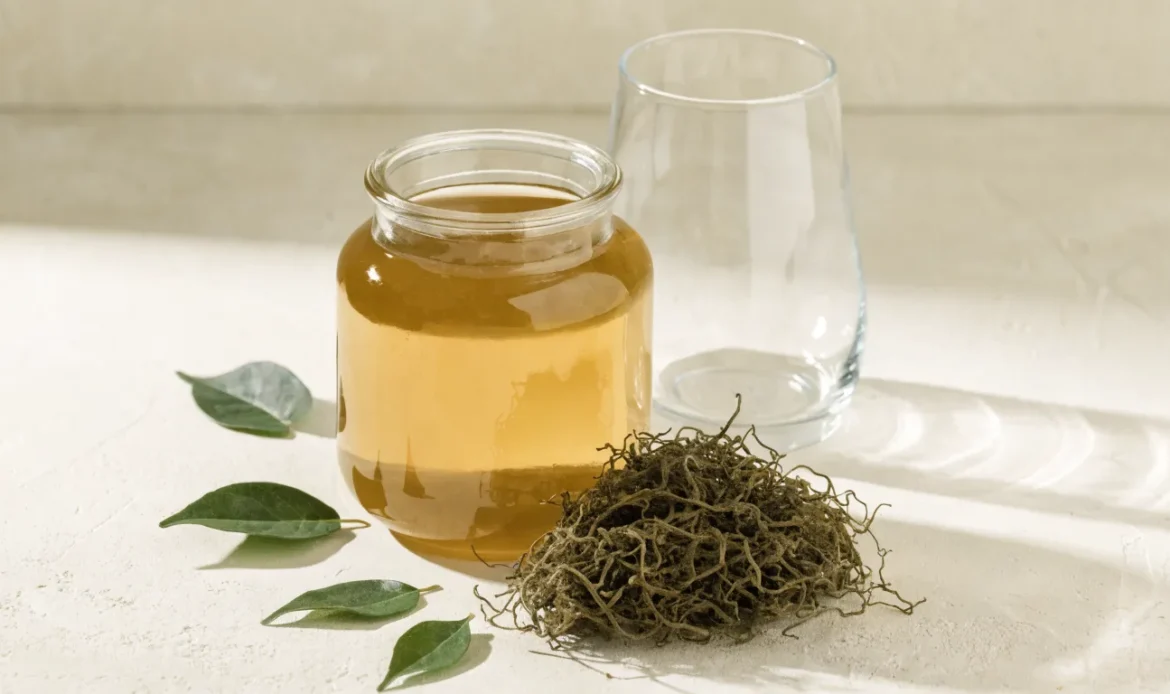
Short answer: There is no single best sea moss for everyone. The best sea moss depends on how you will use it, how much testing and transparency you want, and which form fits your life. Pick the form that matches your plan, then check for clear lab testing and storage guidance.
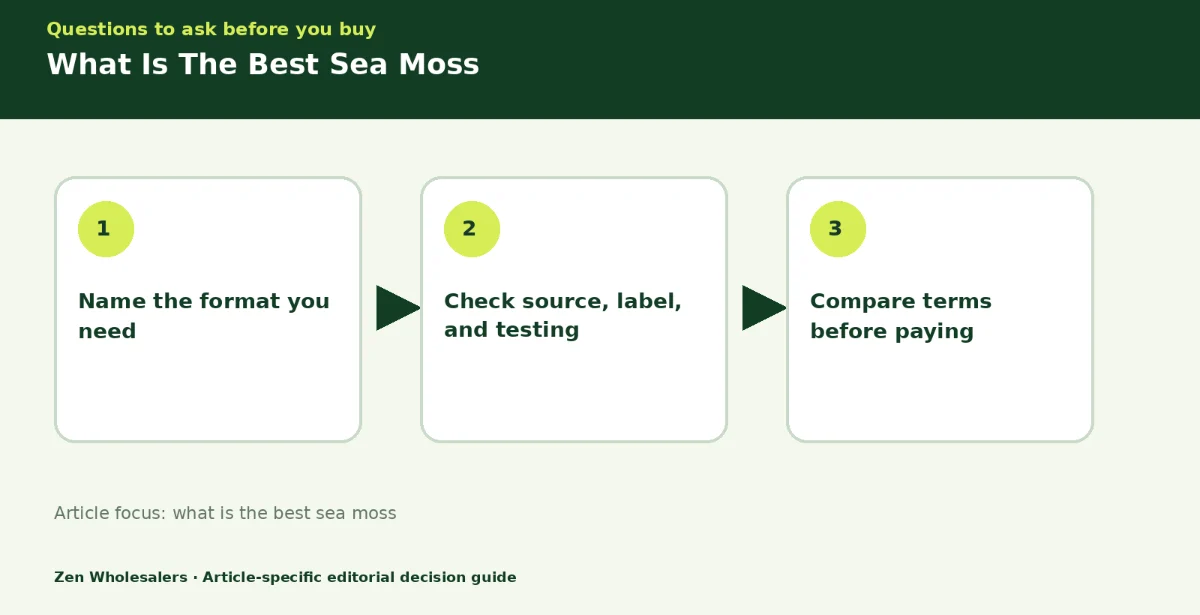
This quick answer helps you start. Below you will find details on forms, safety checks, a practical buyer checklist, and what to ask a seller. The goal is to make your next buy clearer and safer.
Why there is no single “best” sea moss
Sea moss is a common name for several types of seaweed. It can grow in different waters. Harvest methods, drying, and processing vary. These differences change taste, texture, shelf life, and safety. What is best for one person may not be best for another.
For example:
- Someone who wants smoothies may prefer a ready-made gel.
- A cook may prefer dried sea moss for recipes.
- A supplement user may prefer powder or capsules for easy dosing.
Also, nutrient and iodine levels vary by harvest and season. You cannot tell exact nutrient levels from a label alone. For safety, third-party testing helps. Scientific sources say seaweed varies in iodine and other minerals, and testing is important (see References [1], [2], [5]).
Forms of sea moss and how to choose
Here are the main forms and what they are best for.
- Raw / fresh
- Best if you want to make your own gel and control every step.
- Pros: Minimal processing. You can clean and prepare it yourself.
- Cons: Short shelf life. Needs refrigeration and careful handling.
- Dried
- Best for long storage and rehydrating for recipes or gel.
- Pros: Longer shelf life. Flexible use.
- Cons: Requires soaking and rinsing. Drying method matters.
- Gel (pre-made)
- Best for convenience and quick use in smoothies or drinks.
- Pros: Ready to use.
- Cons: Perishable. May include other ingredients. Check the label.
- Powder
- Best for mixing into food, capsules, or recipes where dry form helps.
- Pros: Easy to dose. Long shelf life if kept dry.
- Cons: Powder may hide fillers. Check ingredient list and COA.
- Capsules / tablets
- Best for people who want a supplement-like routine.
- Pros: Simple dosing and no prep.
- Cons: Less control over product purity. Check for fillers and testing.
Use the form table below to match form to use.
Form comparison table
| Form | Best use | Main benefits | Main drawbacks | What to verify |
|---|---|---|---|---|
| Raw | Make gel at home | Most control over prep | Short shelf life | Harvest date, handling, storage |
| Dried | Cooking, rehydrating | Long shelf life | Needs prep | Drying method, packing date |
| Gel | Smoothies, quick use | No prep | Perishable; may have extras | Ingredients, refrigeration, batch date |
| Powder | Capsules, recipes | Easy dosing; shelf stable | Could contain fillers | Ingredient list, COA |
| Capsules | Supplement routine | Convenient | Less transparency | Ingredient list, third-party testing |
Safety basics to check first
Sea moss can be part of a healthy diet for many people. But there are safety points you must check.
- Iodine varies: Seaweed can hold a lot of iodine. Iodine helps the thyroid. But too much iodine can cause problems for some people. If iodine is a concern, ask for testing or choose smaller portions. (See References [2], [3], [5].)
- Contaminants: Sea plants can absorb metals and pollutants from the water. Testing for heavy metals and microbes is the only reliable way to know safe levels. (See Reference [4].)
- Allergies and medicines: If you have allergies to seafood or are on medications, talk to your clinician before adding sea moss to your routine.
- Perishability: Gels and fresh products spoil if left out. Follow seller storage instructions.
These are common-sense checks. Labels rarely tell the whole story without tests.
What you can check on a product page or label
Before you buy, look for this information:
- Form and net quantity.
- Ingredient list (only sea moss or added ingredients?).
- Harvest region or country (if provided).
- Batch or harvest date.
- Processing or drying method.
- Storage and use instructions.
- Return, refund, and contact policy.
- Third-party lab testing or Certificate of Analysis (COA).
If the seller does not provide these details, ask them. A transparent seller should answer these questions.
How to read a COA (Certificate of Analysis)
A COA is a lab report for a specific batch. If you get one, check these points.
- Batch match: The report should match the batch or lot number on the product.
- Date: The COA should be recent and tied to the batch date.
- Parameters tested: Look for heavy metals (lead, mercury, cadmium, arsenic), microbiology (total plate count, yeast, mold), and iodine.
- Results and limits: The COA should show actual values and the lab’s detection limits.
- Lab accreditation: Prefer labs with recognized accreditation. The lab name and contact should be on the COA.
- Units and clarity: Make sure units are clear (e.g., mg/kg). If units are unclear, ask the seller to explain.
What a COA does not prove:
- Future batches will match. A COA is only for the tested batch.
- Personal health outcomes.
Operation Supplement Safety notes that sea moss sold as supplements should be tested (see Reference [4]). If a seller cannot show a clear COA, treat the product as higher risk.
Iodine and why it matters
Iodine in seaweed is variable. Some kinds of seaweed can be high in iodine. Too much iodine can affect thyroid function in susceptible people. If you have a thyroid condition, are pregnant, or take thyroid medication, ask a clinician before using sea moss. Also ask the seller for an iodine test for the batch if you plan frequent use. (See References [2], [3], [5].)
A few practical notes:
- Small amounts occasionally are different from daily large doses.
- Labels rarely show precise iodine per serving unless a test is done.
- If iodine values are important to you, ask for a COA that includes iodine.
Contaminants and environmental risk
Seaweed grows in the ocean. It can take up metals and pollutants from seawater. Heavy metals of concern include lead, cadmium, arsenic, and mercury. Only laboratory tests can tell levels for a batch. Regulatory bodies and food safety groups advise testing for seaweed products destined for food or supplements (see Reference [3]).
If you see no testing, consider buying a product that shares a lab test. For wholesale and resale, insist on COAs and batch testing.
Practical checklist: questions and actions before buying
Use this step-by-step checklist. Write short answers for each item.
- Purpose and form
- Why am I buying sea moss? (e.g., smoothies, cooking, supplement, retail)
- Which form fits that purpose? (raw, dried, gel, powder, capsule)
- Product details
- Net weight and package size match my need? (Yes/No)
- Ingredient list: only sea moss or other ingredients? List them.
- Origin and processing
- Does the seller state harvest region or waters? (Yes/No)
- Is the species or color named? (Yes/No)
- Is the harvest or packing date shown? (Yes/No)
- How was the sea moss processed or dried? (Describe)
- Safety and testing
- Does the seller provide a COA or lab report for this batch? (Yes/No)
- Which parameters were tested? (Iodine, heavy metals, microbes)
- Does the COA show values and lab contact? (Yes/No)
- Storage and shelf life
- Are clear storage instructions included? (Yes/No)
- Is the product perishable (gel, fresh) or shelf-stable (dried, powder)? (Note)
- Use and dosing
- Does the seller give suggested serving sizes or dosing? (Yes/No)
- Are there warnings for pregnant people or people with thyroid issues? (Yes/No)
- Seller transparency and support
- Is there a return policy? (Yes/No)
- Is there a clear contact method for questions? (Yes/No)
- How quickly did the seller answer queries? (Fast / Slow / No response)
- Price and value
- Is the price shown for the declared amount? (Yes/No)
- Do you need to compare unit price across sellers? (Yes/No)
If you answer No to many items, ask the seller before buying. For wholesale, require batch COAs and ask about supply consistency.
How to prepare and store each form
- Dried sea moss
- Rinse with cool water to remove sand and salt.
- Soak in clean water until it rehydrates and becomes flexible.
- Rinse again and use per recipe.
- Dry or refrigerate any leftovers.
- Raw sea moss
- Rinse and inspect for debris.
- Use quickly or make gel, then refrigerate the gel.
- Follow seller guidance for storage time.
- Sea moss gel (pre-made)
- Keep refrigerated.
- Check how long the product lasts after opening.
- Freeze small portions if you need longer storage.
- Powder
- Store in a cool, dry place.
- Keep sealed to avoid moisture and clumping.
- Capsules / tablets
- Store like other supplements, away from heat and moisture.
- Check the label for expiration.
Always use clean tools and containers. If something smells off or looks moldy, discard it.
Buying in bulk or for resale
If you plan to buy wholesale:
- Ask for sample batches before committing to a large order.
- Require COAs for each batch, or a plan for regular testing.
- Ask for expected lead times and packaging options.
- Agree on shelf-life dating and minimum order quantities.
For wholesale inquiries, use the wholesale contact path. Clear testing and supply terms reduce risk for both seller and buyer.
What sellers should be able to answer
Ask these questions. A good seller should answer them clearly.
- What species or common name is this sea moss?
- Where and when was it harvested?
- How was it processed and dried?
- Do you have a COA for this batch?
- How should I store and use it?
- What is your return and contact policy?
If answers are vague, request more detail. If the seller cannot provide clear answers, you may prefer a different source.
Next steps and useful links
- Learn more basics on our learning hub: Learn.
- See current product formats and options: Shop.
- Interested in bulk supply? Visit our wholesale page: Wholesale.
- Have questions or need custom orders? Reach out: Contact.
- Return to the home page for company info: Home.
Conclusion
There is no single best sea moss for everyone. The best choice matches your use, your risk tolerance, and the seller’s transparency. Pick a form that fits your routine. Then check the label, ask for a COA, and verify storage and return policies. If safety is important, prioritize products with batch testing for heavy metals, microbes, and iodine. Use the checklist and the decision flow idea in this article to compare options. If you plan bulk buying, always ask for sample testing and clear supply terms.
Choosing carefully helps you get a product that fits your needs and reduces surprises. When in doubt, ask questions and consult a clinician about iodine or medical concerns.
Frequently asked questions
Is one color of sea moss better than another?
Color is not a reliable sign of quality. Color can come from species, place, or drying method. More important are testing and how you will use the product.
Can I tell if sea moss has too much iodine from the label?
Not usually. Labels rarely list iodine unless the seller tested the batch. Ask for a COA that includes iodine if this is important to you.
How do I know if a COA is trustworthy?
Check that the COA matches the batch or lot number. Look for test details, lab name, date, and contact. Prefer labs with recognized accreditation. If anything is unclear, ask the seller to explain.
Is dried sea moss safer than gel?
Not inherently. Dried sea moss can last longer, but any product can be unsafe if not harvested or processed well. Gel is perishable and needs proper storage. Always check testing and handling instructions.
Should I stop other supplements to take sea moss?
Talk with your clinician. Seaweed can change iodine intake. If you are on thyroid medicine or other drugs, ask a health professional before changing supplements.
What if a seller will not share harvest or lab information?
If a seller will not share basic harvest details or lab tests, consider a different source. Lack of transparency increases uncertainty about safety and consistency. (Provide 4–6 FAQs — this list contains 6.)
References
- Harvard T.H. Chan School of Public Health, “Seaweed.” https://nutritionsource.hsph.harvard.edu/seaweed/
- Smyth PPA. “Iodine, Seaweed, and the Thyroid.” European Thyroid Journal, 2021. https://pmc.ncbi.nlm.nih.gov/articles/PMC8077470/
- Food Standards Australia New Zealand, “Survey of iodine levels in seaweed and seaweed containing products,” updated 2025. https://www.foodstandards.gov.au/science-data/monitoring-safety/surveyofiodinelevels
- Operation Supplement Safety, “Sea Moss in Dietary Supplements.” https://www.opss.org/article/sea-moss-dietary-supplements
- Blikra MJ et al. “Consequences of acute and long-term excessive iodine intake: A literature review focusing on seaweed as a potential dietary iodine source.” 2024. https://doi.org/10.1111/1541-4337.70037