
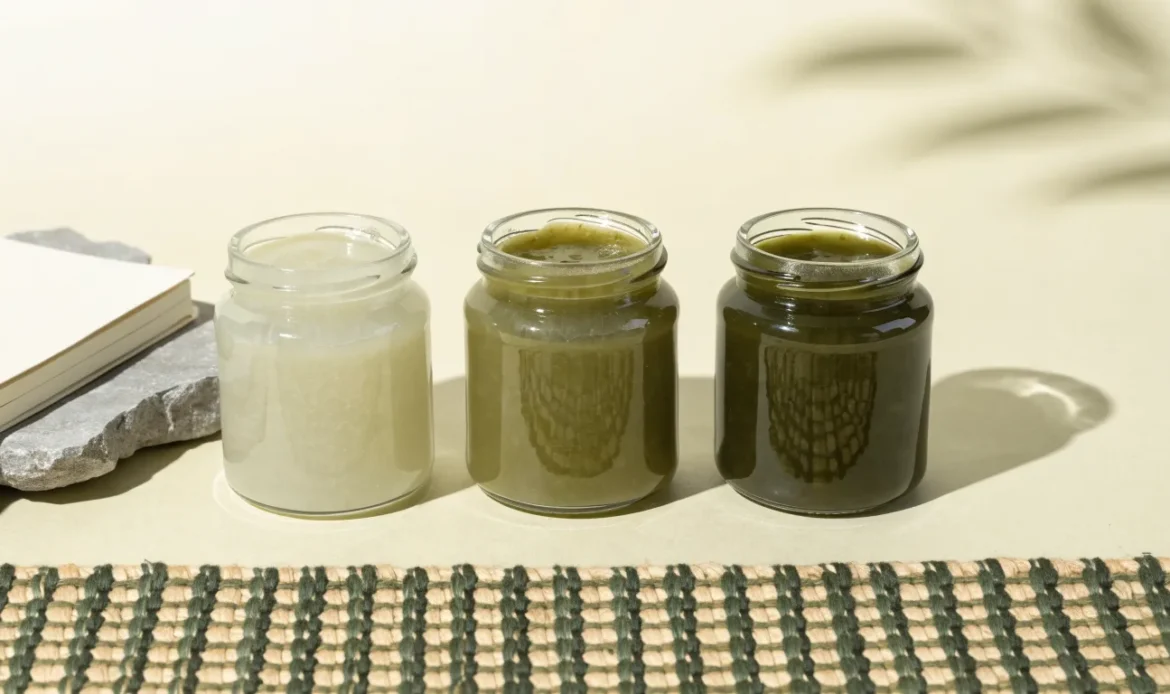
Short answer first: “Sea moss organics” usually refers to sea moss sold with claims that it is harvested and processed using organic or natural methods. The term is not standardized across the industry. You can check labels, ask sellers for testing, and compare product formats to decide what fits you. Below are clear steps to help you understand the phrase, check product claims, and pick a safe format.
Why this matters: seaweed, including sea moss, can contain natural iodine and other compounds. Levels vary by species, where it grew, and how it was processed. Some products are labeled “organic” or “organics,” but that label alone does not prove safety or quality.
What “sea moss organics” can mean
- A seller uses the word “organics” in their brand or product name. This can be a marketing choice.
- The product may be described as harvested using natural or sustainable methods.
- The product might carry an organic certification from a recognized agency. Certification is the clearest proof, but not every product will have it.
Important note: There is no single, global rule that makes the phrase “sea moss organics” mean the same thing everywhere. A buyer should not assume the word “organics” guarantees testing, purity, or a particular nutrient level.
How sea moss is different from other seaweed products
Sea moss is a common name for several red algae species. Like other seaweeds, it can contain minerals that plants on land do not. These include iodine and other trace elements. Those elements can be helpful in small amounts. However, they can also be high in some seaweeds. That is why knowing source and testing matters [1][2].
What we can check:
- Species name (Latin name) on the label.
- Harvest location or region.
- Processing steps: dried, gel, powdered, raw.
- Any lab tests or certificates listed.
What we cannot know from a label alone:
- Exact iodine or contaminant levels unless a lab report is included.
- How the product was stored before you buy it.
- Whether the seller followed environmental best practices unless third-party proof is provided.
Common sea moss product formats and how they compare
Below are common formats you will see in the market. Each has trade-offs for convenience, shelf life, and how easy it is to check for quality.
H2 Raw dried sea moss
- What it is: Whole or trimmed dried pieces of sea moss.
- Pros: Minimal processing. You can see the product and smell it.
- Cons: Needs rehydration before use. Quality varies by harvest and drying methods.
H2 Sea moss gel
- What it is: Rehydrated and blended sea moss turned into a gel.
- Pros: Ready to add to smoothies, drinks, or recipes.
- Cons: Perishable. Often made by small producers with variable storage practices. Gel can hide poor quality because texture masks pieces.
H2 Sea moss powder
- What it is: Dried sea moss ground to a powder.
- Pros: Easy to store and measure. Often sold for smoothies and capsules.
- Cons: Powdering hides pieces, so visual inspection is harder.
H2 Sea moss capsules or supplements
- What it is: Powdered sea moss placed in capsules or combined in blends.
- Pros: Convenient dosing.
- Cons: Harder to confirm purity. Check ingredient lists and third-party testing if available.
H2 Blends and flavored products
- What it is: Sea moss mixed with other ingredients.
- Pros: More taste options.
- Cons: More labels to check. Added ingredients change what you are buying.
Safety considerations and what evidence to look for
Iodine and other minerals in seaweed can vary widely. That variation can affect people who are sensitive to iodine or who take thyroid medicines [2][5]. Some regulatory agencies have reported variable iodine levels in seaweed products [3].
What to ask or look for:
- Does the product provide the species name (for example, a Latin name)?
- Is there a harvest location or region? General regions are better than nothing.
- Are there third-party lab tests or certificates? Tests should show levels for iodine and any heavy metals or contaminants.
- Does the seller provide a certificate of analysis (COA) from an accredited lab? A COA gives specific measured values and a lab name.
- Is there an ingredient list with only sea moss, or are there added fillers or preservatives?
- What storage and use instructions are given? Fresh gel should have refrigeration and an expiration date.
- If a product claims “organic,” what certifier is named? A certified organic label from a recognized body is stronger evidence than a brand name alone.
What labels cannot prove:
- Safety in your personal health situation. Only a healthcare professional can advise you about interactions with medicines or medical conditions.
- That the product will meet any nutrient needs. Nutrient content varies by batch and growing conditions.
- That the product is contamination-free unless testing is shown.
Reference notes: For the relationship between iodine, seaweed, and the thyroid, see the scientific review and public health summaries [2][5]. For general nutrition context for seaweed, see the Harvard nutrition guide [1]. For surveys on iodine levels in seaweed products, see food safety regulatory reports [3]. Consumer guidance on supplements and sea moss is available from supplement safety organizations [4].
Practical decision checklist: How to evaluate “sea moss organics” before you buy
Use this checklist when you read a product page or a label. You can copy it or use it as a mental list.
Decision checklist (minimum checks)
- Species listed: Yes / No
- Harvest region listed: Yes / No
- Form of sea moss (dried, gel, powder, capsule): _______
- Ingredient list contains only sea moss? Yes / No
- Certificate of Analysis (COA) available? Yes / No
- COA shows iodine or heavy metals testing? Yes / No / Not stated
- Organic certifier named (if product claims “organic”): Yes / No / Not stated
- Storage and best-by date listed: Yes / No
- Seller contact and traceability info available: Yes / No
If you answer “No” or “Not stated” to many checks, ask the seller for more information before buying.
Quick scoring guide
- Most Yes answers: Product presents useful information. Still check COA if you have specific health concerns.
- Mixed Yes/No: Ask the seller for COA and harvest details.
- Mostly No: Consider a different product or request more details.
Why this checklist helps: It separates verifiable facts from marketing language. A label with specific facts (species, COA, harvest region) is easier to evaluate than a vague claim such as “organics.”
How to read a Certificate of Analysis (COA)
A COA is a lab report that shows what was tested for a product batch. It is one of the most useful documents for buyers.
What to look for in a COA:
- Batch number that matches the product container.
- Date of testing and name of the lab.
- Measured values for iodine, lead, mercury, cadmium, and arsenic (if tested).
- Testing method or standards used.
- Pass/fail statements for microbiological tests (if included).
What a COA cannot tell you alone:
- Whether other untested contaminants are present.
- Whether the product will be safe for everyone. Individual health conditions matter.
If a COA is not publicly available, you can ask the seller to share it. Reputable sellers will provide testing on request or explain why testing is limited.
Practical buying scenarios and what to choose
Scenario 1 — You want raw sea moss to make gel at home
- Choose dried whole sea moss.
- Look for species name and harvest region.
- Confirm drying method if provided (sun-dried vs. machine-dried).
- Ask for COA for contaminants if you plan regular use.
Scenario 2 — You want convenience and shelf stability
- Powder or capsules suit convenience.
- Choose products with ingredient lists and testing information.
- Prefer brands that give batch numbers and COAs.
Scenario 3 — You prefer ready-to-use gel
- Check refrigeration needs and shelf life on the label.
- Ask how the gel was prepared and how long it will last after opening.
Scenario 4 — You are concerned about iodine or specific contaminants
- Ask specifically for iodine testing on the COA.
- Consult a healthcare provider before regular use, especially if you have thyroid disease or take thyroid medications.
How to store different sea moss formats
- Dried sea moss: Store in a cool, dry place. Use airtight containers to limit moisture.
- Gel: Keep refrigerated and follow the seller’s use-by date.
- Powder: Keep sealed and dry. Watch for clumping that can indicate moisture.
- Capsules: Store as directed on the package.
Storage advice reduces spoilage risk but does not change mineral content or contamination.
What questions to ask the seller
- What species of sea moss is in this product?
- Where was it harvested?
- Do you have third-party lab tests (COA)? Can you share them?
- If a product is labeled “organic,” which body certified it?
- How was the product processed and stored before sale?
- What is the batch or lot number and best-by date?
Asking these questions helps you move past marketing language to facts you can check.
Handling uncertainty: what labels can’t prove
- Labels cannot guarantee uniform nutrient content between batches.
- Labels alone don’t prove absence of contaminants; only tests do.
- The word “organic” can mean different things unless a certifier is named.
- Sellers can be honest but still lack testing resources. Small producers may provide useful products but will have fewer formal documents.
When you find a product with clear, verifiable details, you reduce uncertainty. When details are missing, the next useful question is: “Can you provide a COA for this batch?”
Next steps and useful guides
If you want more detail about formats and uses, see our guides:
- Learn hub: Learn — general sea moss articles and guides.
- Formats guide: Sea moss formats and uses — compare dried, beads, gel, and powders.
To browse products or place wholesale orders, visit:
If you have questions or need more product details from us:
If you are new to sea moss, start by reading and asking for test results. If you plan to use it regularly and have health concerns, speak with a healthcare professional.
Conclusion
“Sea moss organics” is not a single, fixed standard. It can mean a brand choice, a production claim, or a certified product. The most useful steps you can take as a buyer are simple:
- Look for specific facts on the label (species, harvest region, processing).
- Ask for a Certificate of Analysis that shows iodine and contaminant testing.
- Match the product format (dried, gel, powder, capsule) to how you will use it.
- Consult a healthcare professional if you have health conditions or take medicines.
These steps reduce uncertainty. They help you make a safer, more informed decision whether or not you buy from any particular seller.
Frequently asked questions
Does “sea moss organics” mean it is certified organic?
Not always. “Organics” in a name can be part of a brand or marketing language. Look for the certifier’s name or logo to verify an organic certification.
Is sea moss safe for people with thyroid issues?
Seaweed can contain variable iodine levels. People with thyroid conditions should consult a healthcare provider and ask the seller for iodine testing on a COA before regular use [2][5].
How can I tell if sea moss is contaminated?
You cannot tell contamination from smell or appearance alone. Request a COA showing tests for heavy metals and other contaminants. Regulatory surveys show variability in iodine and other elements across products [3].
Which format gives the most transparency?
Dried whole sea moss often lets you inspect the product visually. However, COAs and clear labeling are the best proof of quality regardless of format.
Are there standard tests for seaweed products?
Labs can test for iodine, heavy metals, and microbes. A COA should list what was tested and the methods used. If a seller cannot provide testing details, ask for clarity.
Is a brand claim of “wild-harvested” proof of quality?
“Wild-harvested” describes harvest method but does not in itself prove quality or safety. Ask for harvest location, season, and testing records if possible.
References
- [1] Harvard T.H. Chan School of Public Health, “Seaweed.” https://nutritionsource.hsph.harvard.edu/seaweed/
- [2] Smyth PPA. “Iodine, Seaweed, and the Thyroid.” European Thyroid Journal, 2021. https://pmc.ncbi.nlm.nih.gov/articles/PMC8077470/
- [3] Food Standards Australia New Zealand, “Survey of iodine levels in seaweed and seaweed containing products,” updated 2025. https://www.foodstandards.gov.au/science-data/monitoring-safety/surveyofiodinelevels
- [4] Operation Supplement Safety, “Sea Moss in Dietary Supplements.” https://www.opss.org/article/sea-moss-dietary-supplements
- [5] Blikra MJ et al. “Consequences of acute and long-term excessive iodine intake: A literature review focusing on seaweed as a potential dietary iodine source.” 2024. https://doi.org/10.1111/1541-4337.70037