
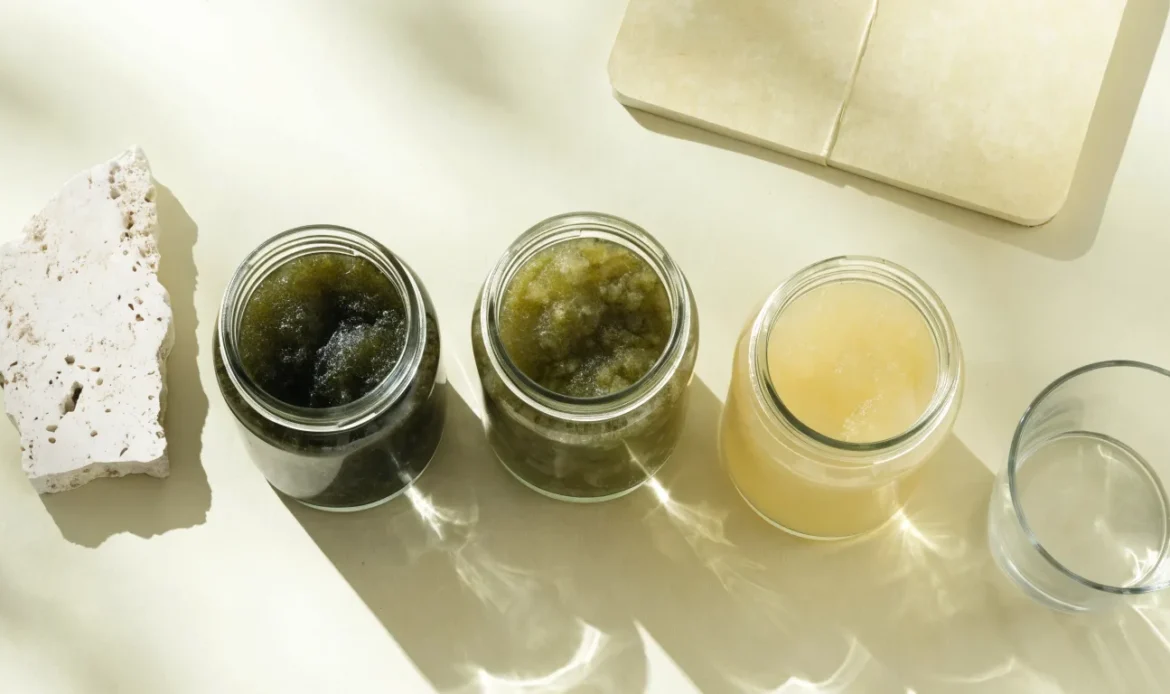
Short answer: “Holistic sea moss” in Atlanta usually means sea moss sold with more whole‑food or traditional handling. Sellers use words like “holistic” to show a focus on simple processing, multiple product formats (raw, gel, powder), and more sourcing detail. To choose one, check format, handling, and third‑party testing. Read the checklist below to pick the right format and to ask the right questions.
Why this first: you want a clear answer fast. Below you will find what holistic can mean, how the common formats work, safety checks, a practical decision guide, and what to ask sellers in Atlanta.
What people mean by “holistic sea moss”
“Holistic” is not a formal label. In this context it usually means the seller emphasizes:
- Minimal processing. The product is handled in ways that try to keep the seaweed close to its natural state.
- Multiple whole‑food formats. That can include raw cleaned sea moss, hand‑made gel, or dried pieces.
- Traditional preparation advice. Sellers may share old recipes or simple uses.
- Attention to sourcing and handling. This can mean more detail about where it was harvested and how it was cleaned.
No single phrase guarantees safety or lab testing. “Holistic” is a buyer signal. It points to a style of handling and sales. It does not prove a product is tested, pure, or potent. Ask for proof before you rely on any label.
Common formats and what they mean
Here are the usual forms you’ll encounter. The format affects storage, prep, and how you use sea moss.
- Raw whole pieces (fresh or sun‑dried). These are pieces of the seaweed. You often need to soak and rinse them before use. They take the longest to prepare. They show the plant structure, which some buyers prefer.
- Gel (prepared, refrigerated). Sellers blend soaked sea moss into a thick gel. It is ready to add to drinks or foods. Gel is convenient and perishable. It usually needs refrigeration and has a shorter fridge life than dried forms.
- Powder (dehydrated and milled). Powder lasts longer on the shelf. It is easier to measure and add to recipes. Because it is processed, the powder’s exact water‑soluble content can vary by batch.
- Capsules or softgels. These are convenience options sold as supplements. They are made from powdered or extracted material. Supplements are regulated differently than foods in many places. Look for clear labeling and third‑party testing.
Each format can be offered by sellers calling their approach “holistic.” The format you pick should match how you plan to use the product.
What you can check when buying in Atlanta
Below are concrete checks you can make when you look at a product or ask a seller. These checks help you move from a marketing term to specific facts.
- Format: raw, gel, powder, or capsule?
- Handling steps: Did the seller describe cleaning and drying methods?
- Harvest info: Do they say where it was harvested and whether it was wild‑harvested or farmed? (Note: a place name alone does not prove current harvest origin.)
- Lab testing: Can they provide third‑party lab reports for heavy metals, microbe counts, and iodine? If yes, check the test date and lab name.
- Storage and shelf life: How long will it last unopened and after opening? Ask for storage instructions.
- Ingredients list: Is the product just sea moss? Or are there added flavors, sweeteners, or preservatives?
- Batch codes or lot numbers: These help trace an item if there is testing or a recall.
- Seller policies: Does the seller offer returns, refunds, or clear contact options?
Asking these questions is normal. Trusted sellers should be able to answer in clear, simple words.
Safety checks and uncertainty you should know
Seaweeds can vary a lot. Some facts are supported by public research:
- Iodine levels vary widely among types of seaweed and across harvests. That means one sample can have modest iodine and another sample of the same species can have much more [1][2][5].
- Excessive iodine intake can cause thyroid effects in sensitive people. If you take thyroid medicines or have thyroid issues, talk to your clinician before using seaweed products [2][5].
- Surveys show iodine levels in seaweed products can be uneven, so tests on one product batch do not prove all batches are the same [3].
- Dietary supplements are not regulated the same way as foods in all countries. Labels on supplements can be less strictly verified. Look for third‑party testing or transparent lab reports [4].
What these points mean for you:
- Do not assume every product labeled “holistic” is low in iodine or free of heavy metals. Ask for testing.
- If you have a health condition or take medicine, ask a clinician before adding concentrated seaweed products to your diet.
- If a seller cannot provide clear answers or recent lab reports, treat that as a risk signal.
References that support these points appear at the end of this article.
Simple preparation and storage tips by format
Keep steps short and clear. These are general guidelines, not rules.
Raw whole pieces
- Rinse under running water to remove sand and debris.
- Soak in clean water until soft. Change the water once if it looks cloudy.
- Use within a few days in the fridge once rehydrated.
- To dry for long storage, use low heat in an oven or dehydrator, or buy pre‑dried pieces.
Gel
- Gel is usually made by soaking pieces, rinsing, and blending with water.
- Refrigerate gel and use within the seller’s recommended time.
- Freeze small portions in ice cube trays for longer storage.
Powder
- Store in a cool, dry place in a sealed jar.
- Use the seller’s serving guidance if available.
- Powder can clump in humid conditions; keep it sealed.
Capsules
- Store per label instructions.
- Check ingredients for fillers or binders.
Practical decision guide: choose a format that fits you
Use this table to decide fast. The right pick depends on how you plan to use sea moss and how much prep you want to do.
| Your priority | Best format to consider | Why | What to check |
|---|---|---|---|
| Fresh, traditional feel | Raw whole pieces | Closest to the plant. You control soaking and gel making. | Ask about cleaning steps and origin. |
| Convenience for daily use | Gel | Ready to add to smoothies or foods. | Check refrigeration time and batch date. |
| Long shelf life, flexible use | Powder | Easy to store and measure. Longer open shelf life than gel. | Ask about drying methods and tests. |
| Easy dosing, travel | Capsules | No mixing needed. Simple dosing. | Check ingredient list and third‑party tests. |
| Wholesale purchase | Dried pieces or powder | Easier to store and resell or process. | Ask for certificates of analysis and lot tracking. |
Use the columns to match your daily needs with a format. Then use the “What to check” column when you talk to a seller.
What to ask a seller in Atlanta (short script)
If you visit a shop or call a seller, use this simple script. It keeps the talk quick and focused.
- “Which format do you sell? Raw, gel, powder, or capsules?”
- “Where was this batch harvested or sourced from?”
- “Do you have a recent lab report for heavy metals, microbes, and iodine?”
- “What is the storage and fridge life once opened?”
- “Is this product just sea moss, or are there other ingredients?”
If a seller can answer these clearly, you have better information. If they cannot, ask for contact details and more time before you buy.
Where to learn more and where to buy
If you want to learn more about seaweed and safety, start with reputable sources and public health pages. For buying, pick sellers who share test results and clear handling steps.
Find our general learning resources at /learn/. Browse our retail options at /shop/. If you are a business buyer, see /wholesale/. For questions, reach out at /contact/ or visit our home page, /.
Conclusion
“Holistic sea moss” in Atlanta usually describes a simple, traditional style of handling. The term itself does not guarantee safety or testing. To make a good choice, pick the format that fits your routine, ask sellers clear questions, and request recent third‑party test results for heavy metals, microbes, and iodine. If you have thyroid issues or take medicines, check with your healthcare provider before using seaweed products. Use the checklist and decision table above to help you shop smarter.
Explore more about sea moss and formats on our learning pages at /learn/. See product options at /shop/ or contact us at /contact/ for more details. If you buy for resale or a business, visit /wholesale/ for wholesale information.
Continue reading
Frequently asked questions
Is “holistic sea moss” a certified label?
No. “Holistic” is a marketing term. It shows a focus on traditional handling or minimal processing. It is not a formal certification. Always ask for specific details such as testing or harvest info.
How can I know how much iodine is in a sea moss product?
You can only know by testing. Iodine levels vary a lot by species, harvest time, and location. Ask for a recent lab test that lists iodine. Even then, values apply to that batch and may not represent future batches [1][2][5].
Are sea moss capsules safer than raw pieces?
Not automatically. Capsules are convenient, but the safety depends on sourcing and testing. Both forms can contain variable iodine or contaminants if not tested. Look for third‑party tests and clear labeling [4].
What does a credible lab report look like?
A credible report lists the testing lab, the date, the batch or lot number, and measured results for things like heavy metals, microbes, and iodine. If a seller provides a lab report, check those details and the lab’s name.
Should people with thyroid conditions avoid sea moss?
People with thyroid conditions should check with their clinician before using seaweed products. Iodine can affect thyroid function in some people, and seaweed iodine content can be high or variable [2][5].
Is there a difference between wild and farmed sea moss for safety?
Wild or farmed labels describe how the seaweed was obtained. Each has potential risks and benefits. What matters more for safety is testing and handling. Ask for test results and handling steps rather than rely only on “wild” or “farmed” claims.
References
- Harvard T.H. Chan School of Public Health, “Seaweed.” https://nutritionsource.hsph.harvard.edu/seaweed/
- Smyth PPA. “Iodine, Seaweed, and the Thyroid.” European Thyroid Journal, 2021. https://pmc.ncbi.nlm.nih.gov/articles/PMC8077470/
- Food Standards Australia New Zealand, “Survey of iodine levels in seaweed and seaweed containing products,” updated 2025. https://www.foodstandards.gov.au/science-data/monitoring-safety/surveyofiodinelevels
- Operation Supplement Safety, “Sea Moss in Dietary Supplements.” https://www.opss.org/article/sea-moss-dietary-supplements
- Blikra MJ et al. “Consequences of acute and long-term excessive iodine intake: A literature review focusing on seaweed as a potential dietary iodine source.” 2024. https://doi.org/10.1111/1541-4337.70037