
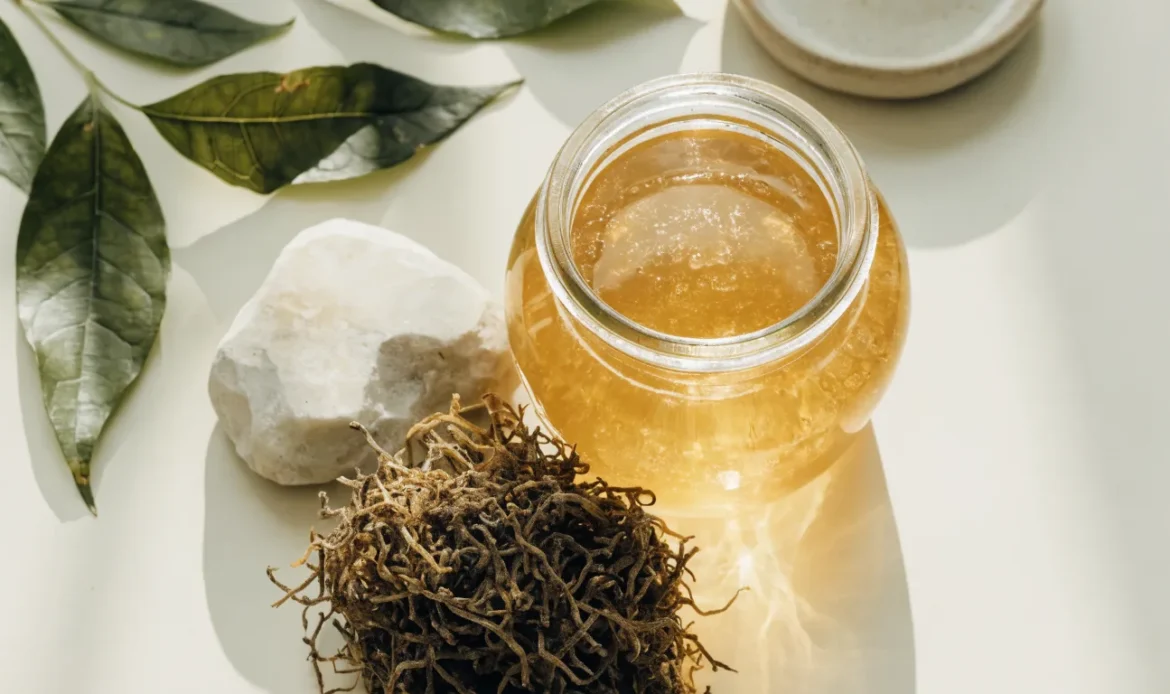
Short answer: The best sea moss depends on what you want to do with it. For cooking and smoothies, many buyers choose dried or pre-washed gels for convenience. For supplements, powders or capsules are common. The quality you should look for is the same in every form: clear sourcing, minimal processing, and testing for safety. Read on for a simple decision guide, a practical checklist, and the next steps you can take.
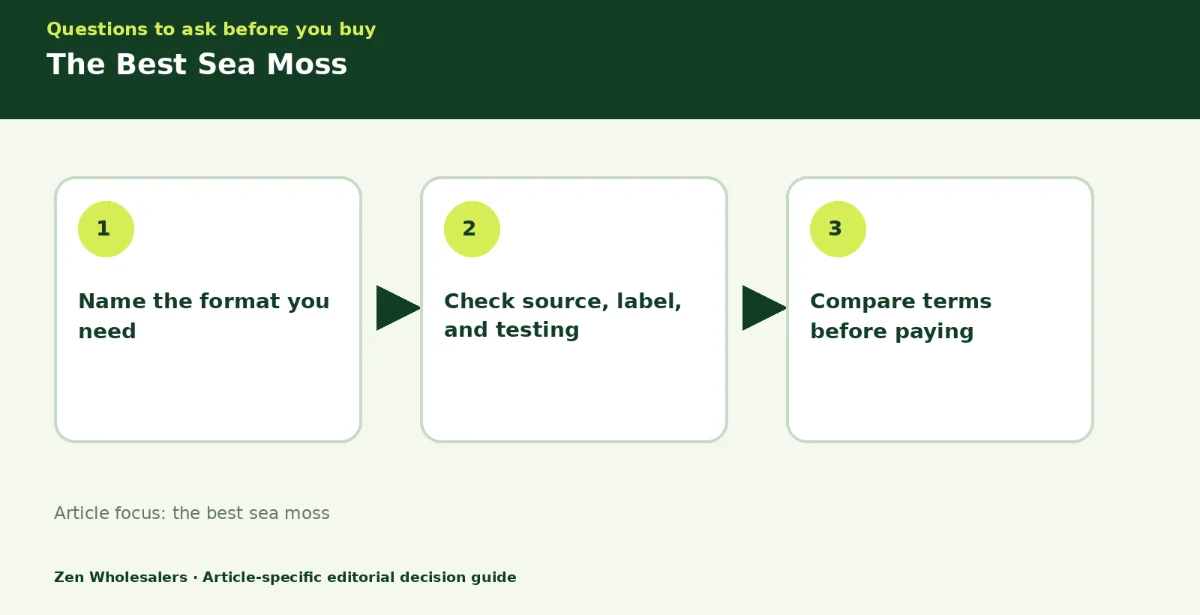
What people mean by “the best sea moss”
People use the phrase “the best sea moss” in different ways. Some mean the cleanest product. Some want the easiest form to use. Some want the lowest cost per pound. All are valid. No single product is best for every use. Saying which is best depends on your priorities: safety, convenience, or price.
This guide helps you decide. It shows what to check and what questions to ask. It also explains what testing and labels can prove — and what they cannot.
How to pick sea moss: key factors explained
Here are the main things to check when you compare products or sellers.
- Form and how you will use it. Do you want raw sea moss to prepare yourself? Or a ready-made gel? Do you need powder or capsules for consistent dosing? Each form has pros and cons. See the comparison table below.
- Source and harvest method. Good sellers will say where their sea moss was harvested and how. Location matters because water conditions vary. A location statement is useful, but it does not prove safety by itself.
- Processing and cleaning. Sea moss is usually rinsed and dried or blanched. Ask how many rinses and whether raw water is used in processing. More steps can mean fewer surface contaminants, but more processing can also change texture.
- Testing for contaminants and iodine. Seaweeds can take up minerals and elements from water. That includes iodine and, in some places, heavy metals. Tests from accredited labs are the strongest evidence that a product was checked for specific contaminants. Keep in mind a test only shows the batches tested. It cannot guarantee every future batch will match.
- Species and color. “Sea moss” often refers to several related species. Color or local names can help identify the species, but they are not a full safety test. Different species can have different textures and mineral levels.
- Processing date and shelf life. Dried sea moss can last a long time if stored well. Made gels are perishable. Ask how the product should be stored and how long it lasts unopened and after opening.
- Transparency and documentation. The best sellers provide clear answers to the questions above. They may show lab reports, harvest maps, or processing photos. Transparency helps you compare options.
Where the science stands: seaweed can be a significant source of minerals, including iodine. Iodine levels vary a lot among seaweed types and with location and processing [1][2]. Some surveys show wide differences in iodine across products and batches [3]. Excess iodine can cause thyroid problems in some people, so checking for iodine content or guidance is important [2][5]. A seller’s lab test is helpful. A label alone does not tell the whole story.
Forms of sea moss — quick comparison
| Form | Best for | Ease of use | How to check when buying | Notes |
|---|---|---|---|---|
| Dried raw sea moss | Home prep, long storage | Needs soaking and rinsing | Look for visible clean pieces, clear harvest info, drying method | Good for home cooks who want control |
| Fresh (wet) sea moss | Immediate use | Perishable; short shelf life | Ask harvest date and storage temp | Use quickly or freeze |
| Gel (ready-made) | Smoothies, topical use | Very easy | Check ingredients list and storage directions; ask for preservative info | Perishable after opening |
| Powder | Baking, consistent dosing | Easy to blend | Check for single-ingredient labeling and batch testing | Good for measured recipes |
| Capsules or tablets | Supplements | Very easy | Look for supplement facts, third-party testing | A supplement label does not replace batch testing for contaminants |
| Wholesale bulk | Retailers and makers | Depends on form sold | Request certificates, lot testing, and sample | Ask about lot sizes and testing frequency |
This table helps you pick a form. It does not tell you which brand is best. Use it with the checklist below.
Practical decision checklist — use this before you buy
Print or save this checklist. Use it when you compare two or more sellers.
- Use: What will I use this sea moss for? (food, supplement, topical)
- Form: Which form fits my plan? (dried, gel, powder, capsule)
- Source: Does the seller list harvest region or bay? If yes, is that region known for clean water? (Seller notes are a start. They do not prove safety.)
- Species: Does the label or seller name the species? If not, ask.
- Processing: How is it cleaned and dried? How many rinses? Is bleach or chemical wash used? (Avoid sellers who won’t answer.)
- Testing: Does the company provide recent lab tests for contaminants and iodine? Are lab reports from an accredited lab? Do the reports match the product lot? (A report is only reliable if it is clear which lot it tests.)
- Ingredients: For gels or blended products, what else is in the jar or bag? (Some people prefer single-ingredient products.)
- Storage: How should it be stored? What’s the shelf life unopened and opened?
- Packaging: Is the packaging sealed and labeled with a batch or lot number? (Lot numbers help trace tests.)
- Transparency: Can the seller answer follow-up questions by email or phone?
- Return policy: Is there a clear return or refund policy?
- For wholesale buyers: Can the supplier supply Certificates of Analysis (COA) and supply chain paperwork at scale?
Use answers to these to rank options. If a seller cannot answer several of these, consider other options.
Questions to ask a seller — a short script you can use
Use these exact questions in email or chat:
- Which species of sea moss is this? (Please share the common and scientific name.)
- Where and when was it harvested? (Please name the region or coordinates if possible.)
- How was it processed and stored before sale?
- Do you have recent lab test results for iodine and contaminants for this lot?
- Is there a batch or lot number on the package?
- What is the recommended storage and shelf life after opening?
- For gels or blends: what are the full ingredients and preservative info?
Sellers who answer fully and quickly are easier to trust. Sellers who refuse may still have a safe product, but you will lack information to compare.
Safety, iodine, and testing — clear facts and limits
- Seaweed, including sea moss, can contain iodine and other minerals. The amount varies by species, place, season, and processing [1][2].
- Large or unexpected iodine intakes can affect the thyroid in some people [2][5]. That risk depends on how much iodine is present and how much someone consumes.
- Surveys and studies show wide variation in iodine across different seaweed products and batches [3]. One test or label cannot guarantee every future batch will be the same.
- Tests that list results for iodine, arsenic, lead, cadmium, and mercury are the most helpful for buyers. Third-party testing from accredited labs is stronger evidence than an internal test result alone [4].
- A seller’s traceability documents (like batch numbers and COAs) help link a test to the specific product you buy. A COA for a different lot is less useful.
- No test can promise zero risk. Tests show only what was measured in the sample tested. Regular testing and transparent traceability reduce, but do not eliminate, uncertainty.
If you have a thyroid condition or are pregnant, talk with a health professional before adding new seaweed products to your routine. This guide does not give medical advice.
References that help explain these points include public nutrition overviews and scientific reviews on iodine and seaweed [1][2][5], and regulatory surveys on iodine in seaweed products [3]. Organizations that review supplement safety have also highlighted caution around sea moss products sold as dietary supplements [4].
How to evaluate lab reports (COAs)
If a seller shares a report, look for these items:
- Lab name and accreditation. An accredited lab is a stronger sign.
- Date and lot number. The date should be recent. The lot number should match the product you are buying.
- Limits reported. Look for levels for iodine and common contaminants. If the report lists no testing for iodine or heavy metals, ask why.
- Units and method. Reports should show units (e.g., mg/kg) and methods used. If these are missing, ask for clarification.
If the report is hard to read, ask the seller to explain. A trustworthy seller will help you understand the COA.
Buying by use case: short guides
- If you want to make your own gel and control ingredients: buy clean dried sea moss with clear harvest info. Choose a seller who explains how to rehydrate and rinse.
- If you want convenience for smoothies or topical uses: a sealed gel with a clear ingredient list and storage instructions fits many buyers. Check if refrigeration is required.
- If you need consistent dosing for a product you make or sell: powders or capsules with COAs per lot can be easier to standardize for recipes or labels.
- If you need large amounts for resale: ask for wholesale supply details, lot testing frequency, and lead times. See our wholesale page for typical documentation requests.
If you want to learn more about sea moss forms and how to use them, start with our learning hub: Learn about sea moss (/learn/).
Wholesale buyers: a short checklist
If you plan to buy in bulk for resale or manufacture, ask about:
- Minimum order quantities and lead times.
- Frequency and scope of testing (do they test every lot?).
- Certificates of Analysis and supply chain documents.
- Packaging and labeling options.
- Return policies for bulk orders.
- Samples and small pilot lots.
You can contact our wholesale team for a list of common documents and a sample request at Wholesale information (/wholesale/).
Helpful next steps
- Compare product forms and read labels with the checklist above.
- Ask sellers for COAs and harvest details before you buy.
- If you are a retailer or maker, request sample lots and documentation before placing a large order.
Browse our product pages when you are ready: Shop sea moss (/shop/). If you still have questions, contact our team: Contact us (/contact/). For more background reading, start at our learning center: Sea moss learning hub (/learn/).
Conclusion
There is no single answer to “the best sea moss” that fits everyone. The best choice depends on your use, your need for convenience, and how much testing and traceability you want. Use the checklist and questions in this guide to compare sellers. Ask for lab reports tied to lot numbers. If you need wholesale supplies, request regular COAs and samples. Clear sourcing and testing are the most useful signals for trust. When in doubt, ask the seller to show documentation or look for a seller willing to answer follow-up questions.
If you want to see product options or request a sample, visit our shop: Shop sea moss (/shop/). For wholesale inquiries, see Wholesale information (/wholesale/). For general questions, explore our learning center: Learn about sea moss (/learn/) or Contact us (/contact/).
Frequently asked questions
Is there one “best” species of sea moss?
No single species is best for everyone. Different species have different textures and mineral profiles. Choose based on your use and the seller’s transparency.
How can I tell if my sea moss is safe?
Look for clear harvest info, batch or lot numbers, and recent lab reports for iodine and contaminants. Ask the seller direct questions. Tests from accredited labs are the strongest evidence.
Are gels safer than dried sea moss?
Safety depends on sourcing and testing, not form. Gels are perishable and must be made and stored properly. Dried products last longer but still depend on clean harvest and processing.
Should I worry about iodine?
Seaweed can be a source of iodine and levels vary widely. Excessive iodine intake can affect the thyroid in some people. If you have thyroid issues or are pregnant, consult a health professional before using seaweed products [1][2][5].
What does a COA show?
A Certificate of Analysis lists test results for a specific sample or lot. Useful COAs will show the lab name, accreditation, date, lot number, and levels for tested substances.
Can labels be trusted for contaminants?
Labels tell you what the seller claims. They do not prove the product was tested. A lab report or COA provides stronger evidence, especially when it names the lot tested.
References
- Harvard T.H. Chan School of Public Health, “Seaweed.” https://nutritionsource.hsph.harvard.edu/seaweed/
- Smyth PPA. “Iodine, Seaweed, and the Thyroid.” European Thyroid Journal, 2021. https://pmc.ncbi.nlm.nih.gov/articles/PMC8077470/
- Food Standards Australia New Zealand, “Survey of iodine levels in seaweed and seaweed containing products,” updated 2025. https://www.foodstandards.gov.au/science-data/monitoring-safety/surveyofiodinelevels
- Operation Supplement Safety, “Sea Moss in Dietary Supplements.” https://www.opss.org/article/sea-moss-dietary-supplements
- Blikra MJ et al. “Consequences of acute and long-term excessive iodine intake: A literature review focusing on seaweed as a potential dietary iodine source.” 2024. https://doi.org/10.1111/1541-4337.70037