
Short answer first: Make a clean sea moss gel, then add it to foods as a mild thickener and texture boost. Start by rinsing, soaking, blending, and chilling. Use small amounts until you know how it changes taste and texture.
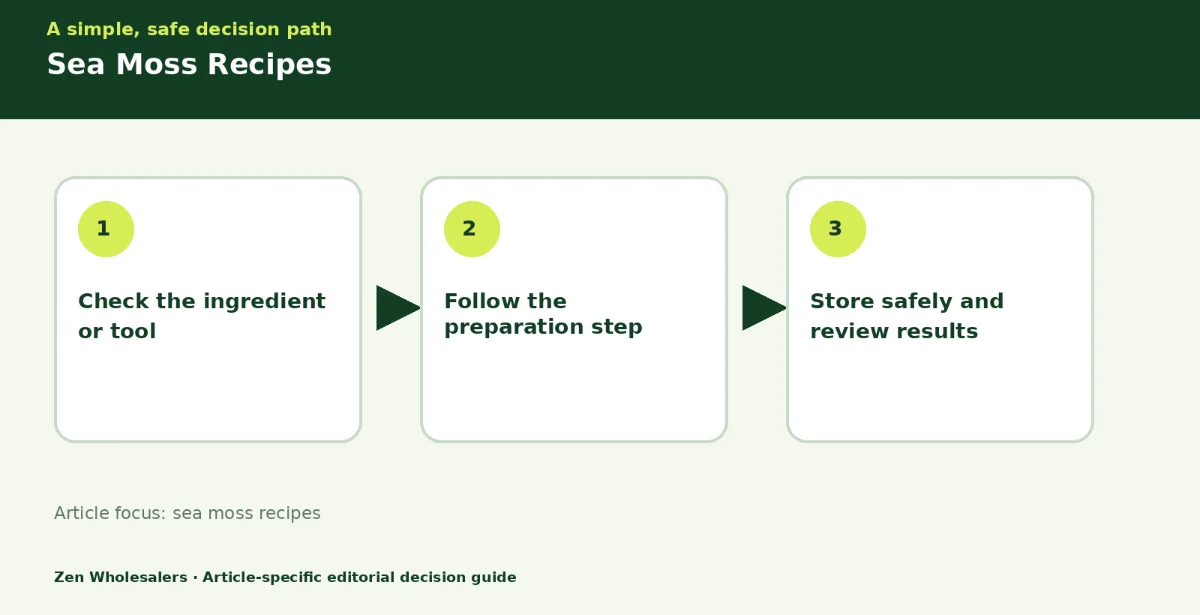
This guide shows step-by-step prep, food-safety checks, helpful recipe uses, and a short decision checklist to help you pick the right form of sea moss for cooking.
Why this matters
- Sea moss is seaweed that many cooks use like a food ingredient.
- It can change texture and help recipes set or cling.
- It has variable natural iodine and other minerals. That can matter for some people [2][5].
- Be cautious about source, contamination, and how much you use. Good checks help you cook safely.
What this guide covers
- How to make sea moss gel at home.
- How to use sea moss in common recipes.
- What to check on the product label or with your supplier.
- Food-safety and storage tips.
- A small decision checklist to pick raw vs gel vs powder.
What is sea moss and sea moss gel?
Sea moss is a name for some edible red seaweeds. People also call it Irish moss or carrageen moss in some places. Sea moss can be sold dried, as powder, or already made into a gel.
Sea moss gel is the hydrated, blended form you most often cook with. You soak dried sea moss in water. Then you blend it with fresh water until smooth. Chill it so it thickens. The gel is easy to add to smoothies, sauces, and desserts.
Note on safety and nutrients
Seaweeds can contain higher levels of iodine than many land foods. Iodine affects the thyroid. Some seaweeds may have very high iodine amounts. If you have thyroid disease, are pregnant, or take medicines that affect the thyroid, check product details and consider talking with a health professional [2][3][5]. Also be aware that some seaweed products sold as supplements may have extra risks or unclear sourcing [4]. General food-safety info about seaweed appears in public health sources [1].
How to prepare basic sea moss gel (step-by-step)
This is the standard home method. Work on a clean surface. Use clean hands and tools.
You will need
- Dried sea moss (clean and food-grade).
- Fresh drinking water for soaking.
- A blender (high-speed helps).
- A clean jar with a tight lid.
- A spoon and strainer.
Steps
- Inspect the dried sea moss. Look for sand, shells, or obvious debris. Break large clumps apart by hand.
- Rinse briefly under cool running water to remove surface grit. Stir and rinse until the water runs clearer.
- Place the rinsed sea moss in a bowl. Cover with clean water. Use enough water to fully submerge the sea moss.
- Soak. Softening time varies by product and age. The pieces will swell and feel softer. Change the soak water at least once if it gets cloudy.
- Drain and rinse again after soaking. Remove any remaining bits that look odd.
- Transfer sea moss to a blender. Add clean water for blending. Start with enough to cover the sea moss and add more until the texture becomes smooth when blended.
- Blend until smooth and silky. Scrape down the sides as needed.
- Pour into a clean jar. Seal and refrigerate to chill. The gel will thicken as it cools.
Food-safety notes during prep
- Wash hands and utensils. Work on sanitized surfaces.
- Use clean drinking water for soaking and blending.
- If sea moss smells bad at any point, do not use it. A mild ocean smell is normal. Sour, rotten, or sharp off smells are not.
- If you notice mold after storage, discard the jar and clean the container well.
What the process can’t prove
- This home method reduces surface grit and softens the product. It does not test for contaminants like heavy metals or microbes. Those require lab testing from the supplier.
Choosing dried sea moss: what to check
You will choose raw dried sea moss, a pre-made gel, or powder. Here are things to check and questions to ask sellers.
Quality checks to make
- Appearance: pieces should look like dried seaweed, not full of sand or foreign bits.
- Smell: a fresh sea smell is normal. Avoid strong sour or rotten smells.
- Packaging: sealed, labeled food packaging is better than loose bulk without labels.
- Label details: look for a clear ingredient list and handling instructions.
- Source transparency: ask where it was harvested and how it was processed. A supplier who can explain processing is more likely to follow safe practices.
Safety questions to ask a seller
- Do you test for contaminants or heavy metals?
- Is the sea moss harvested for food use?
- How was it dried and stored before sale?
- Is the product raw, washed, or pre-cleaned?
Be aware that product labeling and testing practices vary. Public sources note that iodine content can vary widely across seaweed types and products [3][5]. Food-safety and composition testing are the seller’s responsibility.
Decision checklist: raw, gel, or powder?
Use this short guide to pick the form that fits your cooking and risk tolerance. The table below helps you decide.
| Decision point | Raw dried sea moss | Pre-made gel | Powder |
|---|---|---|---|
| Control over cleaning | High — you clean it yourself | Low — depends on maker | Low to medium — processing varies |
| Ease of use | Requires soaking and blending | Ready to use | Easy to mix or cook with |
| Storage and travel | Lightweight, long shelf life if kept dry | Needs refrigeration after opening | Stable if dry, depends on packaging |
| Transparency of source | Depends on vendor labeling | Depends on maker practices | Depends on manufacturer testing |
| Best if you want | Full prep control | Quick mixing into foods | Baking, dry mixes, and beverages |
| Notes | Requires time and water | Check preservative or additives | Powder may include fillers — check label |
How to use this checklist
- If you want hands-on prep and full control: choose raw dried sea moss.
- If you want convenience and speed: pre-made gel works well.
- If you want to add to dry mixes or bake: powder can be handy.
This chart helps with the practical choice. It does not guarantee safety. Ask sellers about testing or look for clear labeling.
Practical recipe uses and simple how-tos
Start by using small amounts. Sea moss gel changes texture. It can make smoothies thicker, soups silkier, sauces clingier, and desserts set without gelatin.
General rule for use
- Add a little at first. Taste and texture will guide you.
- Consider blending the gel into wet ingredients for a smooth result.
Here are practical, non-medical recipe ideas. Quantities are suggestions. Adjust to taste and texture.
1) Smoothie booster (cold)
- Add a spoonful of sea moss gel to any fruit or green smoothie.
- Blend well so the gel disperses.
- It thickens and smooths mouthfeel.
2) Creamy soup thickener (hot)
- Use gel to thicken pureed soups.
- Stir in toward the end of cooking on low heat.
- Do not boil aggressively after adding; gentle heat helps maintain texture.
3) Vegan dessert base (chilled)
- Mix sea moss gel with fruit puree and a sweetener.
- Chill until set. Gel helps the mix hold shape.
- For firmer set, combine with an agar or other plant gelling agent if you normally use one.
4) Salad dressing or sauce
- Blend gel with oil, acid (like lemon or vinegar), and seasonings.
- Use as a creamy dressing that stays emulsified longer than water alone.
5) Baked goods (as an egg replacer)
- In some recipes, a small amount of sea moss gel can add moisture.
- Replace part of the liquid in a batter. Start small and test.
6) Frozen treats
- Add gel to popsicle mixes for a smoother frozen texture.
- Blend well before pouring into molds.
7) Topical culinary uses
- Sea moss may be used to thicken syrups or glazes. Use a small test batch before scaling.
Notes on cooking and heat
- Sea moss gel handles gentle heat well.
- High, prolonged heat may change texture. Add toward the end when possible for soups and sauces.
Recipe testing tip
- When trying a new recipe, make a small test batch first. That way you learn how the gel affects texture and flavor.
Storage, containers, and safety tips
Containers and temperature
- Use clean glass jars or food-safe plastic containers with tight lids.
- Keep pre-made gel refrigerated after opening.
- If you freeze gel, use freezer-safe containers and leave room for expansion.
Signs to discard
- Foul smells, visible mold, or sliminess beyond normal smoothness are signals to discard.
- If the jar lid bulges, do not open. That suggests spoilage.
No universal shelf-life promise
- Storage times depend on processing, sanitation, and refrigerator conditions. Do not assume a product lasts indefinitely. When in doubt, throw it out.
Food-safety best practices
- Clean working surfaces and utensils.
- Use potable drinking water.
- Keep gels and mixes chilled if not served immediately.
- Label jars with prep date if you want to track freshness for your home use.
Working with special diets and allergies
Allergic reactions
- Seaweed allergies are rare but possible. If you have a known seaweed allergy, avoid sea moss.
Gluten and common allergens
- Pure sea moss itself is not a gluten grain. However, processed products and mixes can include other ingredients. Always read labels.
Diet compatibility
- Sea moss can be used in many diets as a texture ingredient rather than a main food. It is plant-based in most forms.
Things to check that sellers can’t prove on a label
A vendor label can say many things. Here are facts a seller can claim and things they can’t prove without testing:
- They can show harvest locations and processing steps.
- They can show certificates from labs that tested for specific contaminants.
- They cannot prove a product is free from every contaminant without lab reports.
- They cannot guarantee a uniform nutrient level across every harvest; natural products vary.
Ask for lab or testing reports if you have special concerns. Public resources note variability in iodine content among seaweed products and recommend caution where high intake could be a risk [3][5].
How to scale recipes for larger batches
If you want to scale up for a family meal or small event:
- Do a test batch first to confirm texture.
- Combine gels from the same type and temperature to keep texture consistent.
- For large hot batches, add gel slowly while stirring to prevent clumping.
If you plan to sell foods made with sea moss, check local food safety rules. Food-safety laws may require labeling, specific handling, or refrigerated transport.
Quick decision guide: should you buy raw, gel, or powder?
- Buy raw dried if you want full control and long shelf life in dry storage.
- Buy gel if you want quick convenience and ready-to-use texture.
- Buy powder if you want a dry blend that mixes into recipes and travels easily.
If you have thyroid issues or are pregnant, ask about iodine levels before adding sea moss regularly to your diet [2][3][5]. If you use supplements, note that supplement quality varies and some products raise safety questions [4].
Where to learn more and next steps
If you want more background on seaweed safety and nutrition, read general resources on seaweed from public health and nutrition schools [1]. To ask about product sourcing or wholesale options, use the contact channels below.
Useful internal links
- Learn the basics of sea moss and sourcing on our main learn page: Sea moss learning center.
- See our product selection and convenience options here: Shop sea moss products.
- If you are a buyer or retailer, view our wholesale options: Wholesale information.
- Contact us with sourcing or recipe questions: Contact our team.
- Return to our homepage for navigation: Zen Wholesalers home.
Conclusion
Sea moss gel is a versatile kitchen ingredient. Make it by rinsing, soaking, and blending dried sea moss. Use it to thicken smoothies, soups, sauces, and desserts. Choose the product form that fits your time and comfort with prep. Ask sellers for source and testing information if you have health concerns, and keep good food-safety habits during prep and storage.
If you want step-by-step basics or more on sourcing, begin on our learning page and visit the shop for product options. If you plan to buy in bulk, our wholesale page explains how to get in touch. You can always contact us with questions.
Frequently asked questions
Can I use sea moss gel every day?
You can cook with it often. Pay attention to how your body reacts and the taste changes. Also watch iodine from other sources. If you have thyroid concerns or are pregnant, check product iodine info and consider professional advice [2][3][5].
Is sea moss gel the same as carrageenan?
Sea moss contains natural compounds (polysaccharides) that can thicken. Carrageenan is a specific extract used as an industrial thickener. Home-prepared gel is whole sea moss hydrated and blended, not the same as isolated industrial extracts.
How should I store pre-made sea moss gel?
Keep it chilled after opening in a clean, sealed jar. Use a freezer for long-term storage. Watch for off smells or visible mold and discard if you see them.
Does sea moss need to be cooked?
No. Sea moss gel is often used without further cooking, such as in smoothies or chilled desserts. For hot dishes, add it toward the end on low heat to preserve texture.
How much sea moss should I add to a recipe?
Start small and increase until you like the texture. A little gel can thicken a whole batch. Test with a small portion before doubling or scaling a recipe.
Are there safety tests for sea moss?
Responsible sellers may provide lab reports for contaminants or iodine. If you have concerns about heavy metals, microbes, or iodine levels, ask the seller for testing documents. Public sources note variability in iodine and recommend checking product details [3][5].
References
- [1] Harvard T.H. Chan School of Public Health, “Seaweed.” https://nutritionsource.hsph.harvard.edu/seaweed/
- [2] Smyth PPA. “Iodine, Seaweed, and the Thyroid.” European Thyroid Journal, 2021. https://pmc.ncbi.nlm.nih.gov/articles/PMC8077470/
- [3] Food Standards Australia New Zealand, “Survey of iodine levels in seaweed and seaweed containing products,” updated 2025. https://www.foodstandards.gov.au/science-data/monitoring-safety/surveyofiodinelevels
- [4] Operation Supplement Safety, “Sea Moss in Dietary Supplements.” https://www.opss.org/article/sea-moss-dietary-supplements
- [5] Blikra MJ et al. “Consequences of acute and long-term excessive iodine intake: A literature review focusing on seaweed as a potential dietary iodine source.” 2024. https://doi.org/10.1111/1541-4337.70037