
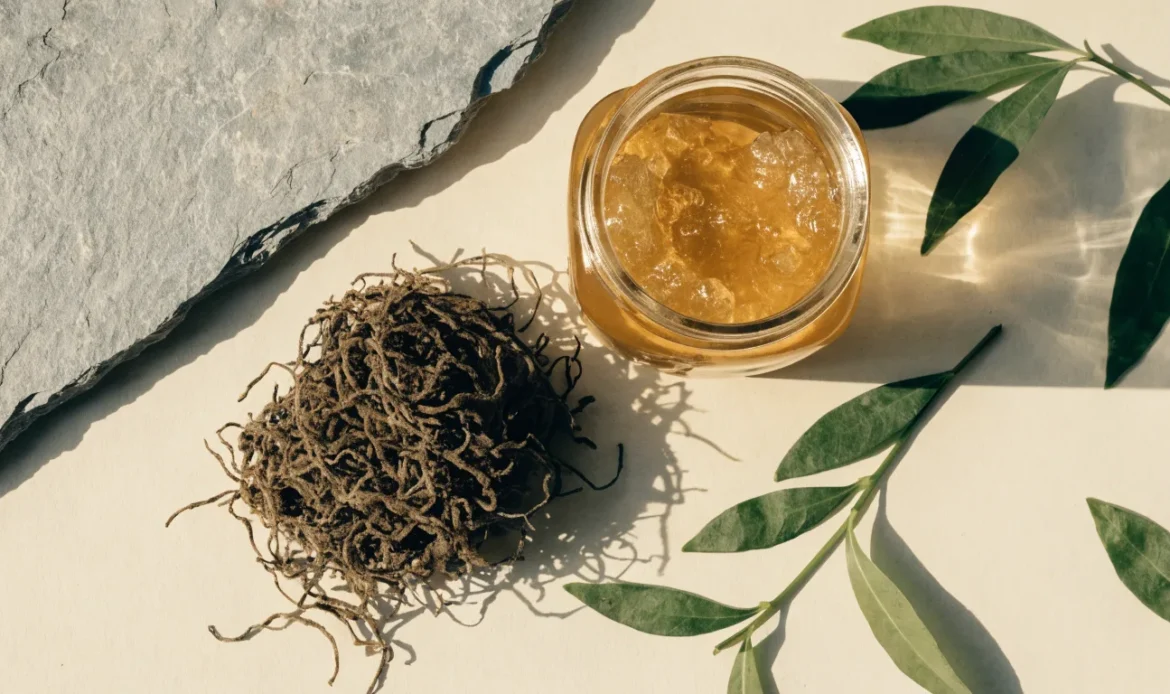
Short answer: Sea moss ashwagandha is a blend that combines sea moss (a form of edible seaweed) with ashwagandha (a dried root or root extract). You will see it in gels, powders, capsules, and tinctures. The main buying concerns are ingredient clarity, iodine content from seaweed, and third‑party testing for contaminants and label accuracy.
This page explains what the blend is, the common product formats, safety checks to do before you buy, and a clear decision checklist. If you only need one thing from this page, use the checklist below to compare products.
What is “sea moss ashwagandha”?
- Sea moss: a common name for edible red seaweed sold as a food or supplement ingredient. It is sold fresh, dried, powdered, or made into gels. Seaweed can contain minerals like iodine and trace elements. The amount of iodine and other elements in seaweed is variable and depends on species, where it was harvested, and how it was processed [1][2][5].
- Ashwagandha: the dried root or root extract of a plant used as an herbal ingredient. In blends, it is usually added as a powdered root, extract, or capsule ingredient. Labels sometimes list “ashwagandha extract” with a ratio (for extracts), or simply “ashwagandha root” for the whole herb.
- The blend: “Sea moss ashwagandha” products mix the two ingredients. Some are single‑ingredient sea moss flavored or combined with powdered ashwagandha. Others are multi-ingredient formulas that add sweeteners, flavors, or other herbs.
What this blend is not: a certified medicine or a regulated therapeutic product. Ingredients and amounts vary by maker. No product label can guarantee specific health effects without valid clinical testing. If you have health concerns, talk to a clinician.
Common formats and what to expect
Products combining sea moss and ashwagandha come in several formats. Each format has pros and cons.
- Gel
- How it’s made: rehydrated sea moss blended with water and often other ingredients; ashwagandha powder or extract can be mixed in.
- Pros: easy to add to smoothies or recipes; usually ready to eat.
- Cons: perishable once opened; can have added sugars or preservatives. Iodine content is rarely listed on gel labels.
- Powder
- How it’s made: dried sea moss and ashwagandha ground to a powder or as separate powders sold in one bag.
- Pros: long shelf life when dry; easy to dose with a scoop; can be used in cooking.
- Cons: may clump in humidity; labels may not list iodine or contaminant testing.
- Capsules / tablets
- How it’s made: powdered sea moss and ashwagandha placed into capsules or compressed.
- Pros: consistent single‑serving dose on label; convenient.
- Cons: dose reflects the label claim, but label accuracy can vary for some supplements. Capsules add fillers or excipients sometimes.
- Tinctures / liquid extracts
- How it’s made: ashwagandha or seaweed extracted into alcohol or glycerin base; sea moss tinctures are less common because seaweed is starchy.
- Pros: good for small, concentrated doses of herb extract.
- Cons: sea moss qualities are not well preserved in alcohol; tinctures usually emphasize the herb more than the seaweed.
- Raw or dried seaweed plus separate ashwagandha
- How it’s sold: whole dried seaweed with a separate packet of ashwagandha or sold simply as separate ingredients.
- Pros: full control over preparation and dose.
- Cons: requires more time to prepare and more knowledge about safe seaweed handling.
How to read labels: what to check and why
Labels are a primary source of buyer information. Here are the key items to look for and why they matter.
- Ingredient list
- Check whether the product lists “sea moss” and “ashwagandha” clearly. Also look for added sugars, flavorings, preservatives, or fillers.
- Type and concentration of ashwagandha
- If the label lists an extract, it may show a ratio (for example, 5:1) or list a standardized compound amount. That indicates how concentrated the herb is. If the label only lists “ashwagandha root,” it is likely whole herb powder.
- Iodine or mineral testing
- Many seaweed products do not list iodine or mineral content. Iodine in seaweed can vary widely and can be high in some samples [1][2][3][5]. If thyroid function matters to you, ask the seller for iodine testing or a certificate of analysis.
- Contaminant testing and certificates of analysis (CoA)
- Ask whether the product has third‑party lab testing for heavy metals, microbial contamination, and pesticides. Suppliers who publish a CoA increase transparency. Tests can show what the product does and does not contain.
- Allergen and cross‑contact statements
- Check whether the product is processed in a facility that handles shellfish, soy, nuts, or gluten if you have food sensitivities.
- Storage instructions and shelf life
- Gels usually require refrigeration after opening. Powders, capsules, and tinctures often store at room temperature; follow the label.
- Batch number and contact information
- Look for a batch or lot number and a company contact. This helps if you need to ask for test records or return a product.
If a label lacks basic details, or the seller won’t provide a CoA upon request, treat that as a red flag.
Safety considerations: what we know and what we don’t
Be cautious. Seaweed contains minerals that can be useful at normal levels but harmful when excess is consumed. Key points:
- Iodine is variable and can be high in some seaweed products.
- Scientific reviews and public health agencies note that iodine content in seaweed can vary by species and region and may be high enough to affect thyroid function in some people [2][3][5]. If you have thyroid disease, are pregnant, or take iodine‑sensitive medication, ask a clinician before using seaweed products.
- Excess iodine can have health effects.
- Reviews of iodine intake highlight that both too little and too much iodine can affect the thyroid [5]. These effects depend on dose, individual health, and length of exposure.
- Contaminants and heavy metals
- Seaweed can absorb elements from its environment. Testing is needed to confirm low levels of heavy metals or other contaminants. Some authorities recommend monitoring iodine and contaminants in seaweed products at the market level [3][4].
- Supplement label accuracy
- Dietary supplements are not regulated like prescription drugs. Independent testing can help confirm that what is on the label is in the bottle. Organizations that track supplement safety recommend caution and checking third‑party test results [4].
- Interactions and special populations
- People with thyroid disease, pregnant or breastfeeding people, children, and people taking certain medications should consult a clinician before adding seaweed or new herbal supplements. A clinician can help assess risks based on diagnosis, current medicines, and lab results.
What we cannot prove from a product label alone:
- Exact iodine intake from a serving unless the manufacturer provides a verified iodine content or CoA.
- Absence of contaminants unless independent testing is provided.
- Clinical effects for an individual. Only a clinician using personal medical data can advise on health outcomes.
References for the safety points above: Harvard’s nutrition resource on seaweed explains mineral content and variability [1]. Reviews and regulatory surveys discuss iodine variability and monitoring needs [2][3][5]. Operation Supplement Safety warns about variability and testing for sea moss supplements [4].
Practical decision checklist (use before you buy)
Use this short checklist when comparing products. Mark “yes” for items you can confirm. Prefer products with more “yes” answers.
- Product identity
- [ ] The label clearly lists sea moss and ashwagandha.
- [ ] The type of ashwagandha (root or extract) is stated.
- Testing and transparency
- [ ] The seller provides a recent third‑party Certificate of Analysis (CoA) showing tests for iodine, heavy metals, and microbes.
- [ ] The product has a batch or lot number.
- Ingredients and additives
- [ ] No undeclared fillers, sweeteners, or allergens are listed.
- [ ] The product lists storage instructions and best‑by or lot dates.
- Safety and warnings
- [ ] The label includes warnings to consult a clinician if pregnant, breastfeeding, or taking medications.
- [ ] The seller answers questions about iodine content and origin of seaweed.
- Format and use
- [ ] The format matches how you want to use it (gel for recipes, capsule for convenience).
- [ ] The product’s serving size is practical for your routine.
If you get fewer than three “yes” answers, ask the seller for more information or choose a different product.
Format comparison table (quick guide)
| Need or goal | Best format to consider | Label items to verify | Questions to ask seller |
|---|---|---|---|
| Easy to blend into drinks | Gel or powder | Ingredients, added sugar, storage | Is the gel refrigerated? Any added preservatives? |
| Precise single‑dose | Capsules/tablets | Amount per capsule, excipients | Is there a CoA showing ingredient amounts? |
| Long storage | Dry powder / sealed dried seaweed | Best‑by date, humidity control | Do you provide CoAs for heavy metals and microbes? |
| Concentrated herb (ashwagandha focus) | Extract or tincture | Extract ratio or standardization | What is the extract ratio or active marker amount? |
| DIY control | Raw dried seaweed + separate ashwagandha | Harvest info (if available), processing method | Can you provide test results for contaminants and iodine? |
Use the table to match your need with the format and to form precise questions for sellers.
How people commonly use each format (safe handling notes)
- Gel: Stir into smoothies, yogurt, or cold drinks. Refrigerate after opening. If gel smells off, discard. Do not use untested fresh seaweed raw without proper cleaning and handling.
- Powder: Add to shakes, soups, or baking. Keep dry and sealed. Follow label serving sizes. If humidity causes clumping, keep in an airtight container.
- Capsules: Take per label directions. If you have swallowing difficulties, consult packaging for alternatives.
- Tinctures: Follow dropper directions. Alcohol‑based tinctures may not be suitable for everyone.
For all formats, follow the label and any storage guidance. If you have allergies or medical conditions, seek clinical advice before use.
Questions to ask a seller or manufacturer
- Do you have a current Certificate of Analysis for this batch?
- Does the CoA include iodine, heavy metals, and microbial test results?
- Is the seaweed wild‑harvested or farmed, and can you state the harvest region?
- What form of ashwagandha is used (whole root, extract), and what is the extract ratio or standardization?
- Where is the product processed, and what allergen controls are in place?
- How should I store the product, and what is its shelf life once opened?
If a seller cannot answer these or declines to provide lab results, consider that when deciding to buy.
Storage and shelf life: practical tips
- Follow the product label. That is the best source of storage and shelf life.
- Keep dry powders in an airtight container in a cool, dark place.
- Refrigerate sea moss gels after opening if the label recommends it.
- Look for changes in color, odor, or texture; these can mean spoilage.
- Use batch numbers to check if the seller has recall or safety information.
Next steps and useful links
If you want to learn more about seaweed and safety: see general seaweed information at the learn hub: Seaweed and sea moss basics (/learn/).
If you want a deeper guide about buying formats: check our format comparison pages: Learn hub: Formats and Uses (/learn/).
Looking to shop or contact a supplier with questions: browse products or ask about CoAs here: Shop (/shop/) • Wholesale inquiries (/wholesale/) • Contact us (/contact/).
Return to our home page for more topics: Zen Wholesalers home (/).
Conclusion
Sea moss ashwagandha is a combination of a seaweed ingredient and an herbal root. It comes in many formats. The most important checks are clear labeling, third‑party lab testing (especially for iodine and contaminants), and seller transparency. If you have thyroid issues, are pregnant, or take medication, consult a clinician. Use the checklist in this article when you compare products. That will help you make a safer and more informed choice.
Frequently asked questions
What is the main difference between sea moss and ashwagandha in one product?
Sea moss is a seaweed ingredient. Ashwagandha is a dried root or extract. Sea moss contributes minerals like iodine (variable), while ashwagandha contributes plant compounds typical of that herb. Each ingredient is added for different botanical reasons. Labels should list both.
Is sea moss ashwagandha safe for people with thyroid conditions?
Not always. Seaweed can contain variable and sometimes high iodine levels, which can affect thyroid function for some people [2][5]. If you have thyroid disease, ask a clinician before using seaweed products and request iodine testing from the seller.
How can I tell if a product is tested for contaminants?
Ask the seller for a third‑party Certificate of Analysis (CoA) that lists tests for heavy metals, microbes, and iodine. A reputable seller will provide a CoA or direct you to testing data [4].
Can pregnant or breastfeeding people use sea moss ashwagandha?
You should consult your clinician. Both pregnancy and breastfeeding change nutritional needs and safety considerations. Because iodine levels in seaweed are variable, check labels and test results before use [3][5].
How much should I take each day?
Follow the product label. If you have specific health concerns or take medications, ask a clinician for personalized guidance. Labels and dosing can vary between products, and individual needs differ.
References
- [1] Harvard T.H. Chan School of Public Health, “Seaweed.” https://nutritionsource.hsph.harvard.edu/seaweed/
- [2] Smyth PPA. “Iodine, Seaweed, and the Thyroid.” European Thyroid Journal, 2021. https://pmc.ncbi.nlm.nih.gov/articles/PMC8077470/
- [3] Food Standards Australia New Zealand, “Survey of iodine levels in seaweed and seaweed containing products,” updated 2025. https://www.foodstandards.gov.au/science-data/monitoring-safety/surveyofiodinelevels
- [4] Operation Supplement Safety, “Sea Moss in Dietary Supplements.” https://www.opss.org/article/sea-moss-dietary-supplements
- [5] Blikra MJ et al. “Consequences of acute and long-term excessive iodine intake: A literature review focusing on seaweed as a potential dietary iodine source.” 2024. https://doi.org/10.1111/1541-4337.70037