
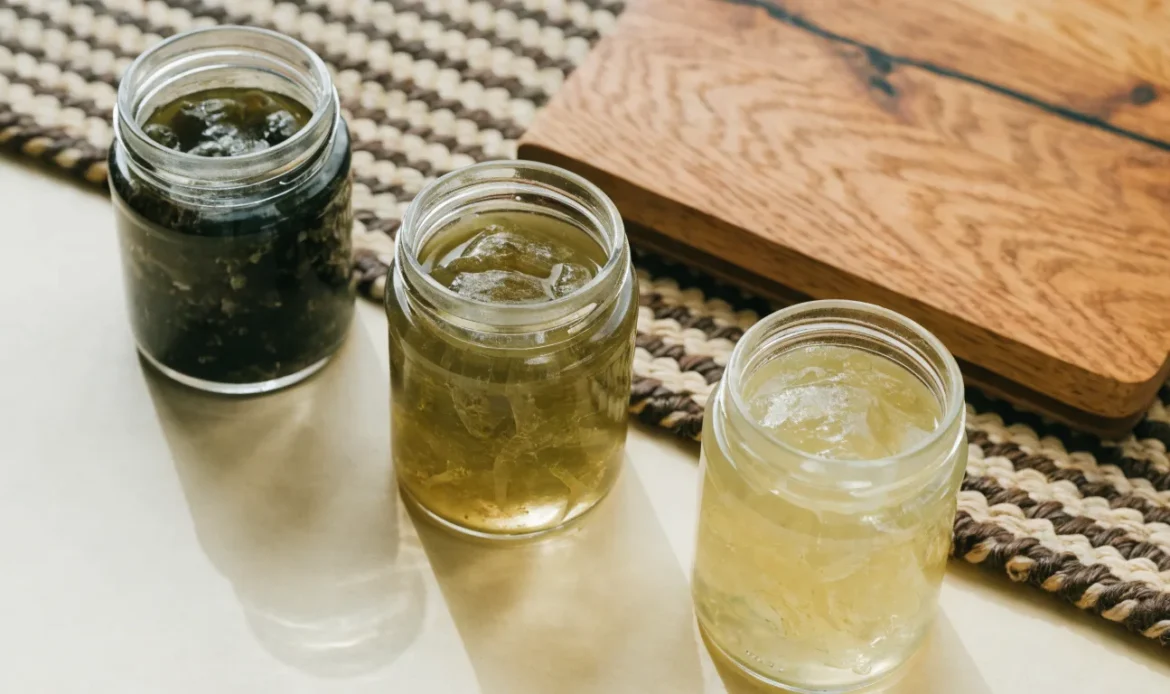
Short answer: “Sea moss advance” is not a single regulated product. It is a marketing or product-name phrase some sellers use to describe a prepared sea moss item. It can refer to a concentrated formula, a blended product, a specific preparation method, or simply a branded listing. Because the term is not standardized, you should check the product format, ingredient list, testing, and seller transparency before you buy.
This guide explains what the phrase often covers. It then gives clear steps you can use to compare formats and decide what matters for your needs. The advice here helps whether you buy a small jar or order sea moss in bulk.
What “sea moss advance” usually means
“Sea moss advance” is a label, not a technical grade. Sellers may use it to suggest one of these things:
- A prepared gel or concentrate made from sea moss.
- A blended product with sea moss plus other ingredients.
- A powdered or encapsulated extract described as “advanced” for convenience.
- A company brand name for a specific line.
Because there is no single definition, the same phrase can mean different things from one listing to another. That is why buyer checks are important.
Common product formats you will see
Different formats suit different uses. Below are common ones and what to watch for.
- Dried raw sea moss (whole, sun-dried or kiln-dried)
- Use: Rehydrate for recipes or gel.
- What to check: Clear product photos, description of how it was dried, and storage guidance.
- Sea moss gel (ready-to-use, refrigerated)
- Use: Smoothies, topically, or as a thickener.
- What to check: Ingredient list, water source, preservatives (if any), and refrigeration instructions.
- Powdered sea moss (dried then milled)
- Use: Drinks, capsules, or recipes where a dry form is easier.
- What to check: Grind size, whether fillers are included, and any processing aids.
- Capsules or tablets (supplement format)
- Use: Controlled dose convenience.
- What to check: Net weight per capsule, all ingredients, and any additive claims.
- Blends and formulas (sea moss mixed with other herbs or extracts)
- Use: Combined benefits or flavor.
- What to check: Full ingredient list and any claimed effects (be cautious with health claims).
- Bulk raw or wholesale packs
- Use: Retail or manufacturing.
- What to check: Packaging, batch information, and test data for large lots.
What seaweed information is most useful — and why
Some pieces of product information are more helpful than others when deciding what to buy.
- Ingredient list
- Why it matters: Shows whether any extra ingredients, preservatives, or fillers are present.
- Format and handling instructions
- Why it matters: Different formats need different storage and use.
- Batch or lot number and testing dates
- Why it matters: Tests are only meaningful for a specific batch. A COA (certificate of analysis) should match the batch sold.
- Test results for iodine and contaminants
- Why it matters: Iodine levels and contaminants like heavy metals can vary widely among seaweeds and products [1],[3],[5].
- Country or region of harvest, and harvest method
- Why it matters: Harvest region gives context for environmental conditions, but it alone cannot guarantee safety.
- Third-party testing or lab reports
- Why it matters: Independent lab results add credibility. Ask for the lab name, test date, and batch number.
What this information cannot prove
- A label or a marketing name cannot prove safety or consistent nutrient content by itself.
- A brand statement about “high quality” or “traditional harvest” is not a substitute for recent lab data.
- A single test result does not guarantee every future batch will match.
If a seller cannot provide current batch-specific lab reports, you should treat that as a gap in transparency.
Important safety points about iodine and seaweed
Seaweed species and parts can contain very different amounts of iodine. Iodine is a nutrient the body needs in small amounts, but too much iodine can cause problems for some people. Studies and public health guidance show that iodine levels in seaweed vary a lot, and some seaweeds can be high in iodine [1],[2],[3],[5].
What to know:
- Iodine content varies by species, season, and location. You cannot infer iodine level from color or general description alone [1],[3].
- Some seaweed products have high iodine that may not be safe for people who need to limit iodine. If you have thyroid disease or are on iodine-sensitive medication, check with a health professional before use [2],[5].
- Public agencies and researchers recommend testing and labeling where possible [3],[5].
A product label that lists iodine concentration is useful. A certificate of analysis (COA) that states iodine levels for the specific batch is better.
Reference notes:
- Harvard’s nutrition resource explains general variability in seaweed nutrients [1].
- Reviews and articles on iodine and seaweed discuss potential risks and the need for monitoring [2],[5].
- Government surveys have found wide ranges in iodine content across products and species [3].
How to evaluate a “sea moss advance” product — key checks
Use this short decision checklist when you read a product page or talk to a seller.
Practical decision checklist
- Format fit: Does the format match your use (raw, gel, powder, capsule, bulk)?
- Ingredient list: Is the product single-ingredient sea moss, or are extras listed?
- Batch-specific lab tests: Can the seller provide a COA for the batch you will buy?
- Iodine information: Is iodine listed? Is it on the COA?
- Contaminant testing: Are heavy metals, arsenic, cadmium, lead, and microbes tested?
- Harvest and handling info: Is the harvest region, method, and processing described?
- Shelf and storage instructions: Are storage conditions and use-by dates provided?
- Claims check: Does the product make medical or health claims? If so, be cautious.
- Seller responsiveness: Can the seller answer questions about batch tests and processing?
- Return policy and contact: Is there a clear return or contact path?
If the seller cannot answer items 3–6 clearly and with documentation, treat that as a reason to pause.
Formats compared: quick guide
Below is a simple format comparison to help decide which is likely best for you.
- Dried whole
- Pros: Less processed; flexible for rehydrating.
- Cons: Needs preparation; iodine and contaminants are not reduced by drying.
- Best if: You want control over preparation.
- Gel (ready-made)
- Pros: Convenient; easy to use.
- Cons: Shorter refrigerated life; ingredients or water content vary.
- Best if: You want ready-to-use product for recipes.
- Powder
- Pros: Long shelf life if dry; easy to add to mixes.
- Cons: Check for fillers; powdering concentrates everything, including iodine.
- Best if: You want a dry, storable form.
- Capsules/tablets
- Pros: Measured dosing and convenience.
- Cons: Dose per capsule matters; watch for added excipients.
- Best if: You prefer a supplement format.
- Blends (sea moss + other ingredients)
- Pros: Combined flavor or functional ingredients.
- Cons: Harder to isolate sea moss effects or content; check each ingredient.
- Best if: You want a multi-ingredient product and know what each part is.
Questions to ask a seller before you buy
Ask short direct questions. A transparent seller will answer plainly.
- Do you have a certificate of analysis (COA) for the batch I’m buying?
- Which lab performed the analysis, and when was it done?
- What seaweed species and harvest region are in this product?
- Are there any added ingredients or preservatives?
- How should I store this product, and what is the shelf life?
- Do you offer wholesale COAs for bulk lots?
If the seller cannot provide batch COAs or full ingredient lists, you will need to decide whether that level of uncertainty is acceptable for your use.
What labels and tests can and cannot prove
- COA (certificate of analysis): Useful when it includes batch number, test date, lab name, and results for iodine and contaminants. It shows results for that batch only.
- “Third-party tested” claims: Ask for the lab report. A named lab and test date give context.
- Country of origin: Helpful but not definitive for safety.
- “Organic” or similar claims: Only relevant if the product carries a valid certification from a recognized certifier. An uncertified claim is not proof.
Never assume that a single test result applies to future batches. Ask sellers if they test each batch and whether COAs are available on request.
Storage and basic handling tips
- Follow the product label for storage temperature and shelf life.
- For refrigerated gels, use within the recommended time and keep a tight lid.
- For powders and dried goods, store in a cool, dry place and keep them sealed.
- If a product smells off or shows visible spoilage, do not use it.
These are practical steps to reduce risk of spoilage or loss of quality. They are not a guarantee of safety.
Decision guide: When to choose each form
- Choose dried whole if you want minimal processing and control over preparation.
- Choose gel if you want convenience and immediate use in foods or topicals.
- Choose powder if you need a dry, mixable ingredient or long-term storage.
- Choose capsules if you want measured convenience and ease of dosing.
- Choose blends if you know and accept the added ingredients.
Always check COAs and confirm the product matches your needs before buying.
Where to go next
- If you want detailed learning about sea moss and seaweed basics, start at our learn hub: /learn/
- If you are comparing product formats, see our format comparison and how to prepare sea moss at: /learn/ (the same hub has multiple guides).
- To browse products, check our catalog: /shop/
- For bulk orders or wholesale documentation, visit: /wholesale/
- If you need specific answers from us, contact our customer team: /contact/
- To return to our homepage: /
These links will help you move from learning to buying or sourcing.
Conclusion
“Sea moss advance” is a label, not a single, clearly defined product. The phrase can cover many formats and preparations. The most useful questions are practical: what is the exact format, what ingredients are present, and what batch testing has been done for iodine and contaminants. Prioritize sellers who can provide batch-specific COAs and clear ingredient and handling information. If you need sea moss for retail, recipe, or bulk use, use the checklist above to compare options and ask direct questions.
If you want help evaluating a specific listing or batch report, contact the seller for the COA and then you can ask an expert or a third-party lab to review it.
Continue reading
Frequently asked questions
Is “sea moss advance” a regulated grade?
No. The phrase is a product or marketing name, not a regulated grade. What it means depends on the seller.
How can I find out how much iodine is in a sea moss product?
Ask the seller for a batch-specific certificate of analysis (COA) that shows iodine concentration. Only a test on the actual batch can tell you the iodine level [1],[3],[5].
Are there safety risks with sea moss?
Seaweed can have variable iodine and variable contaminant levels. That variability is why batch testing and caution are important, especially for people who must limit iodine [2],[5].
Can I trust a product that lists “natural” or “wild-harvested”?
Those terms describe sourcing but do not prove safety or nutrient levels. Look for COAs and other documentation to confirm lab results and handling.
Should I buy wholesale sea moss for retail sale?
If you plan to sell, require batch COAs and clear labeling from your supplier. Confirm how they handle traceability and what documentation they provide for each lot.
Where can I learn more about seaweed nutrition and safety?
Public health resources and scientific reviews cover seaweed nutrients and risks. The Harvard T.H. Chan School of Public Health provides an overview of seaweed nutrition, and public surveys and scientific papers discuss iodine variability and safety [1],[2],[3],[5].
References
- Harvard T.H. Chan School of Public Health, “Seaweed.” https://nutritionsource.hsph.harvard.edu/seaweed/
- Smyth PPA. “Iodine, Seaweed, and the Thyroid.” European Thyroid Journal, 2021. https://pmc.ncbi.nlm.nih.gov/articles/PMC8077470/
- Food Standards Australia New Zealand, “Survey of iodine levels in seaweed and seaweed containing products,” updated 2025. https://www.foodstandards.gov.au/science-data/monitoring-safety/surveyofiodinelevels
- Operation Supplement Safety, “Sea Moss in Dietary Supplements.” https://www.opss.org/article/sea-moss-dietary-supplements
- Blikra MJ et al. “Consequences of acute and long-term excessive iodine intake: A literature review focusing on seaweed as a potential dietary iodine source.” 2024. https://doi.org/10.1111/1541-4337.70037