
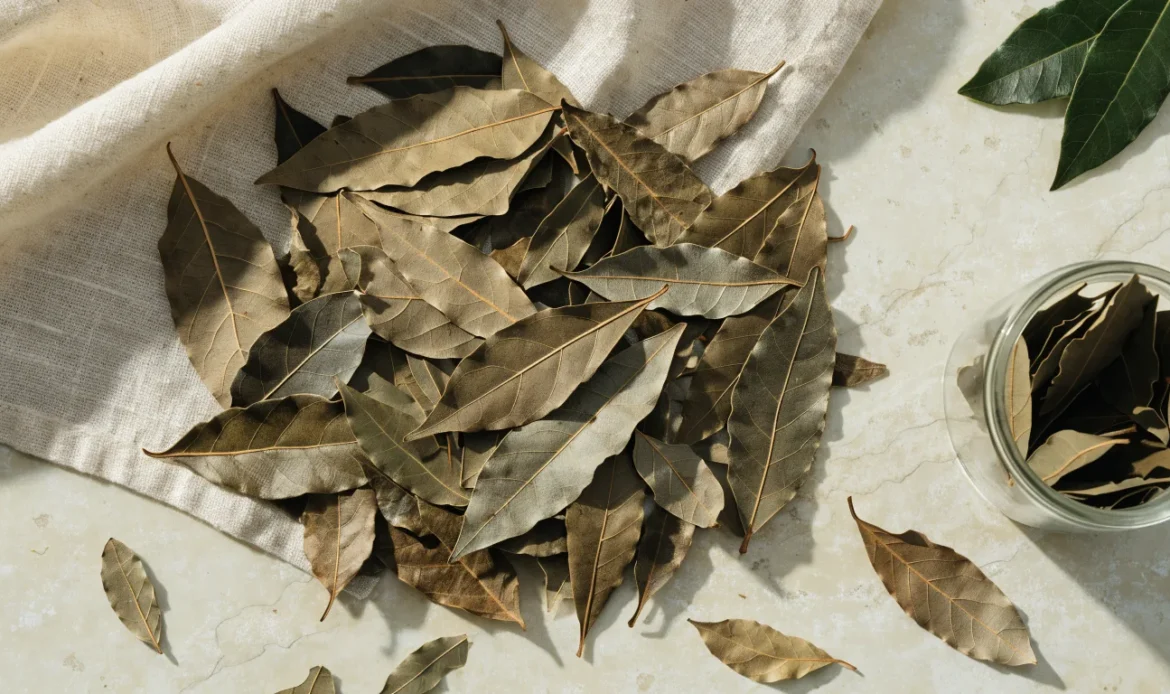
Short answer: Pick fresh culinary bay leaves (Laurus nobilis). Wash and pat them dry. Then choose one of these methods: air-dry, low-heat oven, or food dehydrator. Dry until the leaves snap or crumble. Store fully dry leaves in an airtight, cool, dark place and check them before use.
Why this matters: Drying preserves aroma and makes leaves easier to store. This guide gives clear steps, food-safety notes, and a simple decision guide so you can pick the best drying method for your kitchen.
Choose the right leaves first
- Use culinary bay laurel (Laurus nobilis). If you are not sure about the plant, do not eat the leaves.
- Pick leaves that look healthy. Avoid leaves with soft spots, holes, or visible mold.
- Harvest in the morning after the dew dries. This reduces surface moisture.
- If you bought store leaves, look for whole, unbroken leaves with a fresh smell.
Short note: Bay leaves from different plants can look similar. Only use leaves you can identify as culinary bay. If you need more on Caribbean herbs or sourcing, see our Caribbean Botanicals.(/shop/caribbean-botanicals/)
Clean and prepare leaves
- Rinse quickly under cool running water to remove dust or insects.
- Pat each leaf dry with a clean towel or paper towel. Remove surface water.
- Let leaves air-dry on a clean towel for 10–30 minutes before starting a drying method. You want no surface wetness.
- Optional: Trim long stems. Stems dry more slowly than the leaf blade. You can leave short stems if you prefer.
Food-safety note: Do not soak leaves. Prolonged wetting can push water into leaf tissue and slow drying. If a leaf looks damaged or slimy after washing, discard it.
Methods to dry bay leaves
Below are safe, common methods. Pick the one that fits your time, tools, and kitchen.
Air-dry (hang or rack) — low effort, slow
- Arrange leaves in a single layer with air between them.
- Use a mesh rack, cooling rack, or string a bunch with clothespins.
- Place in a warm, dry, well-ventilated spot out of direct sunlight.
- Turn leaves every few days so both sides dry evenly.
- Drying time varies with humidity. Expect a slow process.
When to use this method: If you have time and low humidity. It preserves color and flavor well because it uses no added heat.
Caution: In humid climates, air-drying can take too long and raise mold risk. If your home is humid, choose a faster method.
Food dehydrator — controlled and reliable
- Place leaves in a single layer on dehydrator trays.
- Use a low setting intended for herbs.
- Check leaves periodically until they snap or crumble.
- Remove and cool before storing.
When to use this method: If you have a dehydrator. It gives steady heat and airflow and is often the fastest reliable option for herbs.
Low-heat oven — quick with care
- Spread leaves in a single layer on a baking sheet lined with parchment.
- Use your oven’s lowest temperature or a “keep warm” setting.
- Leave the oven door slightly open to help moisture escape.
- Check the leaves often to avoid over-browning.
- Remove when the leaves are crisp and cool them on a tray.
When to use this method: If you need dry leaves the same day and don’t have a dehydrator.
Caution: Ovens vary. High heat will cook or brown the leaves and reduce aroma. Watch closely and remove early if the leaves brown.
Microwave (small batches) — fast, for single leaves
- Place one or two leaves between paper towels on a microwave-safe plate.
- Heat on short intervals. Check after each interval.
- Stop once the leaves snap.
- Cool before storing.
When to use this method: If you only need a few leaves quickly. It works for tiny batches.
Caution: Microwaves can create hot spots. Leaves can burn fast. This method is not ideal for large batches.
How to tell when bay leaves are fully dry
- Bend test: A fully dry bay leaf will snap or crumble cleanly. If it bends, it still has moisture.
- Texture: Dry leaves are brittle, not leathery.
- Color: Leaves will be slightly faded but should not be dark brown or blackened.
- Smell: Aroma concentrates as the leaf dries. If the smell is weak, the leaf may have lost oils from over-heating or old age.
Always let leaves cool to room temperature before packing. Warm leaves can trap moisture and make mold later.
Practical decision guide: which method to pick?
| Method | Speed | Control | Best for | Watch-outs |
|---|---|---|---|---|
| Air-dry | Slow | Low | Small home gardens, no equipment | Slow in humid climates; mold risk if not ventilated |
| Dehydrator | Fast | High | Larger batches; consistent results | Needs the appliance |
| Low-heat oven | Moderate | Medium | Same-day drying without special tools | Easy to overheat; check often |
| Microwave | Very fast | Low | 1–5 leaves quickly | Uneven heating; burn risk |
Use this guide to match your time and tools with the right method.
Food-safety and quality notes
- Only dry healthy, clean leaves. Discard any leaf with mold, rot, or insect damage.
- Avoid drying in direct sun. Sun can fade oils and reduce aroma.
- Ensure good airflow in the drying area to discourage mold.
- Dry leaves fully before storing. Any trapped moisture encourages spoilage.
- Label containers with the drying date so you can track freshness yourself.
Practical check: If a stored batch develops off smells, visible moisture, or sticky spots, discard it.
How to store dried bay leaves
- Use a dry, airtight container. Glass jars with tight lids work well.
- Keep jars in a cool, dark place away from heat and light.
- Avoid storing near a stove, oven, or sunny window.
- Do not seal warm leaves. Let them cool first.
- If you buy bulk dried bay, repackage into smaller jars to limit air exposure when you open them.
Note: Over time dried leaves lose aroma. Periodically smell a jar and replace it if the scent seems gone for your cooking needs. There is no universal shelf-life number that fits every storage situation.
Using dried bay leaves in the kitchen
- Add whole dried bay leaves to soups, stews, sauces, and braises.
- Remove whole leaves before serving; they are usually not eaten directly.
- To release more flavor, briefly crush or fold a leaf before adding. Alternatively, put small pieces in a spice bag or tea infuser.
- Ground bay leaf can be used sparingly for rubs and blended seasonings. Freshly ground bay leaf will taste stronger than a whole leaf left to simmer.
Tip: Dried bay leaves are most useful in long-cooking dishes where the aroma has time to infuse liquids.
Cultural context and botanical ID
Bay laurel (Laurus nobilis) is the culinary bay used in many cuisines. Other plants may be called “bay” in local contexts but are not the same species. If you are gathering leaves locally or buying from a market, confirm the plant is for culinary use.
If you are exploring Caribbean botanicals, remember that local names vary. Always identify a plant before eating its leaves. For more background on Caribbean herbs and sourcing, visit our Caribbean Botanicals page.(/shop/caribbean-botanicals/)
Zen Wholesalers note on sea moss and bay leaves
Zen Wholesalers sells Caribbean sea moss and related botanicals. Sea moss and bay leaves are different kinds of ingredients. Sea moss is a type of seaweed. Herbs like bay are land plants. If you are researching how to prepare botanicals for culinary or storage reasons, treat each ingredient on its own terms. For general background on seaweed and sea-moss topics, see the nutrition and safety overviews listed in References. [1][4]
Practical checklist: dry-bay-leaf preparation
- Gather: fresh, healthy bay leaves; clean cloth or paper towels; drying tool (rack, dehydrator, oven).
- Inspect: discard leaves with spots, holes, or mold.
- Rinse: quick rinse under cool water. Pat dry.
- Pre-dry: let sit until surface moisture is gone.
- Dry: choose a method (air, dehydrator, oven, microwave).
- Test: leaves should snap or crumble.
- Cool: let leaves reach room temp.
- Store: airtight, cool, dark place. Label with date.
- Check: smell and inspect before use. Discard if any off-odors or moisture appears.
Keep this checklist near your prep area while you dry.
Troubleshooting
- Leaves stayed leathery after drying: Try a bit more drying time. If you used low heat, extend time. If using oven, check for uneven heat.
- Leaves browned or smelled cooked: Heat was too high. Use lower heat or use air-dry/dehydrator next time.
- Mold in stored jar: Not fully dry before packing or stored in humid place. Discard jar. Dry a small sample next time and use a well-sealed jar in a dry spot.
- No aroma left: Leaves may be old or over-heated. Try a new small batch from fresh leaves.
Conclusion
Drying bay leaves is simple when you follow a clear process. Start with clean, healthy leaves. Pick a drying method that fits your tools and climate. Make sure leaves are brittle and cool before you store them. Store in a cool, dark, airtight container and check for moisture before use. If you plan to dry other Caribbean botanicals or sea moss, treat each ingredient on its own schedule and follow safe handling steps.
If you want ready-dried herbs or other botanicals, check our Caribbean Botanicals shop.(/shop/caribbean-botanicals/) For bulk inquiries, see our wholesale options.(/wholesale/) For general product shopping, visit our shop.(/shop/) If you have questions about an order or need help identifying herbs, contact us.(/contact/) Learn more about botanical topics and safe use on our Learn page.(/learn/)
Continue reading
Frequently asked questions
Can I dry bay leaves in direct sun?
Direct sun can fade the leaf oils and aroma. It is safer to dry out of direct light with good airflow.
Do I need to remove stems before drying?
You can leave short stems on. Long, woody stems dry slowly and can slow the leaf drying. Trim long stems if you want even drying.
How can I tell culinary bay (Laurus nobilis) from other “bay” leaves?
If you are not sure of the plant, do not eat the leaves. Only use leaves from plants you can identify as culinary bay. If you bought leaves, buy from a trusted food vendor.
Can I grind dried bay leaves into powder?
Yes. Make sure leaves are fully dry and crisp. Grind in a spice mill or mortar and pestle. Use sparingly; ground bay is strong.
Are dried bay leaves safe for children and pets?
Dried bay leaves are commonly used in cooking. However, whole leaves can be sharp and are not typically eaten; remove them before serving. If you have concerns about allergies or pets, consult a healthcare provider or veterinarian.
References
- [1] Harvard T.H. Chan School of Public Health, “Seaweed.” https://nutritionsource.hsph.harvard.edu/seaweed/
- [4] Operation Supplement Safety, “Sea Moss in Dietary Supplements.” https://www.opss.org/article/sea-moss-dietary-supplements