

Short answer first: A sea moss hair mask can add slip, moisture, and some minerals to hair when used as a topical, food-based treatment. Scientific proof that it repairs hair or treats scalp disease is limited. Use it as a gentle, low-risk part of a hair routine if you like, but watch for high iodine or contaminated products and ask a clinician if you have a thyroid condition or irritated skin.
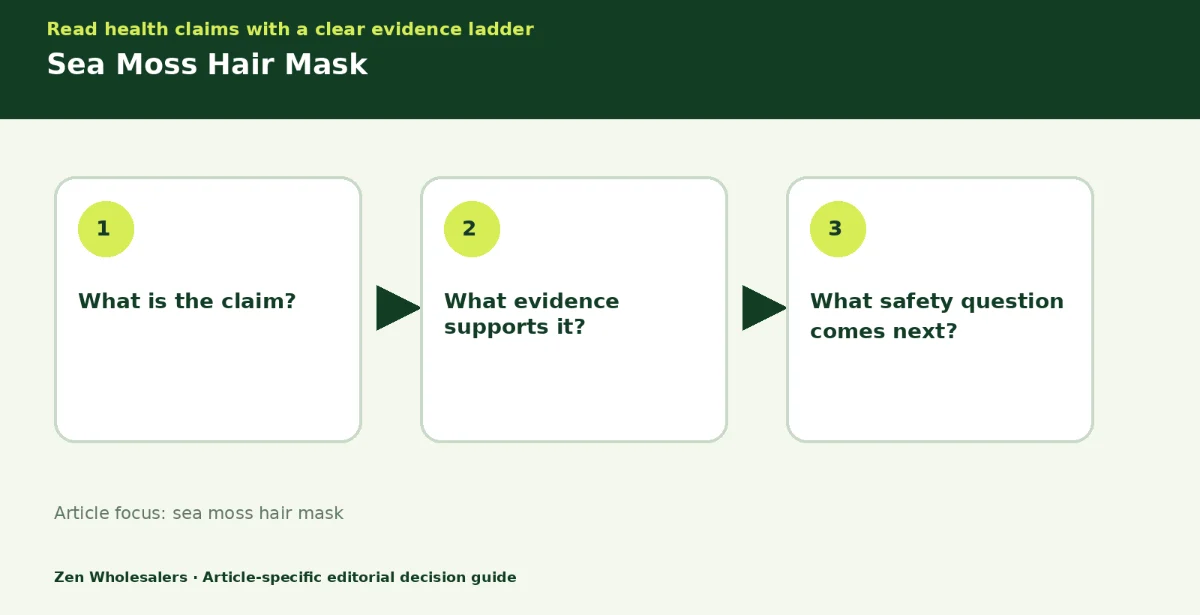
What this guide covers
- What sea moss is and why people use it on hair.
- What the evidence actually shows.
- Clear, safe DIY mask options and when not to use them.
- A practical checklist to help you decide.
- Safety notes and when to ask a clinician.
Read this to make an informed choice. This article separates food tradition from research. It lists the limits of current evidence. It does not give medical or dosing advice.
What is sea moss?
Sea moss is a common name for several red seaweeds. People prepare it as a gel, powder, or whole dried seaweed. It is used as food in many coastal cultures. As a topical ingredient, it adds a slippery gel that can help spread other ingredients across hair and scalp.
Seaweeds supply minerals like iodine, calcium, and iron when eaten. They also contain carbohydrates called polysaccharides that make a gel-like texture. These features explain why sea moss is popular in food and skin or hair recipes. [1]
Is sea moss good for hair?
Short, plain answer: It can be helpful for feel and manageability but evidence that it improves hair growth or treats medical scalp conditions is weak or lacking.
How sea moss may help hair, in practical terms:
- Texture and slip: Sea moss gel makes a smooth paste. This helps apply oils and rinses evenly.
- Moisture feel: The gel can coat hair and give a softer feel right after rinsing.
- Mineral trace: Sea moss contains minerals that may remain on hair after rinsing. These do not equal a proven therapeutic dose. [1]
What sea moss cannot be shown to do (based on current evidence):
- It has not been proven in clinical trials to cure hair loss, scalp disease, or systemic conditions.
- Topical application will not reliably change internal iodine or nutrition status. The amounts absorbed through skin are not well studied.
This distinction matters. Tradition and early lab work suggest possible benefits. But strong clinical proof—controlled human trials on hair and scalp outcomes—is limited.
Evidence, tradition, and limits
Separate the sources of claims into three types.
- Food composition and lab data.
- Seaweed contains iodine and other minerals. Iodine levels can vary a lot by species and where it was harvested. This is a food-composition fact. [1][3]
- Traditional and folk use.
- Many cultures use seaweed or sea moss for skin and hair care. These uses reflect observation and value, not clinical proof. Tradition is a reason to try something, but it is not clinical evidence.
- Clinical proof and safety studies.
- Scientific studies on sea moss as a hair treatment are scarce. Most research about seaweed and health focuses on dietary effects, iodine exposure, or lab studies, not topical hair outcomes. [2][4][5]
Key safety point: seaweed can be a concentrated source of iodine. Excess iodine can affect the thyroid when eaten. This makes product sourcing important and means some people should be cautious even with topical products if they also use seaweed foods or supplements. [2][5] The amount of iodine in topical products is less well measured, but variability in raw seaweed implies variable iodine across homemade gels or bulk powders. [3]
How to make a simple, low-risk sea moss hair mask
Below are two simple, food-based options. They use familiar kitchen ingredients. They avoid strong actives (like essential oils in high amounts) that can irritate skin.
General steps that apply to both:
- Use clean tools and bowls.
- Prepare on a clean surface.
- Patch-test any new mixture on the inside of your forearm for 24 hours if you have sensitive skin.
- Rinse hair thoroughly after use.
1) Plain sea moss gel mask (for slip and moisture)
- Ingredients: hydrated sea moss gel (homemade or food-grade), water.
- Use: Apply to damp hair and scalp. Leave 10–20 minutes. Rinse with lukewarm water and a gentle shampoo if desired.
- Why: Simple gel gives slip and a soft feel without many added ingredients.
2) Sea moss + avocado mask (for extra conditioning)
- Ingredients: sea moss gel, mashed ripe avocado, 1–2 tsp light carrier oil (like jojoba or sweet almond).
- Use: Mix to a smooth paste. Apply to lengths and ends. Leave 10–30 minutes. Rinse well.
- Why: Avocado adds fatty acids and oils. Sea moss supplies gel texture to spread the mix.
Do not use household cleaning agents or unknown additives. Keep recipes simple. Avoid making claims that the mask will reverse hair loss or fix scalp disease.
How often and who might benefit
- Occasional use (weekly to biweekly) is common for hair masks.
- People with dry, tangled, or brittle hair may notice softer feeling hair after a sea moss mask.
- Those with active scalp infection, open sores, severe dandruff, or known allergies should avoid topical seaweed until cleared by a clinician.
Remember: individual response varies. If your scalp becomes itchy, red, or inflamed after use, stop and rinse. If symptoms persist, contact a clinician.
Practical checklist: Should you try a sea moss hair mask?
Use this checklist before you mix and apply a mask.
- I have a clear goal (e.g., add slip, test a natural mask). [ ]
- I do not have active scalp wounds or infection. [ ]
- I am not allergic to seaweed or seafood. [ ]
- I am not using a high-iodine diet or seaweed supplements without clinician advice. [ ]
- I will do a patch test on my inner arm for 24 hours. [ ]
- I have a clean jar and tools to make and store the gel. [ ]
- I will rinse thoroughly and watch for irritation. [ ]
If you checked all boxes, a simple sea moss mask is reasonable to try as a cosmetic, food-based treatment.
Decision guide: When to use DIY sea moss vs buy ready-made
| Situation | Try DIY sea moss gel | Buy a tested product |
|---|---|---|
| You want to control ingredients | Yes | No |
| You want standardized iodine or lab testing | No | Yes |
| You need product shelf stability | No | Yes |
| You are trying once for texture | Yes | Maybe |
| You have a thyroid condition | No, unless cleared | Better to consult clinician and prefer tested products |
This table helps you decide based on safety and quality needs. Commercial products may offer lab testing for contaminants and iodine. Homemade gels let you control freshness and ingredients but have more variability.
Safety and when to ask a clinician
Be clear about risks and what we do not know.
- Iodine variability: Seaweed can contain high and variable iodine levels. Eating seaweed has been linked to changes in iodine intake. For people with thyroid disease, excess iodine can cause problems. [2][5] Testing and variability reports show that iodine in seaweed products varies by species and origin. [3]
- Supplements and regulation: Some sea moss dietary supplements are marketed for many uses. Regulation and labeling vary. Supplements may have variable content and contamination risk. Check reputable advisories before taking any supplement. [4]
- Topical unknowns: The amount of iodine absorbed through skin from a mask is not well measured. That means topical use has uncertain systemic effects. If you already eat seaweed or take supplements, be cautious.
- Contaminants: Seaweeds can concentrate heavy metals or other ocean pollutants depending on where they were harvested. Sourcing from tested suppliers reduces risk. [3]
- Allergies and skin reactions: Seaweed and added ingredients can irritate skin. Patch testing is important.
When to ask a clinician:
- You have a current thyroid condition or take thyroid medication.
- You are pregnant or breastfeeding.
- You have a history of skin reactions or severe eczema on the scalp.
- You are using oral seaweed products or supplements alongside topical use.
If any of these apply, show a clinician your product label or ingredient list and ask if topical use is safe for you.
How to choose a product or sea moss raw material
If you prefer buying rather than making:
- Look for food-grade or cosmetic-grade labels.
- Prefer suppliers that publish third-party lab tests or certificate of analysis (COA).
- Check origin and harvest dates when possible. Some producers test for heavy metals and iodine.
- Avoid products with unclear or vague ingredient lists.
Operation Supplement Safety and public health sources note variability in supplements and advise caution with untested products. [4]
Storage and shelf life (simple rules)
- Homemade gel: Keep refrigerated and use within a week to 10 days. If it smells off, discard.
- Commercial products: Follow label guidance. Look for preservatives and COAs if you need a longer shelf life.
Practical next steps
- Decide your goal: feel/manageability vs medical treatment.
- Do a patch test.
- Try a simple recipe once. Observe your scalp for 48 hours.
- If you plan repeated use and have a thyroid issue, check with a clinician and prefer tested products.
- If you like the result and plan to buy regularly, choose suppliers that provide testing or COAs.
Conclusion
A sea moss hair mask is a low-tech, food-based cosmetic that many people enjoy for texture and conditioning. Tradition and the gel’s physical properties explain its popularity. Scientific proof that it treats medical hair or scalp conditions is limited. The main safety concern is variable iodine and potential contaminants in raw seaweed. If you have thyroid disease, are pregnant, or have sensitive skin, check with a clinician before regular use. If you decide to try a mask, keep recipes simple, patch-test, and pick reliable sources.
Learn more about the general benefits of natural ingredients on hair at our benefits hub: /learn/benefits/. For broader learning about sea moss and other products, visit /learn/. Browse tested supplies and shop options at /shop/. If you are interested in bulk or business purchases, see our wholesale information at /wholesale/. For questions or help choosing a product, contact us at /contact/.
Continue reading
Frequently asked questions
Will a sea moss hair mask make my hair grow faster?
There is no strong clinical evidence that a sea moss mask speeds hair growth. It may improve feel and manageability. For growth concerns, speak with a clinician.
Can a sea moss mask affect my thyroid?
Eating seaweed can change iodine intake. The iodine in topical masks is less well studied. If you have thyroid disease or take thyroid medicine, check with a clinician before regular use. [2][5]
Is homemade sea moss gel safe to use on hair?
Homemade gel is safe for many people if you use clean methods and patch-test first. It is more variable than tested commercial products. Avoid if you have open scalp sores or a known allergy.
How often should I use a sea moss hair mask?
Many people use hair masks weekly or biweekly. Start with one use and see how your hair and scalp react. Do not use more if you get irritation.
Where should I buy sea moss?
Choose food-grade or cosmetic-grade sea moss from suppliers that share sourcing and testing information. Prefer sellers who publish third-party lab tests or COAs. [3][4]
Can I mix sea moss with essential oils?
You can add a few drops of a skin-safe essential oil, but essential oils can irritate some scalps. Use low amounts and patch-test first.
References
- [1] Harvard T.H. Chan School of Public Health, “Seaweed.” https://nutritionsource.hsph.harvard.edu/seaweed/
- [2] Smyth PPA. “Iodine, Seaweed, and the Thyroid.” European Thyroid Journal, 2021. https://pmc.ncbi.nlm.nih.gov/articles/PMC8077470/
- [3] Food Standards Australia New Zealand, “Survey of iodine levels in seaweed and seaweed containing products,” updated 2025. https://www.foodstandards.gov.au/science-data/monitoring-safety/surveyofiodinelevels
- [4] Operation Supplement Safety, “Sea Moss in Dietary Supplements.” https://www.opss.org/article/sea-moss-dietary-supplements
- [5] Blikra MJ et al. “Consequences of acute and long-term excessive iodine intake: A literature review focusing on seaweed as a potential dietary iodine source.” 2024. https://doi.org/10.1111/1541-4337.70037