
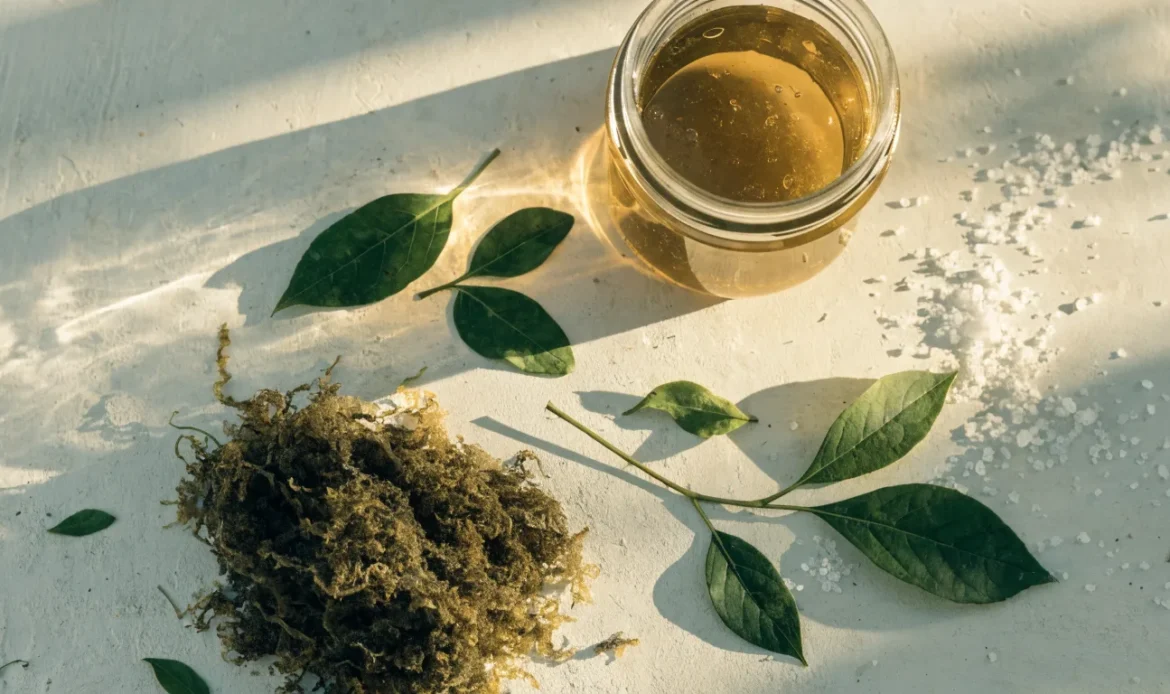
Short answer: Yes — you can eat sea moss. But how you eat it matters. Sea moss sold for food usually needs cleaning, soaking, and sometimes cooking or blending into a gel before you eat it. Some forms are ready to consume, while others need more prep. Read on for clear steps, safety checks, and a short decision guide to help you choose the right form.
What is “sea moss” and which forms you might find
Sea moss is a general name for several edible seaweeds people harvest and sell. It is often called Irish moss or simply seamoss in markets and online. You will find sea moss sold in a few common forms:
- Dried whole pieces (raw, dried seaweed).
- Rehydrated gel (a soft gel made by soaking and blending dried sea moss).
- Powdered seaweed or seamoss powder.
- Capsules or tablets containing sea moss extract or powdered product.
- Fresh seaweed, less common in retail but used in kitchens and restaurants.
Each form is a food product or ingredient. Some are ready to use. Others need cleaning and processing before they are safe or pleasant to eat.
Can you eat sea moss right away? Short guidance
- If a product is labeled and sold as a food or food ingredient, you can eat it when prepared correctly.
- If you buy dried sea moss, you should clean and soak it before eating.
- If you buy a sealed food-grade gel, powder, or capsule from a reputable seller, follow the product label for use.
- If you have a thyroid condition, are pregnant, breastfeeding, or take certain medicines, talk with a healthcare provider before you start eating sea moss regularly. Iodine content in seaweed can be high or variable and may affect thyroid function [2][3][5].
How do you eat sea moss: common forms and practical steps
Below are common forms and safe, practical steps for each. These are simple food-prep ideas. They do not promise any health benefit.
Dried sea moss (raw sea moss) — how to eat it
- Inspect the pieces. Look for strong off-odors or visible sand and debris.
- Rinse under cold water to remove surface dirt.
- Soak in clean water until the pieces soften. Change the water if it becomes cloudy.
- After soaking, rinse again and trim any dark or slimy parts.
- Cook or blend into a gel if you plan to use it as a food ingredient (see gel steps below). You can also add soaked, rinsed pieces to soups and broths that will be heated.
Notes: Do not eat dried sea moss straight from the package without cleaning. Dried seaweed can hold sand, shell fragments, or small organisms.
Sea moss gel — how to eat it
- Sea moss gel is usually made by soaking cleaned dried sea moss, then blending with fresh water until smooth.
- Sea moss gel is used like a food ingredient. Add it to smoothies, soups, or sauces.
- Store open gel in the refrigerator and use by the date on the product or within a short home-use time. If the gel smells bad or looks separated, discard it.
Notes: Commercially prepared, sealed gel products will include storage and use directions. Follow the product label.
Powdered sea moss — how to eat it
- Powders are often sold to mix into drinks, smoothies, or recipes.
- Follow the product label. Mix into a beverage or recipe. If the powder is a whole-food powder, you may want to check the ingredient list for added ingredients.
Capsules or tablets — how to eat them
- These are taken like other supplement capsules. Follow the label directions.
- Capsules may have concentrated extracts. Check the label and consider medical advice before regular use, especially if you have thyroid conditions.
Fresh seaweed — how to eat it
- Fresh seaweed is cleaned and either cooked or used raw in certain dishes. Preparation steps vary by recipe. Always wash fresh seaweed thoroughly.
How to eat seamoss safely — what to check before you eat
Seaweed can contain minerals and trace elements from the water where it grew. Most are safe at modest amounts. But some points matter:
- Source and labeling: Buy products that are clearly labeled for food use. Labels should list the product type and basic instructions. Avoid products with incomplete information.
- Cleanliness and storage: Rinse and soak dried pieces. Keep opened products refrigerated as the label directs. Discard products with an unusual smell or appearance.
- Medical conditions: If you have thyroid disease, talk with a healthcare provider before eating seaweed regularly. Seaweed can contain variable levels of iodine, which affects thyroid function [2][5].
- Medications: If you take thyroid medication or other medicines, ask your clinician or pharmacist whether seaweed could interact with your treatment.
- Children and pregnancy: For pregnant people and young children, check with a healthcare provider before regular use. Because iodine varies and pregnancy has special nutritional needs, professional advice is wise [2][3].
- Product testing: Look for food-grade products and sellers who share testing or lab reports if you have concerns about contaminants. Independent testing can reduce uncertainty about heavy metals or other pollutants in seaweed products [4].
References in scientific reviews and food safety monitoring show that iodine levels in seaweed products can vary widely and that excess iodine intake is the main concern when people eat large amounts of seaweed regularly [3][5].
What happens if you eat too much sea moss
Eating a small amount occasionally is different from eating large quantities every day. Possible issues from eating too much include:
- Iodine imbalance. Seaweed can have high or variable iodine. Too much iodine can affect the thyroid. People with thyroid disease are at higher risk from excess iodine [2][5].
- Gastrointestinal upset. Large amounts of any new fiber-rich food can cause gas, bloating, or loose stools in some people.
- Contaminants. Seaweed can contain traces of heavy metals or contaminants depending on where it was harvested. Buying food-grade products and checking for testing lowers this unknown. Operation Supplement Safety and food-monitoring agencies recommend caution and checking labels for source and testing information [3][4].
- Interactions with medicines. If you take medication for thyroid disease or other conditions, repeated high intake of seaweed could matter. Talk to your provider.
We do not know exact safe or unsafe intake levels that apply to every person. The scientific literature and monitoring programs document variability and potential for excess iodine; they do not give a single number that fits everyone [3][5]. This is why asking a clinician is useful for personal advice.
Practical decision checklist: Should I eat sea moss?
Use this short checklist to decide whether to try eating sea moss and which form to choose.
- [ ] Is the product labeled as food or a food ingredient? If yes, it is intended for eating.
- [ ] Do I need to clean, soak, or cook the product before eating? (Dried usually needs soaking/cleaning.)
- [ ] Do I have a thyroid condition, am I pregnant, breastfeeding, or taking thyroid medicine? If yes, consult a healthcare provider first.
- [ ] Do I prefer a ready-to-use form (gel or powder) or raw/whole piece to prepare myself?
- [ ] Do I want an independently tested product for contaminants or iodine? Look for sellers who provide lab reports or testing information.
- [ ] Am I starting with a small amount to test tolerance, rather than large daily doses? Plan to monitor how you feel.
- [ ] Do I know how to store the product safely after opening? (Follow label directions.)
- [ ] Is the seller reputable and clear about handling and shipping? If not sure,ask questions or choose a different product.
Answering yes to the first few items and taking steps on the rest will help you make a safer choice.
Format comparison: Which form to eat and why (quick table)
| Form | How people eat it | Prep needed | Good if you want | Watch outs |
|---|---|---|---|---|
| Dried whole pieces | Soak, clean, then cook or blend | Rinse and soak; trim debris | Control over preparation; longer shelf life | Needs time and care to clean |
| Sea moss gel | Add to smoothies, soups, sauces | Usually ready once bought | Easy to mix into recipes | Check storage instructions |
| Powder | Mix into drinks or recipes | None beyond mixing | Convenient; shelf-stable | Check for added ingredients |
| Capsule/tablet | Swallow with water | No prep; follow label | Simple dosing | May be concentrated; check label |
| Fresh seaweed | Use in dishes raw or cooked | Thorough washing | Culinary use in recipes | Less common; short shelf life |
This table is a practical way to match a format to your needs. It does not recommend any one format for health reasons.
How to make sea moss gel at home (brief outline)
If you choose to make gel from dried sea moss, here is a general outline. These are food-prep steps, not a recipe for medical use:
- Rinse dried sea moss thoroughly until water runs mostly clear.
- Soak the sea moss in fresh water until it softens. Change the water if it becomes very cloudy.
- Rinse again and remove any discolored bits.
- Blend softened sea moss with fresh water until smooth.
- Store gel in a clean container in the refrigerator and use it within a short time. Discard if it develops an off smell.
If you buy a commercial gel, follow the package directions. Do not assume homemade gel lasts as long as factory-prepared products without preservation.
Questions a buyer can ask a seller or check on a product page
- Is this product sold as a food or a supplement?
- Where was the seaweed sourced (general region) and is that verified in writing? Sellers may provide origin details, but origin alone does not guarantee safety.
- Is the product food-grade and intended for human consumption?
- Are there third-party lab tests available for contaminants, heavy metals, or iodine content?
- What are the storage and use instructions?
- Is there a batch number and a clear best-by date?
These questions reduce uncertainty. If a seller cannot answer basic questions about labeling and food-use status, you may want to consider another product or ask for more details.
Where to go next
If you want more background on seaweed and food safety, see a short overview at the Harvard School of Public Health on seaweed [1]. For information about iodine and thyroid implications from seaweed, see scientific reviews [2][5] and food monitoring data [3]. For guidance about supplements and product testing, consult Operation Supplement Safety [4].
If you’d like to view product options or ask about wholesale quantities, visit our shop or contact us:
- Explore product options: /shop/
- Learn more about sea moss and food use: /learn/
- For wholesale inquiries: /wholesale/
- General site and company info: Home
- To ask a question directly: /contact/
Conclusion
Sea moss to eat is a real food option in several formats. You can eat it when you buy food-grade products and follow basic cleaning and preparation steps. The main safety consideration is that seaweed can contain variable levels of iodine and other trace elements. This means people with thyroid conditions, pregnant people, and those on certain medications should get medical advice before using seaweed regularly. Use the decision checklist above, choose a clear-labeled food product, and start with a small amount to see how your body responds.
Frequently asked questions
Can you eat sea moss raw?
You can eat sea moss that is sold and labeled as food. Dried sea moss should be cleaned and soaked before eating. Fresh seaweed should be washed well. Many people prepare a gel or cook the seaweed before eating.
How do you eat sea moss in a smoothie?
Use sea moss gel or powder in a smoothie. Gel blends easily. If you use dried pieces, make gel first or soak and blend until smooth. Follow product instructions for serving suggestions.
What happens if you eat too much sea moss?
Eating large amounts of seaweed regularly can increase iodine intake and affect thyroid function. It may also lead to digestive upset or increase exposure to contaminants depending on the product. Talk to a healthcare provider if you plan frequent or high intake [2][3][5].
Is sea moss safe for people with thyroid problems?
Because seaweed can contain variable amounts of iodine, people with thyroid conditions should consult their healthcare provider before adding seaweed or sea moss to their diet regularly [2][5].
Can children eat sea moss?
Children can eat food products containing seaweed in small amounts, but for regular or supplemental use, consult a pediatrician. Iodine needs are different for children, and excess intake can matter.
How do I know if a sea moss product is food-grade?
Food-grade products are labeled for food use and include directions for preparation and storage. Look for clear labeling, ingredient lists, and seller information. For added peace of mind, ask the seller about testing or certificates related to food safety [4].
References
- Harvard T.H. Chan School of Public Health, “Seaweed.” https://nutritionsource.hsph.harvard.edu/seaweed/
- Smyth PPA. “Iodine, Seaweed, and the Thyroid.” European Thyroid Journal, 2021. https://pmc.ncbi.nlm.nih.gov/articles/PMC8077470/
- Food Standards Australia New Zealand, “Survey of iodine levels in seaweed and seaweed containing products,” updated 2025. https://www.foodstandards.gov.au/science-data/monitoring-safety/surveyofiodinelevels
- Operation Supplement Safety, “Sea Moss in Dietary Supplements.” https://www.opss.org/article/sea-moss-dietary-supplements
- Blikra MJ et al. “Consequences of acute and long-term excessive iodine intake: A literature review focusing on seaweed as a potential dietary iodine source.” 2024. https://doi.org/10.1111/1541-4337.70037