
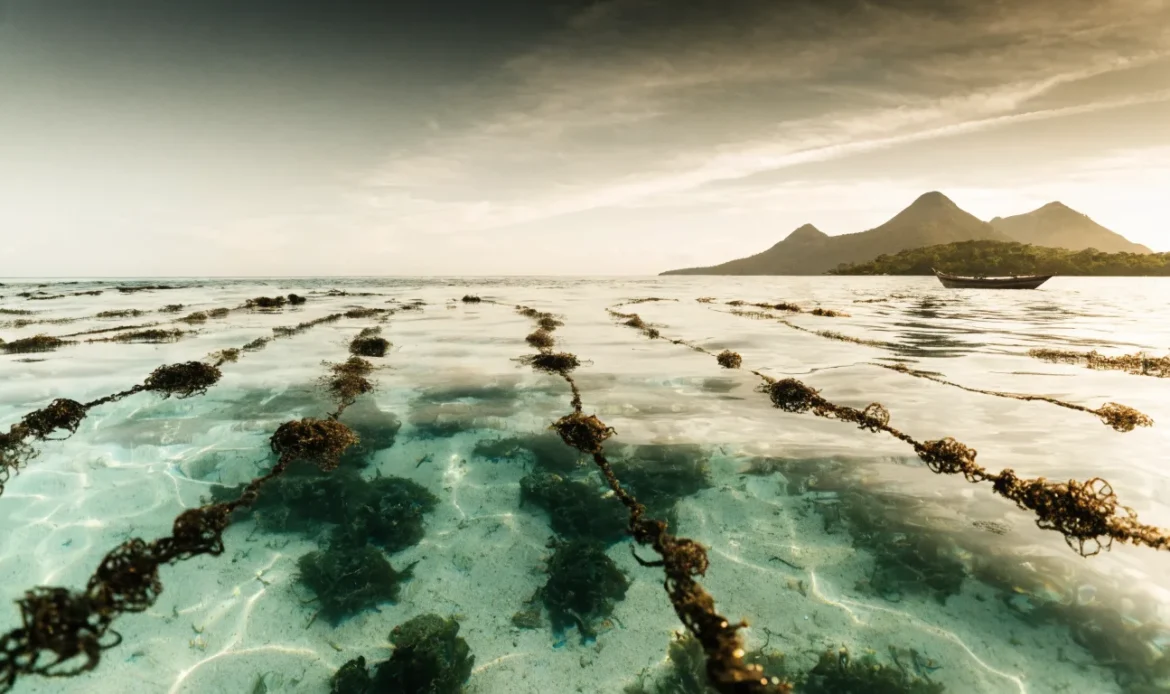
Short answer: St Lucian sea moss usually means sea moss that comes from or is marketed as from St. Lucia. To trust that label, ask the seller where it was harvested, how it was processed, and for recent test results or batch paperwork. If you plan to buy in bulk, use a checklist of traceability, testing, and shipping details before you place an order.
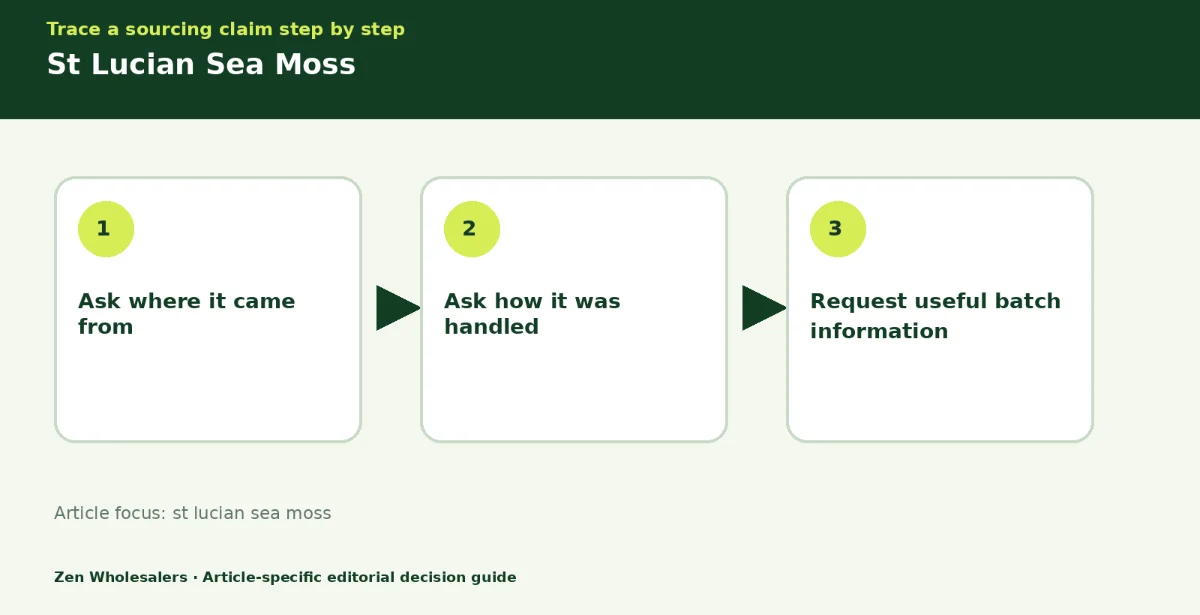
This guide explains where “St Lucian sea moss” comes from, what you can check, what testing can and cannot prove, and which questions help you make a safe buying choice. It also gives a practical decision checklist and links to useful next guides and pages.
What “St Lucian” means for sea moss
“St Lucian sea moss” or “saint lucian sea moss” is a label. It suggests the sea moss was harvested, processed, or sold from St. Lucia. The label alone does not prove how or where the sea moss was grown or handled. Sellers can mean different things by the phrase:
- Harvested in waters around St. Lucia.
- Processed or packaged in St. Lucia, though the algae may be from nearby waters.
- Packaged for a brand based in St. Lucia.
If the exact origin matters to you, the label is only a first clue. The next step is to ask for more documentation and to check the items in the decision checklist below.
Which algae are called “sea moss”
“Sea moss” is a common name used for several types of red algae and related seaweeds. Different regions use “sea moss” for different species. Scientific names and species vary by place and by market. For general context, reliable sources say seaweeds include many species and that content like iodine can vary a lot by species and by where the algae grew [1]. That variability is why supplier answers and lab tests matter.
How to check origin and traceability
What you can reasonably check:
- Harvest location and date. Ask for a harvest area description and harvest date or season.
- Proof of handling. Ask how the sea moss was cleaned, dried, and stored.
- Batch paperwork. Request batch numbers, packing dates, and lot-level paperwork.
- Photos or videos. Recent harvest or drying photos help but are not proof alone.
What documents can show but not prove:
- A Certificate of Analysis (COA) or lab report can show results for that batch. But a COA is only as good as the testing lab and the sample tested. It does not prove sustainable harvesting or continuous quality for future batches.
- Country of origin on a label can be helpful. But some supply chains mix material before packaging. Ask whether the product is single-origin or blended.
What testing cannot prove:
- Testing cannot show who harvested the sea moss or whether every pack in a shipment came from the same place unless the seller uses strict lot control and shares that information.
- A single COA does not guarantee all batches will test the same way in the future. Seaweed chemistry changes by season and location.
Tests and safety considerations to request
Seaweed can contain naturally high amounts of iodine and can pick up metals from its environment. These points matter for buyers and for people who use the product regularly.
- Iodine: Seaweed iodine content can vary widely by species and location. Both low and high iodine intake affect thyroid function, so knowing iodine levels in a product is important if users will consume it regularly. Ask for iodine testing on the batch you plan to buy [2][3][5].
- Heavy metals and contaminants: Request tests for common heavy metals (like lead, cadmium, mercury). Labs can test for these. A COA with these tests gives information for a batch but does not guarantee future batches.
- Microbial testing: For raw or lightly processed sea moss, ask about microbial testing (total plate count, yeast and mold, E. coli, Salmonella) especially for product formats that are sold fresh or as gels [4].
- Lab credentials: Ask where the tests were done. Accredited third-party labs are preferable. A supplier’s in-house test is useful, but third-party labs reduce conflict of interest.
Remember: test results are a snapshot. They do not replace safe handling, storage, and clear supply-chain practices.
References that discuss seaweed and testing include overviews from nutrition science and public health sources [1][4] and articles reviewing iodine and seaweed [2][3][5].
Common harvest and processing terms — what they usually mean
- Wild-harvested: Collected from natural rocks or beds, not farmed. This can mean more variation in size and chemistry. Ask how harvesters avoid overharvesting.
- Farmed or cultivated: Grown on ropes or beds in controlled sites. Farming aims for consistency, but methods and oversight differ by producer.
- Hand-picked: Harvested by people, often from shallow water or rocks. This does not guarantee sustainability; ask about permits and quotas.
- Sun-dried: Dried using natural sun exposure. Sun drying is common in coastal areas. Check whether drying included steps to reduce contamination.
- Mechanically dried: Industrial dryers can control moisture better. Ask about temperatures and how fast the product was dried.
- Raw vs. processed: “Raw” often means not heated above typical cooking levels. “Processed” may include blanching, steaming, or chemical treatments. Request details.
If a seller uses a term you do not understand, ask for a short description of the exact steps they use from harvest to packing.
Buying for retail or wholesale: key questions to ask
If you plan to buy St Lucian sea moss, either as a small buyer or a wholesale buyer, here is a practical checklist to use when talking to suppliers. Keep this checklist handy and use it before you order.
Decision checklist: questions to ask a supplier
- Origin and traceability
- Where exactly was this batch harvested? (area or coordinates if available)
- Was this lot single-origin or blended?
- Can I see batch photos, harvest date, and packing date?
- Processing and handling
- How was the sea moss cleaned?
- How was it dried or processed?
- Is it packed raw, dried, powdered, or made into gel?
- Testing and paperwork
- Can you provide a recent COA for this batch?
- Which lab conducted the tests? Is it an accredited third-party lab?
- What tests were run? (iodine, heavy metals, microbes)
- Supply and logistics
- Minimum order quantity and lead time?
- How is it packaged for shipping?
- What are storage conditions during transit and on arrival?
- Sustainability and permits
- Are harvesters locally licensed? Are there permits or a management plan?
- Are harvest practices seasonal or year-round?
- Samples and returns
- Can I request a small sample or a lab-tested sample?
- What is your return or dispute policy if batch testing does not match the COA?
Use this checklist as a script when you call or email suppliers. Get answers in writing where possible. A supplier that cannot answer these items should cause caution.
Practical decision guide: how to choose based on your priorities
This short guide maps common buyer goals to the most useful questions.
- If origin certainty is most important:
- Ask for harvest GPS or named area and a written statement that the lot is single-origin.
- Request photos and a chain-of-custody or lot number.
- If safety testing matters most:
- Ask for batch-level COAs with iodine and heavy metal testing from a recognized third-party lab.
- If cost and lead time matter:
- Ask about minimum order quantity, typical lead times, and sample costs.
- If sustainability matters:
- Ask about harvest permits, community involvement, and any sustainable collection guidelines used.
No single answer fits everyone. Combine the questions that match your priorities.
How to prepare common formats (basic, neutral steps)
If you buy dried sea moss or whole leaf sea moss, here are neutral, practical steps used by many people to turn it into a food ingredient. These are general handling steps, not health claims.
- Visual inspection: Look for foreign matter, unusual odor, or extreme discoloration.
- Rinse: Rinse under cool running water to remove salt, sand, and obvious debris.
- Soak: Soak in clean water if you plan to rehydrate. Change the water if it looks cloudy.
- Cook or blend: For food uses, some people simmer or blend the product into recipes. Cooking steps depend on your recipe.
- Make a gel: To make a simple gel for culinary use, rehydrate, cook gently until soft, blend, and cool. Keep refrigerated and use within a reasonable time based on storage advice.
- Storage: Keep dried sea moss in a cool, dry place. Follow supplier storage instructions for other formats.
If you plan to sell prepared foods containing sea moss, follow local food safety laws and labeling requirements.
Sustainability and local communities
Sea moss harvesting is part of coastal economies in many places. Responsible buyers ask how a supplier supports local communities and manages resources.
Questions to ask about sustainability:
- Are harvesters paid directly or through a cooperative?
- Are local regulations and seasonal closures respected?
- Does the supplier have a plan to avoid overharvested areas?
- Does the supplier use small-scale methods that help families, or larger farms?
Sustainability claims vary. Ask for specifics rather than simple marketing phrases. A supplier that can describe who does the harvesting, how often, and what local rules apply is easier to evaluate.
Pricing and samples: practical tips
- Request a small paid sample before a large order. Samples let you check quality and customer response.
- Ask whether sample testing is possible. A tested sample is more reliable for a buying decision.
- For wholesale, negotiate a small initial order and a trial period. This lowers risk if future batches vary.
- Factor in shipping, customs, and storage. Seaweed can be bulky or heavy when wet, so ask about freight methods.
What information cannot be proved without extra steps
- Species ID: Visual ID is not always reliable. Genetic testing (DNA barcoding) is needed to prove species identity.
- Continuous quality: One COA does not prove future batches will match the same values.
- Sustainability claims: “Fair” or “sustainably harvested” claims require proof like permits, local management plans, or third-party certification to mean anything specific.
If these points are important to you, say so up front and ask the supplier which proof they can provide.
Useful next steps
- If you want to learn more about seaweed basics and safety, see our learning hub: /learn/
- To view product formats and small orders, visit: /shop/
- For wholesale inquiries and to request samples or wholesale terms, start at: /wholesale/
- If you have specific questions or need documents before you buy, contact the supplier directly: /contact/
- For a general overview of our company and home page, see: /
These pages will help you collect the questions and documents you need before deciding.
Conclusion
“St Lucian sea moss” is a helpful label, but it does not replace checks on origin, processing, and testing. Use the decision checklist in this guide when you talk to sellers. Ask for batch COAs from accredited labs for iodine and contaminants. Request harvest dates, photos, and handling steps. If you buy wholesale, begin with a small test order and ask about lead times and storage. Doing this work up front reduces surprises and helps you choose a supplier who documents what they sell.
If you want help drafting a supplier questionnaire or a sample request email, reach out via /contact/ or start by reviewing best practices on /learn/. If you’re ready to see product samples or place a small order, visit /shop/ or inquire about larger orders through /wholesale/.
Continue reading
Frequently asked questions
How can I verify that sea moss really came from St. Lucia?
Ask the seller for batch-level information: harvest area description, harvest date, photos, and a COA. Request written confirmation that the lot is single-origin. These steps increase confidence but do not guarantee origin unless the supplier tracks lots carefully.
Should I ask for lab tests before I buy?
Yes, request COAs for the batch you want. Prioritize tests for iodine, heavy metals, and microbes as relevant to the product format. Prefer third-party accredited labs when possible [3][4][5].
Do lab tests prove the sea moss is safe?
Lab tests give a snapshot for the tested batch. They do not guarantee future batches, nor do they replace safe handling and storage. Tests are one part of a broader check on supply-chain practices.
What processing terms should I avoid?
Avoid buying when the seller is vague about processing. If they cannot explain how the sea moss was cleaned, dried, or stored, that is a red flag. Exact terms are less important than clear steps and documentation.
Is all sea moss the same?
No. “Sea moss” refers to several species and product forms. Species, harvest location, and processing all affect the product. If species identity matters to you, ask for precise identification; visual ID can be unreliable.
Can I rely on pictures the seller sends?
Pictures help but are not proof. Ask for batch photos taken on the harvest or packing date, and request lot numbers that match the COA. Even then, pictures are only one part of due diligence.
References
- Harvard T.H. Chan School of Public Health, “Seaweed.” https://nutritionsource.hsph.harvard.edu/seaweed/
- Smyth PPA. “Iodine, Seaweed, and the Thyroid.” European Thyroid Journal, 2021. https://pmc.ncbi.nlm.nih.gov/articles/PMC8077470/
- Food Standards Australia New Zealand, “Survey of iodine levels in seaweed and seaweed containing products,” updated 2025. https://www.foodstandards.gov.au/science-data/monitoring-safety/surveyofiodinelevels
- Operation Supplement Safety, “Sea Moss in Dietary Supplements.” https://www.opss.org/article/sea-moss-dietary-supplements
- Blikra MJ et al. “Consequences of acute and long-term excessive iodine intake: A literature review focusing on seaweed as a potential dietary iodine source.” 2024. https://doi.org/10.1111/1541-4337.70037