
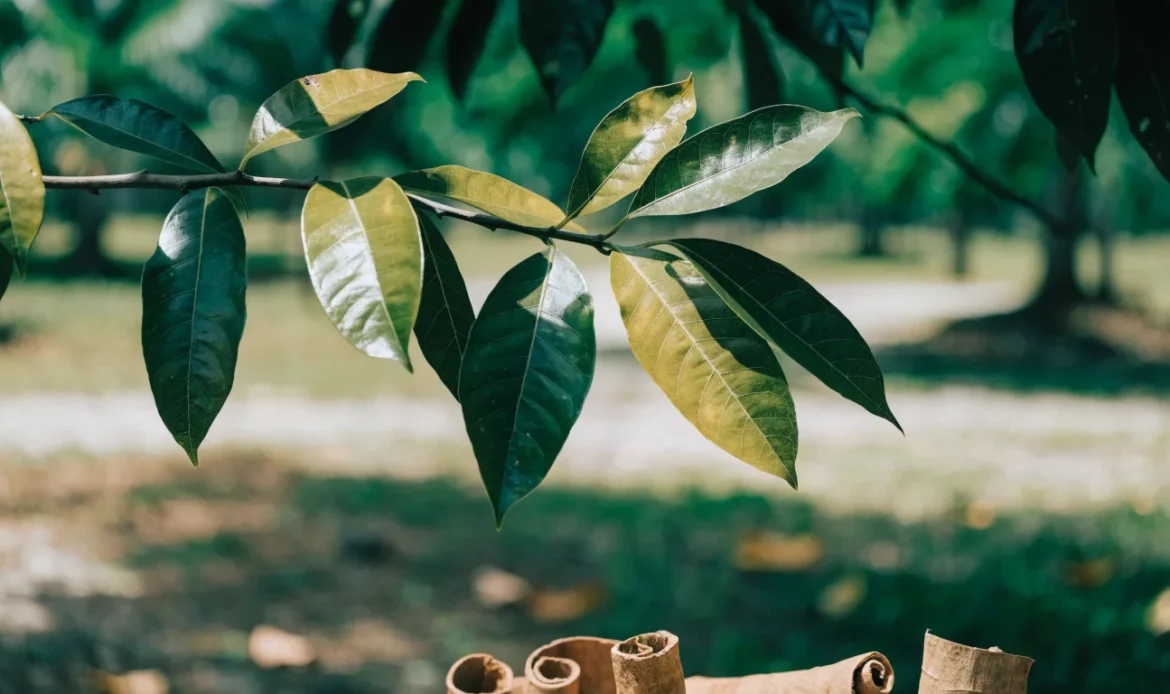
Short answer: Cinnamon leaves are the aromatic leaves from trees in the cinnamon family. Dried cinnamon leaves are used like a spice leaf—added whole or crushed to teas, stews, rice, and marinades for gentle warmth and scent. They are different from cinnamon bark and are botanically not related to sea moss.
Why this page: You want clear, practical info on cinnamon leaves and dried cinnamon leaves uses. Below you’ll find simple definitions, how to cook with them, how to buy and store them, safety checks you can do at home, and a decision guide for buying loose leaves or packaged products.
What are cinnamon leaves?
Cinnamon leaves come from trees in the genus Cinnamomum. The tree produces both bark (what most people call “cinnamon”) and leathery leaves. The leaves have a milder, greener scent than cinnamon bark. When dried, the leaves keep their scent and can be stored and used like other dried herbs.
Short notes:
- Leaves are usually used whole, bruised, or crushed.
- Dried cinnamon leaves are less intense than cinnamon sticks or ground cinnamon.
- Different species (for example, Cinnamomum verum and Cinnamomum cassia) can vary in smell and strength, and sellers may use different common names.
How cinnamon leaves differ from cinnamon bark
Cinnamon bark and cinnamon leaves come from the same broad group of trees, but they are different plant parts and behave differently in recipes.
- Texture: Bark is hard and woody; leaves are thin and leafy when fresh, brittle when dried.
- Flavor profile: Leaves give a fresher, greener warmth. Bark (sticks or powder) gives a sweet-spicy note that is usually stronger.
- Uses: Bark is common in baking and spice blends; leaves are common in savory cooking, teas, and slow-simmered dishes.
- Handling: Leaves can be removed from a dish before serving like bay leaves. Bark may be steeped, ground, or removed.
Do not assume that a product labeled “cinnamon” contains leaves, bark, or both. Read the label or ask the seller.
Common culinary uses for dried cinnamon leaves
Dried cinnamon leaves have a wide range of culinary uses. Here are practical ideas and simple methods.
Tea and infusions
- Use whole dried leaves to make tea. Steep 2–4 leaves per liter of water. Simmer gently for 5–15 minutes depending on how strong you want it.
- Combine with other herbs like clove, ginger, or citrus peel for a warm, aromatic tea.
Savory braises, curries, and stews
- Add one or two dried leaves to a pot while cooking meat, beans, or vegetables. Remove before serving.
- Leaves blend well into long, slow cooking where they soften and infuse flavor.
Rice, grains, and pilafs
- Toss a leaf into cooking water for rice or quinoa. Remove before fluffing to add a subtle aromatic note.
Pickling and marinades
- Use a leaf in small-batch pickles or marinades for an aromatic background note.
Syrups and drinks
- Simmer leaves in simple syrup for cocktails or mocktails. Strain out the leaves before bottling.
Savory blends and bouquet garni
- Bind leaves with bay leaf, peppercorns, and thyme to make a spice bundle. Use like a bouquet garni and remove before serving.
Note: Start with fewer leaves for new recipes, taste as you go, and remember dried leaves are milder than ground cinnamon.
How to use dried cinnamon leaves: step-by-step tips
- Smell the leaves first. A fresh aroma is a good sign.
- Use whole leaves for long simmering dishes and remove before serving.
- Bruise or crush leaves if you want more immediate flavor release for shorter cooks.
- For tea, simmer rather than just steeping briefly to pull out the leaf’s aroma.
- Store leftovers in an airtight container away from heat and light.
Practical substitution guidance
If your recipe calls for a cinnamon stick and you only have dried cinnamon leaves:
- Use one or two dried leaves in the simmering liquid. Expect milder flavor.
- Taste during cooking and add another leaf if needed.
If your recipe calls for ground cinnamon and you want a leaf note:
- Make a quick infusion: simmer several leaves in a small amount of water or milk, strain, then use that liquid in place of some of the recipe’s liquid. This gives leaf aroma without the granular texture of ground spice.
Avoid trying to grind dried cinnamon leaves into a fine powder the way you would cinnamon bark. The texture and flavor outcome will be different.
Buying dried cinnamon leaves: what to check
When you shop for dried cinnamon leaves, here is what you can inspect or ask about. The checklist below helps you decide between loose leaves, small packages, and bulk buys.
| What to check | Why it matters | What it tells you |
|---|---|---|
| Smell (if possible) | Fresh aroma shows the leaf still has essential oils | Stronger scent = more flavor potential |
| Color and appearance | Leaves should look dry but not faded to dust | Intact leaves keep flavor longer |
| Packaging date | Freshness matters for aroma | Recent packing usually means better aroma |
| Packaging type | Airtight packages keep humidity out | Resealable or sealed vacuum packs extend shelf life |
| Country or region of origin (if listed) | Helps you ask follow-up questions | Origin alone doesn’t equal quality; use it for comparisons |
| Certifications or testing (if listed) | Labels like organic or third-party testing give extra info | Certification indicates certain production standards, not guaranteed purity |
| Seller handling info | How the seller stores and ships affects quality | Clear answers build trust; vague answers do not prove safety |
| Price per weight | Useful for comparing sizes and value | Very low prices may mean mixed quality; compare similar packaging sizes |
Use the table to compare products before purchase. If something is missing (no date, no origin), ask the seller.
Storage and shelf-life guidance
- Keep dried cinnamon leaves in an airtight container.
- Store in a cool, dry, dark place away from heat and kitchen steam.
- Whole dried leaves typically keep their aroma longer than crushed leaf. If aroma fades, the flavor will be muted.
- Avoid storing near strong-smelling items, as dried leaves can absorb odors.
Do not trust visual appearance alone for safety. If the leaves smell off, show mold spots, or feel damp, discard them.
How to dry fresh cinnamon leaves at home
If you have fresh leaves and want to dry them:
- Rinse gently and pat dry.
- Spread in a single layer on a clean tray or screen.
- Dry in a warm, well-ventilated spot out of direct sunlight, or use a low-temperature oven or dehydrator set to the herb setting.
- Leaves are ready when they snap or crumble easily.
- Store fully cooled in airtight jars.
Do not speed-dry with high heat; that can remove aroma.
Safety, allergies, and quality checks
Cinnamon leaves are a food product. Keep these safety points in mind:
- Allergies: Some people may be sensitive to cinnamon-family plants. If you or guests have known spice allergies, test a small amount first.
- Pregnancy and medicines: If you have medical concerns or take medications, ask a health professional before adding large amounts of new herbs or spices to your diet.
- Contaminants and testing: Visual and smell checks help but cannot detect chemical residues, heavy metals, or microbial contamination. Only laboratory testing can confirm those. If a seller claims “tested” or “lab verified,” ask for the name of the lab and a certificate of analysis (COA).
- Cross-contact with seaweed products: If you buy cinnamon leaves from a seller who also handles sea moss or seaweed, ask about their allergen and cross-contact controls. Sea moss is a different product class (seaweed), and some people may be concerned about iodine content or other seaweed-specific issues. For more on seaweed and sea moss safety considerations, see the resources in References. Use separate storage if you need to avoid cross-contact.
Do not assume a product is free from contaminants or additives unless the seller provides verifiable documentation.
What you can check vs what you cannot prove at home
It helps to know what you can verify by inspection and what needs lab work or seller transparency.
What you can check in-store or on receipt:
- Smell and appearance
- Whether leaves are whole or powdered
- Packaging integrity and date
- Seller-provided certifications and labels
What you cannot prove at home:
- Presence of pesticide residues, heavy metals, or microbial contamination
- Exact botanical species or whether a product contains leaf only or a blend, unless the label is accurate and the seller provides verification
- Long-term storage conditions prior to shipment
If you need proof beyond appearance and label claims, ask the seller for a recent third-party lab report.
Buying decision guide: bulk vs small package
Consider this short decision guide when choosing between bulk dried leaves and smaller retail packages.
- Buy small sealed packages if:
- You want to try the product for the first time.
- You store spices in a small pantry and prefer sealed freshness.
- You want clearer labeling and date information.
- Buy bulk or wholesale if:
- You use cinnamon leaves often and can store them airtight in a cool place.
- The seller provides batch dates and reliable packaging.
- You have the capacity to repackage into smaller airtight containers quickly.
- Consider a middle approach:
- Purchase a moderate amount and split into small jars on arrival. This balances testing new products with value.
If you plan to resell or use large volumes, ask about wholesale terms and storage handling. For wholesale inquiries, use the company contact channels linked below.
Practical recipes and simple formulas
Here are a few easy recipe starters that use dried cinnamon leaves. These are guidelines—taste and adapt.
Simple cinnamon leaf tea
- 2–4 dried leaves per liter of water
- Bring water to a simmer, add leaves, simmer 5–10 minutes, strain
- Sweeten as desired or add citrus peel
Cinnamon-leaf simmered rice
- Add 1 dried leaf to cooking water for 2 cups of rice
- Cook as usual, remove leaf before serving
Spiced syrup for drinks
- 1 cup sugar + 1 cup water + 2–3 dried leaves
- Simmer 5–10 minutes until sugar dissolves and aroma is released
- Cool, strain, bottle
Stew or curry
- Add 1–2 leaves near the start of cooking and remove before serving
Always taste and add more leaves gradually.
Questions to ask a seller
When buying dried cinnamon leaves online or from a market, ask:
- What species or common name is this? (Ask for botanical name if possible.)
- When were the leaves harvested and packed?
- Do you have a packing date or batch number?
- Are there any certificates (organic, third-party testing)?
- Do you handle seaweed or other allergen-prone products in the same facility?
- How are the leaves stored and shipped?
Transparent sellers will answer clearly. If a seller is vague, consider buying elsewhere or ordering a smaller sample.
Conclusion
Dried cinnamon leaves are a useful, milder alternative to cinnamon bark. They are versatile in tea, savory cooking, rice dishes, and syrups. When buying, check aroma, packaging, and seller transparency. You can do simple home checks for quality, but only laboratory testing can confirm the absence of chemical contaminants. If you need proof, ask the seller for third-party lab documents.
If you want to explore related botanical products or buy cinnamon leaves in small or bulk amounts, visit our shopping and learning pages linked below.
- Browse Caribbean botanicals: Caribbean Botanicals
- Learn more about related ingredients: Learn
- Shop other herbs and spices: Shop
- Wholesale inquiries: Wholesale
- Contact us for product questions: Contact
- Back to home: Zen Wholesalers
Frequently asked questions
Are cinnamon leaves the same as bay leaves?
No. Bay leaves come from a different plant (bay laurel). Cinnamon leaves have a warmer, cinnamon-family aroma. Use them differently in recipes.
Can I eat dried cinnamon leaves whole?
You can eat them, but they are often removed before serving like a bay leaf. If you plan to eat them, crush them first and use in small amounts.
How do dried cinnamon leaves compare to ground cinnamon for baking?
Dried leaves are milder and greener in flavor. Ground cinnamon gives a stronger, sweeter spice note and is usually easier to mix into batters and doughs.
Do cinnamon leaves contain iodine like some seaweed products?
Cinnamon leaves are plant leaves and are not the same as seaweed or sea moss. Seaweed may contain iodine; plant spices like cinnamon leaves are not classified as seaweed. For seaweed and sea moss information, consult the resources in References. If you have iodine concerns, check the product and consult a professional.
Can I use cinnamon leaves for herbal remedies?
This page focuses on culinary uses. If you plan to use cinnamon leaves for health reasons, consult a qualified health professional. Do not rely on product pages alone for medical advice.
How should I store bulk dried leaves to keep them fresh?
Store in airtight containers in a cool, dry, dark place. Re-seal packages after opening and avoid humidity.
References
- Harvard T.H. Chan School of Public Health, “Seaweed.” https://nutritionsource.hsph.harvard.edu/seaweed/
- Operation Supplement Safety, “Sea Moss in Dietary Supplements.” https://www.opss.org/article/sea-moss-dietary-supplements
- Blikra MJ et al. “Consequences of acute and long-term excessive iodine intake: A literature review focusing on seaweed as a potential dietary iodine source.” 2024. https://doi.org/10.1111/1541-4337.70037