
Short answer
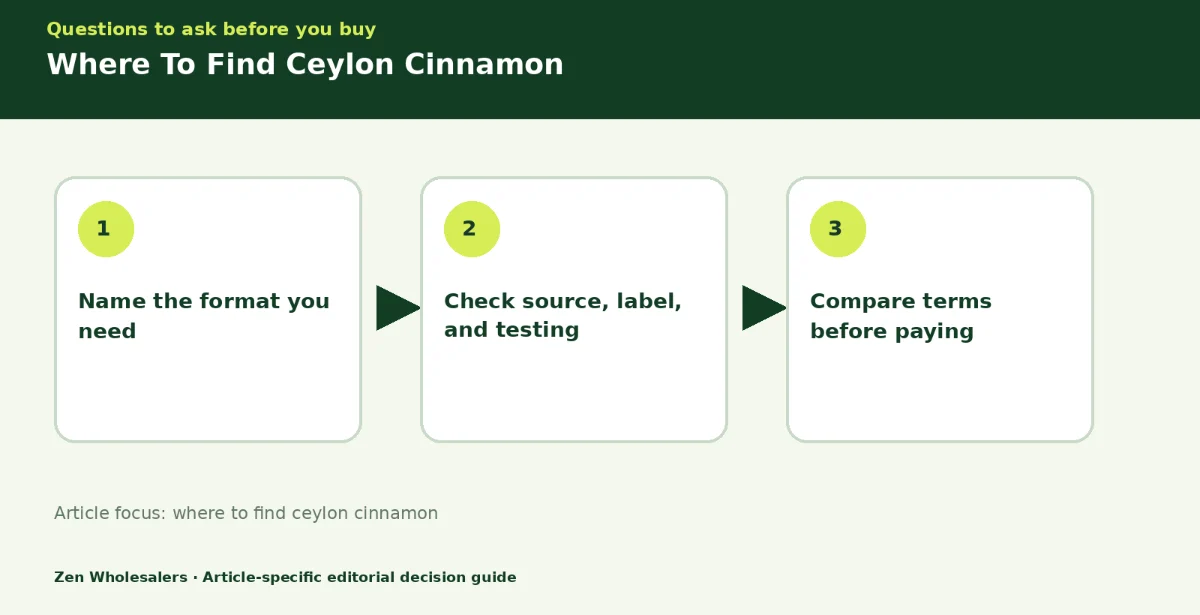
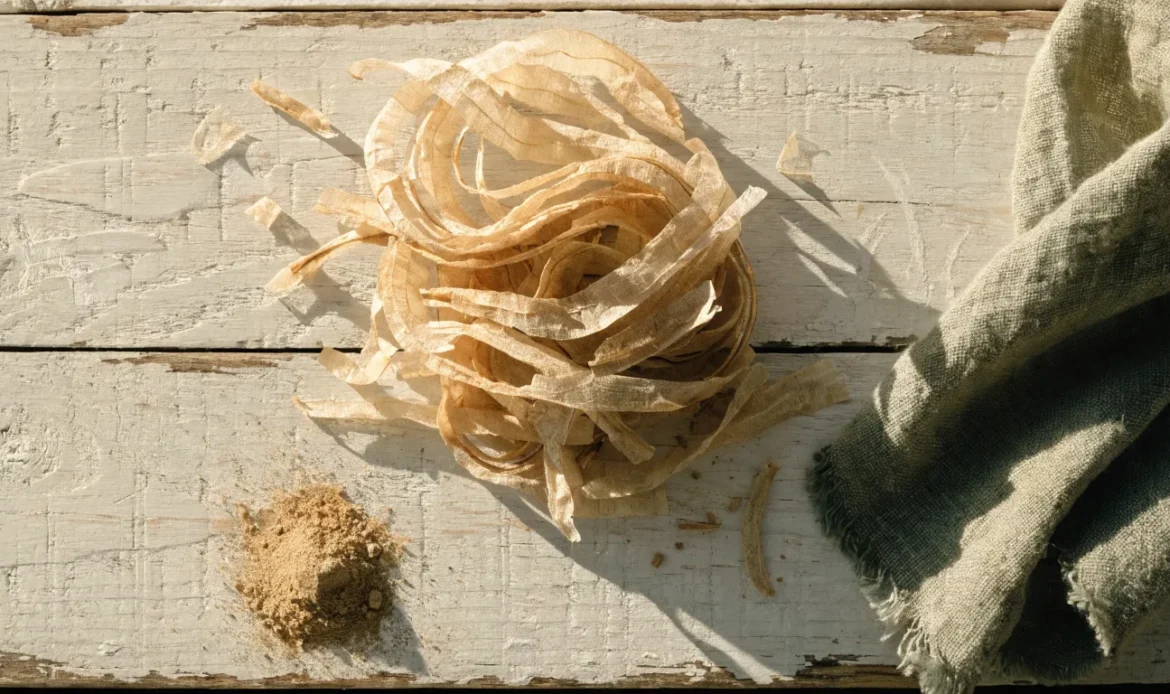
You can find Ceylon cinnamon (true cinnamon, Cinnamomum verum) at specialty spice shops, some ethnic markets, reputable online spice sellers, and through wholesalers. Look for the botanical name on the label, whole quills for longer freshness, and supplier answers about origin and processing. If you need bulk or repeat supply, ask suppliers for samples and lead times before you buy.
Why this guide
This article gives clear, practical steps. It explains how Ceylon differs from more common cassia types. It shows where to look for different buyer needs. It tells you what to check on labels. It also points to the right next questions for cooks and wholesale buyers.
What is Ceylon cinnamon?
Ceylon cinnamon is a spice made from the inner bark of the tree Cinnamomum verum (sometimes written zeylanicum). People call it “true cinnamon.” It is different from cassia spices, which are also often labeled “cinnamon” in stores.
- Botanical name: Cinnamomum verum (true cinnamon).
- Common forms: whole sticks (quills), ground powder, and chips.
- Typical use: cooking, baking, and spice blends.
This guide only covers buying and identifying the spice. Ceylon cinnamon is not related to sea moss or seaweed products. Sea moss is a marine algae product with different uses and safety points. If you want to learn about sea moss, see our learning pages and the references at the end. (See References.)
Where to look: places that commonly sell Ceylon cinnamon
Different sellers serve different buyers. Below are common places to check, and what you can expect to find there.
Specialty spice shops and gourmet food stores
- Why go: Staff often know spice types and can show whole quills. You can smell the spice and inspect texture.
- What to ask: Do you sell Cinnamomum verum? Is the product whole quills or ground? When was it packed?
- Best for: Home cooks and bakers who want to inspect before buying.
Ethnic and international markets
- Why go: Stores serving South Asian, Sri Lankan, or Middle Eastern communities sometimes carry true cinnamon. Labels may list the country of origin.
- What to ask: Is this labeled as “true cinnamon” or “Cinnamomum verum”? Country of origin?
- Best for: Buyers who want authentic culinary ingredients with familiar retailer names.
Online specialty spice retailers
- Why go: They often list botanical names and origin, and offer options in small to moderate quantities.
- What to check: Product photographs, botanical name on label, packaging date, customer reviews focused on authenticity (not health claims).
- Best for: Home cooks who want clear labeling and small-batch buying.
General online marketplaces
- Why go: You can compare many sellers and forms (sticks, powder).
- What to check: Seller reputation, clear botanical name, product photos that show the bark layers and quill structure. Prefer sellers who show a return policy and answer origin questions.
- Best for: Convenience and variety. Use caution: not every “Ceylon” label is accurate.
Wholesale spice suppliers and importers
- Why go: For cafés, food producers, retailers, and bulk buyers.
- What to ask: Minimum order quantities, sample availability, packing options, product certificates (organic, phytosanitary), and lead times.
- Best for: Businesses and repeat buyers. For wholesale help, see our wholesale page. (/wholesale/)
Our Caribbean Botanicals collection
- If you want to view Caribbean-appropriate spices and botanicals, see our Caribbean Botanicals shop. (/shop/caribbean-botanicals/)
How to tell Ceylon cinnamon from cassia
Labels can be wrong. If you want true Ceylon, learn the visual and label clues that point to the right product.
Label clues
- Botanical name: Look for Cinnamomum verum (or “Cinnamomum zeylanicum”). This is the most reliable label clue.
- “True cinnamon” or “Ceylon” on the label is helpful but not definitive without the botanical name.
- Country of origin: Sri Lanka is the traditional origin for true Ceylon cinnamon. Other origins can also grow C. verum, but country alone does not guarantee species.
Visual and physical clues (useful when you can inspect the product)
- Quill structure: True Ceylon quills are thin and have many tight layers. They tend to be softer and break easily into powder. Cassia quills are thicker and harder, often with a single thick layer.
- Color and texture: Ceylon is usually lighter brown and finer in texture. Cassia is darker and harder.
- Aroma and taste: Ceylon is generally more delicate and complex. Cassia is often stronger and more astringent.
- Ground spice: Ground powders are harder to distinguish by eye. Buy from sellers that list the botanical name.
A note on coumarin
Ceylon cinnamon typically contains much lower levels of coumarin than many types of cassia. This is a compositional difference between species. The presence or level of specific compounds is not a buyer proof by label alone. If compositional numbers matter for your use, ask the supplier for lab reports or certificates of analysis.
What to check on a product page or label
When buying online or in store, check these details before you buy.
- Botanical name (Cinnamomum verum). If missing, ask the seller.
- Product form: whole quills vs powder vs chips. Whole quills maintain aroma longer.
- Country of origin and harvest/pack date. Freshness matters.
- Packaging: sealed, food-grade bags or jars are better for shelf life.
- Certifications listed: organic, fair trade, or other certifications—these speak to production methods, not flavor quality.
- Sample availability for bulk orders. Ask for one before a large purchase.
- Return policy and customer service contact. Look for clear answers from the seller before you buy.
A buyer decision guide
Use this table to pick where to start based on your needs. For each buyer type, the table lists a suggested product form, where to look first, what label details to prioritize, and the next question to ask the seller.
| Buyer type | Suggested form | Where to look first | Label details to prioritize | Next question to ask seller |
|---|---|---|---|---|
| Home cook (occasional) | Small jar ground or a few quills | Specialty spice shop or online specialty retailer | Botanical name, pack date, sealed packaging | Can you confirm this is Cinnamomum verum? |
| Baker (regular use) | Whole quills and ground in 1–2 lb packs | Gourmet grocer or online spice retailer | Botanical name, supply consistency, freshness | Do you offer resealable packaging or bulk refills? |
| Restaurant / café | Bulk quills or commercial ground | Wholesale spice supplier | Botanical name, batch traceability, sample | Can I get a sample and lead time for regular orders? |
| Small retail shop | Small retail tins or bags | Specialty distributors or wholesale importers | Botanical name, private label options | Do you provide labeling info and order minimums? |
| Manufacturer (large scale) | Bulk chips or powder | Industry importers and spice brokers | Certificates, lab reports, supply chain trace | Can you supply COA and consistent monthly volume? |
Use this table to make the next call, send the next email, or request the next sample.
Practical buying tips
Keep these short checks in your shopping flow.
- Buy whole quills if you want longer aroma life. Grind at home as needed.
- Ask for the botanical name in writing if you buy online.
- If buying powdered cinnamon, prefer smaller jars you will use within months.
- For bulk buying, request a sample and a certificate of analysis if you need compositional data.
- If origin is important (e.g., Sri Lanka), confirm by asking the seller for the harvest or export origin.
- For repetitive orders, agree on lead times and MOQ (minimum order quantity) before you commit.
Cooking and storage notes
These tips help you get the best flavor from Ceylon cinnamon.
- Whole quills: store in a cool, dry, dark place in an airtight container.
- Ground powder: keep in small jars to use up faster and preserve aroma.
- Use: Ceylon’s texture and flavor make it a good match for custards, stewed fruits, rice puddings, and delicate baked goods.
- Grinding: use a clean spice grinder for whole quills. Grind right before use if possible.
- Shelf life: Flavor fades over time. Whole quills stay aromatic longer than ground spice.
Wholesale and business buyers: questions to ask suppliers
If you buy for resale or production, these questions save time and risk.
- Can you confirm the botanical name and provide it on invoices?
- Do you offer samples for quality testing? What is the cost or policy?
- What are minimum order quantities and typical lead times?
- How is the cinnamon packaged for shipping and retail (vacuum, resealable bags, tins)?
- Do you provide certificates such as organic, fair trade, or phytosanitary documents?
- Can you provide a certificate of analysis (COA) or third-party lab report on contents if needed?
- How do you handle returns, refunds, and quality disputes?
Keep answers in writing. That makes future conversations faster and reduces disputes.
Where Ceylon cinnamon is NOT the same thing as sea moss
Ceylon cinnamon is a tree bark spice. Sea moss is a marine seaweed product with different uses and safety considerations. They are unrelated botanically and in supply chains. If you are searching for sea moss or seaweed products, review safety and iodine information from trusted sources before buying or using them. See our learning pages for more on sea moss and seaweed. (/learn/) For seaweed safety and iodine guidance, consult scientific and regulatory sources. (See References.)
Conclusion
Finding true Ceylon cinnamon is practical if you know where to look and what to check. Start with the botanical name (Cinnamomum verum), prefer whole quills for freshness, and ask suppliers for samples and packing information if you need ongoing supply. If you are buying for a business, get supply details, certificates, and lead times in writing. For more spices and Caribbean botanicals, visit our shop page or contact our team for wholesale options.
Useful links
- Browse Caribbean botanicals: /shop/caribbean-botanicals/
- View full shop catalog: /shop/
- Wholesale inquiries: /wholesale/
- Learn about other botanicals: /learn/
- Contact our team: /contact/
Continue reading
Frequently asked questions
Is Ceylon cinnamon the same as cassia?
No. Ceylon (Cinnamomum verum) and cassia come from related but different species. They look and taste different. For reliable identification, check the botanical name on the label.
Can I trust an online listing that just says “Ceylon”?
Not always. “Ceylon” on its own is helpful. The best listings include the botanical name (Cinnamomum verum) and photos. If the botanical name is missing, ask the seller for clarification and a packing date.
Which is better for baking, sticks or ground powder?
Both work. Whole quills keep aroma longer and are good if you like to grind to order. Ground powder is faster to use in recipes. For strong, repeated use, buy whole quills and grind as needed.
How can I get a bulk sample before placing a large order?
Ask the supplier directly. Many wholesale suppliers and importers will send samples for a fee or free under certain conditions. Ask about sample size, cost, and lead time.
Does “Sri Lanka” on a label guarantee Ceylon cinnamon?
Sri Lanka is the traditional source of Cinnamomum verum. However, country of origin alone does not guarantee species. Check for the botanical name on the label or ask the seller if it is Cinnamomum verum.
What should I do if I suspect a seller mislabels cassia as Ceylon?
Request clarification in writing. Ask the seller for the botanical name, a photo of the product showing the quill structure, and a sample if you need to verify. If the seller cannot provide clear answers, consider a more transparent supplier.
References
- Harvard T.H. Chan School of Public Health, “Seaweed.” https://nutritionsource.hsph.harvard.edu/seaweed/
- Operation Supplement Safety, “Sea Moss in Dietary Supplements.” https://www.opss.org/article/sea-moss-dietary-supplements
- Blikra MJ et al. “Consequences of acute and long-term excessive iodine intake: A literature review focusing on seaweed as a potential dietary iodine source.” 2024. https://doi.org/10.1111/1541-4337.70037