
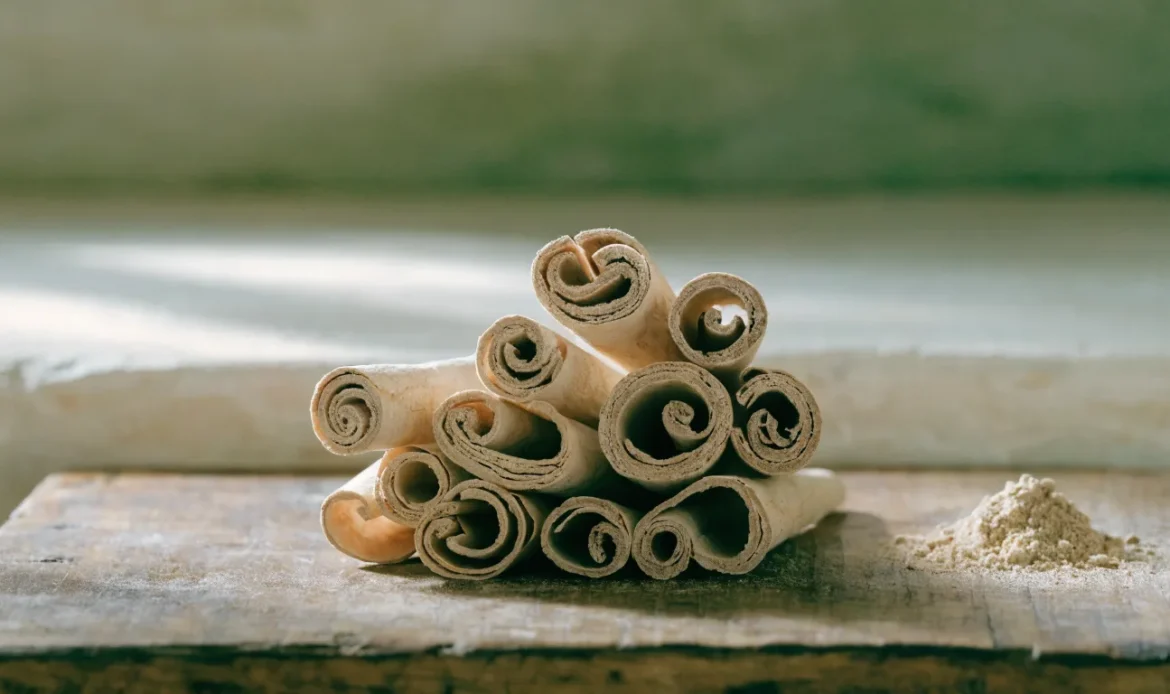
Short answer: You can find Ceylon cinnamon at specialty spice shops, Asian and Indian groceries, natural food stores, some larger supermarkets, farmers markets, and online retailers. For larger quantities, check wholesalers or bulk spice suppliers. Read on for simple checks, a buying checklist, a decision table, and next steps.
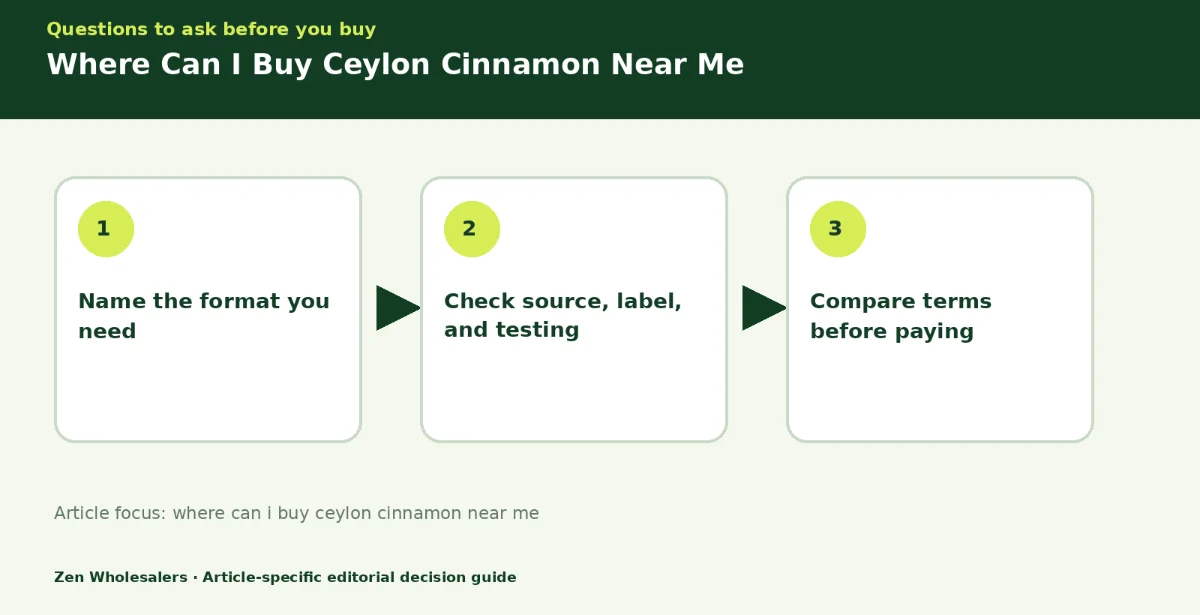
What “Ceylon cinnamon” means — one clear label to look for
Ceylon cinnamon is the common name for the spice from the tree Cinnamomum verum (sometimes written C. zeylanicum). Sellers who list the botanical name make it easier to trust what you are buying. A frequent source of confusion is cassia cinnamon. Cassia comes from related trees and is usually labeled Cinnamomum cassia or just “cassia.” If you need true Ceylon cinnamon, look for “Ceylon,” “Cinnamomum verum,” or “Cinnamomum zeylanicum” on the label.
Where to look near you — quick places to check
- Supermarkets and grocery chains. Larger stores often carry both ground and stick cinnamon. Check the spice aisle and any bulk bins.
- Specialty spice shops. These shops sell a wider range of single-origin spices and often offer Ceylon in whole quills or ground form.
- Asian, Indian, and Middle Eastern grocery stores. They sometimes stock different cinnamon types and may carry whole sticks labeled by origin.
- Natural food stores and co-ops. These stores may stock single-origin or organic Ceylon cinnamon.
- Farmers markets and local spice vendors. Some sellers import or source specialty spices and will show you the product up close.
- Bulk food stores and co-ops. Good if you want small or large quantities without prepackaged brands.
- Online retailers and marketplaces. They offer many sellers and formats. Look at seller photos, labels, and reviews.
- Wholesale distributors and spice importers. If you need larger volumes, contact distributors or wholesalers for samples and lead times.
If you want Caribbean-style products, check specialty Caribbean botanicals suppliers and spice collections for items labeled Ceylon or “true cinnamon.” You can also browse our Caribbean botanicals collection for examples and options: /shop/caribbean-botanicals/.
How to tell Ceylon cinnamon from cassia — a simple guide
You can check a few visual and sensory signs. None of these are perfect alone, but together they help.
- Botanical name on the label. This is the clearest sign. “Cinnamomum verum” means Ceylon.
- Appearance of sticks (quills). Ceylon quills are usually thinner and made of many thin layers rolled together. Cassia sticks are often harder and appear as a single thick layer.
- Color and texture. Ceylon tends to be lighter brown and crumbles more easily. Cassia is darker and harder.
- Smell and taste. Ceylon is often described as more delicate, with a subtly sweet, floral note. Cassia is usually stronger and more pungent.
- Price and packaging. Ceylon sometimes sells for more because it is less common, but price alone is not proof.
When in doubt, ask the seller to confirm the botanical name. If buying online, ask for a clear photo of the whole stick or a scan of the label that shows the botanical name and origin.
Forms of Ceylon cinnamon and when to choose each
- Whole quills or sticks. Best if you want the freshest aroma or need to make ground cinnamon at home. Whole sticks keep easier and let you control grind size.
- Ground or powdered. Ready to use. Buy from a trusted source and check packaging dates when possible. Ground cinnamon loses volatile aroma faster than whole sticks.
- Broken pieces. Often cheaper and good for steeping in hot liquids or simmered dishes.
- Oil or extract. Used in flavoring or industrial applications. These are concentrated — follow supplier instructions and safety labels.
- Pre-mixed blends. Read the label. Blends may mix Ceylon and cassia or other spices.
If possible, prefer whole sticks for long-term storage and grind as needed for best flavor. If you use cinnamon mainly for baking and convenience, ground cinnamon is fine — buy small amounts so it stays fresh.
Buying online: tips and red flags
Buying online widens your options but needs careful checks.
Good practices:
- Look for the botanical name (“Cinnamomum verum”) in the product title or description.
- Ask the seller where the cinnamon was harvested or processed, and for photos of the actual product.
- Read reviews that show photos and describe texture or aroma.
- Choose sellers who allow returns or sample orders.
- Check packaging date or “best by” if available.
Red flags:
- Vague listings that say only “cinnamon” without origin or botanical name.
- No photos of whole sticks if the seller claims to sell whole quills.
- No return policy on food items.
- Mixed or blended labels that hide the cinnamon type.
If you are buying in bulk online, request a small sample first. For wholesale purchases, ask about minimum order quantity, sample rules, lead time, and shipping options.
Questions to ask a seller or store before you buy
- Is this labeled “Ceylon” and does it show the botanical name?
- Is it whole quills or ground powder?
- Where was it grown and where was it processed?
- Does the product contain any additives or fillers?
- Is there a harvest or packaging date?
- Can I get a sample or small quantity first?
- What is the return policy?
- For wholesale: what are minimums, lead times, and shipping terms?
Asking these questions will help you compare sellers and avoid listings that are unclear or incomplete.
Ceylon Cinnamon Buying Checklist
Use this checklist in-store or when ordering online.
- [ ] Product lists “Ceylon” or “Cinnamomum verum” on the label.
- [ ] Form matches my need (whole sticks, ground, oil).
- [ ] Seller shows clear photos of the item, including whole sticks if applicable.
- [ ] No fillers, additives, or unspecified “spice blends” listed.
- [ ] Packaging or harvest date is available, or the seller confirms freshness.
- [ ] Return policy or satisfaction guarantee is stated.
- [ ] If buying bulk: samples are available before the full purchase.
- [ ] For wholesale: confirm minimums, shipping, and lead time.
- [ ] For culinary/cultural use: seller understands the use and can advise on form.
Bring this checklist on your phone when you shop or paste it into your messages to online sellers.
Quick decision table — which place to choose
| Where to shop | Best for | Pros | Cons |
|---|---|---|---|
| Supermarket | Convenience and small amounts | Easy, quick | May not clearly label Ceylon vs cassia |
| Specialty spice shop | Single-origin and whole quills | Staff knowledge, quality focus | May be pricier or limited stock |
| Asian/Indian market | Regional varieties and good stock | Good variety | Labeling may vary |
| Natural food store / co-op | Organic or single-origin options | Cleaner sourcing claims | May be limited selection |
| Farmers market / local vendor | Small artisan batches | See product in person | Irregular supply |
| Bulk supplier / wholesale | Large quantities | Lower unit handling, custom orders | Requires lead time and samples |
| Online marketplaces / retailers | Wide selection, rare forms | Easy to compare, ships to you | Must verify seller; photos vary |
Use this table to pick the shopping route that fits quantity, budget, and how much verification you want.
Buying in larger amounts: what wholesalers and bulk buyers should check
If you are buying Ceylon cinnamon for a business, cafe, or resale, add these checks:
- Minimum order quantity and price breaks.
- Availability and lead time for larger batches.
- Sample availability and cost for testing aroma and look.
- Certificates or documentation the seller can provide about origin or processing.
- Packaging options for resale or food service.
- Shipping conditions and import rules for spices in your area.
Contact wholesalers early. If you want to request samples or talk about a custom pack, use the supplier’s contact page or wholesale inquiry form. Learn how we work with wholesale customers here: /wholesale/.
Culinary and cultural notes — how Ceylon cinnamon is used
Ceylon cinnamon is used in many culinary traditions. People use it in baked goods, stewed dishes, rice preparations, and beverages. In Caribbean cooking, cinnamon adds warm flavor to puddings, stews, and spiced drinks. Because it has a more delicate, mellow flavor than cassia, cooks often choose Ceylon when they want a subtler cinnamon note that blends well with citrus, nuts, or coconut.
If you want to highlight Ceylon cinnamon in recipes:
- Use whole quills for infusions (simmered drinks or sauces).
- Grind whole sticks fresh for a brighter aroma in baked goods.
- Pair with warm spices like nutmeg or allspice for classic Caribbean profiles.
These are culinary notes, not health claims. If you are making products for sale, label the cinnamon form and origin clearly for customers.
Storage and small handling tips
- Store cinnamon in an airtight container.
- Keep it away from heat, light, and moisture.
- Whole sticks stay aromatic longer than ground powder.
- If you grind at home, use a clean spice grinder and grind small batches.
- Smell and taste a small sample before buying large amounts.
These simple steps help you keep the flavor intact.
Safety note: cinnamon vs. sea moss — don’t mix them up
This article is about cinnamon. Sea moss and other seaweeds are very different products. Sea moss is a seaweed used for foods and supplements. Some seaweed products can contain high iodine levels. If you are shopping in a shop or online seller that also sells sea moss or other botanicals, double-check labels and product names so you buy the spice you want and not a seaweed product. For background on seaweed and iodine, see the public health and supplement resources in the References section. These references explain how seaweed can vary in iodine and why checking product type and labeling matters. citeturn0
(Note: the previous citation tag is for internal guidance only. See References.)
Next steps — a simple plan to buy today
- Decide how much you need: single recipe, regular home use, or bulk.
- Use the checklist above while you shop in-store or message sellers online.
- If buying online, ask for photos and the botanical name. Request a sample for bulk buys.
- If you need help sourcing Caribbean-style spices or wholesale options, contact the supplier directly via a contact or wholesale page. You can reach us here: /contact/ or browse wholesale details: /wholesale/.
- If you want a curated set of Caribbean spices to try, visit our Caribbean botanicals shop: /shop/caribbean-botanicals/ or explore all available products in our shop: /shop/.
Conclusion
Ceylon cinnamon is available from many nearby and online sources. The clearest way to be sure you are buying true Ceylon is to check for the botanical name Cinnamomum verum, ask sellers about product form, and use the checklist and decision table above. If you need larger quantities, ask wholesalers for samples and delivery details. If you want help finding Caribbean-style spices or a wholesale contact, our shop and wholesale pages can point you to options: /shop/caribbean-botanicals/ | /shop/ | /wholesale/. For quick guidance or questions, visit our learning pages or reach out: /learn/ | /contact/.
Continue reading
Frequently asked questions
Is Ceylon cinnamon the same as “true cinnamon”?
Yes. The term “true cinnamon” is often used for Ceylon cinnamon. The botanical name is Cinnamomum verum. Check the label for that name to confirm.
Can I tell the difference between Ceylon and cassia by taste?
Often yes. Ceylon tends to be milder and slightly sweeter. Cassia usually tastes stronger and spicier. Taste alone is not proof, so use the botanical name on the label as confirmation.
Is Ceylon cinnamon easy to find in grocery stores?
You can find it in many larger grocery stores. Some stores use the generic label “cinnamon.” If a label does not show origin or botanical name, ask a staff member or check nearby specialty stores.
Should I buy whole sticks or ground cinnamon?
Whole sticks keep their aroma longer. Ground cinnamon is convenient. If flavor is important, buy whole sticks and grind small amounts at home.
How can I buy Ceylon cinnamon in bulk?
Contact bulk spice suppliers or wholesalers. Ask for samples, minimum order quantities, lead times, and shipping terms before placing a large order. You can learn more about wholesale options here: /wholesale/.
Where can I learn more about other Caribbean botanicals and spices?
See our Caribbean botanicals collection and general shop pages for related items and background: /shop/caribbean-botanicals/ and /shop/. For product education, visit our learning area: /learn/.
References
- Harvard T.H. Chan School of Public Health, “Seaweed.” https://nutritionsource.hsph.harvard.edu/seaweed/
- Smyth PPA. “Iodine, Seaweed, and the Thyroid.” European Thyroid Journal, 2021. https://pmc.ncbi.nlm.nih.gov/articles/PMC8077470/
- Food Standards Australia New Zealand, “Survey of iodine levels in seaweed and seaweed containing products,” updated 2025. https://www.foodstandards.gov.au/science-data/monitoring-safety/surveyofiodinelevels
- Operation Supplement Safety, “Sea Moss in Dietary Supplements.” https://www.opss.org/article/sea-moss-dietary-supplements
- Blikra MJ et al. “Consequences of acute and long-term excessive iodine intake: A literature review focusing on seaweed as a potential dietary iodine source.” 2024. https://doi.org/10.1111/1541-4337.70037