
Short answer up front
Soursop seamoss usually means sea moss paired with soursop (Annona muricata) leaves or flavor. People make blends, teas, gels, gummies, tinctures, and soaps. You can buy fresh or dried soursop leaves, soursop sea moss blends, or make simple soursop tea and mix it with sea moss gel at home. Read the steps, safety notes, and a buying checklist below so you know what to check before you buy or make anything.
Why this page
This guide explains what soursop and sea moss are, how they are used together, where to look for soursop leaves, simple recipes, safety things to check, and a short buying checklist. I point out what you can verify and what you can’t know without asking the seller or testing the product.
How to use the page
- If you want to buy: jump to “Where to buy soursop leaves and soursop seamoss.”
- If you want to prepare: see “How to make soursop tea” and “Soursop + sea moss recipes.”
- If you want safety info: read “Safety, iodine, and lab testing.”
What are soursop and sea moss?
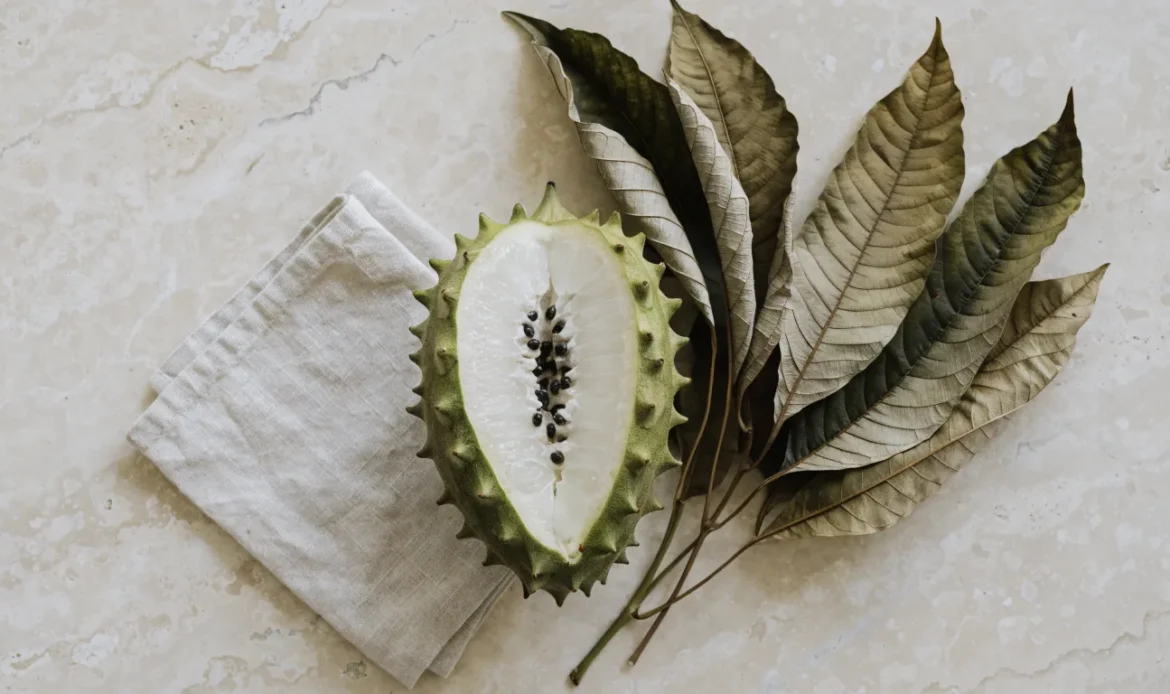
Soursop (botanical name Annona muricata) is a tropical tree and fruit. Common names include graviola and soursop. The tree has glossy, green leaves that are used fresh or dried for herbal tea in many Caribbean and tropical kitchens.
Sea moss is a common name for several edible seaweeds used for cooking and as a gel base. In retail it often appears as raw dried seaweed, soaked gel, powders, or blended gels. Sea moss forms the “seamoss” part of product names like soursop seamoss.
When people say “soursop seamoss” they most often mean a product or recipe that combines soursop leaves or flavor with sea moss — for example a sea moss gel made with soursop tea, a gummy flavored with soursop, or a tincture that lists both soursop and sea moss.
What do soursop leaves look like?
Quick identification features
- Shape: smooth, simple, oblong to oval leaves.
- Color: glossy dark green on top and paler underneath.
- Size: small to medium; typical household leaves are easy to hold in one hand.
- Texture: smooth, leathery surface; veins visible but not prominent.
If you’re buying fresh leaves, ask the seller for a clear photo or inspect them in person to confirm those features. Dry leaves look brittle, olive to dark brown-green, and crumble when rubbed.
Common product forms and terms you’ll see
- Fresh soursop leaves: sold whole, usually in markets in the Caribbean or specialty stores.
- Dried soursop leaves (dried soursop graviola leaves / dry soursop leaves): sold in bundles, bags, or labeled tea packs.
- Soursop tea (made from fresh or dried leaves): loose or tea bags.
- Soursop seamoss / sea moss soursop blends: sea moss gel, powders, tinctures, or drops blended or flavored with soursop. Look for term variations like “soursop sea moss drops,” “soursop seamoss tincture,” or “sea moss soursop gel.”
- Soursop gummies / soursop gummy: chewable products flavored with soursop; may use pectin, gelatin, or agar.
- Soursop soap: a topical product that uses soursop leaf or fruit extracts for scent or color.
- Graviola soursop fruit for sale: fresh or frozen fruit sold at markets.
Note: product names vary. Read ingredient lists to confirm what’s inside.
Where to buy soursop leaves and soursop seamoss
What to try first
- Local Caribbean grocery stores and produce markets: check the fresh produce area or ask staff.
- Ethnic or tropical markets in cities: these stores often stock dried leaves or frozen fruit.
- Herbal shops and apothecaries: they may carry dried botanical leaves and labeled tea blends.
- Online retailers: many sellers ship dried soursop leaves, soursop tea, and sea moss blends. Search for terms like “buy dried soursop leaves online” or “graviola soursop leaves.”
- Farmers and local growers: in tropical areas, growers may sell leaves or fruit directly.
Search tips for “where can i buy soursop leaves near me” or “where to buy soursop leaves”
- Use specific keywords with your city or ZIP code. Example: “dried soursop leaves near Seattle” or “soursop leaves Miami market.”
- Check online marketplaces and read seller photos and reviews. Look for recent photos of the actual product.
- Ask questions before buying: origin, harvest date, whether leaves were washed, and packaging. For dried leaves ask whether they are cut or whole.
What you can verify before buying online
- Ingredient list and weight.
- Seller photos and customer reviews.
- Return or refund policy.
- Whether the product is labeled “dried” or “fresh” and shipping method for fresh items.
What you can’t verify easily online
- Pesticide use, post-harvest handling, and exact origin unless the seller provides documentation. If these matter to you, ask the seller directly.
How to make soursop tea (fresh or dried leaves)
Two simple recipes. These focus on basic preparation, not on medical or health claims.
A. Fresh soursop leaves (simple simmer)
- Ingredients: 3–5 fresh soursop leaves, 4 cups water.
- Steps:
- Rinse leaves lightly to remove dust.
- Bruise or tear leaves to release oils.
- Place leaves in a pot with water and bring to a gentle simmer.
- Simmer 10–15 minutes with the lid on.
- Remove from heat and let steep 5–10 minutes.
- Strain into a cup. Sweeten if desired. Serve warm or chilled.
B. Dried soursop leaves (tea cup method)
- Ingredients: 1–2 teaspoons dried soursop leaves, 8 oz (1 cup) water.
- Steps:
- Bring water to a boil, then reduce to a simmer.
- Add dried leaves and simmer 5–10 minutes.
- Turn off heat and steep 5–10 minutes.
- Strain and serve.
Notes on strength and safety
- Dried leaves vary in density, so start lighter and adjust to taste.
- If you plan to use the tea as a liquid base for sea moss gel or gummies, make a stronger batch and cool before mixing.
How to make soursop + sea moss recipes
These are practical kitchen methods. They do not claim medical benefits.
A. Basic soursop sea moss gel (no exact shelf-life claim)
- Ingredients:
- Prepared sea moss gel (commercial or homemade).
- Strong soursop tea or fresh soursop pulp (cooled).
- Steps:
- If using dried sea moss, soak, rinse, and blend with water until smooth to make a plain sea moss gel. (If you are buying a prepared gel, follow the supplier’s directions.)
- Make a concentrated soursop tea (use 2–3x the leaf amount in the tea recipe above) and cool it fully. Or use fresh soursop pulp thinned with water.
- Blend the cooled soursop liquid into the sea moss gel until uniform. Taste and adjust texture with more liquid or a small amount of sweetener.
- Transfer to a clean jar and refrigerate. Use clean utensils when scooping.
B. Simple soursop seamoss gummies
- Ingredients:
- Sea moss gel.
- Strong soursop tea or soursop puree.
- Gelatin (or agar-agar for vegan option).
- Steps:
- Warm the soursop tea gently (do not boil if using gelatin).
- Sprinkle gelatin over a small amount of cold soursop liquid and let bloom per package directions.
- Stir bloomed gelatin into warmed liquid until dissolved.
- Mix with sea moss gel, pour into molds, chill until set.
- Store refrigerated. Use clean hands when unmolding.
C. Soursop sea moss tincture or drops (general note)
- Tinctures usually use alcohol or glycerin to extract leaf compounds. If buying or making, follow a trusted tincture recipe and label the alcohol content clearly. Do not mix tincture dosing with edible sea moss recipes without guidance.
What you can test at home
- Smell and color: fresh soursop blends will smell fruity or leafy; sea moss adds a neutral to sea-scent base.
- Texture: gummies should hold shape; gels should be smooth and spreadable.
Buying checklist: How to choose soursop leaves or soursop seamoss products
Use this checklist when shopping online or in person.
- Product form: fresh leaves, dried leaves, tea bags, sea moss gel, gummies, tincture, soap.
- Label accuracy: clear ingredient list and product weight.
- Seller transparency: origin, harvest/pack date, photos of actual product.
- Packaging: sealed, labeled, and protected from moisture.
- Storage instructions: refrigerated for fresh, cool/dry for dried.
- Testing and claims: if the seller cites lab tests (e.g., for heavy metals or microbes), ask for certificates; absence of tests is common but worth noting.
- Reviews: recent customer reviews, especially photos.
- Return policy and contact options: can you reach the seller if there’s a problem?
- Allergens and additives: check for added flavors, preservatives, or sweeteners.
- For blends (soursop + sea moss): check the seaweed type and whether the product is flavored or mixed with other botanicals.
Decision guide table (quick view)
| Form | Good for | What to check |
|---|---|---|
| Fresh leaves | Immediate tea or cooking | Freshness, smell, color |
| Dried leaves | Tea, long storage | Whole vs powdered, packing date |
| Sea moss gel | Easy recipes, gummies | Ingredients list, storage guidance |
| Gummies | Convenience, kids | Ingredients, sweeteners, gelatin type |
| Tinctures/drops | Small dosing, extracts | Alcohol or glycerin base, concentration |
| Soaps/topicals | Non-food use | Cosmetic labeling, scent, base oils |
Safety, iodine, and testing — what to know
Important context about seaweed and safety
- Seaweed can contain notable amounts of iodine. Iodine intake matters for thyroid function in some people. If you have thyroid disease, are pregnant, or take thyroid medication, talk to a healthcare provider before adding seaweed products to your diet. This is a general safety point about seaweed. cite125
About contaminants and lab testing
- Dried botanicals and seaweed may carry variable levels of minerals, iodine, or environmental contaminants depending on where they were harvested and how they were handled. Some manufacturers offer lab reports for heavy metals or microbes. If this is important to you, ask for certificates of analysis. cite34
Practical safety tips
- If you have thyroid conditions, pregnancy, or are taking prescription medication, consult a clinician before use.
- Buy from sellers who describe sourcing and provide contact information.
- For home-prepared items, keep everything clean. Use fresh water to soak sea moss and store finished products refrigerated. Use clean utensils to avoid contamination.
What the available information cannot prove
- Pack labels or seller claims alone cannot prove safety or exact iodine content. Only third‑party lab testing can verify mineral levels or contaminant absence. If a seller does not provide testing and this matters to you, ask or choose another supplier. cite34
How to verify “real” soursop leaves and avoid low-quality products
Checks for dried leaves
- Visual: look for whole or large cut pieces rather than fine dust. Whole leaves are easier to inspect.
- Smell: leaves should smell fresh or herbal, not moldy or musty.
- Packaging: resealable, labeled, and stored away from moisture.
- Photos: ask for recent, high-resolution images.
- Seller answers: ask when leaves were harvested and how they were dried.
Checks for sea moss or soursop blends
- Ingredient list: seaweed species and soursop listed clearly?
- Product form: is it a flavored gel, a true blend, or just flavored with an oil or essence?
- Claims: avoid unspecified “superfood” language. Ask for specifics if you need them.
Cultural and culinary notes
Soursop in Caribbean kitchens
- Soursop fruit and leaves are part of many Caribbean food traditions. The fruit is used in drinks, ice creams, and desserts. Leaves are brewed as herbal tea and used in home kitchens. You may see “soursop Jamaica” or “jamaica soursop leaves” in regional product listings.
How soursop and sea moss appear together
- In Caribbean-inspired products, soursop flavor is often paired with sea moss to make flavored gels, drinks, gummies, or tinctures. These blends combine a coastal ingredient (sea moss) with a tropical flavor (soursop) for culinary variety.
Practical recipes and storage notes (kitchen-focused)
Simple soursop tea concentrate
- Make a double-strength tea and cool it. Use this as a liquid base for sea moss gel, smoothies, or gummies.
Sea moss gel basics (brief)
- Many home makers soak cleaned dried sea moss, rinse it well, and blend it with water until smooth. Use cooled soursop tea as part of the blending liquid if you want soursop flavor.
Storage notes (non-numeric guidance)
- Keep fresh sea moss gel and fresh soursop products refrigerated. Freeze portions if you need longer storage. Discard if smell, color, or texture changes noticeably.
Where next? Questions to ask your seller
- Is the product fresh or dried? If dried, when was it packaged?
- What country or region were the leaves/seaweed harvested from?
- Are there any third-party lab results for iodine, heavy metals, or microbes?
- How should I store the product after opening?
- For gummies or tinctures: what form of gelling agent or solvent was used?
Asking these will let you confirm practical details that labels may not show.
Conclusion
Soursop seamoss covers a range of culinary and retail items that combine soursop leaves or flavor with sea moss. You can buy fresh or dried soursop leaves and a variety of soursop + sea moss products online or at specialty markets. When you buy, check the product form, ingredient list, seller transparency, and storage directions. If you have medical conditions or questions about iodine or contaminants, ask the seller for lab tests or talk with a healthcare professional. Use the checklist above to choose products that fit your needs.
Helpful links
- Caribbean Botanicals — our botanical selection and related products.
- Shop — browse sea moss and related items.
- Learn — more educational pages about sea moss and seaweeds.
- Wholesale — for bulk or business inquiries.
- Contact — questions about products or sourcing.
Frequently asked questions
Where can I buy soursop leaves online?
Many herbal retailers and online marketplaces sell dried soursop leaves. Search for “dried soursop leaves” or “graviola leaves,” read seller photos and reviews, and ask the seller about packing and origin before buying.
How do I make soursop tea with dried leaves?
Use about 1–2 teaspoons of dried leaves per cup of water. Simmer 5–10 minutes, then steep and strain. Start with a lighter strength and adjust by taste.
What do soursop leaves look like?
They are smooth, glossy, oblong leaves with a darker green top and a paler underside. Dried leaves will be olive to brown-green and brittle.
Can I mix soursop tea with sea moss gel?
Yes. Cool the tea first, then blend into prepared sea moss gel to add flavor. Use clean tools and jars when preparing and storing food items.
Are soursop gummies available?
Yes. Gummy products use soursop flavor or puree and may use gelatin or plant-based gelling agents. Check the ingredient list for sweeteners and gelling agents.
Is there a risk from iodine in sea moss?
Seaweed can be a source of iodine. If you have thyroid conditions, are pregnant, or take thyroid medication, discuss seaweed-containing products with a healthcare provider. For more background on seaweed and iodine, see the references below. cite125
References
- Harvard T.H. Chan School of Public Health, “Seaweed.” https://nutritionsource.hsph.harvard.edu/seaweed/
- Smyth PPA. “Iodine, Seaweed, and the Thyroid.” European Thyroid Journal, 2021. https://pmc.ncbi.nlm.nih.gov/articles/PMC8077470/
- Food Standards Australia New Zealand, “Survey of iodine levels in seaweed and seaweed containing products,” updated 2025. https://www.foodstandards.gov.au/science-data/monitoring-safety/surveyofiodinelevels
- Operation Supplement Safety, “Sea Moss in Dietary Supplements.” https://www.opss.org/article/sea-moss-dietary-supplements
- Blikra MJ et al. “Consequences of acute and long-term excessive iodine intake: A literature review focusing on seaweed as a potential dietary iodine source.” 2024. https://doi.org/10.1111/1541-4337.70037