
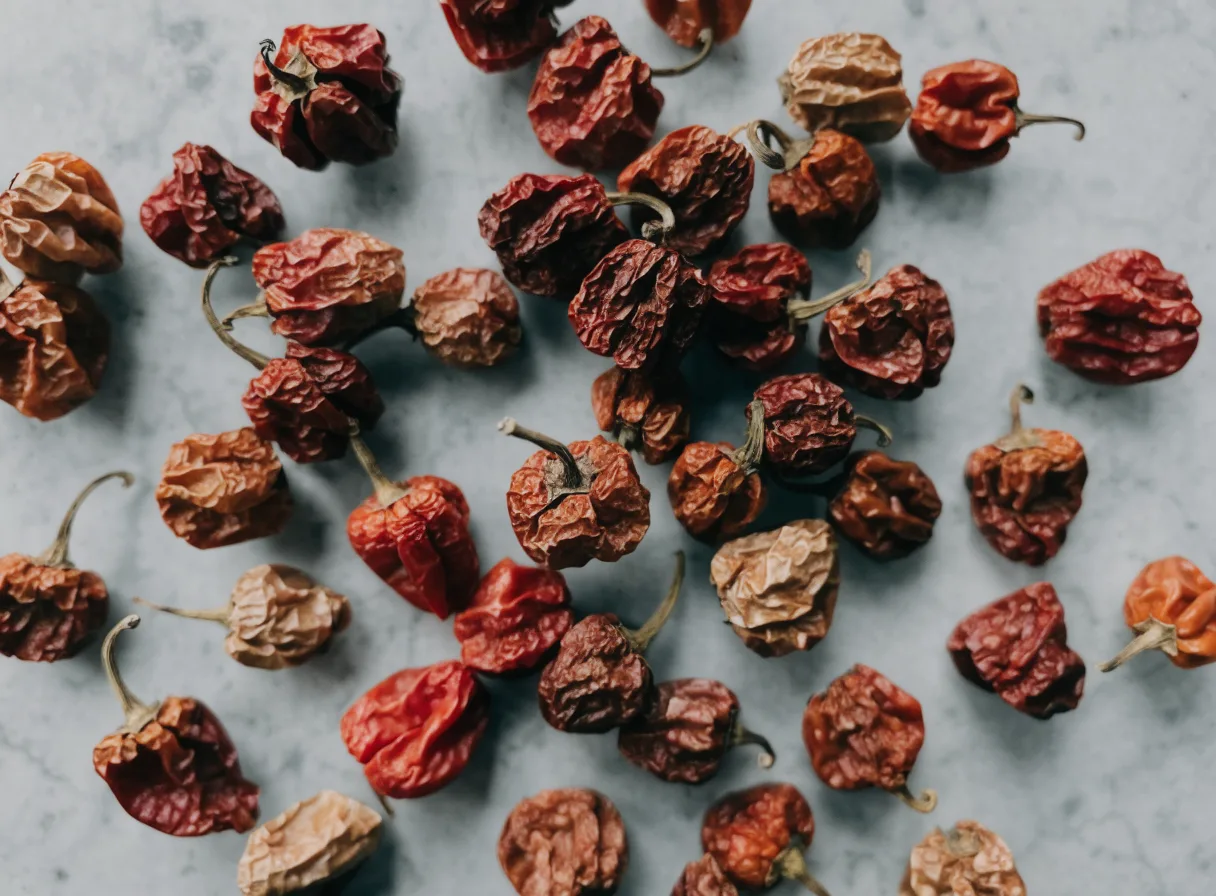
The scotch bonnet is the chilli Caribbean cooking is built on. Squat, crumpled and named for a tam o’ shanter, it runs roughly 100,000 to 350,000 Scoville — but heat is not why it is used. It is used because of what sits behind the heat.
How to tell it apart
| Scotch bonnet | Squat and crumpled, wider than it is tall, with a distinctly fruity, almost apricot aroma. |
|---|---|
| Habanero | The same species, a different cultivar. Smoother, more elongated lantern shape. Hotter-tasting for the same Scoville because there is less fruit behind it. |
Dried, the fruit concentrates and the aroma survives. Sellers often use the two names interchangeably; they are not the same cultivar and they do not taste the same in a pot.
Specimen
| Botanical name | Capsicum chinense |
|---|---|
| Family | Solanaceae |
| Part used | Whole dried fruit |
| Also called | Bonnet pepper, piman |
| Origin | Grown and dried in Saint Lucia |
| Form | Whole and dried, not ground |
Using it
- One whole pod dropped into peas, soup or a stew, then fished out before serving.
- Left whole it perfumes the pot. Split or crushed, it burns.
- Rehydrate in warm water for 20 minutes before blending into a pepper sauce.
Keeping it
Airtight, dark and dry. Dried pods hold their aroma for a year or more; the colour dulls before the flavour does.
Read more
Need a larger volume? Cases and bulk quantities are quoted the same way as a single pack — say how much you need in the form below and we will price it, and mention it in the notes if you want a recurring supply.