
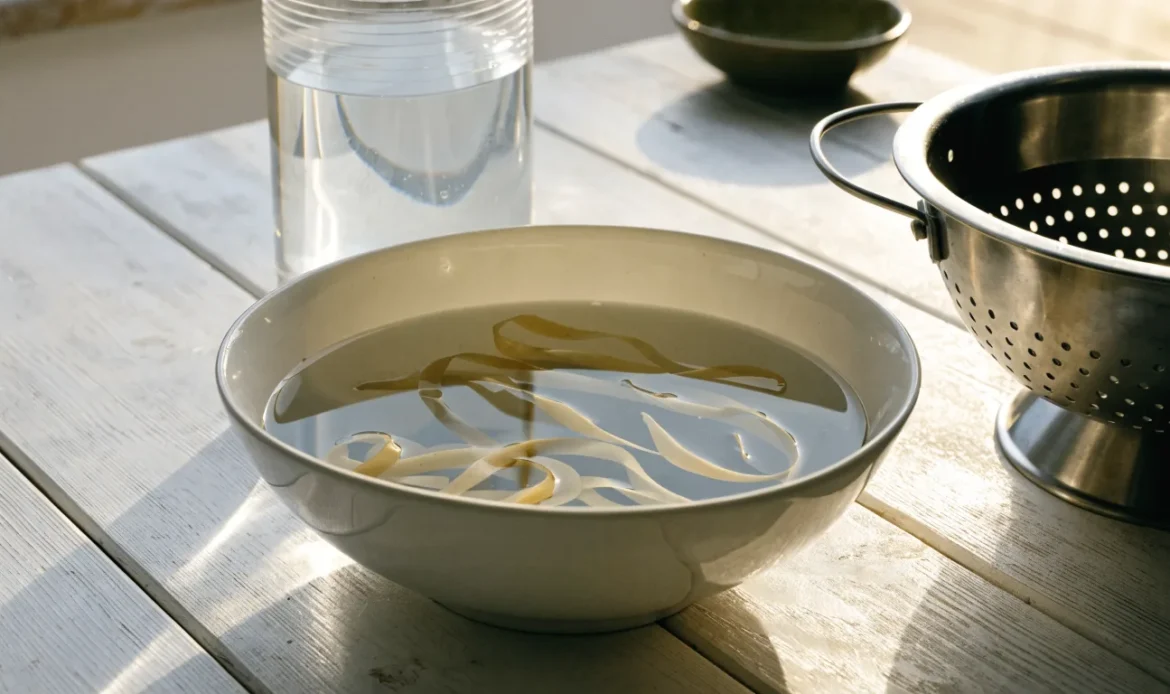
Short answer: Soaked sea moss is dried seaweed that has been rinsed and rehydrated in clean water until it is soft and pliable. People soak it to remove sand and grit, make a smooth gel, or prepare it for cooking. Soaking does not prove purity or exact nutrient content. You can check smell, color, and seller information. If you want to use or sell soaked sea moss, follow simple safety steps and ask sellers for test or sourcing details before you buy.
What “soaked sea moss” means
Soaked sea moss starts as dried seaweed. The drying step makes the product light and shelf-stable. When you soak it, the sea moss absorbs water. It swells and becomes soft. Once soft, you can:
- Rinse away sand or debris.
- Blend it into a smooth gel.
- Use it in food or recipes as a thickener or ingredient.
Soaked sea moss is a preparation step. It is not the same as powdered sea moss, capsules, or pre-made gels. Each format has different handling, storage, and use.
What soaking does not do: Soaking does not by itself remove chemical contaminants or guarantee a specific nutrient level. Information on labels and seller-supplied lab tests are how you can learn more about composition or safety. See the Safety section for what to check.
Why people soak sea moss
People soak sea moss because dried sea moss is hard and contains small amounts of sand or salt crystals. Soaking:
- Rehydrates the seaweed to a soft texture.
- Makes it easier to blend into a smooth gel.
- Helps reveal any off smells or visible problems before use.
Soaking is a practical preparation step. It helps with texture and cleaning. It is not a sterilization step.
What forms of sea moss you will see
- Dried raw sea moss: Whole pieces or smaller fragments that are dry. These are what people typically soak.
- Pre-made sea moss gel: Already blended and hydrated. Gel is ready to use but may have added water or ingredients.
- Powdered or powdered-extract forms: Made by drying and grinding, or extracting and spray-drying. These are used differently.
- Capsules and supplements: Dosed and sold as supplements. Regulation and testing vary.
Each form has trade-offs for convenience, shelf handling, and where you will use it (kitchen, beverage, commercial recipe, retail).
How to soak sea moss — step-by-step
This is a common, practical method. Adjust for the amount you have.
- Inspect the dried sea moss.
- Look for sand, shells, dark spots, or an unusual smell.
- If it smells rotten, musty, or strongly off, discard it.
- Rinse first.
- Hold the dried sea moss under cool running water.
- Rinse to remove loose sand or salt.
- Place in a clean bowl and cover with clean water.
- Use filtered or bottled water if you prefer. Tap water is common but may affect taste in some areas.
- Let it sit until soft.
- Soaking time varies by product and how dry it is. A good test is whether pieces are flexible and easy to compress between fingers.
- If a piece is still stiff and brittle, it needs more time.
- Rinse again.
- After soaking, rinse and swish the sea moss to remove any residual grit.
- Trim or remove unwanted parts.
- Some pieces have small hard bits. Remove these.
- Blend into gel or use as needed.
- To make a gel, place the softened sea moss in a blender with enough clean water to achieve the texture you want. Blend until smooth.
- Store or use.
- Transfer to a clean container. Keep chilled if you do not use it right away. See Storage below.
What to watch for while soaking:
- Off smells or slimy, discolored patches are signs to discard.
- Cloudy or foul soaking water is another red flag.
- Soaking water can be discarded after rinsing; it is not a cleaning certificate.
Practical comparison: formats and when to choose them
| Format | Best when you want | What to check before buying | Main steps after buying |
|---|---|---|---|
| Dried raw sea moss | Full control of soaking and gel, longer shelf storage when dry | Visible color/texture, seller info, any test reports offered | Rinse, soak until soft, rinse, blend into gel or cook |
| Pre-made gel | Quick use in recipes or drinks | Ingredient list, refrigeration needs, production and packaging notes | Chill, stir, use; follow use-by notice |
| Powder | Easy to dose, long shelf life in dry form | Ingredient list, purity claims, any testing info | Rehydrate per product instructions or add to recipes |
| Capsules / supplements | Measured doses for convenience | Third-party testing info, label accuracy, dosage directions | Follow label directions; consult a professional with questions |
This table is a short decision guide. It helps match the product to your needs and shows what to check.
A practical decision checklist before you soak or buy
- Is the product labeled as dried sea moss or a pre-made gel?
- Can the seller provide simple answers about where the product was harvested or processed?
- Does the product list ingredients besides sea moss? (Added sugar, preservatives, or flavorings change how you use it.)
- Are there third-party lab reports available for heavy metals or iodine? If none are offered, ask why.
- Does the product look and smell normal when you inspect it?
- Do you have a plan for storage (cold space or freezer) after soaking or opening?
These checks tell you about transparency and how you will handle the product.
Safety notes and what to check about contaminants and iodine
Seaweeds, including sea moss, can contain iodine and other minerals. The amount of iodine in seaweed varies a lot by species, where it was harvested, and how it was processed. Because iodine levels vary, you cannot tell how much iodine is present just by looking at a product. Researchers and food agencies note this variability and advise caution when iodine intake is a concern [1][2][3][5].
What you can check:
- Seller information on species and region. This gives context but does not prove iodine content.
- Any third-party lab testing the seller provides. Tests for iodine and heavy metals give more concrete information. If a seller provides lab reports, look at who did the test and which substances were measured.
- Ingredient and processing statements. These do not show exact nutrient amounts, but they help you understand whether the product has added ingredients.
What labels or claims cannot prove:
- A label cannot alone tell you the exact iodine or heavy metal content.
- Absence of a test does not mean the product is free from contaminants.
- “Natural” or “wild-harvested” claims do not guarantee safety or low levels of specific substances.
Regulatory context:
- Supplements and food products can be subject to different rules in different countries. Operation Supplement Safety notes that sea moss marketed as a supplement may not be regulated the same way as foods in some places, and testing can vary [4].
If you have thyroid issues, are pregnant, nursing, or under medical care, talk with a healthcare professional before using seaweed products. That is the safest route to account for iodine and other nutrients.
How to use soaked sea moss in the kitchen
Soaked sea moss is versatile. Here are common ways people use it:
- Make a gel: Blend softened sea moss with water until smooth. Gel is a neutral-thickening base for smoothies, sauces, or desserts.
- Add to smoothies: Use a spoonful of gel for texture. Start with a small amount to test texture and flavor.
- Use in cooked dishes: Soaked pieces can be added to soups or stews as a thickener or ingredient. Add near the end of cooking if you want to preserve texture.
- Make a cleanser or cosmetic base: Some use sea moss gel in homemade skin products. If you do, test on a small skin area first.
Simple gel method (basic steps):
- After soaking and rinsing, place softened sea moss in a blender.
- Add enough cold, clean water to cover the sea moss by about the same volume you used of sea moss. (Adjust water for thicker or thinner gel.)
- Blend until smooth. Transfer to a clean jar.
Note: If you plan to sell food products made with sea moss, check local food safety rules.
Storage and handling after soaking
- Keep soaked or blended sea moss in a clean, sealed container.
- Chilling slows changes. Freezing is an option for longer-term storage.
- Always smell and look at the product before use. Off odors or mold are signs to discard.
- If you plan to sell sea moss products, follow local food safety and labeling laws.
Do not assume a soaked product is sterile or free from contaminants. Clean utensils and containers help keep the product in good condition.
What to ask a seller before buying soaked sea moss
- Do you have test results for iodine or heavy metals? Who performed the tests?
- What species of seaweed is this? Where was it harvested or processed?
- Is the product dried raw sea moss, pre-made gel, or another format?
- Are there additional ingredients in the product?
- What storage conditions do you recommend?
Asking these questions will not force a seller to have lab results. But it will show you how much information a seller is willing to share.
Practical decision guide (short)
If you want quick use and convenience:
- Choose pre-made gel. Check refrigeration and ingredient list.
If you want to control preparation and texture:
- Choose dried raw sea moss. Soak and blend into your preferred gel consistency.
If you want measured doses and convenience:
- Consider powdered forms or capsules. Ask for testing and ingredient details.
If you are buying for resale or a commercial recipe:
- Require third-party test results and clear supply-chain information. Follow local food safety rules.
Next steps and useful links
If you want to learn more about sea moss uses and formats, see our Learn (/learn/) section. Ready to browse products? Visit Shop (/shop/). If you buy in bulk or sell sea moss products, get details from our Wholesale (/wholesale/) team. For general company questions, visit our Home (/) page or reach out on our Contact (/contact/) page.
Conclusion
Soaked sea moss is a simple, practical way to turn dried seaweed into a soft ingredient you can blend or cook with. It helps with texture and cleaning, but it does not prove anything about nutrient levels or the presence of contaminants. Before you buy or use soaked sea moss, inspect it, ask sellers for information or test reports if iodine or heavy metals are a concern, and follow safe handling steps after soaking. Use the checklist and guide here to pick the right format for your needs and plan your next questions to a seller or food-safety advisor.
Frequently asked questions
How long should I soak sea moss?
Soaking time varies. Soak until pieces are soft and pliable. Test by pressing a piece. If it bends easily, it is ready.
Can I use tap water to soak sea moss?
You can. Many people use tap water. If your tap water has a strong taste, consider filtered or bottled water for a neutral result.
Will soaking remove iodine or contaminants?
Soaking removes grit and some surface salt. It does not reliably remove iodine or chemical contaminants. For information on those, look for lab reports or seller testing [1][2][3][5].
How can I tell if soaked sea moss has gone bad?
Signs include a foul or rotten smell, sticky or slimy texture that is not normal, mold, or unusual discoloration. When in doubt, discard.
Is soaked sea moss the same as sea moss gel?
Soaked sea moss is softened raw seaweed. Gel is the blended product made from soaked sea moss. Gel is ready for recipes; soaked sea moss may still need blending.
Where can I learn more about seaweed safety and nutrients?
Reputable sources such as university nutrition pages and food-safety authorities discuss seaweed variability and iodine. See our References and consult a healthcare provider with questions [1][2][3][5].
References
- [1] Harvard T.H. Chan School of Public Health, “Seaweed.” https://nutritionsource.hsph.harvard.edu/seaweed/
- [2] Smyth PPA. “Iodine, Seaweed, and the Thyroid.” European Thyroid Journal, 2021. https://pmc.ncbi.nlm.nih.gov/articles/PMC8077470/
- [3] Food Standards Australia New Zealand, “Survey of iodine levels in seaweed and seaweed containing products,” updated 2025. https://www.foodstandards.gov.au/science-data/monitoring-safety/surveyofiodinelevels
- [4] Operation Supplement Safety, “Sea Moss in Dietary Supplements.” https://www.opss.org/article/sea-moss-dietary-supplements
- [5] Blikra MJ et al. “Consequences of acute and long-term excessive iodine intake: A literature review focusing on seaweed as a potential dietary iodine source.” 2024. https://doi.org/10.1111/1541-4337.70037