
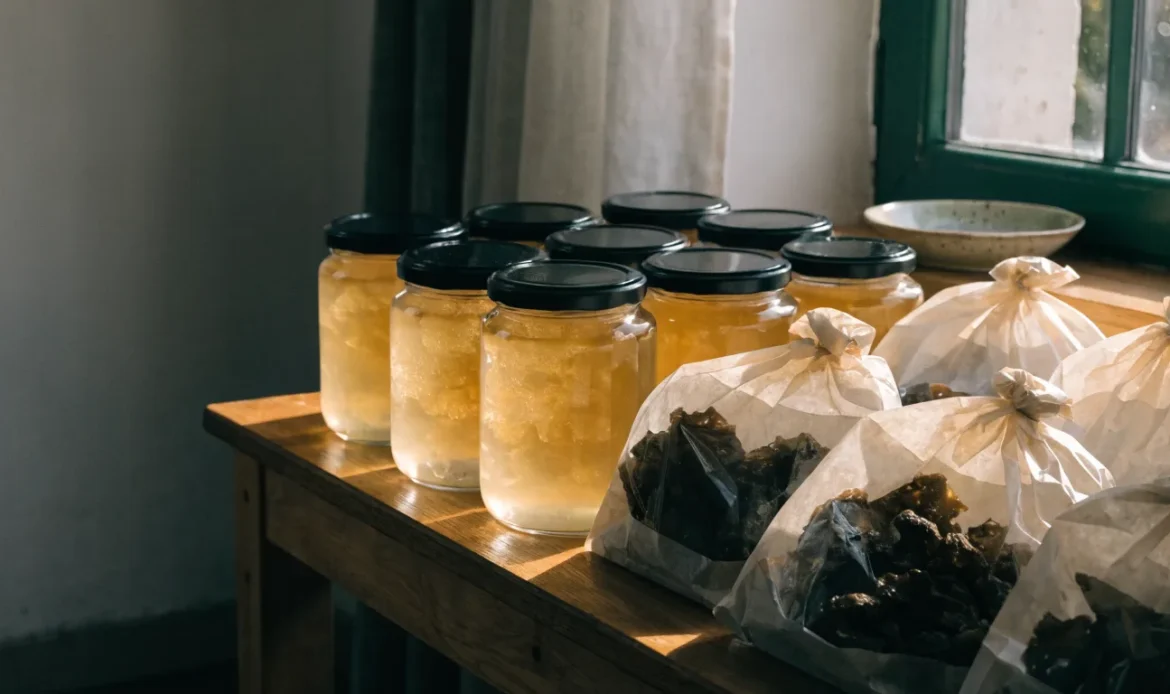
Short answer: You can get sea moss at health food stores, Caribbean or international markets, farmers markets, herbal shops, online sellers, and from wholesalers. For “where to get sea moss near me,” use map searches, community groups, and direct calls to local stores.
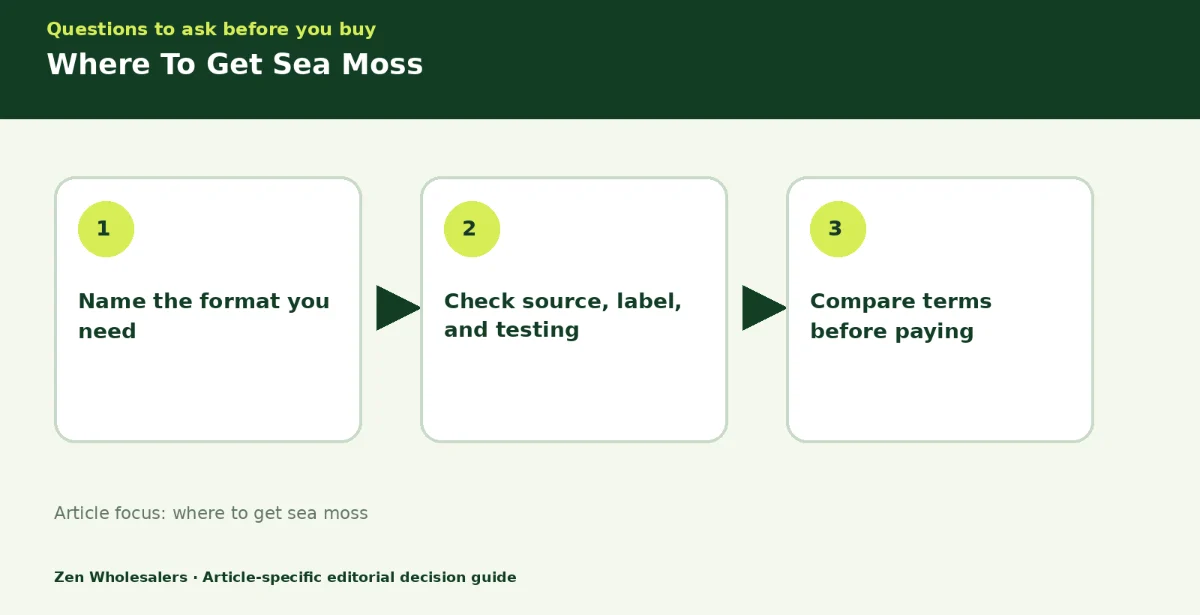
This page gives a clear next step. First you will learn where to look. Then you will get a simple checklist to pick the right source. Finally you will see safety notes and questions to ask sellers. If you want to read more, visit our learning hub at /learn/ or check products at /shop/.
Quick places to get sea moss (what to try first)
- Local health food stores and natural grocers
- Why: They often carry dried seaweeds, gels, and supplements.
- What to check: Ask staff where it was sourced and whether it was tested.
- Best if: You want to see packaging and avoid shipping delays.
- Caribbean or international grocery stores
- Why: Sea moss is common in Caribbean cooking. These stores often stock popular varieties.
- What to check: Look for clean packaging and clear labels. Ask the shop owner about freshness.
- Farmers markets and local harvesters
- Why: Some coastal harvesters sell fresh or sun-dried sea moss directly.
- What to check: Ask how and where it was harvested and how it was cleaned. Fresh inspection is possible.
- Herbal shops and naturopathic stores
- Why: They may carry sea moss in various forms and can offer usage tips.
- What to check: Request sourcing and testing information.
- Online specialty retailers
- Why: Wider selection and often larger supply sizes.
- What to check: Read product pages closely for sourcing, processing, and return policy. Look for customer photos and clear photos of the goods.
- Wholesale suppliers
- Why: For businesses or buyers who need large amounts.
- What to check: Ask for minimum order amounts, sample policies, and any available lab reports. Contact a wholesale team via /wholesale/ or /contact/ for details.
- Dietary supplement outlets
- Why: Sea moss is sold as capsules or powders in some supplement stores.
- What to check: Check labeling and any third-party testing. Note that supplement regulations differ from food rules [4].
What you can check in each place
- Packaging and labeling. Look for harvest date, origin, and processing notes.
- Seller transparency. If the seller answers where and how it was harvested, that is a good sign.
- Ability to inspect. Buying local often lets you see color, smell, and texture before you buy.
What these checks cannot prove
- A label or a claim cannot prove absence of contaminants without lab tests.
- Words like “wild” or “hand-harvested” are descriptions. They do not guarantee safety or purity on their own.
How to find sea moss near me (step-by-step)
- Use map search queries
- Try terms like “sea moss near me”, “sea moss store”, “seaweed market”, or “Caribbean grocery”.
- Check hours, photos, and recent reviews.
- Call stores before you visit
- Ask if they have sea moss in stock.
- Ask what form they sell (dried, gel, powdered).
- Check farmers market directories
- Market websites often list vendors and products.
- Ask market staff if any vendor sells sea moss or seaweed.
- Use community groups
- Local Facebook groups, Nextdoor, or regional food forums can point to local sellers.
- Ask neighbors for recommendations and photos.
- Search online retailers with clear product pages
- Look for detailed descriptions, photos, and return policy.
- Prefer sellers who list source regions and processing methods.
- Contact wholesalers for bulk needs
- If you need larger quantities, contact wholesalers through /wholesale/ and inquire about samples and lead times.
What to ask when you call or message a seller
- Where was the sea moss harvested?
- What form is it in (raw, dried, gel, powder)?
- Was it washed and trimmed? How was it processed?
- Do you have lab testing or certificates for contaminants or iodine?
- What is your return policy if the product is damaged or not as described?
Forms of sea moss and how that affects where to buy
- Raw / fresh sea moss
- Sold by harvesters and some markets.
- You may need to clean it yourself.
- Best if you want the freshest option and a hands-on approach.
- Dried sea moss (loose or strands)
- Easier to store.
- Common in natural food stores and online.
- Sea moss gel
- Ready to use and sold refrigerated or frozen.
- Check for added ingredients and shelf instructions.
- Powdered or capsules (supplement form)
- Sold in supplement stores and online.
- Labeling standards differ from whole food products. Check for batch and testing info [4].
- Blends and prepared products
- May contain other ingredients. Read labels for added sugars, thickeners, or preservatives.
How to pick the form you want
- Buy raw or dried if you want control over preparation.
- Buy gel if you want convenience.
- Buy capsules or powder if you need a measured supplement form — but check labels and testing [4].
What to check before you buy (practical checks and limits)
Practical checks you can do at purchase time
- Packaging and label clarity: Look for a clear origin, processing method, and date. If none is present, ask.
- Smell and look: Fresh sea moss has a mild ocean scent, not a strong foul odor. Color varies by species.
- Texture: Dried strands should rehydrate. Gel should be smooth and even.
- Seller answers: If a seller answers specific questions about harvest and processing, that helps evaluate transparency.
What a seller’s answer cannot prove
- A verbal statement about “clean water” cannot prove absence of heavy metals or other contaminants. Only lab testing can.
- “Wild-harvested” does not prove the species or the level of iodine.
Safety items to ask about or look for
- Lab testing: Ask whether third-party tests for heavy metals, microbes, or iodine exist.
- Traceability: Can the seller name the region or harbor where the product was harvested?
- Processing steps: How was the sea moss cleaned and dried? This can affect shelf life and safety.
Why iodine matters
- Seaweeds can contain variable iodine levels. That level is not visible to the eye.
- High iodine intake can affect thyroid function in some people [2][5].
- If you have thyroid concerns, ask your clinician before making dietary changes.
Regulatory and testing notes
- Food and supplement rules differ by country. Some product types may not require the same testing as others [4].
- Surveys and reviews of seaweed iodine content show that iodine can vary widely by species and region [3]. This is a reason to ask for testing if iodine intake matters for you.
References for safety and iodine
- Harvard notes seaweed as a food group and highlights variability in composition [1].
- Reviews discuss iodine and thyroid concerns with seaweed and seaweed products [2][5].
- A regional survey looks at iodine levels in seaweed products and shows variability [3].
- Operation Supplement Safety outlines differences for sea moss in supplement form [4].
Decision checklist: should you buy from this seller?
Use this checklist when picking a seller. Tick items that are true before you buy.
- Seller identity
- [ ] Store or seller name is clear on the label or website.
- [ ] Physical address or contact method is provided.
- Product form and handling
- [ ] Form is the one I want (raw, dried, gel, powder).
- [ ] Packaging protects from moisture and contamination.
- Transparency and traceability
- [ ] Seller lists origin or harvest region.
- [ ] Seller explains processing (washed, sun-dried, sterilized, etc.).
- Testing and safety
- [ ] Seller can show third-party lab results or certificates on request.
- [ ] Seller provides handling and storage instructions.
- Practical terms
- [ ] Return or refund policy is clear.
- [ ] Shipping and delivery times are acceptable.
- [ ] Seller responds to questions quickly.
- Special concerns
- [ ] I have no medical reasons to avoid variable iodine intake, or I have checked with a clinician.
- [ ] I know how I will prepare and store the item after purchase.
What to do if many boxes are unchecked
- Consider buying a smaller amount or from a different seller.
- Ask for samples if you plan to buy in bulk or wholesale.
Decision table: quick comparison of source types
| Source type | Convenience | Ability to Inspect | Likely Transparency | Good for |
|---|---|---|---|---|
| Local store | High | Yes (see product) | Medium | Small buys, quick needs |
| Market / harvester | Medium | High (see & ask) | High (if local) | Fresh/raw buying |
| Online retailer | High | No (photos only) | Varies | Wide selection, different forms |
| Wholesale supplier | Low | Possible with samples | High (business terms) | Bulk orders for resellers |
Note: The table shows typical differences. Actual sellers will vary.
Safe preparation basics (general guidance)
- Clean and rinse: Most raw sea moss needs rinsing to remove sand and debris. Sellers should tell you if cleaning is already done.
- Storage: Dried sea moss stores longer than gel. Follow seller storage instructions on the label.
- Cooking and use: Sea moss is used in many ways. Follow the recipe or product instructions.
- Allergy and medical check: If you have thyroid conditions, pregnancy, or other health concerns, consult a clinician before adding sea moss to your diet. Iodine content can vary and may be high in some seaweeds [2][5].
What preparation steps cannot guarantee
- Home cleaning cannot guarantee removal of heavy metals or chemical contaminants. Lab testing is the only way to know those levels.
If you need bulk or wholesale supply
- Find wholesalers that list minimums and terms. Use /wholesale/ to contact our wholesale team or check other wholesale directories.
- Ask for samples before placing a large order.
- Request certificates or lab reports when possible.
- Clarify lead times and shipping conditions.
If you are a retailer or product maker
- Ask about lot tracing and batch records.
- Check how the product is packed for transit.
- Confirm storage requirements to maintain quality.
What to do next (a short decision guide)
- If you want a small trial:
- Buy a small package locally or from a well-reviewed online seller.
- Use the checklist above before buying.
- If you want bulk:
- Contact wholesalers. Ask for samples and lab reports.
- Confirm minimum order and shipping terms.
- If you want to learn more first:
- Visit the learning hub at /learn/ for guides on cleaning, storing, and using sea moss.
- If you have questions for a supplier:
- Use /contact/ to reach out to sellers or wholesalers.
Conclusion
Where to get sea moss depends on what you want. For small, quick purchases, check local stores and markets. For variety and convenience, look online. For bulk needs, contact wholesalers and ask for samples and testing. Before you buy, use the checklist above. Ask clear questions about origin, processing, and testing. Remember that labels and claims cannot replace lab tests. If you have a thyroid condition or other medical concerns, consult a clinician about iodine. For more learning, see /learn/ and, if you are ready to shop, visit /shop/. To speak with a supplier, use /contact/ or explore our wholesale options at /wholesale/.
Continue reading
Frequently asked questions
Where can I get sea moss near me?
Start with map searches for “sea moss near me,” local Caribbean markets, health food stores, and farmers markets. Call ahead to confirm stock and form (raw, dried, gel).
Is it safe to buy sea moss online?
You can buy online safely if the seller gives clear information about origin, processing, and returns. Ask for lab tests if you are worried about contaminants or iodine variability.
How can I tell if sea moss is fresh or good quality?
Look for clear packaging, a mild ocean smell (not foul), and a description of cleaning and drying. Ask the seller how it was processed. Visual checks help but do not show chemical safety.
Can I buy sea moss in bulk for a business?
Yes. Contact wholesalers to discuss minimums, samples, and testing. Use /wholesale/ to find supplier options or reach out through /contact/.
Should I be worried about iodine?
Iodine levels in seaweeds vary widely. If you have thyroid concerns, talk with a clinician. Research shows that some seaweeds can contain high iodine, so caution is wise [2][5][3].
What should I ask a seller before buying?
Ask where it was harvested, how it was processed, whether they have third-party testing, and what their return policy is. If you plan to use it in food or products, ask about lot traceability.
References
- [1] Harvard T.H. Chan School of Public Health, “Seaweed.” https://nutritionsource.hsph.harvard.edu/seaweed/
- [2] Smyth PPA. “Iodine, Seaweed, and the Thyroid.” European Thyroid Journal, 2021. https://pmc.ncbi.nlm.nih.gov/articles/PMC8077470/
- [3] Food Standards Australia New Zealand, “Survey of iodine levels in seaweed and seaweed containing products,” updated 2025. https://www.foodstandards.gov.au/science-data/monitoring-safety/surveyofiodinelevels
- [4] Operation Supplement Safety, “Sea Moss in Dietary Supplements.” https://www.opss.org/article/sea-moss-dietary-supplements
- [5] Blikra MJ et al. “Consequences of acute and long-term excessive iodine intake: A literature review focusing on seaweed as a potential dietary iodine source.” 2024. https://doi.org/10.1111/1541-4337.70037