
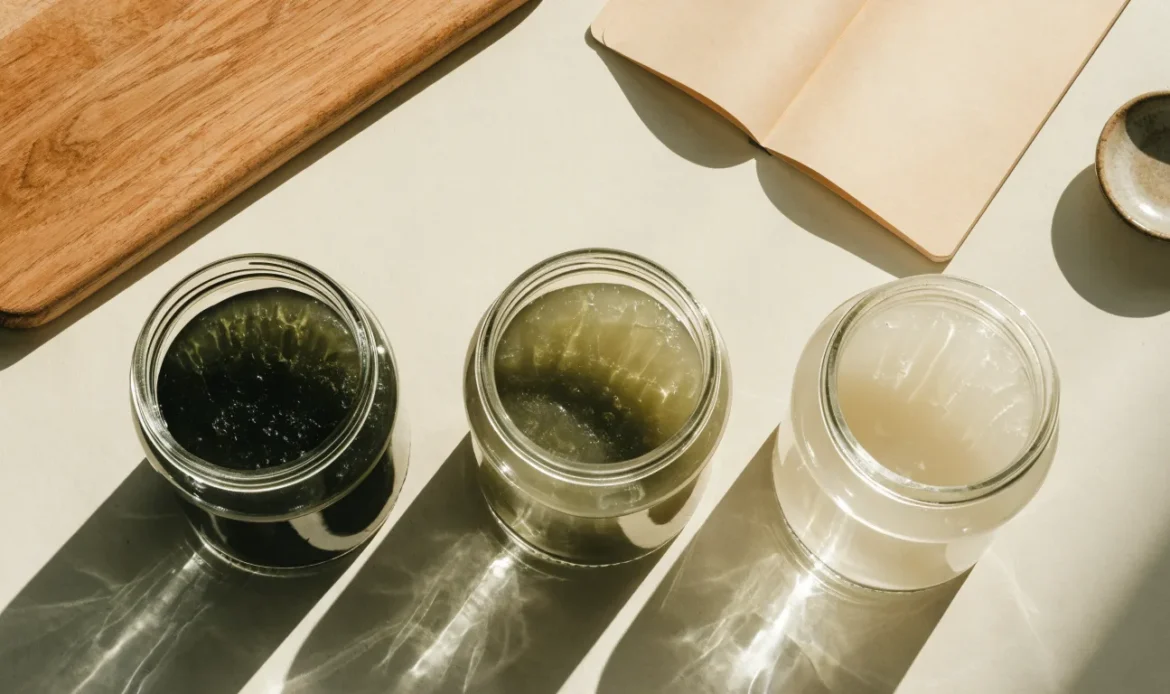
Short answer first: “Sea moss whole foods” means sea moss sold and used in a minimally processed, food-like form — for example, whole dried sea moss, lightly cleaned fresh pieces, or a simple soaked-and-rinsed product you can cook or blend yourself. Whole-food sea moss keeps the seaweed’s natural texture and structure rather than turning it into a highly processed powder, capsule, or extract.
This page explains what that label can mean, how whole foods sea moss compares with other formats, what you can check when you buy it, and a clear decision checklist to help you pick the right format for your needs.
Why read this? If you want to cook with sea moss, make it into a gel at home, or prefer to handle a minimally processed ingredient, this guide helps you understand options and limits. It also shows what can be checked on a product label and what cannot be proven without testing.
What “sea moss whole foods” usually means
“Sea moss whole foods” typically refers to sea moss offered in one of these simple forms:
- Whole, dried pieces: strands or clumps that have been cleaned and dried. You rehydrate them before use.
- Fresh or lightly preserved pieces: wet or chilled sea moss that’s been rinsed and sold in larger pieces.
- Sun-dried or air-dried batches that preserve more of the original shape and fiber than finely milled powders.
Key idea: minimal processing. Whole-food formats keep much of the seaweed’s original appearance and require home preparation (rinsing, soaking, cooking, or blending) before eating.
What it usually does not mean:
- Highly refined extracts, isolates, or standardized powders.
- Capsules or tablets where the sea moss is concentrated and portioned.
- Products with many added ingredients (sweeteners, thickeners, flavors) that transform the seaweed into a prepared food.
Common formats and how they differ
Understanding formats helps you pick the one that fits your routine.
- Whole dried pieces
- Form: Strands, sheets, or chunks that look like the raw seaweed.
- How to use: Rinse thoroughly, soak until soft, then cook, blend, or make gel.
- Pros: Easy to inspect visually. Minimal added ingredients.
- Cons: Requires time for soaking and cleaning. Texture varies.
- Fresh or chilled pieces
- Form: Wet pieces kept refrigerated or on ice.
- How to use: Rinse and use soon after purchase.
- Pros: No soaking needed. Often softer.
- Cons: Shorter shelf life. Harder to ship long distances.
- Sun-dried / air-dried
- Form: Dry but retains structure and sometimes color variation.
- How to use: Similar to whole dried; may need longer soak if very dry.
- Pros: Lower moisture so longer shelf life.
- Cons: Drying can change texture and color.
- Powder (not whole-food)
- Not a “whole food” format. Powdered sea moss is milled, which concentrates small particles and changes how it mixes and stores.
- Pros: Fast to use, mixes into smoothies.
- Cons: Harder to visually inspect, often processed.
- Gel, capsules, extracts (not whole-food)
- These are processed forms. They have clear uses but are different from whole-food sea moss.
- If you want a food you can store or a precise dosage, these formats may be useful — but they are not “whole foods.”
What to check when buying whole foods sea moss
When shopping for a whole-food sea moss product, you can check several things on packaging or with the seller. These checks help you gather useful facts without assuming too much.
- Product form and handling
- Does the seller list whether the product is dried, fresh, or sun-dried?
- Is there guidance on how to rinse and prepare?
- Ingredient list
- A true whole-food product should list mainly sea moss and maybe water.
- If you see lots of additives, it’s not a simple whole-food format.
- Harvesting and handling statements
- Sellers may state where the product was harvested, how it was handled, and how it was dried or stored.
- These claims are helpful but not proof of a specific lab result.
- Storage and shelf-life instructions
- Look for safe storage tips and recommended use-by guidance for fresh or rehydrated products.
- Safety and testing
- Some sellers will share third-party lab testing for contaminants, iodine, or heavy metals. This is useful if available.
- Remember: absence of test reports on a product page does not mean the product is unsafe. It means you do not have that piece of evidence.
- Pack size and yield
- Whole dried sea moss expands when soaked. Check guidance on how much product yields when rehydrated.
- Seller reputation and contact info
- Clear seller contact details and transparent policies (returns, shipping) are practical signs of a responsible seller.
What you cannot prove just by looking:
- Exact iodine content or heavy metal levels. These vary by species, harvest site, and processing and require lab testing to confirm [1][2][3][5].
- Whether the product was handled in a way that prevents cross-contamination in every batch.
- Nutrient concentrations or their bioavailability in a single serving unless the label lists verified lab results.
Safety considerations and what the evidence says
Seaweeds can vary widely in their mineral content. Some seaweeds are naturally high in iodine. Iodine intake matters because both low and high intakes can affect the thyroid. Scientific reviews and food-safety groups emphasize that iodine levels in seaweed are variable and sometimes very high depending on species and harvesting site [1][2][3][5].
Key points to note:
- Variation: Iodine and mineral content vary by species, season, and location. You cannot reliably know exact mineral levels without testing [1][2][5].
- Labeling and testing: Some producers include lab reports showing iodine and contaminant levels. These reports are the only direct evidence of content for the batch tested.
- Supplements vs. whole foods: Supplements that contain sea moss may standardize a dose or list amounts, but that does not apply to whole-food formats unless the maker provides testing data. Operation Supplement Safety and food-safety bodies advise caution about claims on untested supplements and products [4].
Practical safety actions:
- If you have health conditions affected by iodine or minerals (for example, known thyroid disorder), ask your clinician before adding seaweed products to your diet.
- Look for sellers that provide batch testing or are willing to share test results for iodine and contaminants.
- Use whole-food sea moss as an ingredient in modest amounts rather than assuming a fixed dose.
How to prepare whole dried sea moss (basic guide)
This is a general, food-preparation outline. Follow the specific packaging instructions if provided.
- Inspect the dried pieces.
- Check for unusual odors, heavy discoloration, or visible foreign matter.
- Rinse well.
- Rinse under cool running water to remove sand and salt.
- Soak until softened.
- Place in clean water. Soak until the sea moss is soft and pliable. Change the water if it becomes cloudy.
- Rinse again and trim.
- Remove any remaining debris or tough parts.
- Cook or blend.
- You can simmer for soups, or blend with water to make a gel. Use food-safe utensils and clean containers.
- Store safely.
- Refrigerate homemade gel and use within a recommended time frame given by food-safety guidance (packaging or recipe guidance). If in doubt, freeze portions.
Note: This is not medical advice. Preparation methods vary by product. Always follow any instructions included with the product.
How whole foods sea moss compares with powders, gels, and capsules
Use this short comparison to decide which format suits you.
- Whole dried sea moss
- Best if you want to cook or make your own gel.
- You can visually inspect product quality.
- Requires prep time.
- Powder
- Best for quick mixing into drinks.
- Harder to visually inspect; may have added processing.
- Pre-made gel
- Convenient for immediate use.
- Check ingredient list for added sugar or preservatives.
- Capsules / tablets
- Convenient, portable, and portioned.
- Less “whole food” — often concentrated and processed.
- Extracts or standardized products
- Meant for specific dosing. Not a whole-food format.
Deciding factor: Do you want a food you cook with and inspect (whole foods), or a prepared, convenience product (powder/gel/capsule)? Both have reasonable uses. Choose based on time, control, and how much inspection or testing information you want.
Practical decision checklist: Should you buy whole foods sea moss?
Use this checklist to match your needs with the format.
- Purpose
- Do I want to use sea moss as a kitchen ingredient or make my own gel? → Consider whole dried pieces.
- Do I want a quick add-in for smoothies? → Consider powder or pre-made gel.
- Time and skills
- Can I rinse and soak sea moss? → Whole dried is fine.
- Do I want zero prep? → Choose pre-made gel or capsule.
- Inspection and transparency
- Do I want to visually inspect product quality? → Buy whole dried pieces or fresh pieces.
- Do I want third-party testing shown? → Look for sellers that publish lab test reports.
- Safety and health considerations
- Do I have thyroid or mineral-related health questions? → Consult a clinician before adding seaweed regularly.
- Do I prefer lower iodine risk? → Ask the seller for species and testing; consider limited use until you know results.
- Storage and shelf life
- Do I have space for refrigeration? → Fresh gel requires fridge space.
- Do I need longer shelf life? → Dried sea moss stores longer if kept dry.
- Budget and value
- Do I want to buy in bulk or small amounts? → Whole dried pieces often scale well for home use.
- Am I buying for immediate use or long-term? → Pick the format that matches how fast you plan to use it.
Use this checklist to mark your priorities. The answers point you to the most suitable format.
What you can ask a seller — sensible questions to verify claims
When you contact a seller, these direct questions help you get useful facts:
- What species of sea moss is this? (Species name can indicate expected texture and sometimes nutrient patterns.)
- How was it harvested and dried?
- Do you have batch-specific lab reports for iodine, heavy metals, or contaminants?
- What are your storage instructions and shelf life for this format?
- Are any additives included?
- Can I see photos of a typical batch before purchase?
These questions do not guarantee a product is safe, but they give you documentable facts you can use to decide.
Buying tips for online purchases
- Ask for clear photos of the actual product and how it is packaged.
- Check seller return and shipping policies.
- If a seller shares lab reports, verify the lab name and report date.
- Beware of vague claims like “superfood” or “detox” without evidence. These are marketing terms, not scientific facts.
Next steps: useful guides to read next
- If you want more background about seaweed and nutrition science, see the Harvard overview of seaweed [1].
- If you are concerned about iodine and thyroid interactions, see the scientific review on iodine and seaweed [2] and the literature review on excessive iodine intake [5].
- If you plan to use sea moss in supplements or want guidance on safety and claims, see Operation Supplement Safety’s information on sea moss products [4].
Conclusion
“Sea moss whole foods” generally means sea moss sold in a minimally processed state that you prepare at home. Whole-food formats let you inspect and cook with sea moss in ways that powders and capsules do not. They also require more preparation and do not provide standard nutrient doses unless the seller provides batch testing.
When buying, check the product form, ingredient list, handling statements, storage guidance, and whether lab testing is available. Ask direct questions if you need information about species, processing, or safety testing. If you have health conditions that could be affected by minerals like iodine, consult your healthcare provider before regular use.
Whether you plan to cook, make gel, or try a new ingredient, making careful checks helps you choose the right sea moss format for your needs.
Frequently asked questions
Is whole foods sea moss the same as seaweed?
Sea moss is a type of seaweed. “Whole foods sea moss” refers to the seaweed sold with little processing, such as dried pieces or fresh trimmed pieces. It is one format among many seaweed products.
Can I know how much iodine is in a bag of whole dried sea moss?
Not from the package alone. Iodine content varies by species and harvest site. Only lab analysis on a batch can tell you the exact iodine level [1][2][3][5]. Some sellers publish lab reports; ask for them.
How long does whole dried sea moss keep?
Dry sea moss stored in a cool, dry place typically keeps longer than fresh forms. Exact shelf life depends on drying, packaging, and storage. Follow the seller’s storage guidance.
Is it safe to make sea moss gel at home?
Many people make gel at home by soaking and blending sea moss. To do this safely, rinse well, use clean containers, refrigerate, and use within a reasonable time. If you have concerns about contaminants or iodine, consult a clinician or seek products with testing.
Should I buy whole foods sea moss or a capsule?
Choose whole foods if you want to cook or inspect the ingredient and control preparation. Choose capsules for convenience and portioning. Each format has trade-offs in control, convenience, and information availability.
What should I do if I have a thyroid condition?
If you have a thyroid condition or take medication related to thyroid function, speak with your clinician before regularly consuming seaweed products. Seaweed can contain high and variable amounts of iodine, which can affect thyroid-related treatments [2][5].
References
- Harvard T.H. Chan School of Public Health, “Seaweed.” https://nutritionsource.hsph.harvard.edu/seaweed/
- Smyth PPA. “Iodine, Seaweed, and the Thyroid.” European Thyroid Journal, 2021. https://pmc.ncbi.nlm.nih.gov/articles/PMC8077470/
- Food Standards Australia New Zealand, “Survey of iodine levels in seaweed and seaweed containing products,” updated 2025. https://www.foodstandards.gov.au/science-data/monitoring-safety/surveyofiodinelevels
- Operation Supplement Safety, “Sea Moss in Dietary Supplements.” https://www.opss.org/article/sea-moss-dietary-supplements
- Blikra MJ et al. “Consequences of acute and long-term excessive iodine intake: A literature review focusing on seaweed as a potential dietary iodine source.” 2024. https://doi.org/10.1111/1541-4337.70037