
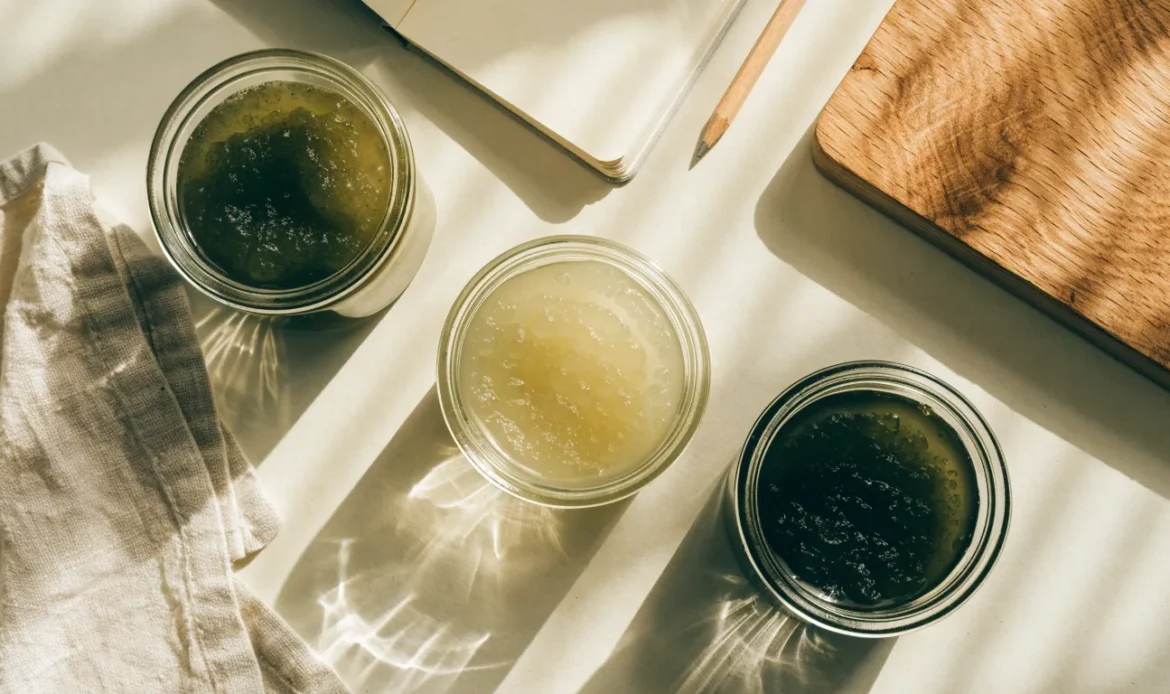
Short answer: “Erewhon sea moss” usually refers to sea moss sold under or near the Erewhon name. The exact product can vary by format, ingredients, and sourcing. To know what you have, check the label for the product type (raw, gel, powder, capsule), ingredient list, any lab testing claims, and storage instructions. This guide shows what to look for and how to decide which format fits your needs.
Why this first: many shoppers want a clear, quick answer. After that, this guide gives a practical checklist and a simple decision table. It also points to safety checks you can actually verify.
What people mean by “Erewhon sea moss”
- Some people use the phrase to mean sea moss sold in Erewhon stores.
- Others use it for a product that bears the Erewhon brand.
- The phrase alone does not tell you the product format, the seaweed species, where it was harvested, or whether it was tested.
You must read the product label to learn specifics. If a label is missing details, ask the seller for more information before buying.
What is sea moss (short overview)
Sea moss is a common name for several kinds of red algae and seaweed. It is part of the broader seaweed family. Seaweed can be sold fresh, dried, powdered, gelled, or made into capsules or other supplement forms.
Seaweed is a food and an ingredient. It is used in cooking and in some supplements. Nutrient levels and contaminants in seaweed can change a lot with species, harvest site, processing, and storage [1]. That variability is why checking labels and testing claims matters.
For general background on seaweed and diet, see a trusted nutrition source [1].
Common sea moss formats and what they mean
Sea moss products come in several common formats. Each has different handling, uses, and checks to make.
H3: Raw dried sea moss
- Description: Dried pieces of seaweed. Looks like brittle, dark strands or small clumps.
- Typical uses: Rehydrating to make gel, cooking, or blending.
- What to check: Ingredient list (should be only seaweed if raw), country or region of harvest (if listed), drying method (sun-dried vs. machine-dried), and any lab-testing claims.
H3: Sea moss gel
- Description: Sea moss rehydrated and blended into a jelly-like gel. Sold chilled or sometimes frozen.
- Typical uses: Smoothies, cooking, topical use (cosmetic), or as an ingredient in recipes.
- What to check: Ingredients (watch for added sugars or preservatives), storage instructions, expiration or “best by” date, and refrigeration/freeze instructions.
H3: Sea moss powder
- Description: Ground sea moss, easier to measure and mix into drinks.
- Typical uses: Smoothies, capsules, baking, or adding to foods.
- What to check: Whether it is pure seaweed or mixed with other powders, processing notes, and testing claims.
H3: Capsules or tablets
- Description: Sea moss or seaweed extracts in supplement form.
- Typical uses: Dietary supplement.
- What to check: Supplement facts panel, dose per capsule, other ingredients, and independent lab testing or third-party seals. If you have a thyroid condition, consult a health professional before use (see Safety section).
H3: Blends and mixed products
- Description: Sea moss combined with other herbs or ingredients.
- What to check: Full ingredient list, potential allergens, and whether sea moss is the main ingredient or a minor component.
Why labels and testing matter
Seaweed can be nutritious. But it can also contain high iodine or other minerals depending on where it grew and how it was processed. Iodine levels in seaweed vary widely and can sometimes be high enough to cause health concerns for people with thyroid conditions or those consuming large amounts [2][5]. Food safety agencies have surveyed iodine in seaweed and found variable results in different products [3].
Words like “wild-harvested,” “organic,” or “raw” appear on many labels. These terms mean different things. They do not prove safety or consistent nutrient levels. The specific tests that matter are lab results for contaminants and nutrient content. If a product claims testing, look for:
- Which lab tested it.
- What exactly was tested (iodine, heavy metals, microbial contamination).
- The date of the testing.
- Whether results cover the lot or batch you are buying.
If a seller cannot provide clear testing information on request, treat claims with caution.
Safety note: iodine and other minerals
Seaweed is a natural source of iodine. Iodine is important for thyroid function. But too much iodine can be harmful, especially for people with thyroid disorders or those who already consume high-iodine diets. Reviews and surveys show that seaweed can lead to both low and high iodine intake, depending on type and quantity [2][5]. A national survey of seaweed products documented varied iodine levels across samples [3].
If you are pregnant, breastfeeding, have a thyroid condition, or take thyroid medication, talk to your health provider before using seaweed products as a regular supplement. If you suspect a product has extremely high iodine or unusual labeling, ask the seller for lab data or avoid frequent use until you have more information.
For an overview of supplement safety issues with sea moss in dietary supplements, see the Operation Supplement Safety guidance [4].
How to check an “Erewhon sea moss” product step by step
- Read the front and back label. Look for product format, ingredient list, and storage instructions.
- Look for “Supplement Facts” or “Nutrition Facts” sections if present. These panels can show serving size.
- Scan for any batch number, lot code, or “best by” or production date. These help link lab tests to the product.
- Note any testing claims. If the label says “third-party tested,” ask for a certificate of analysis (COA). A COA usually lists tested compounds and results.
- Ask the seller where the seaweed was harvested and how it was processed. If they cannot answer, this is a gap.
- Check for added ingredients: sweeteners, preservatives, filler powders, or coating agents.
- If buying a gel, confirm refrigeration and shelf-life. If buying dried or powdered, check for signs of moisture or clumping.
- If you have health conditions, check with a clinician before using regularly.
Practical decision table: Choosing a sea moss format
| Format | Good if you want | Ease of use | Shelf stability | Label checks to prioritize |
|---|---|---|---|---|
| Raw dried | Maximum control; make your own gel | Needs rehydration | Long if kept dry | Single-ingredient list, batch/lot info, origin |
| Gel (ready) | Convenience for mixing into drinks | Very easy | Short; usually refrigerated or frozen | Ingredient list, preservative use, “best by” date |
| Powder | Easy measuring; blends into recipes | Easy | Moderate to long if dry | Purity, fillers, processing notes |
| Capsules | Supplement-style dosing | Very easy | Stable | Supplement facts, dose per capsule, testing claims |
| Blended products | Flavor or combined effects | Easy | Varies | Full ingredient list, amount of sea moss |
This table helps you match format to your needs. For example, pick dried if you want to control preparation. Pick gel if you want instant use.
Practical buying checklist
- Product format: dried, gel, powder, capsule?
- Ingredient list: only sea moss or added ingredients?
- Storage instructions and “best by” date.
- Batch/lot number or production date.
- Any testing or COA available? Which lab and when?
- Harvest/processing information listed? (Region, drying method)
- Packaging condition (torn, wet, bloated containers).
- For gels: is the product kept refrigerated or frozen in store?
- For capsules: check serving size and number of capsules per container.
- If you have thyroid issues, pregnancy, or other health concerns: consult a clinician before use.
Use this checklist when you shop online or in person. Keep screenshots or photos of labels for future reference.
Simple preparation basics (how people commonly use sea moss)
- Dried to gel: Rinse dried pieces in cool water to remove sand or salt. Soak in clean water until softened. Blend softened sea moss with fresh water to make a gel. Store gel in the fridge. Follow the seller’s storage guidance.
- Powder: Mix into smoothies, yogurt, or recipes. Start with a small amount until you know how it tastes and how your body reacts.
- Gel (ready-made): Add to smoothies or recipes as directed. Check for refrigeration.
- Capsules: Take as labeled; do not exceed the suggested dose without checking with a clinician.
Note: This is general prep advice for common formats. Follow any specific instructions on the product label.
Storage and spoilage signs
- Dried sea moss should be dry, not damp or clumping. Keep in a cool, dry place.
- Gel products usually require refrigeration or freezing. Follow the seller’s instructions.
- Powder should be dry and sealed. If it smells off or shows mold, do not use.
- For all forms, discard if you see mold, unusual odors, or if the taste is strange.
Labels that lack storage guidance leave more uncertainty. If you are unsure, ask the seller.
Questions to ask a retailer or manufacturer
- Which species of seaweed is in the product?
- Where and when was it harvested?
- What processing steps were used? (Was it washed, dried, irradiated, etc.?)
- Is there a certificate of analysis for the batch I am buying? Can I see it?
- What is the expected shelf life under recommended storage?
- Are there any added ingredients or fillers?
- Do you recommend anyone avoid this product (e.g., people with thyroid conditions)?
A trustworthy seller will try to answer. If answers are vague or missing, consider that an information gap.
When to be cautious or avoid use
- If the product has no ingredient list or no storage date.
- If the seller cannot provide a COA for contaminants or iodine on request, and you plan to use sea moss often.
- If you are pregnant, breastfeeding, have a thyroid condition, or are on thyroid medicine, ask your clinician before regular use.
- If you have known seaweed allergies.
This is not a medical list. Talk with a clinician about your specific health needs.
How to compare price fairly (what to watch)
Price alone is not proof of quality. Higher price may reflect brand, packaging, or convenience. To compare fairly:
- Compare the net weight and the format.
- Compare the ingredient list. Pure sea moss may cost less per ounce than blended products.
- Consider whether the seller provides test results. That can add value for some buyers.
- Check storage and shipping conditions for perishable formats to avoid waste.
Do not assume a low price always means poor quality. Instead, focus on the label details and testing info you can verify.
Useful next steps and related guides
- Learn more about general seaweed facts at our /learn/ pages.
- Browse formats and current stock at our /shop/ if you want to compare product options.
- If you buy for business or resale, see our /wholesale/ page for bulk policies and requirements.
- For help or specific questions about an item, contact the seller through /contact/ or visit our home page /.
These internal links help you find more information or reach out for answers.
Conclusion
“Erewhon sea moss” is a search phrase that points to sea moss products connected to that name. The phrase alone does not reveal format, origin, or testing. For safe and informed buying, read labels, ask for a COA when testing is claimed, and match the product format to how you will use it. If you have thyroid concerns, pregnancy, or other health conditions, check with a clinician before regular use. Use the decision table and checklist above when you shop.
If you want to learn more about seaweed basics, visit our /learn/ pages. To see product options or contact us, use /shop/ or /contact/. If you buy in bulk or resell, check /wholesale/ for next steps. Our homepage is at /.
Continue reading
Frequently asked questions
Does the term “Erewhon sea moss” tell me where the sea moss was harvested?
No. The phrase alone does not provide harvest location. Always check the product label or ask the seller for harvest region and processing details.
Is sea moss gel the same as raw dried sea moss?
No. Gel is rehydrated and blended sea moss. Raw dried sea moss is dehydrated and must be soaked and blended to become gel. The formats differ in shelf life and storage needs.
How do I know if a sea moss product was tested for iodine or contaminants?
Look for a “third‑party tested” claim and a link or a certificate of analysis (COA). A COA should show which tests were done, the lab name, and test dates. If a seller cannot provide a COA on request, treat testing claims cautiously.
Can I use sea moss every day?
People vary. Seaweed can be high in iodine, and daily use may increase iodine intake. If you plan daily use, especially with health conditions like thyroid disease, consult your healthcare provider first [2][5].
What should I do if a product label is missing information?
Ask the seller for details. If they cannot provide harvest, processing, or testing information, consider buying a product with clearer documentation.
Where can I learn more about general seaweed safety and nutrition?
Reputable sources include university and public health nutrition pages on seaweed, as well as food safety agency surveys on iodine levels in seaweed products [1][3].
References
- Harvard T.H. Chan School of Public Health, “Seaweed.” https://nutritionsource.hsph.harvard.edu/seaweed/
- Smyth PPA. “Iodine, Seaweed, and the Thyroid.” European Thyroid Journal, 2021. https://pmc.ncbi.nlm.nih.gov/articles/PMC8077470/
- Food Standards Australia New Zealand, “Survey of iodine levels in seaweed and seaweed containing products,” updated 2025. https://www.foodstandards.gov.au/science-data/monitoring-safety/surveyofiodinelevels
- Operation Supplement Safety, “Sea Moss in Dietary Supplements.” https://www.opss.org/article/sea-moss-dietary-supplements
- Blikra MJ et al. “Consequences of acute and long-term excessive iodine intake: A literature review focusing on seaweed as a potential dietary iodine source.” 2024. https://doi.org/10.1111/1541-4337.70037