
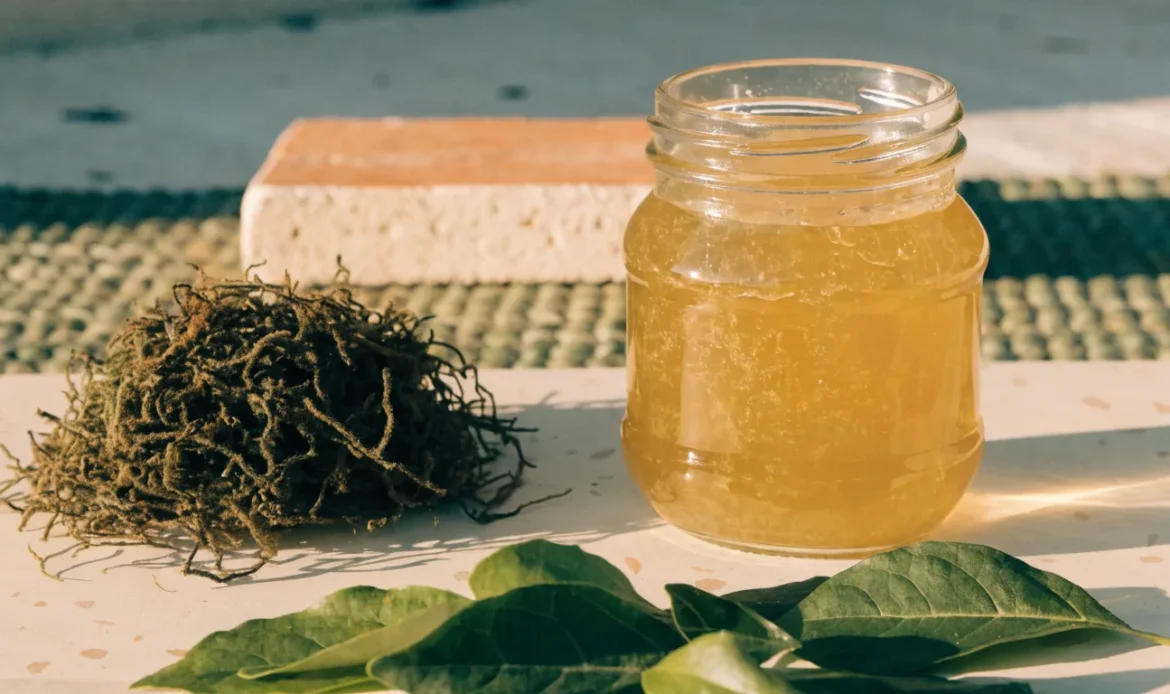
Short answer: Sea moss is a type of edible seaweed that people use because it contains minerals, fiber-like compounds, and other components found in seaweeds. These components can add nutrients to a diet, but amounts vary by source. Sea moss may be useful as a food ingredient if you check the label, test results, and your own health needs first.
Why this answer first: readers often want a clear yes/no reason. Below you will find a plain explanation, safety notes, how science supports (and limits) what we can say, a buyer checklist, and next steps.
What sea moss is — simple definition
Sea moss usually refers to several kinds of red seaweed. It can be sold dried, raw, powdered, or as a prepared gel. People harvest it from the ocean or grow it on farms. Seaweed is a broad category of marine plants that includes brown, green, and red types; sea moss falls under the red group. Seaweed naturally contains minerals and other compounds that are not found in most land crops [1].
Forms you will see
- Dried whole pieces (often rehydrated before use).
- Raw or sun-dried sea moss.
- Powdered or capsules.
- Prepared gels or blended products.
Each form changes how you store and use the sea moss. It does not change basic facts about what seaweed contains, but processing can change moisture, texture, and possibly the concentration of some components.
Why people say sea moss is “good” — what it contains
Seaweed, including sea moss, is known to contain:
- Iodine and other trace minerals. These are minerals the body needs in small amounts and are common in marine plants [1].
- Fiber-like and complex sugar compounds that are common in seaweeds. These include long-chain molecules that affect texture and mixability.
- Small amounts of vitamins and a range of minerals that land-grown foods may have less of.
These features explain why people include sea moss in foods. For example, iodine is commonly linked to marine foods. But the exact amount of any nutrient in a single product depends on species, location, harvest time, and processing. That is why labels and test results matter [1][3].
What this does not prove
- The presence of iodine or minerals does not prove any specific health outcome for an individual.
- Nutrient content varies widely between samples. You cannot assume a single product provides a fixed dose of any nutrient without testing.
What science says — knowns and unknowns
Knowns
- Seaweed is a dietary source of iodine and other minerals. Public health and nutrition authorities describe seaweed as a rich source of iodine relative to many land foods [1].
- Iodine levels in seaweed products can be highly variable. Surveys and reviews show differences by species and product type [3][5].
- High or variable iodine intake can affect thyroid function in some people. Scientific reviews discuss risks of too much iodine from marine products and the need to watch intake if you have thyroid concerns [2][5].
Uncertainties and limits
- Many studies look at “seaweed” in general or at specific seaweed types. Results do not always translate to every sea moss product on the market.
- Labels do not always give full information about iodine or heavy metals. You need product testing to know the specific content [4].
- Evidence about sea moss in particular (as opposed to seaweeds broadly) is less consistent in scientific literature. Claims about benefits for a specific health condition are best treated carefully.
Bottom line: seaweed can supply nutrients, but the dose and safety depend on the product and on the person using it. Public guidance suggests checking iodine content and testing where possible [1][2][3][4][5].
Safety: who should be cautious
People who may want to be careful with sea moss:
- Those with thyroid disorders or who take thyroid medication. Iodine can change thyroid function in some people [2][5].
- Pregnant or breastfeeding people, unless a health professional advises it. Pregnancy raises the need for safe levels of iodine, and excess also matters [2].
- People who need low-sodium or low-mineral diets for medical reasons should check with a clinician.
- People who have allergies to seafood or seaweed.
What to check for safety
- Certificates of analysis (lab tests) showing iodine and heavy metal results.
- Third-party testing statements or verified lab reports when available.
- Clear ingredient lists and storage directions.
Official bodies recommend care because iodine and other components can vary. Consumer safety groups advise checking product claims and testing where possible [3][4][5].
Why is sea moss so expensive?
Sea moss prices can look high. Here are common reasons why a seller or buyer might see higher cost:
- Harvest method: Hand-harvested seaweeds take labor and time. Wild harvests can be seasonal and weather-dependent.
- Processing steps: Cleaning, drying, milling, and preparing gels or powders add labor and equipment cost.
- Testing and quality control: Products that publish lab tests or third-party verifications may incur extra cost for sampling and analysis.
- Transport and supply chain: Shipping from coastal areas, storage, and import/export processes add to cost.
- Demand and market size: Rising interest in certain foods can increase retail prices, while small-scale operations often have higher per-unit costs.
What price cannot prove
- A higher price is not proof of safety, purity, or more nutrients. Price can reflect many factors. Always look for lab test results and transparent sourcing information rather than using price alone as proof of quality.
How to choose sea moss — practical decision checklist
Use this checklist before you buy or use sea moss. Ask the seller, read labels, and request test results when needed.
| Question to ask or check | Why it matters | What to accept or look for |
|---|---|---|
| What form is it? (dried, raw, powder, gel) | Different forms suit cooking, storage, and dose control | Choose the form that fits your use and storage needs |
| Is the species listed or described? | Nutrient and iodine levels vary by species and region | A clear species name is better than vague labeling |
| Are lab results or COAs available? (iodine, heavy metals) | Only tests show actual levels of iodine and contaminants | Accept products that provide recent lab reports |
| How was it processed? (sun-dried, oven-dried, raw cleaned) | Processing affects moisture and handling | Look for descriptions of cleaning and drying steps |
| Where was it harvested or farmed? | Location affects marine conditions and possible contaminants | Prefer suppliers who provide harvest region or method |
| Are storage and use instructions included? | Proper storage prevents spoilage and loss of quality | Follow label directions for best safety |
| Do you have health conditions affected by iodine? | Thyroid issues change what is safe to consume | Consult a clinician before use if you have thyroid conditions |
This checklist helps you gather facts that a label or product page sometimes leaves out. If a seller cannot answer these questions, consider asking for a written response or a copy of test reports.
How to prepare and use sea moss safely
Basic steps for handling dried or raw sea moss
- Rinse: Rinse dried sea moss well under cool water to remove sand, salt, and debris.
- Soak: Many people soak rehydrated pieces until they expand and soften. Use clean water and change water if cloudy.
- Inspect: Remove bits that look discolored or have a strong off smell.
- Cook or blend: Prepare per the product instructions. Some forms are blended into a gel for easy mixing into foods or drinks.
- Store: Keep dried pieces in a cool, dry place. Prepared gels usually require refrigeration and a label with a recommended use-by time.
Dose awareness
- Because iodine content varies, avoid assuming a specific safe daily amount from an unlabeled product.
- If you plan to use sea moss regularly, seek products with lab results and talk to a healthcare provider about how it fits your diet and health.
Food safety reminders
- Do not ingest seaweed that smells rotten or looks moldy.
- Follow package storage instructions.
- If you experience digestive upset or allergy signs after trying sea moss, stop use and consult a clinician.
What you can check, and what labels cannot prove
You can check:
- Lab results for iodine and heavy metals.
- Processing descriptions (how it was cleaned and dried).
- Harvest region or farm details.
- Storage and shelf-life instructions on the label.
Labels, photos, or marketing cannot prove:
- Exact nutrient doses without a lab report.
- Safety for every user. Individual health conditions change risk.
- Consistency batch-to-batch unless the company publishes regular testing.
Asking for a certificate of analysis (COA) is a reasonable step for buyers. A COA shows measured values from a lab for particular samples. If a company cannot or will not provide test results, treat that as a warning sign and consider alternatives.
Next questions to ask a supplier or to research
- Can you provide a recent lab report showing iodine content and heavy metal testing?
- What species and harvest area does this product come from?
- How is the product processed and stored before shipping?
- Are there clear instructions for safe use and storage?
- Do you offer wholesale pricing or samples for bulk buyers?
If you are buying wholesale or for a retail operation, request batch testing and ask about traceability in the supply chain.
Helpful next guides and internal links
- Learn more about seaweed and how it is used: /learn/
- If you want to browse products and forms: /shop/
- If you are buying for resale or large quantities, see wholesale options: /wholesale/
- Have questions or want documents? Contact the team: /contact/
- Return to our home page for general company info: /
Conclusion
Sea moss is a form of seaweed that contains iodine, minerals, and fibrous compounds. That is why people add it to foods or supplements. However, values vary a lot by species, harvest, and processing. The key steps for safe, useful purchasing are: ask for lab reports (iodine and heavy metals), check processing and storage details, and consult a healthcare provider if you have thyroid or other health concerns. Use the checklist above to compare products and to ask suppliers the right questions before you buy.
If you want more detailed guides about seaweed and product formats, visit our learning hub at /learn/. To see product choices and current formats, check /shop/ or reach out for bulk or wholesale information at /wholesale/. For specific questions or documents, contact us at /contact/.
Continue reading
Frequently asked questions
Is sea moss the same as other seaweed?
Sea moss is a type of red seaweed. “Seaweed” is a broad term that covers many species and colors of marine plants. Different types have different nutrients and textures [1].
Can I use sea moss every day?
You can use small amounts, but regular daily use should be guided by product testing and your health needs. Iodine levels vary, so check lab results or talk to a healthcare provider if you plan daily use [2][3][5].
How can I know how much iodine is in a product?
The only reliable way is a lab test or a certificate of analysis (COA) provided by the supplier. If a label does not list iodine, ask the seller for test data [3][4].
Are there risks of heavy metals in sea moss?
Seaweed can take up trace elements from the water. Testing for heavy metals is a good safety step. Ask for lab results and consider products that publish third-party testing [3][4].
What should someone with thyroid problems do?
People with thyroid disease should consult their clinician before using sea moss. Iodine can affect thyroid medication and function. Scientific reviews highlight potential risks for susceptible individuals [2][5].
Why does sea moss cost more than other ingredients?
Costs reflect harvest methods, processing, testing, transport, and market demand. Price alone does not prove quality or safety. Use the checklist above to evaluate value.
References
- Harvard T.H. Chan School of Public Health, “Seaweed.” https://nutritionsource.hsph.harvard.edu/seaweed/
- Smyth PPA. “Iodine, Seaweed, and the Thyroid.” European Thyroid Journal, 2021. https://pmc.ncbi.nlm.nih.gov/articles/PMC8077470/
- Food Standards Australia New Zealand, “Survey of iodine levels in seaweed and seaweed containing products,” updated 2025. https://www.foodstandards.gov.au/science-data/monitoring-safety/surveyofiodinelevels
- Operation Supplement Safety, “Sea Moss in Dietary Supplements.” https://www.opss.org/article/sea-moss-dietary-supplements
- Blikra MJ et al. “Consequences of acute and long-term excessive iodine intake: A literature review focusing on seaweed as a potential dietary iodine source.” 2024. https://doi.org/10.1111/1541-4337.70037