
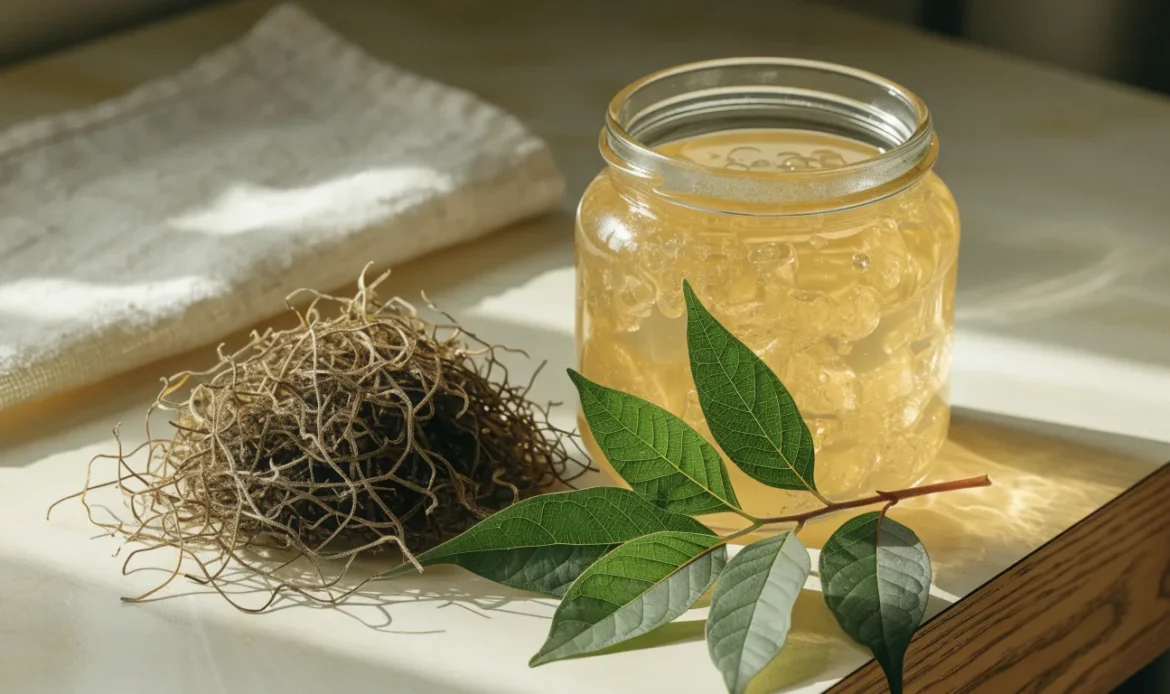
Short answer: Rinse dried sea moss, soak it until soft, blend it into a smooth gel, then mix that gel into water, juice, or a smoothie. Clean tools and check the sea moss for off-smells. Be aware that iodine in seaweed varies, so consult reliable sources if you have a thyroid condition [1][2].
Why this guide helps: You’ll get clear steps, a simple checklist, safe-handling notes, creative recipe options, and advice on storage and sourcing. I do not promise health results. This guide focuses on kitchen technique and safety.
What is a “sea moss drink”?
A sea moss drink is any beverage that contains sea moss prepared into a gel or blended form. The sea moss gives a smoother or thicker texture. People add it to plain water, fruit juice, tea, or smoothies. The flavor is mild when mixed and often takes on the taste of other ingredients.
Do not confuse whole seaweed used in cooking with processed powders or supplement capsules. If you use supplements, read their labels and safety notes carefully [4].
Tools and basic ingredients
What you need (checklist)
- Dried sea moss (clean, food-grade)
- Fresh water (for rinsing, soaking, and blending)
- Blender (high-speed or regular)
- Glass jar or container for soaking
- Measuring cups and spoons
- Strainer or colander
- Knife and cutting board (optional)
- Refrigerator space and storage containers (glass jars are best)
- Optional: citrus, sweetener, juice, milk or plant milk, spices (cinnamon, vanilla), or fruit for flavor
Decision guide: gel vs. powdered sea moss
- Use gel if you want a smooth texture and easy portioning. Gel is made by hydrating and blending the sea moss.
- Use powder if you want quick mixing and long-term pantry storage. Powdered forms may come from different processing methods and should be handled per the product label.
Note: This guide explains how to make the gel and then use it in drinks.
Choosing and inspecting sea moss
How to choose
- Buy food-grade dried sea moss from a reputable seller. Ask about sourcing and cleaning steps if you can.
- Avoid any product with unclear labeling.
How to inspect dried sea moss
- Look for a dry, clean appearance.
- Expect some natural color variation.
- If it smells strongly fishy, rotten, or chemically, do not use it.
- If you find visible mold or odd residues, discard it.
Why check: Seaweed can vary in iodine and mineral content. People with thyroid conditions should pay attention and may want medical advice before making sea moss a frequent part of their diet [1][2][5].
Step-by-step: Make sea moss gel
- Rinse
- Put the dried sea moss in a colander or bowl.
- Rinse under cool running water.
- Move the pieces around with your hands to remove sand, salt, and debris.
- Soak
- Place the rinsed sea moss in a clean jar or bowl.
- Cover with fresh, cool water so the sea moss can rehydrate and expand.
- Soak until soft and pliable. Times vary by product and size; check texture. Discard if the water becomes cloudy with a bad smell.
- Final rinse
- Drain the soaking water.
- Rinse the softened sea moss once more to remove any remaining grit.
- Blend
- Chop the softened sea moss into smaller pieces if needed.
- Put the sea moss in a blender.
- Add fresh water. Start with a small amount to make a thick gel. Add more water to reach a thinner consistency.
- Blend until very smooth. Stop and scrape down the sides as needed.
- Store the gel
- Transfer the blended gel into a clean glass jar.
- Seal and place in the refrigerator.
- The gel is ready to use in drinks.
Notes on texture and water ratios
- The thicker you make the gel, the less you will need per serving.
- You can make a thinner gel or “liquid sea moss” by using more water when blending.
- Experiment: some people prefer 1–2 tablespoons of gel per serving; others use more for texture. Adjust by taste and texture preference.
Three simple sea moss drink recipes
Recipe 1 — Basic sea moss water
- 1 cup cold water
- 1–2 tablespoons sea moss gel
- Stir or shake until mixed
- Add lemon or lime to taste
Recipe 2 — Fruit smoothie with sea moss
- 1 cup fruit (banana, berries, or mango)
- 1 cup liquid (water, juice, or milk)
- 1–2 tablespoons sea moss gel
- Blend until smooth
Recipe 3 — Warm sea moss tea
- Heat water (do not need a rolling boil)
- Stir in a small amount of sea moss gel
- Add honey, lemon, or ginger
- Serve warm, not scalding
These are kitchen methods, not medical treatments. Use flavors you like. Taste will vary by the other ingredients.
Food safety and quality checks
Cleanliness
- Wash your hands before handling sea moss.
- Use clean jars and utensils.
- Keep the working area tidy.
Smell and appearance
- Fresh sea moss has a mild ocean smell. A strong offensive or rotten smell is a sign to discard.
- If you see mold, slimy film, or unusual colors in the jar, throw it away.
Heat and microbes
- Blending and refrigerating slows spoilage but does not sterilize. Make gel with clean water and keep it chilled.
- If you plan to make a hot drink, heat the liquid separately. Adding cold sea moss gel to very hot liquids can change texture. Be careful when handling hot liquids.
Iodine and mineral variability
- Seaweed contains iodine and other minerals. Amounts vary by species, harvest location, and processing.
- People with thyroid conditions should be cautious and may want to consult a health professional about intake before using sea moss regularly [1][2][5].
- Surveys and studies show iodine levels can be high in certain seaweed products, and variability is wide [3][5].
Supplements vs. whole sea moss
- Processed supplements and powders may be labeled differently. Read labels and follow the manufacturer’s instructions.
- Operation Supplement Safety points out that supplement content and safety can vary. Treat supplements as separate from food-grade sea moss [4].
Storage, freezing, and thawing
General storage tips
- Keep sea moss gel in a sealed container in the refrigerator.
- Use clean spoons to remove portions. Do not double-dip.
- If the gel develops an off-odor, visible mold, or strange color, discard it.
Freezing
- You can freeze sea moss gel in portion sizes, such as ice cube trays.
- Thaw frozen portions in the refrigerator before use.
- Freezing helps with portion control and reduces waste.
What to check when thawing
- Smell the thawed gel before use.
- Check texture and appearance.
- Discard if it smells bad or looks abnormal.
Note: Storage conditions and safe storage times depend on your kitchen, ingredients, and how clean containers are. When in doubt, discard and make a fresh batch.
Troubleshooting common problems
Problem: Gel is grainy
- Cause: Sea moss may not have blended long enough or was not fully softened when soaked.
- Fix: Re-blend with more water. Strain if needed.
Problem: Gel is too watery
- Cause: Too much water in the blender.
- Fix: Use less water next time or refrigerate; gel often thickens when chilled.
Problem: Strong off-smell
- Cause: Spoilage or poor-quality raw sea moss.
- Fix: Discard the batch. Clean the jar and start with fresh sea moss.
Problem: Texture slimy in a bad way after storage
- Cause: Possible microbial growth.
- Fix: Discard and sanitize containers before making a new batch.
Substitutions and flavor options
Substitutions
- Powdered sea moss: Use as directed on the package; it may mix differently.
- Fresh seaweed: Follow a recipe specific to that seaweed.
Flavor pairings
- Citrus (lemon or lime) brightens the taste.
- Fruit like banana or mango masks texture and adds natural sweetness.
- Spices (vanilla, cinnamon, ginger) add warmth.
- Sweeteners (honey, maple syrup, agave) are optional.
Adjust texture
- More gel makes drinks thicker.
- More water or juice makes drinks thinner.
Checklist: quick preparation and safety checklist
- Buy food-grade, labeled dried sea moss.
- Inspect for off-smells or visible mold before use.
- Rinse thoroughly under cool water.
- Soak until soft and pliable.
- Rinse again after soaking.
- Blend with clean water until smooth.
- Store in a clean, sealed glass jar.
- Use a clean spoon for each portion.
- Refrigerate and freeze portions as needed.
- Discard if smell, color, or texture is abnormal.
- Consult a health professional about frequent use if you have thyroid issues. See references [1][2][5].
Next questions to consider
- How often do you plan to use sea moss in drinks? That will guide batch size and storage choices.
- Do you want to try powdered or capsule forms instead? Compare labels and safety notes.
- If you have a medical condition, ask a healthcare professional about iodine and mineral intake before regular use [2][5].
Conclusion
Making a sea moss drink at home is a straightforward kitchen process: rinse, soak, blend, and mix. Use clean tools and watch for signs of spoilage. Choose flavors you enjoy. Be aware that seaweed’s iodine content is variable and that people with thyroid issues should seek advice before frequent use [1][2][5]. This guide focuses on safe, repeatable cooking steps so you can make a sea moss drink that fits your taste and kitchen habits.
Learn more sea moss recipes and tips at our recipes page: Sea Moss Recipes (/learn/recipes/). For background on seaweed and nutrition, visit our learning hub: Learn (/learn/). Browse sourcing options if you want to buy supplies: Shop (/shop/). If you need bulk or wholesale information: Wholesale (/wholesale/). Questions about orders or sourcing? Contact us: Contact (/contact/).
Frequently asked questions
How long should I soak sea moss?
Soak until the pieces are soft and flexible. Time varies by product and piece size. Check the texture and feel; if it is still rigid, soak longer.
Can I use hot water to soak or clean sea moss?
Use cool or room-temperature water to rinse and soak. Hot water can change the texture and may make it harder to judge quality. Heat liquids separately when you make a warm drink.
Is sea moss safe for people with thyroid problems?
Seaweed can contain variable levels of iodine. People with thyroid conditions should be cautious and consider speaking with a health professional. Studies and reviews note that iodine in seaweed varies and can sometimes be high [2][3][5].
What if my sea moss gel smells fishy after blending?
A mild ocean scent is normal, but a strong fishy or rotten smell is a sign of spoilage or low-quality raw sea moss. Discard the batch and clean containers.
Can I use powdered sea moss instead of making gel?
Yes. Powder mixes differently and may dissolve more quickly. Follow the product label for best results.
How can I portion gel for convenience?
Freeze in ice cube trays or small containers for single-use portions. Thaw in the refrigerator before use.
References
- [1] Harvard T.H. Chan School of Public Health, “Seaweed.” https://nutritionsource.hsph.harvard.edu/seaweed/
- [2] Smyth PPA. “Iodine, Seaweed, and the Thyroid.” European Thyroid Journal, 2021. https://pmc.ncbi.nlm.nih.gov/articles/PMC8077470/
- [3] Food Standards Australia New Zealand, “Survey of iodine levels in seaweed and seaweed containing products,” updated 2025. https://www.foodstandards.gov.au/science-data/monitoring-safety/surveyofiodinelevels
- [4] Operation Supplement Safety, “Sea Moss in Dietary Supplements.” https://www.opss.org/article/sea-moss-dietary-supplements
- [5] Blikra MJ et al. “Consequences of acute and long-term excessive iodine intake: A literature review focusing on seaweed as a potential dietary iodine source.” 2024. https://doi.org/10.1111/1541-4337.70037