
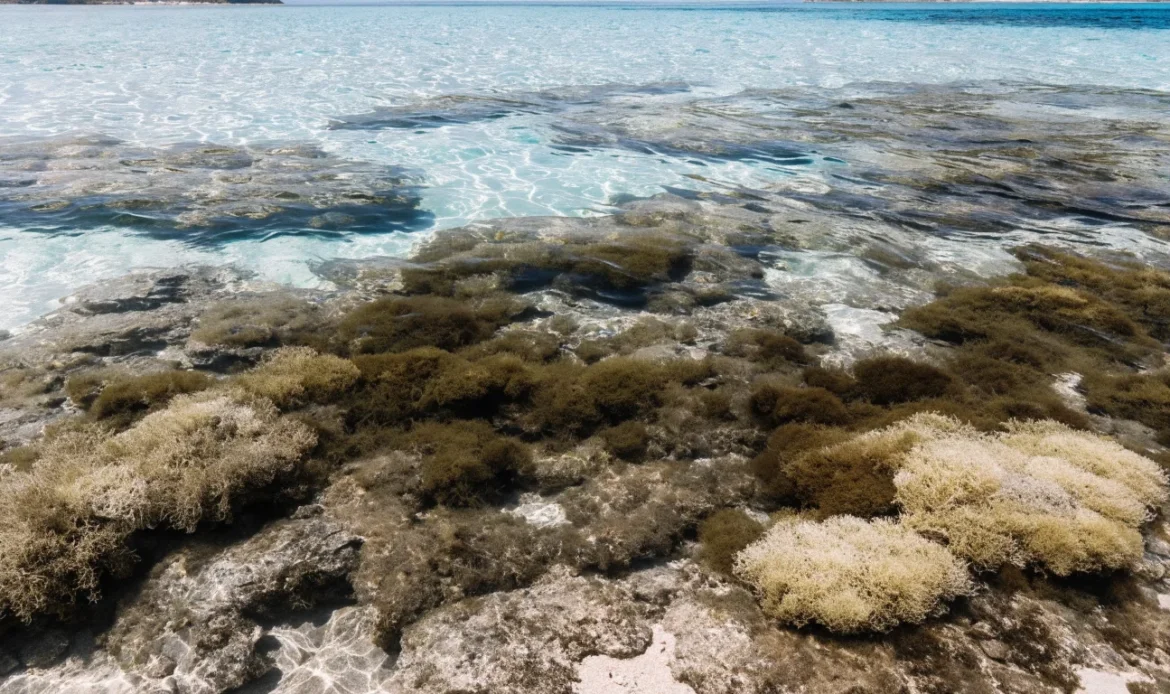
Short answer: Wildcrafted sea moss means sea moss that was harvested from the natural shoreline or ocean, not grown in a controlled farm. Buyers who care about origin should check harvest location, handling steps, species identification, and lab or supplier documentation. This guide explains what you can verify, what you cannot prove from photos or labels alone, and which next questions to ask.
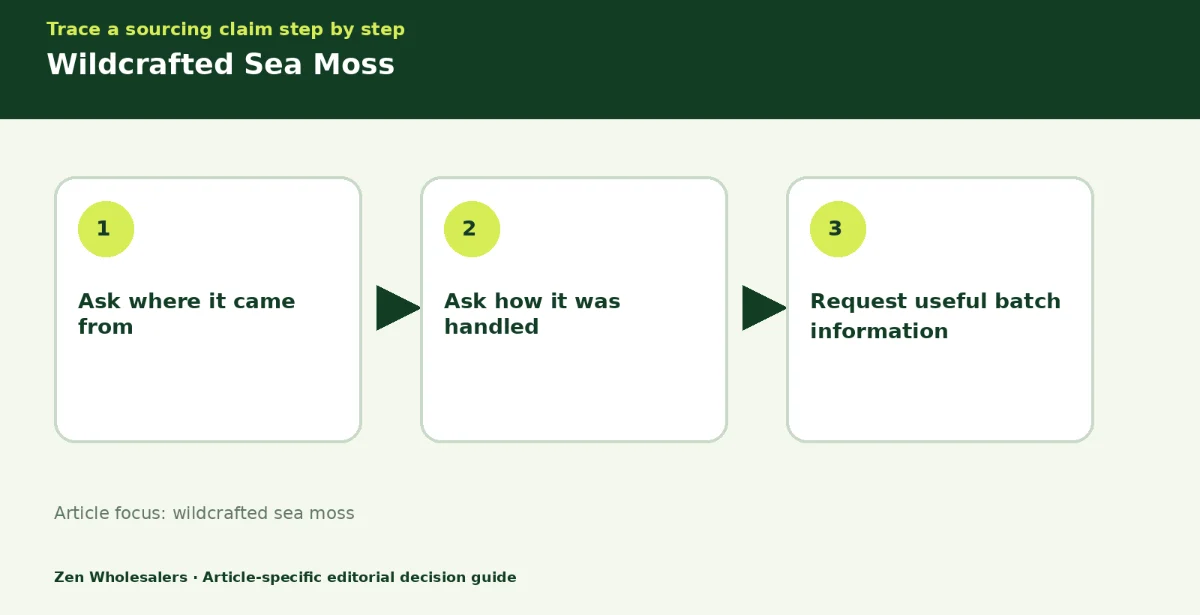
Why this matters: sea moss varies by location, color, and handling. Those things affect taste, texture, and how people use it. But color or country name alone does not prove quality or safety. Read on for practical checks and a decision guide.
What is “wildcrafted sea moss”?
Wildcrafted sea moss is seaweed gathered in the wild. Harvesters collect plants that grow on rocks, reefs, or other natural underwater places. The term “wildcrafted” emphasizes that the plants were not farmed in tanks or plots. That is the main difference.
Wild sea moss covers several kinds of red algae. Names and local labels vary by island and market. In the Caribbean, some sellers call local collections “sea moss” or by local names. Color can range from pale gold to deep purple. Color comes from natural pigments and the environment. It does not, by itself, prove origin or safety.
What you can verify
- Whether the product was wild-harvested versus farmed. Ask the supplier.
- The stated harvest location (for example, St Lucia). Ask for details.
- How the sea moss was cleaned and dried after harvest.
- Whether the supplier has third-party lab tests for contaminants or iodine.
What you generally cannot prove from a photo or short label
- Exact harvest GPS coordinates.
- Every step of post-harvest handling.
- The species identity without expert or lab work.
- Safety or contaminant levels without lab reports.
Wildcrafted purple sea moss and the mention “St Lucia”
You will see terms like “wildcrafted purple sea moss” and “wildcrafted sea moss St Lucia.” These describe color and claimed origin. They can be accurate, but they need verification.
Purple color
- Purple sea moss exists. The color can come from pigments in the algae.
- Color varies by season, water temperature, and exposure.
- Color alone does not prove a higher nutrient level or better safety.
St Lucia origin
- Stating “from St Lucia” tells you the declared harvest area.
- A responsible seller can provide harvest dates, local harvest rules, and photos from the harvest.
- If origin is important, ask for clear documentation. Notes, harvest logs, or geo-tagged photos help but are not foolproof.
A balanced approach
- Treat color and origin claims as starting points.
- Verify with practical checks listed later in this article.
- Avoid relying on marketing language alone.
How to evaluate origin, species, and handling
When you look for wildcrafted sea moss, you want clear, verifiable answers. Here are the main things to check.
- Harvest location and date
- Ask where the product was harvested. Be specific: island, bay, or general coast.
- Ask for harvest dates or a harvest season. Freshness in the supply chain matters.
Why it matters: location and date help you understand local water conditions and seasonal changes.
- Species identification
- Ask the seller what species it is, if they know.
- Understand that common names are not scientific names.
- If species identification matters to you, ask if they can supply a scientific name or an expert identification.
Why it matters: different species can have different textures, colors, and uses. Only a qualified identification can confirm species.
- Post-harvest handling
- Ask how the sea moss was handled right after harvest. Look for steps such as rinsing, sorting, and drying.
- Ask about drying method: sun-dried vs. low-heat drying vs. air drying. Each method affects texture and water content.
- Ask how it was stored and packaged.
Why it matters: poor handling can introduce molds or bad odors. Proper drying and storage slow microbial growth.
- Tests and documentation
- Ask if the supplier has lab tests. Reasonable tests include checks for heavy metals, microbiological contamination, and iodine content.
- If tests exist, ask for the date, lab name, and a copy of the certificate or report.
Why it matters: seaweed accumulates minerals from seawater. Tests show levels at the time of testing. They do not cover future batches unless repeated.
- Chain of custody
- Ask for a basic chain-of-custody or handling log from harvest to packaging.
- Even a simple harvest log that lists dates and handlers is useful.
Why it matters: it shows care and traceability.
- Packaging and labeling
- Check labels for origin, harvest date, net weight, and handling/storage advice.
- Look for transparent supplier contact details.
Why it matters: clear labeling helps you follow up if you have questions.
Wildcrafted sea moss benefits — what is supported and what is not
People use sea moss for many reasons. Be careful about claims.
What is known
- Seaweed is a type of algae. Seaweed species can be a dietary source of minerals such as iodine. (See Harvard reference.) [1]
- Iodine levels in seaweed vary by species and location. Some seaweeds can be high in iodine. [1][3][5]
- Because iodine varies, testing or conservative portions are sensible. [2][3][5]
What is not proven in this article
- No single sea moss variety is guaranteed to produce health outcomes.
- Avoid promises about curing or preventing disease, releasing toxins, or guaranteed weight loss.
How to use the information
- If you are concerned about iodine intake, seek products with iodine testing.
- If you have thyroid issues or take iodine-containing products, consult a clinician before adding high-iodine foods to your diet.
Cautions and safety
- Seaweed can pick up heavy metals and other contaminants from water. Tests can check this. [4]
- Iodine excess can cause thyroid problems in some people. [2][5]
- If you plan to consume sea moss frequently, consider testing data for contaminants and iodine.
What questions to ask a supplier — practical list
When sourcing wildcrafted sea moss, use clear questions. A supplier who answers them is more transparent.
- Where exactly was this sea moss harvested?
- When was it harvested?
- Was it hand-harvested or mechanically collected?
- What species or local name is this product identified as?
- How was it rinsed, cleaned, and dried after harvest?
- Do you have lab tests for heavy metals, microbiology, or iodine for this batch?
- Can you provide harvest photos, harvest logs, or packaging photos?
- How do you store and ship the product?
- Do you offer different grades or sizes? What is the drying moisture content range?
- Who is responsible for export or local regulations during shipping?
A transparent supplier will answer most of these. If they cannot, that is a reason to request more proof or to choose a different source.
Decision guide: How to choose wildcrafted sea moss
Use this table to sort options. It is a practical decision guide. It helps you move from general claims to verifiable facts.
| What to check | Why it matters | Acceptable answers | Red flags |
|---|---|---|---|
| Claimed origin (island, bay) | Location gives context about local water and harvest rules | Specific place + harvest date | Vague origin: “Caribbean” with no details |
| Harvest method | Affects sustainability and plant regrowth | Hand-harvested, with harvest limits noted | “Unknown” or “mechanical” with no explanation |
| Species or local name | Affects texture and use | Seller gives local and scientific name (if known) | Only a marketing name like “gold” or “super” |
| Post-harvest cleaning | Poor cleaning can cause odor or contaminants | Describes rinsing, sorting, and drying method | No cleaning steps described |
| Drying method | Affects moisture and shelf stability | Low-heat drying or rapid drying, with temp or time note | No drying info or “sun-dried only” with no details |
| Lab testing | Shows contaminant and iodine info | Recent lab results for heavy metals and microbiology | No lab testing available |
| Chain of custody | Improves traceability | Harvest log, packaging photos, or supplier contact | No traceability |
| Packaging/Labeling | Helps long-term handling | Clear label with contact info and storage advice | Vague labeling or missing contact info |
| Price and volume | Not a quality proof but matters for buying | Fits your budget and intended use | Extremely cheap with no proof of origin |
| Sustainability claim | Helps long-term availability | Harvest limits, local permits, or community plans | Bold claims with no local context |
This table helps you pick a product that fits your needs and risk tolerance.
Checklist: Quick buyer checklist before you buy
- Ask for the harvest location and date.
- Request photos or harvest logs.
- Ask about cleaning and drying steps.
- Request lab tests for heavy metals, microbiology, and iodine for the batch.
- Ask about species identification or local names.
- Confirm storage, packaging, and shipping procedures.
- Ask whether the product is wild-harvested or farmed.
- If you have health concerns (especially thyroid), consult a clinician before regular use.
Save or print this checklist when you contact suppliers.
Handling, storage, and basic preparation notes
This section gives simple, neutral steps for handling and storage. Adjust based on supplier instructions.
Basic cleaning steps sellers often follow
- Rinse in cool, running seawater or fresh water to remove sand and debris.
- Sort out stones and non-algae material.
- Dry using low-heat air drying or sun drying in a clean place. Drying method varies.
Storage
- Keep dried sea moss in a cool, dry place and sealed.
- Store rehydrated sea moss in the refrigerator and use within a few days. Follow supplier instructions.
Preparation
- Many users soak dried sea moss in fresh water to soften it.
- Rinse again after soaking to remove residual sand.
- Cook or blend according to recipes. Follow the supplier’s use instructions.
Safety tip
- When in doubt about safety or smell, do not consume. Report concerns to the supplier.
How tests help — what to expect from lab reports
Lab tests are the best way to know what is in a batch at a point in time.
Common tests to ask for
- Heavy metals (lead, cadmium, mercury). These show if the seaweed accumulated metals.
- Microbiological screens (total plate count, yeast and mold). These show handling cleanliness.
- Iodine content. This shows how much iodine is present in the batch.
- Sometimes pesticide screenings or algal toxins are relevant in certain regions.
What test results can and cannot tell you
- They tell you levels for the tested batch on the test date.
- They do not guarantee future batches will match unless the supplier tests every batch.
- Test methods vary. Ask which lab did the work and which methods were used.
Sources that explain variability
- Seaweed can contain iodine and other minerals, and levels vary by species and location. See Harvard T.H. Chan School of Public Health for an overview. [1]
- Scientific reviews note that high iodine intake can cause thyroid issues in some people. [2][5]
- National surveys show wide iodine variability among seaweed products. [3]
Wildcrafted sea moss from St Lucia — what to check specifically
If a seller claims the product is “from St Lucia,” here are specific steps.
- Ask for the exact harvest location in St Lucia.
- Check whether the seller mentions local harvest seasons or rules.
- Request harvest photos and any harvest logs from St Lucia.
- Ask about export process and which port or handler in St Lucia managed the product.
- Ask about local water conditions or advisories, if any are known.
These steps apply to any named origin. The goal is simple: verify claims with traceable facts.
Where to learn more and who to contact
- To learn about our farming and sourcing practices, visit our farm page: /our-farm/.
- For general information on sea moss and seaweed, our learning resources are at /learn/.
- If you want to buy small quantities, visit /shop/.
- If you are a retailer or buyer seeking bulk supply, see /wholesale/.
- For specific sourcing questions or documentation requests, contact us at /contact/.
- For general company information and home page, see /.
These links help you find more details from the seller or from broader learning pages.
Conclusion
Wildcrafted sea moss is a natural product with variation. Color and origin claims matter, but they are only the start. The best buyers ask for harvest details, handling steps, and lab tests. Use the decision guide and checklist here when you compare products. If origin or safety matters to you, ask specific questions and request documentation before you buy.
You can learn more about our farm and practices at /our-farm/, browse learning materials at /learn/, or view buying options at /shop/ and /wholesale/. If you have specific sourcing questions, reach out via /contact/.
Continue reading
Frequently asked questions
What does “wildcrafted” actually mean?
It means the sea moss was collected from its natural habitat rather than raised in a farm or tank. It does not guarantee testing or specific handling unless the seller provides those details.
Is purple sea moss better than other colors?
Color is a natural variation. Purple can be attractive and may indicate certain pigments. Color alone does not prove higher safety or nutrients. Ask for tests if nutrient levels or safety are important to you.
How can I be sure the sea moss is really from St Lucia?
Ask for harvest logs, photos, harvest dates, and contact details for local handlers. Geo-tagged photos or a consistent chain-of-custody help. A single photo or label without supporting documentation is a weak proof.
Should I be worried about iodine or contaminants?
Seaweed can contain iodine and sometimes contaminants. Ask suppliers for lab tests on iodine and heavy metals for the specific batch. If you have health concerns, speak with a healthcare professional. See references [1], [2], [3], [5].
Can lab tests guarantee safety?
Lab tests show the levels at the time of testing for that batch. They are useful but not a blanket guarantee for future batches. Regular testing and clear handling steps improve confidence.
What if a supplier refuses to answer questions?
A refusal to share basic sourcing and handling information is a reason to look elsewhere or to request more proof. Transparency is a practical marker of trust.
References
- [1] Harvard T.H. Chan School of Public Health, “Seaweed.” https://nutritionsource.hsph.harvard.edu/seaweed/
- [2] Smyth PPA. “Iodine, Seaweed, and the Thyroid.” European Thyroid Journal, 2021. https://pmc.ncbi.nlm.nih.gov/articles/PMC8077470/
- [3] Food Standards Australia New Zealand, “Survey of iodine levels in seaweed and seaweed containing products,” updated 2025. https://www.foodstandards.gov.au/science-data/monitoring-safety/surveyofiodinelevels
- [4] Operation Supplement Safety, “Sea Moss in Dietary Supplements.” https://www.opss.org/article/sea-moss-dietary-supplements
- [5] Blikra MJ et al. “Consequences of acute and long-term excessive iodine intake: A literature review focusing on seaweed as a potential dietary iodine source.” 2024. https://doi.org/10.1111/1541-4337.70037