
Short answer: “Elm and Rye sea moss” most likely refers to a sea moss product sold under the name Elm and Rye. Sea moss itself is a common name for several kinds of edible seaweed. If you are looking at a product called Elm and Rye sea moss, you should check the label and testing information before you buy. This guide shows what to check, how to prepare common formats, and how to decide if a product fits your needs.
Why this matters: sea moss products can differ a lot. The name on the label does not tell you the species, where it was harvested, or whether it was tested. Those facts affect how you store, use, and trust the product.
What “sea moss” means
Sea moss is a term people use for a few types of red or brown seaweed. Two kinds you may see are called Irish moss (a red alga) and Gracilaria (another red alga). Sellers sometimes call these “sea moss,” “Irish sea moss,” or other names. Sea moss is sold in many forms: raw dried, blended gels, powders, and capsules.
Important point: a product name (like Elm and Rye sea moss) tells you little about the seaweed inside. It could be one species or a mix. It could be harvested in different places. It could be dried or made into a gel. Always look for specific product details and tests.
Common formats and what they mean
- Dried whole sea moss: This is sea moss that has been harvested and dried. It is often sold in loose clumps. Dried moss is meant to be rinsed and soaked before use. Dried moss lets you see the pieces and check for visible debris.
- Raw or fresh sea moss (vacuum packed): This is less common in online retail. It usually needs refrigeration. If you see “raw,” check storage instructions.
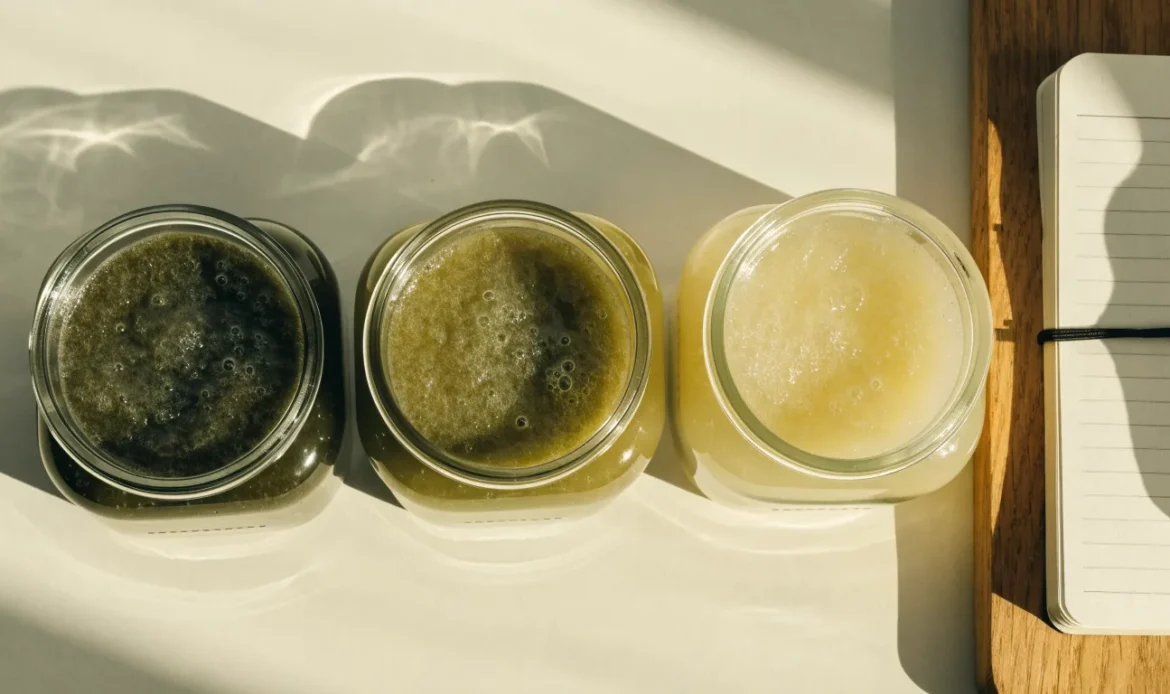
- Sea moss gel: This is sea moss that has been soaked and blended into a gel. It is ready to use for cooking or adding to drinks. Gels are convenient but can spoil faster than dried moss.
- Powder or capsules: These are dried and ground sea moss or extracts. They are convenient for travel and portioning. Powders and capsules should have a clear Supplement Facts label if sold as supplements.
- Tinctures and blends: Some products mix sea moss with other ingredients. Watch labels to see what else is in the product.
Each format has trade-offs. Dried moss lasts longer when stored well and allows you to inspect the pieces. Gels are easy to use but need refrigeration. Powders are easy for travel but give less visual proof of the raw material.
Why testing and labels matter
Seaweed can pick up minerals from seawater. That includes iodine and, in some cases, unwanted things such as heavy metals or microbes. Iodine levels in seaweed vary a lot by species and harvest location. Some seaweeds can have high iodine. High iodine intake may affect the thyroid for some people [1][2][5].
Because of this variability, third-party testing or a Certificate of Analysis (COA) matters. A COA shows lab results for things like heavy metals, microbes, and sometimes iodine. If a seller provides a recent COA tied to the product batch, you can see whether the product has been tested and what was tested.
A few trusted facts from public sources:
- Seaweed can have very different iodine amounts depending on species and where it grew [1][2].
- High iodine intake can have health effects in some people [2][5].
- Surveys and studies find wide variation in iodine levels across seaweed products, so labeling is useful when available [3][5].
- Dietary supplements are regulated differently from foods in many places. Some seaweed products sold as supplements may not have been independently tested [4].
If a product page or label does not show a COA or lab results, ask the seller for them before buying.
How to read a product page or label for Elm and Rye sea moss
When you look at a product called Elm and Rye sea moss, check the page and label for these items. Each line below explains why it matters and what a missing piece means.
- Species name (e.g., Chondrus crispus, Gracilaria): Species affects texture and typical iodine content. If the species is missing, you cannot judge likely iodine range or culinary use.
- Harvest location and method: The ocean area and the way it was harvested help you understand likely contamination risks. Lack of a location makes it harder to trace quality.
- Harvest or pack date and batch number: Freshness and traceability depend on batch info. No date or batch reduces traceability.
- Processing steps: Was it sun-dried, dehydrated, steamed? Processing affects shelf life and how you should prepare it.
- Storage instructions: Dried moss usually keeps longer than gels. If storage guidance is missing, follow up with the seller.
- Lab tests / Certificate of Analysis (COA): A COA should list the lab name, date, and what was tested. If there’s no COA, ask for one tied to the batch.
- Ingredient list: If the product mixes ingredients, the list must show every component. Watch out for added colors, dyes, or preservatives if you want pure sea moss.
- Country of origin and supply chain notes: These help with traceability. If not listed, ask where the product came from.
- Allergen and safety info: Look for statements about cross-contamination or other allergens.
- Return policy and contact info: A clear return policy and a way to contact the seller improve buyer confidence.
If a product is missing many of these items, treat that as a red flag. You can still buy, but you should ask questions and expect a slower buying decision.
Practical decision checklist: Elm and Rye sea moss buyer guide
Use this checklist when you evaluate a product page or seller. Mark each item Yes/No/Ask. If many items are No or Ask, look elsewhere or request proof.
| Item to check | Why it matters | What to do if missing |
|---|---|---|
| Species named | Helps predict texture and typical mineral content | Ask the seller which species they sell |
| Harvest location / method | Affects contamination risk and traceability | Ask for location or region |
| Batch number and date | Enables checks for recalled or tested batches | Ask for batch-specific info |
| COA or lab report | Shows testing for iodine, heavy metals, microbes | Request a COA tied to the batch |
| Processing info (dried/gel/powder) | Tells you how to prepare and store | Ask for processing steps and storage tips |
| Full ingredient list | Ensures no hidden additives | Ask for full list |
| Storage and shelf-life guidance | Prevents spoilage and waste | Ask seller for recommended fridge/freezer rules |
| Clear return policy | Gives options if product is not as described | Read policy; contact if unclear |
| Contact info and customer support | Lets you ask follow-up questions | Use contact page or seller email |
Practical tip: Save any COA and batch number with the product photo and order date. That makes it easier to report problems or follow up later.
What a Certificate of Analysis (COA) should show
A COA is a lab report for a specific product batch. A good COA will include:
- Lab name and accreditation, and the testing date.
- Batch or lot number that matches the product.
- Tests performed (for example: heavy metals, microbial counts, sometimes iodine).
- Numeric results and the lab’s pass/fail or detection limits.
- Signatures or stamps from the lab.
If the COA lists heavy metals or microbes as “not detected” or below safety limits, that is helpful. If the COA omits iodine, ask the seller whether iodine was tested. Many COAs only test for heavy metals and microbes, not iodine.
If a seller gives only a generic COA not tied to your batch, that is less useful. You want batch-specific results.
Safety: iodine, contaminants, and how to be cautious
Iodine
- Seaweed is a known source of iodine. Iodine levels can vary across species and harvests [1][2][5].
- High iodine intake can affect thyroid function in some people [2][5]. If you have a thyroid condition or take thyroid medication, consult a health professional before adding seaweed regularly.
- If a product does not list iodine testing on its COA, you cannot estimate iodine level reliably.
Contaminants
- Seaweed can concentrate some elements from seawater, including heavy metals in some areas. Lab testing can show whether levels are low or not detected [1][3].
- Microbial contamination is a possibility for products that are not dried or that were processed without safe handling. A COA that includes microbial tests gives more assurance.
Regulatory and label issues
- Supplements and foods are regulated differently in different countries. A product sold as a dietary supplement may not have the same labeling as a packaged food. Read the label and check whether the product is sold as a food or supplement [4].
How to be cautious
- Ask for a COA with batch info.
- If you have a thyroid condition, speak with your healthcare provider before starting regular seaweed use.
- Store gels and raw products according to seller instructions.
- Do not rely on marketing language alone. Seek test data when you can.
References that discuss these topics include public health and scientific sources that show the variability and potential effects of iodine and contaminants in seaweed [1][2][3][5], and a consumer guidance source on sea moss supplements [4].
Preparing common sea moss formats safely
General rule: clean and inspect the raw product before use.
Preparing dried sea moss
- Rinse to remove sand or debris.
- Soak in clean water until the pieces soften. Discard water with visible dirt.
- After soaking and rinsing, you can simmer briefly or blend for a gel, depending on intended use.
Making gel from dried sea moss
- Soak and rinse first.
- Blend the softened moss with clean water to create a gel texture.
- Store the gel in a clean container and follow seller storage guidance.
Using ready-made gel
- Check the smell and look. If it smells off or shows visible mold, do not use it.
- Keep it refrigerated or frozen as the label suggests.
Using powder or capsules
- Check the Supplement Facts or ingredient list.
- Follow serving guidance on the label.
Safety note: If a product smells strongly of fish, rot, or mildew after proper rinsing, do not use it and contact the seller. Trust your senses along with lab data.
Which format might suit you?
- Dried whole sea moss: Good if you want the raw material and control over prep. It provides visual proof of the stock and often lasts longer when stored correctly.
- Gel: Good for convenience and immediate use in recipes or drinks. Buy gels only from sellers that provide storage guidance and batch info.
- Powder/capsules: Good for measured dosing and travel. Check labels for additives and test reports.
- Wholesale bulk: If you need large quantities, ask for bulk COAs and sample testing. Bulk purchases should come with clear batching and traceability.
If you want to compare formats on cost, shelf life, and convenience, request batch COAs and ask about storage. We provide product options and wholesale information at our store pages. Visit /shop/ for retail choices and /wholesale/ for bulk options. If you need help, reach out via /contact/ or our main page /.
Questions to ask Elm and Rye (or any seller)
If the product page doesn’t answer your questions, contact the seller. Ask these specific questions:
- Which species of seaweed is this product?
- Where and when was it harvested?
- What processing steps were used?
- Can you provide a batch-specific COA? What does it test for?
- What are the storage instructions and expected shelf life?
- Is this sold as a food, ingredient, or dietary supplement?
- What is your return policy?
If the seller cannot answer these, consider buying from a vendor who provides clearer traceability.
Practical next steps for buyers
- Read the product page thoroughly. Save screenshots of product claims.
- Look for a COA link on the product page. If you don’t see one, ask for it and the batch number.
- Inspect the label when your order arrives. Make sure the batch number or date matches any COA you were shown.
- Keep the packaging and any lab reports with your records.
- For bulk buying, request a sample and testing information before committing to a large order.
If you need help finding a product with clear testing and batch traceability, you can check learning resources on /learn/ for general seaweed guidance or contact the seller through /contact/ for specific product questions.
Conclusion
“Elm and Rye sea moss” is a product name you may see for seaweed sold as dried, gel, powder, or bulk. The name alone does not show species, harvest area, or testing. To make a safer choice, look for species info, harvest and batch details, and a batch-specific COA that lists tests for things you care about (for example iodine or heavy metals). If those items are missing, ask the seller before you buy.
If you want to learn more about seaweed basics, visit our learning hub at /learn/. If you are ready to browse products, see /shop/, or contact us for wholesale options at /wholesale/ and direct inquiries at /contact/. You can also return to our homepage at / for general info.
Continue reading
Frequently asked questions
Is Elm and Rye sea moss safe to eat?
Safety depends on the product batch, species, and testing. Seaweed can contain iodine and other minerals that vary by species and location. Ask the seller for a batch-specific COA. If you have a thyroid condition, check with a clinician before regular use [1][2][5].
How can I tell what species is in a sea moss product?
The species should be on the label or product page. If it is not listed, ask the seller. Visual inspection of dried pieces can give clues, but species ID is best confirmed by clear labeling or lab work.
What should a COA include?
A COA should show the lab name, accreditation if any, testing date, sample or batch number, the tests run (for example heavy metals, microbes, iodine), and the results. A COA tied to your batch is more useful than a generic report.
Can I use sea moss gel left at room temperature?
Follow the seller’s storage directions. Ready-made gels often require refrigeration or freezing. If storage instructions are missing, contact the seller before use.
Should I worry about iodine or heavy metals in sea moss?
Seaweed can have variable iodine. Some studies and surveys show wide variation in iodine amounts and possible high levels in some products [1][2][3][5]. Heavy metal presence depends on the water where it was harvested. Lab testing provides the best information.
Where can I buy bulk sea moss or ask for samples?
For wholesale or larger orders, ask the seller for samples, COAs, and batch traceability. If you are exploring options, check our wholesale page at /wholesale/ and our retail offerings at /shop/. You can also contact us at /contact/ for questions.
References
- [1] Harvard T.H. Chan School of Public Health, “Seaweed.” https://nutritionsource.hsph.harvard.edu/seaweed/
- [2] Smyth PPA. “Iodine, Seaweed, and the Thyroid.” European Thyroid Journal, 2021. https://pmc.ncbi.nlm.nih.gov/articles/PMC8077470/
- [3] Food Standards Australia New Zealand, “Survey of iodine levels in seaweed and seaweed containing products,” updated 2025. https://www.foodstandards.gov.au/science-data/monitoring-safety/surveyofiodinelevels
- [4] Operation Supplement Safety, “Sea Moss in Dietary Supplements.” https://www.opss.org/article/sea-moss-dietary-supplements
- [5] Blikra MJ et al. “Consequences of acute and long-term excessive iodine intake: A literature review focusing on seaweed as a potential dietary iodine source.” 2024. https://doi.org/10.1111/1541-4337.70037