
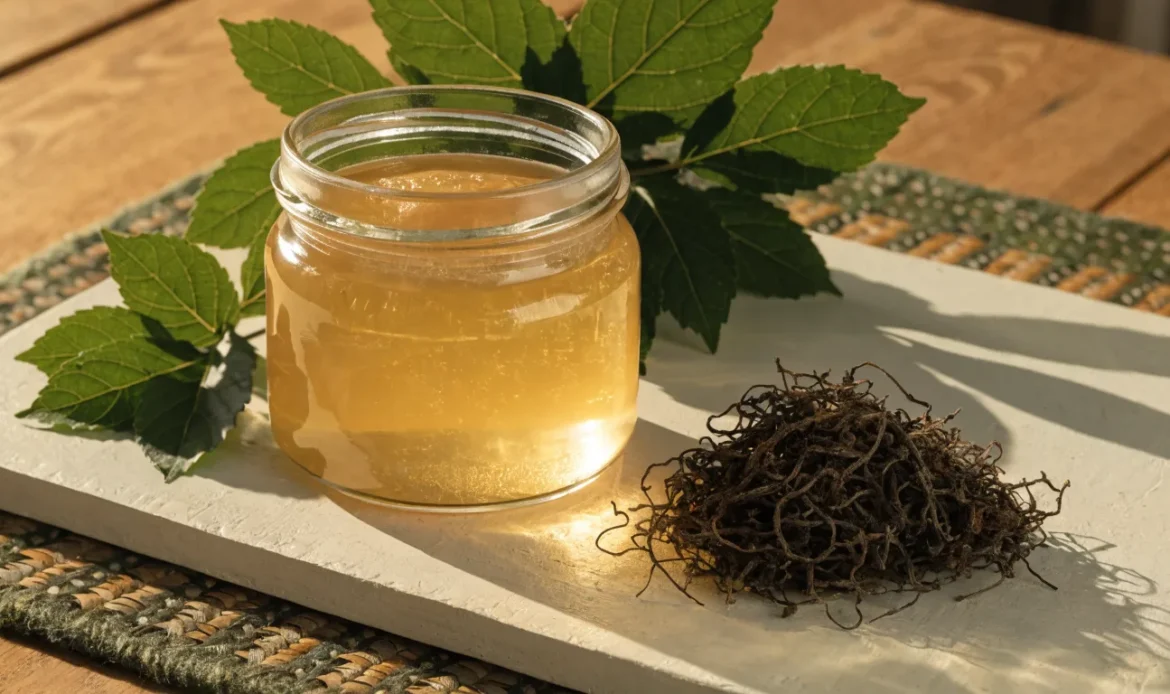
Short answer: Sea moss ingredients usually start with seaweed (one or more species) and may include water, carriers (like oils or alcohol), thickeners, flavoring, or added vitamins. Labels can tell you what was mixed in. They cannot prove how the sea moss was harvested or the exact mineral levels unless the seller provides third‑party test results. Read labels, ask for tests, and use the checklist below to decide what to buy.
Why this matters: Some ingredients change how a product tastes, how long it keeps, and what it can be used for. Some natural components in seaweed, such as iodine, can vary a lot from batch to batch. That makes label clarity and testing important when you buy or use sea moss products [1][2][3][5].
What “sea moss” means on an ingredient label
“Sea moss” is a common name. It covers many types of red seaweed and other seaweeds used the same way. When you see “sea moss” on an ingredient list, the seller may mean:
- Raw dried seaweed (a single species or a blend).
- Sea moss gel (seaweed cooked and blended with water).
- Sea moss powder (dried then ground).
- Sea moss extract or concentrate.
- Sea moss in capsules or mixed into other foods.
Labels that list the scientific name (for example, Gracilaria sp. or Chondrus crispus) are more specific than those that only say “sea moss.” Specific names help you compare products and search for more information. But a scientific name on a label does not prove origin, testing, or nutrient values.
Common non-seaweed ingredients you might see
Manufacturers add other ingredients for texture, flavor, stability, or marketing. Seeing these on a label is normal. Here are common types and why they are used:
- Water: Used in gels and liquids. It changes the texture and makes sea moss spreadable.
- Natural flavorings: Lemon, ginger, or fruit purées are added to improve taste.
- Sweeteners: Sugar, honey, or non-sugar sweeteners may be included.
- Thickeners and stabilizers: Ingredients like xanthan gum, carrageenan, or starches help keep gel and powdered forms from separating.
- Preservatives: Some products include preservatives to extend shelf life.
- Carrier oils or alcohol: Found in tinctures or topical products.
- Vitamins and minerals: Some brands fortify products with added nutrients. Check the label to see what and how much was added.
- Herbs and botanicals: Blends may include other plants like turmeric, moringa, or ginger.
None of the above are inherently bad. But they change what you are buying. If you want pure sea moss, look for minimal added ingredients.
Ingredients that affect safety and usage
Certain ingredients or natural content can change how people use sea moss products and what to watch for.
- Iodine: Seaweed naturally contains iodine. Iodine levels can vary widely by species, season, and location. High iodine intake can affect thyroid function in some people. Labels rarely list exact iodine amounts unless the producer tests the product. Ask for test results if iodine is a concern [2][3][5].
- Heavy metals and contaminants: Seaweed can absorb metals and pollutants from water. A transparent seller will offer third‑party testing or a certificate of analysis (COA) showing contaminant levels. Without test results, you cannot know the contaminant levels in a product.
- Allergens and added substances: If you have food allergies, check the ingredient list and any “may contain” statements. Also look for added alcohol or oils if you avoid those.
- Preservatives and additives: Some preservatives trigger sensitivities in some people. If you react to food additives, check labels carefully.
When a label lists tests or limits for these items, it is a useful sign. If a seller does not provide testing information on request, consider that a gap.
How labels can help — and what they cannot prove
What a label can show:
- Exact ingredients and added substances.
- Net weight or volume.
- Basic storage instructions and suggested use.
- Allergen statements when used.
What a label cannot prove by itself:
- The exact mineral content or iodine amount unless a test is shown.
- That the product is free from contaminants without a third‑party test.
- The harvest location or exact species unless independently verified.
- The consistency of a natural product from batch to batch.
A clear, honest label is helpful. But labels are not a substitute for test reports or seller transparency.
Safety and testing: What to ask the seller
If safety or consistent content matters, ask the seller these questions:
- Do you have a certificate of analysis (COA) or third‑party lab test for this batch?
- Does the test show iodine and heavy metal levels?
- What species of seaweed is in the product? Is that listed on the label?
- Where and how was it harvested? (Wild‑harvested vs. farmed)
- What processing steps were used? (Sun‑dried, oven‑dried, cooked, irradiated)
- Does the product contain added vitamins or minerals?
- What is the product’s shelf life and recommended storage?
A reliable seller can answer these questions or point you to documentation. If they cannot, view that as missing information.
Ingredients by product format
Different formats have different typical ingredient lists. Below are practical notes on what you will find and how that affects use and storage.
- Dried sea moss (loose seaweed)
- Typical ingredients: seaweed only.
- Notes: Needs rinsing and soaking before use. Minimal additives if fresh‑dried.
- Sea moss gel
- Typical ingredients: seaweed, water, sometimes lemon or preservative.
- Notes: Shorter shelf life. Often refrigerated. Useful for smoothies or topical use.
- Sea moss powder
- Typical ingredients: seaweed powder, sometimes anti‑caking agents or stabilizers.
- Notes: Good for blending into recipes. Check for added fillers.
- Capsules or tablets
- Typical ingredients: powdered sea moss, flow agents, capsule material.
- Notes: Look for fill weight and whether fillers are used.
- Tinctures and extracts
- Typical ingredients: seaweed extract, carrier solvent (alcohol or glycerin), flavoring.
- Notes: Check solvent type if you avoid alcohol.
A practical decision checklist
Use this checklist when you compare two or more sea moss products. Answer each item with yes/no/not sure.
| Question | Why it matters |
|---|---|
| Does the label list the seaweed species? | Species can tell you about typical flavor and iodine variation. |
| Are there added ingredients? | To decide if you want a pure product or a blend. |
| Is an iodine or nutrient test available for the batch? | Natural iodine varies a lot; a test gives more certainty [3][5]. |
| Is a third‑party test or COA available for contaminants? | Tests can show heavy metals or pollutants. If not available, you can’t know. |
| Does the seller explain harvest and processing? | This helps evaluate freshness and handling but is not proof of safety. |
| Does the product include allergen statements? | Important if you have allergies or dietary restrictions. |
| Is storage and shelf life clearly stated? | Some formats need refrigeration or special care. |
| Is the price transparent and comparable? | Compare per weight or per serving to judge value. |
| Can you contact the seller for more details? | A contactable seller can supply COAs or answer questions. |
Use the checklist as a quick filter. If several answers are “not sure,” ask the seller for more information before buying.
Decision guide: choosing a format based on your needs
- Want to cook and control ingredients?
- Choose dried seaweed. It usually has fewer added ingredients.
- Want ready-to-eat or ready-to-blend?
- Choose gel or powder. Check for added flavors or preservatives.
- Prefer convenient dosing?
- Choose capsules. Ask about fillers and capsule material.
- Looking for a topical product?
- Check the carrier and preservatives used in gels and tinctures.
These are practical choices. They do not replace a safety check. For any format, ask for test results if iodine or contaminants are a concern.
What the science says about minerals and iodine
Seaweed is a source of many minerals and trace elements. The amount of minerals in seaweed is highly variable. Iodine is a key example. It can be high in some seaweed and low in others. That variability is large enough that labels without batch testing cannot give a reliable iodine figure for the product you buy [1][2][3][5].
- Harvards’s nutrition resource describes seaweed as a source of minerals and says composition varies by species and environment [1].
- Reviews and research on iodine note that seaweed can provide large and variable amounts of iodine. This variability can be a concern for people with thyroid conditions. Accurate measurement requires testing of the specific product or batch [2][5].
- National food safety surveys show iodine levels in seaweed and seaweed products can vary by product and region, highlighting the importance of testing and labeling [3].
If iodine intake is a concern for you, ask for batch-specific iodine testing. A label alone cannot answer if a single product meets your needs.
Practical tips for safe use and storage
- Read the whole ingredient list before buying.
- If the product is a gel or liquid, check storage instructions and use‑by dates.
- Rinse and soak dried sea moss per the seller’s instructions to remove sand and salt.
- If you plan to use sea moss frequently, ask for batch test results for iodine and contaminants.
- If you have a thyroid condition or take medications, discuss new supplements with a healthcare professional. Labels and COAs give information, but only a professional can advise about your personal situation.
Questions to ask before buying wholesale or bulk
If you plan to buy sea moss in larger quantities (wholesale), add these questions:
- Can you provide COAs for the batch I will receive?
- What is your minimum order and lead time?
- How do you package and ship to keep the product stable?
- Do you offer different grades or species, and can you provide samples?
Wholesale purchases amplify risks from inconsistent batches. Documentation and the ability to sample are important.
Useful next steps
- If you want to learn more about seaweed in general, start with educational resources at our main Learn hub: Learn.
- To compare available product formats in our store, visit Shop.
- Businesses interested in bulk purchasing can find details at our Wholesale page.
- For general company information or specific questions, use our Contact page.
- For a quick view of our home section and links, go to Home.
Conclusion
Sea moss ingredients vary by product format and brand. Labels tell you what was added. They cannot, by themselves, prove iodine levels or contaminant safety. If those things matter to you, ask the seller for batch-specific tests or a COA. Use the checklist above when you compare products. Make choices based on the format you prefer, the ingredients listed, and whether the seller provides testing and clear answers.
Frequently asked questions
Does “sea moss” mean the same species across brands?
No. “Sea moss” is a common name used for several types of seaweed. Brands may use different species or blends. The scientific name on the label helps but does not prove origin or testing.
Should I avoid sea moss because of iodine?
Seaweed contains iodine and levels vary widely. If iodine is a concern, ask for batch test results that include iodine. Discuss with a healthcare professional before using regularly if you have a thyroid condition [2][5].
Can I trust the word “natural” on the label?
“Natural” is a marketing term. It does not guarantee testing, contaminant limits, or absence of added ingredients. Check the full ingredient list and ask for COAs if you need proof.
What is a certificate of analysis (COA)?
A COA is a lab report showing results for tests run on that product batch. Useful tests include iodine content, heavy metals, and microbial contamination. If a seller provides a COA from a reputable third‑party lab, it gives more confidence in the product’s contents.
Is sea moss gel safer than dried sea moss?
Safety depends on source, processing, and testing—not format alone. Gels often have shorter shelf life and may include preservatives or flavorings. Dried seaweed may have fewer added ingredients but also needs proper handling before use.
How can I check if a seller is trustworthy?
Look for clear labels, transparent answers to testing and harvest questions, accessible contact information, and willingness to provide COAs or lab reports for the specific batches they sell.
References
- [1] Harvard T.H. Chan School of Public Health, “Seaweed.” https://nutritionsource.hsph.harvard.edu/seaweed/
- [2] Smyth PPA. “Iodine, Seaweed, and the Thyroid.” European Thyroid Journal, 2021. https://pmc.ncbi.nlm.nih.gov/articles/PMC8077470/
- [3] Food Standards Australia New Zealand, “Survey of iodine levels in seaweed and seaweed containing products,” updated 2025. https://www.foodstandards.gov.au/science-data/monitoring-safety/surveyofiodinelevels
- [4] Operation Supplement Safety, “Sea Moss in Dietary Supplements.” https://www.opss.org/article/sea-moss-dietary-supplements
- [5] Blikra MJ et al. “Consequences of acute and long-term excessive iodine intake: A literature review focusing on seaweed as a potential dietary iodine source.” 2024. https://doi.org/10.1111/1541-4337.70037