
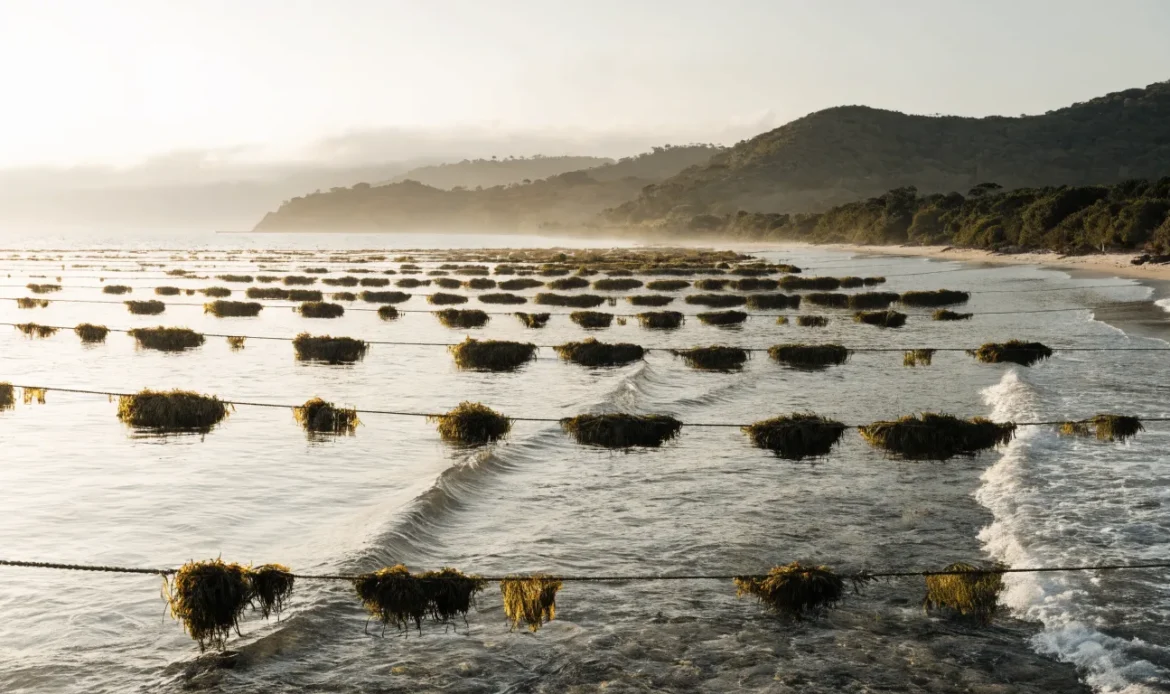
Short answer: Jamaican sea moss is a general name for seaweed products sold in and near Jamaica. It can mean several types of red or brown seaweeds that are harvested, dried, or turned into gels and powders. Species and quality vary. Use the checklist below to pick a safe product that fits your use and budget.
This guide explains what “Jamaican sea moss” can mean, the common formats you’ll see, how to check safety and quality, how to prepare it, and what to ask a seller. It is made to help you decide next steps, whether you buy a small jar or place a wholesale order.
What is “Jamaican sea moss”?
- “Jamaican sea moss” is a market name, not a single scientific species name. Sellers may use it to describe seaweed harvested in Jamaica or the wider Caribbean.
- Different seaweed species can be sold under the same trade name. Local names and harvesting methods vary by island and by harvest season.
- Seaweed is a broad group of marine plants and algae. They are used worldwide as food, thickening agents, and in supplements. Seaweed types differ in texture, color, and how they behave when cooked or turned into gel [1].
What we can say confidently:
- The term refers to seaweed-based products that are processed (for example, dried or made into gel) and sold for food or as ingredients.
- Because “Jamaican sea moss” can mean different species and processing methods, the exact product makeup and content depend on the seller and their source.
What the name cannot prove:
- The name alone does not prove the species, the harvest method, or that a product is free of contaminants. You need more details from the seller or lab testing to be sure.
Common formats and how they differ
You will commonly find sea moss sold in a few main formats. Each has trade-offs.
- Dried (raw or sun-dried): Whole pieces of seaweed dried for storage and later rehydration.
- Gel (prepared sea moss gel): Dried sea moss soaked and blended with water to make a thick gel.
- Powder: Dried seaweed ground to a powder for easy mixing.
- Capsules or tablets: Powdered seaweed put into capsules.
- Bulk/wholesale: Larger packaged quantities for retailers, manufacturers, or foodservice.
How they differ in use:
- Dried: Buy if you plan to prepare gel yourself or use the seaweed in cooking.
- Gel: Ready to add to smoothies or recipes but has moist storage needs.
- Powder: Easy to dose and carry; good for dry mixes and capsules.
- Capsules: Convenient, pre-measured, but check the capsule ingredients and dosing.
- Wholesale: Best when you need consistent supply and can request specifications.
Format comparison table
| Format | What it is | Pros | Cons | Good if you want… |
|---|---|---|---|---|
| Dried sea moss | Whole seaweed dried | Long storage when kept dry; you can inspect pieces | Needs soaking/cleaning; preparation time | Full control of prep and recipes |
| Sea moss gel | Soaked, blended sea moss | Easy to use in drinks and desserts | Refrigeration needed; shorter fresh life | Convenience for smoothies |
| Powder | Ground dried seaweed | Easy to measure; shelf-stable if dry | May be heat-treated or processed; check origin | Adding to dry mixes or capsules |
| Capsules/tablets | Powder in capsules | Convenient dosing | Higher processing; fewer clues about raw material | No-prep supplement use |
| Wholesale bulk | Large quantities of dried/powder | Better unit cost for business; specification option | Requires storage and testing plan | Selling or manufacturing with sea moss |
Safety, testing, and what to check
Seaweed can contain natural minerals like iodine and may accumulate elements from seawater. This is why checking a product carefully matters.
Key safety points:
- Iodine levels in seaweeds vary widely by species and location. High iodine intake can change how the thyroid works in some people [2][5].
- Surveys and monitoring programs show that iodine levels and composition vary by product and region. Some products may have very high iodine; others lower [3].
- Seaweed can accumulate other elements from the water. Heavy metals and microbes are possible contaminants if harvest or processing isn’t controlled.
What you can ask the seller to check:
- Certificate of Analysis (CoA) from an independent lab for heavy metals, microbiology, and iodine, if available.
- Harvest location and method (wild-harvest vs. farmed).
- Processing steps (sun-dried, air-dried, heat-treated).
- Any food-safety certifications or third-party audits the supplier holds.
What a seller’s claim cannot prove by itself:
- A label that says “clean” or “natural” does not prove absence of contaminants. Only lab testing can show specific levels.
- Country or island name on a package does not prove species identity or testing unless backed by documentation.
Relevant guidance sources:
- Academic and public health reviews stress checking iodine content and not assuming uniform nutrient levels across seaweeds [2][5].
- General overviews of seaweed as food and ingredient note that composition is variable and buyer checks are important [1].
- Consumer-safety organizations recommend caution with sea moss dietary supplements because of variability in composition and labeling [4].
How to choose Jamaican sea moss: a practical checklist
Use this checklist when you evaluate a product or a seller. Check as many boxes as you can. Missing items are questions you should ask.
- [ ] Format matches my use: dried, gel, powder, or capsule.
- [ ] Seller tells me the harvest region and gives a basic description of how it was processed.
- [ ] Seller can provide a third-party lab report (CoA) or test results for heavy metals and microbes, on request.
- [ ] Seller can provide iodine test results or a statement about iodine testing.
- [ ] Packaging lists clear storage instructions and a best-practice handling method.
- [ ] For wholesale purchases: the supplier offers product specs, lot traceability, and minimum order terms I can meet.
- [ ] I understand how to prepare or store the format I am buying (e.g., gel refrigeration).
- [ ] I have compared at least two suppliers on transparency and testing.
- [ ] If I have a medical condition (for example, thyroid issues), I will ask a clinician before adding seaweed products to my diet.
If several boxes are unchecked, ask the seller for details before buying. If a seller refuses to answer basic questions about testing or origin, consider a different supplier.
How to prepare common formats (simple, safe steps)
These are basic, commonly used preparation steps. Follow a seller’s specific instructions when they provide them.
Dried sea moss (basic prep):
- Inspect pieces for debris or unusual odor.
- Rinse under cool running water to remove sand and salt.
- Soak in clean water for several hours or overnight until softened. Change water if very salty.
- Rinse again, remove any dark or slimy pieces.
- To make gel: simmer briefly or blend with fresh water, then refrigerate. Do not store at room temperature.
Sea moss gel (store-bought):
- Keep refrigerated and check the seller’s recommended storage time.
- Use clean utensils to scoop gel from the container.
- Freeze in small portions if you want longer storage; follow seller guidance.
Powder or capsules:
- Store in a cool, dry place.
- Check label for any added ingredients and suggested serving size.
- If you plan to cook with powder, be aware heat can change texture and color.
Safety notes:
- Use clean water and clean utensils.
- If you notice off smells, mold, or unexpected color changes, do not use the product.
Buying wholesale or as a business
If you need Jamaican sea moss for retail or manufacturing, plan for documentation and testing.
What to ask for:
- Product specifications: moisture content, grade, particle size (for powder), or grade of dried pieces.
- Traceability: harvest date, lot number, and harvest area.
- Certificates of Analysis: tests for heavy metals, microbiology (pathogens), and iodine if you plan to market nutrition content.
- Export/import documents and any industry certifications you require.
Logistics considerations:
- Storage capacity for dry bulk or refrigerated gel.
- Lead times for harvest seasons and shipping.
- Sample testing before placing a large order.
If you need supplier support, you can reach out through our wholesale page: /wholesale/ or contact us to discuss specs: /contact/.
Questions to ask before you buy (quick script)
Here is a short script you can use when you contact a seller:
- Which species or species mix is in this product?
- Where and when was it harvested?
- How was it processed (dried, sun-dried, heat-treated)?
- Do you have a recent Certificate of Analysis? Can I see tests for heavy metals and iodine?
- What are your storage recommendations and shelf handling?
- Do you sell samples or small quantities first?
If a seller cannot answer those questions, treat the purchase as higher risk.
What reliable information cannot tell you
Even with test results, some uncertainty remains:
- A single lab report shows results for that lot at that time. It does not guarantee every future lot will have the same results.
- Species listed by the supplier may be correct, but species identity is best confirmed by a qualified lab if species matters for your use.
- Some monitoring programs report wide variation in iodine and mineral content across product samples. Consumers should not assume uniform content across brands or harvests [3][5].
Useful next steps
- If you want a short primer on seaweeds and food uses, see our learning hub: /learn/.
- If you are ready to compare formats and samples, visit our shop: /shop/.
- For business buyers who want specifications and bulk pricing, start here: /wholesale/.
- For general questions or sample requests, contact us: /contact/.
- Return to our home page for more resources and links: /.
Conclusion
“Jamaican sea moss” is a useful marketplace label for seaweed products tied to Jamaica and the Caribbean. Because the term covers different species and processing styles, the best next step is to decide which format fits your use and to ask the seller for clear information. Check for lab testing, handling instructions, and traceability. If you need help interpreting a Certificate of Analysis or choosing a format, contact a supplier or a food-safety lab before buying in large quantities.
Continue reading
Frequently asked questions
Is Jamaican sea moss one species?
No. “Jamaican sea moss” is a market name and may include different seaweed species. Ask the seller for species or a description of the raw material.
Can I trust labels that say “wild-harvested” or “organic”?
Labels can help, but they don’t substitute for testing or traceability. “Wild-harvested” describes a method, while “organic” requires certification. Ask for documentation or test results if those points matter to you.
Does sea moss always contain lots of iodine?
Iodine content varies widely by species and location. Some seaweeds have high iodine levels. If iodine is a concern, ask for iodine test results or choose products tested for iodine [2][3][5].
How long does sea moss gel last?
Storage time varies by how the gel was made and stored. Follow the seller’s instructions. If you make gel at home, store it in the refrigerator and use clean utensils. Freezing small portions is a common method to extend usability.
Should I take sea moss supplements if I have a thyroid condition?
Talk with a qualified clinician before using seaweed products if you have thyroid concerns. Seaweed can affect iodine intake and thus influence thyroid management [2][5].
Are lab tests necessary?
Lab tests (CoAs) provide specific information on contaminants and minerals. They are the best way to verify a product’s safety profile for heavy metals, microbes, and iodine.
References
- [1] Harvard T.H. Chan School of Public Health, “Seaweed.” https://nutritionsource.hsph.harvard.edu/seaweed/
- [2] Smyth PPA. “Iodine, Seaweed, and the Thyroid.” European Thyroid Journal, 2021. https://pmc.ncbi.nlm.nih.gov/articles/PMC8077470/
- [3] Food Standards Australia New Zealand, “Survey of iodine levels in seaweed and seaweed containing products,” updated 2025. https://www.foodstandards.gov.au/science-data/monitoring-safety/surveyofiodinelevels
- [4] Operation Supplement Safety, “Sea Moss in Dietary Supplements.” https://www.opss.org/article/sea-moss-dietary-supplements
- [5] Blikra MJ et al. “Consequences of acute and long-term excessive iodine intake: A literature review focusing on seaweed as a potential dietary iodine source.” 2024. https://doi.org/10.1111/1541-4337.70037