
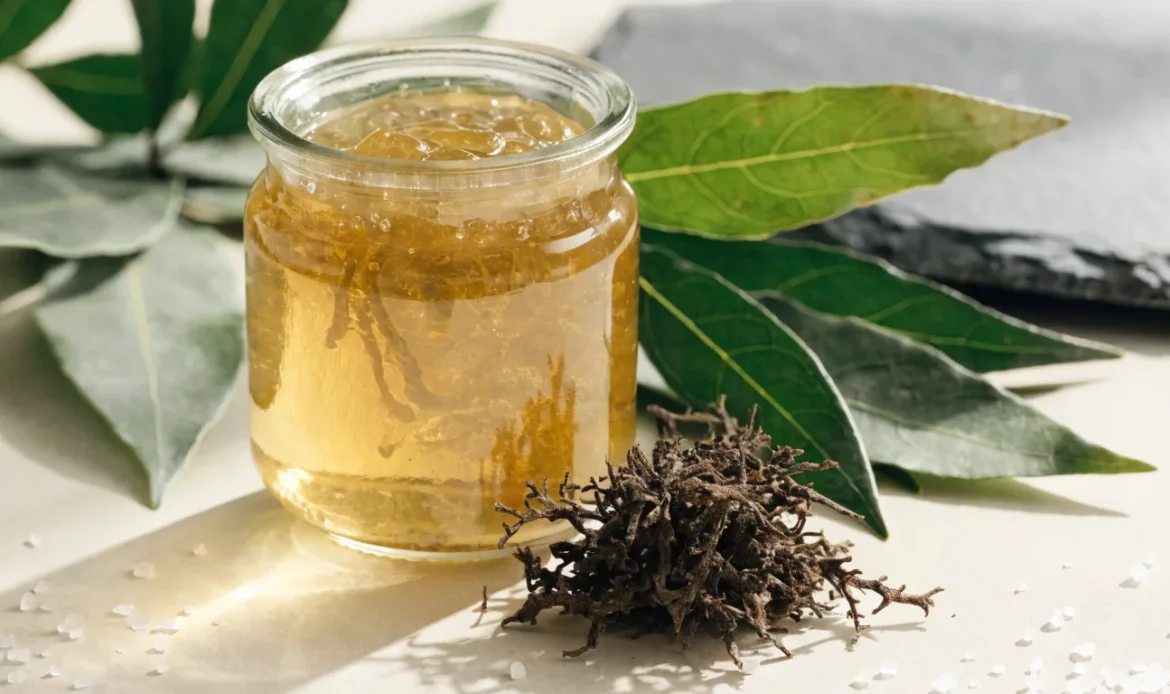
Short answer: Sea moss and bladderwrack are two different kinds of edible seaweed. People buy them as food, powder, gel, or capsules. They are often mixed together, and sometimes burdock root is added. Each format has trade-offs. Check labels, testing, and storage to pick what fits your needs.
What are sea moss and bladderwrack?
Sea moss (often called Irish sea moss) and bladderwrack are types of marine algae. They come from different plant groups. Irish sea moss commonly refers to Chondrus crispus. Bladderwrack often refers to Fucus vesiculosus. Both grow in cold coastal waters.
They are used as food ingredients and in supplements. Makers use them for texture, flavor, and to supply a range of minerals found in sea plants. Exact content varies by species, where the plants grew, and how they were processed [1].
Sea moss, bladderwrack, and burdock root are sometimes blended. Burdock root is a land plant root. It has an earthy flavor and is used as an herbal ingredient in teas and supplements. When combined, the mix is a blend of sea and land plant components. The blend’s exact make-up depends on the product label.
Common formats and what they mean
Below are common ways you will see these ingredients sold. Each format changes how you use them and how they store.
- Raw or dried seaweed
- Whole pieces. Often dried for storage. You rehydrate them before cooking.
- Sea moss gel
- Made by soaking cleaned sea moss, then blending with water into a thick gel. Used in smoothies and recipes.
- Powder
- Dried and milled seaweed. Easy to add to drinks, shakes, or recipes.
- Capsules or tablets
- Powder put in a pill form. Designed for convenience.
- Tinctures or liquid extracts
- Concentrated liquid forms. Often made with an alcohol or glycerin base.
- Blended supplements (sea moss + bladderwrack ± burdock root)
- Pre-mixed powders, capsules, or teas that list multiple ingredients on the label.
Each format changes convenience, taste, shelf needs, and the way you check quality.
How sea moss, bladderwrack, and burdock root are used together
Makers combine these three for several reasons:
- Flavor and texture balance. Sea plants add briny notes. Burdock adds earthiness.
- Ease of use. Powder blends and capsules offer a simple daily dose.
- Product variety. Blends allow makers to label a “sea + root” product for different recipes.
What a blend does not prove is any specific nutrient amount or medical effect. Labels and tests are the only reliable sources for numbers, and even then, values can vary by batch and harvest site.
What you can and cannot know from a label
What you can often find:
- Ingredient list.
- Serving size and number of servings.
- Claims like “dried,” “powder,” or “gel.”
What you cannot prove from the label alone:
- Exact iodine or mineral content per batch (unless a certificate or detailed test is shown).
- Whether heavy metals or contaminants were tested for, unless the product shows a third-party report.
- The exact location and time of harvest (many labels give a general origin, but not precise data).
- Long-term storage or handling quality during shipping.
If these details matter to you, ask the seller for a Certificate of Analysis (CoA) or third-party test results. Wholesale buyers should request batch-level CoAs before purchase. Consumers can ask customer service for testing information.
Safety points to check before buying
Seaweed can have varying levels of iodine. Iodine is important for the thyroid. It can be high in some seaweeds and low in others. Levels vary by species and where the seaweed grew [2]. Surveys and reviews have found wide variability in iodine and other minerals across seaweed products [3][5]. This means labels may not tell the full story unless testing is available.
Other safety checks:
- Heavy metals and pollutants. Sea plants can absorb metals from water. Testing helps show if a product is within safe limits.
- Additives and preservatives. Check for extra ingredients you might want to avoid.
- Allergens. Seaweed products can be processed in facilities with allergens. Check warnings.
- Dosage instructions. Follow the product label. If unsure, ask a health professional.
- Interactions. People on certain medications or with thyroid issues should talk to a health provider before using seaweed products.
Operation Supplement Safety highlights that sea moss and related products can vary in quality and labeling. Look for clear testing and transparent sourcing information [4].
Practical decision checklist
Use this checklist to compare products and formats. It helps you choose what matches your need.
Checklist: deciding which format to buy
- Purpose
- Cooking: raw/dried pieces or gel are best for texture.
- Smoothies or recipes: gel or powder.
- Convenience: capsules or pre-measured powder.
- Wholesale resale: seek batch CoAs and clear labeling.
- Label clarity
- Are all ingredients listed clearly?
- Is the species named (e.g., Chondrus crispus, Fucus vesiculosus)?
- Testing and safety
- Is a Certificate of Analysis available?
- Does the seller state tests for iodine, heavy metals, or contaminants?
- Storage needs
- Does it need refrigeration after opening (e.g., gels)?
- What is the recommended shelf method?
- Serving and dosing
- Is a serving size shown?
- Are usage instructions clear for cooking or supplement use?
- Additives
- Any preservatives, sweeteners, or binders listed?
- Any allergens or cross-contact warnings?
- Cost and supply
- For regular use, is the format affordable and easy to store?
- For wholesale, ask about minimums and lead time.
- Support
- Can you contact the seller with questions?
- Is customer service responsive to test or origin questions?
Use these checks for each product you review. If a seller cannot answer basic safety or testing questions, consider a different source.
Format comparison table
| Format | Good for | Checks to make |
|---|---|---|
| Raw / Dried pieces | Cooking and rehydration | Species name, clean appearance, soak instructions |
| Gel (prepared) | Smoothies, dessert texture | Storage time, refrigeration, ingredient list |
| Powder | Mixing in drinks and recipes | Grind fineness, added fillers, storage in dry place |
| Capsules | Convenience, travel | Capsule ingredients, serving size, fillers |
| Tincture / liquid | Small doses, liquid blends | Solvent used (alcohol/glycerin), preservatives |
| Blended mixes (sea moss + bladderwrack + burdock) | Convenience, multi-ingredient product | Full ingredient list, ratios not guaranteed without test, CoA availability |
This table helps you match a format to a use. It also points to the checks that are most important for each format.
How to prepare common formats safely
Simple preparation steps:
- Rehydrating dried seaweed
- Rinse to remove sand or debris.
- Soak in clean water until soft.
- Cut or chop as your recipe needs.
- Making a basic sea moss gel (home method)
- Rinse dried sea moss thoroughly.
- Soak in water 4–12 hours until soft.
- Drain and rinse.
- Blend with fresh water until smooth. Adjust water for desired thickness.
- Store in a clean container in the fridge. Use within the time the label or recipe suggests.
- Using powder
- Stir into cold or warm liquid. Avoid prolonged heat if you want to preserve texture.
- Keep powder sealed and dry.
- Taking capsules
- Follow the label dose.
- Take with water unless stated otherwise.
Do not assume homemade preparations are sterile. Follow common food-safety rules. If you have a compromised immune system or special health needs, check with a health professional before use.
Storage and shelf life basics
Storage varies by format:
- Dried products: cool, dry place. Keep sealed from moisture.
- Gels and fresh products: usually refrigeration after opening.
- Powders and capsules: sealed in a dry place, away from heat and sunlight.
Labels should state shelf-life and storage. If not, ask the seller. For wholesale purchases, ask about unopened shelf life and recommended storage to avoid spoilage.
What testing and documentation to ask for
If safety matters to you, ask for:
- Certificate of Analysis (CoA) for the batch you are buying.
- Tests for iodine, heavy metals, and microbial contamination.
- Date of testing and lab name.
- Information on where and how the seaweed was harvested and processed (if available).
Third-party tests from accredited labs add trust. A CoA that matches the batch number is more useful than a generic report.
Questions to ask sellers (quick list)
- What species are in this product?
- Where and when was it harvested?
- Do you have batch-level CoAs?
- What tests were done (iodine, metals, microbes)?
- Are there any additives or preservatives?
- How should I store this product after opening?
- What is the recommended serving size?
If a seller cannot answer these basic questions, consider a different one.
Useful next steps
- If you want a deeper guide on seaweed basics, see our learn hub: /learn/.
- Ready to view products and formats? Check our shop for available formats and descriptions: /shop/.
- If you buy in bulk, contact our wholesale team to discuss testing and supply: /wholesale/.
- For general site navigation or questions, return to our home page: /.
- If you need direct help, reach out through our contact page: /contact/.
These links point you to where you can read more, shop, or get help.
Conclusion
Sea moss and bladderwrack are two distinct seaweeds sold in many formats. They are often blended with other botanicals like burdock root. Each format has trade-offs for taste, convenience, and storage. The most important checks are clear lab tests, ingredient lists, and storage instructions. If you have health conditions or take medication, consult a healthcare professional before using seaweed products. Use the decision checklist and the visual brief above to pick a product that fits how you plan to use it.
Continue reading
Frequently asked questions
Are sea moss and bladderwrack the same thing?
No. They are different types of seaweed. Sea moss often refers to Chondrus crispus. Bladderwrack is usually Fucus vesiculosus. They have different looks and may have different nutrient profiles.
What is “Irish sea moss”?
Irish sea moss usually means Chondrus crispus. The term comes from a region where the seaweed was historically gathered. Many products call Chondrus crispus “Irish moss.” Check the ingredient list for the species name.
Why is iodine a concern with seaweed products?
Seaweed often contains iodine. Levels vary by species and location. High iodine intake can affect the thyroid for some people. Because levels vary widely, testing and labels matter. Consult a healthcare provider if you have thyroid issues [2][5].
Is burdock root the same as sea moss or bladderwrack?
No. Burdock root is a land plant root. It is sometimes added to blends for flavor or as an herbal ingredient. It is not a seaweed.
Can I take sea moss or bladderwrack with medication?
Some seaweed components, especially iodine, can interact with thyroid medicines or other treatments. Ask a healthcare provider if you take medication. Do not rely solely on product labels for interactions.
How can I tell if a product was tested for safety?
Look for a Certificate of Analysis (CoA), a link to lab results, or a third-party test mentioned on the label or product page. Contact customer service if that information is missing. For wholesale buyers, require batch-level CoAs.
References
- Harvard T.H. Chan School of Public Health, “Seaweed.” https://nutritionsource.hsph.harvard.edu/seaweed/
- Smyth PPA. “Iodine, Seaweed, and the Thyroid.” European Thyroid Journal, 2021. https://pmc.ncbi.nlm.nih.gov/articles/PMC8077470/
- Food Standards Australia New Zealand, “Survey of iodine levels in seaweed and seaweed containing products,” updated 2025. https://www.foodstandards.gov.au/science-data/monitoring-safety/surveyofiodinelevels
- Operation Supplement Safety, “Sea Moss in Dietary Supplements.” https://www.opss.org/article/sea-moss-dietary-supplements
- Blikra MJ et al. “Consequences of acute and long-term excessive iodine intake: A literature review focusing on seaweed as a potential dietary iodine source.” 2024. https://doi.org/10.1111/1541-4337.70037