
Short answer first:
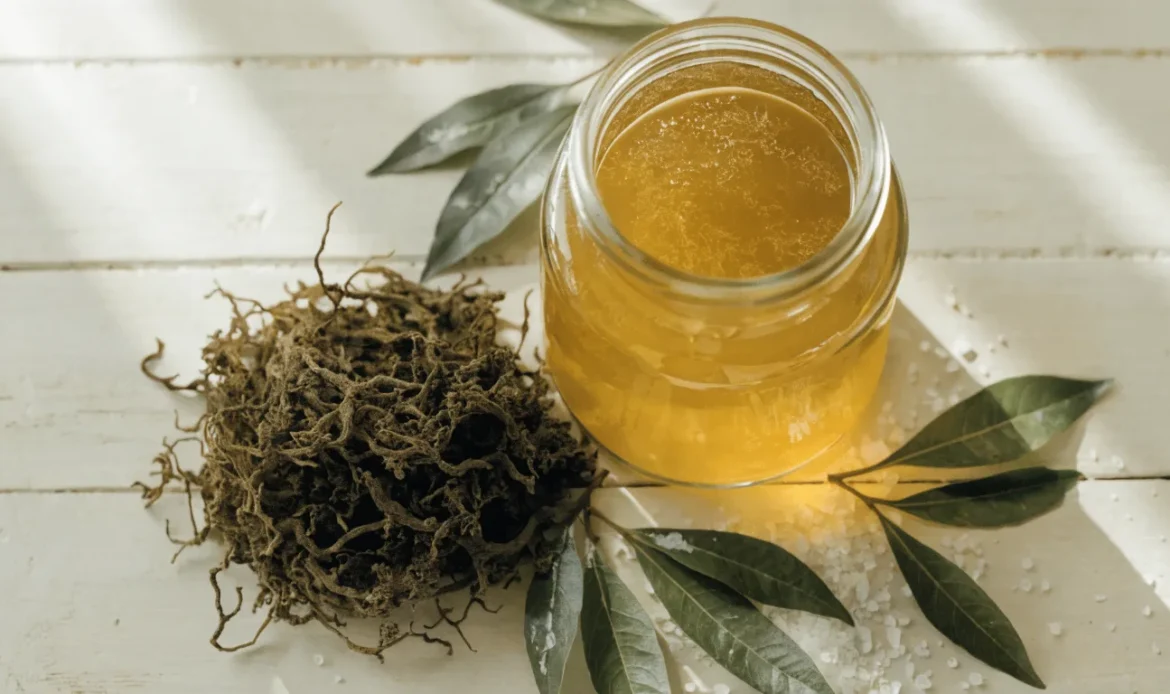
Sea moss is a type of seaweed product. Shilajit is a natural mineral-rich resin from rocks. People often take them as supplements or foods. They can be combined, but you should check labels, possible iodine levels (from seaweed), and talk with a health professional if you have health conditions or take medicines.
Why this short answer? Sea moss and shilajit are different things. Each has many product formats. They are not magic. The best next step is to learn how each is made, how it is sold, and what to check before buying or mixing them.
What are sea moss and shilajit?
Sea moss
- Sea moss is a common name for several kinds of red seaweed. It is used as food and in supplements. People turn it into gels, powders, dried pieces, and capsules.
- Seaweed can be a source of nutrients like iodine. The levels of iodine and other minerals can vary a lot between seaweed types and products [1] [2].
Shilajit
- Shilajit is a dark, sticky resin that seeps from certain mountain rocks. It is used in traditional systems of medicine and now appears in modern supplements.
- It is sold as raw resin, purified resin, powders, or capsules. The word “shilajit” describes the natural substance, not a single standardized ingredient.
Lion’s mane (brief)
- Lion’s mane is a mushroom often used in foods and supplements. Some people combine lion’s mane with sea moss and shilajit in blended formulas or stacks.
- As with shilajit and sea moss, forms include powders, extracts, and capsules.
How people use them together
- People mix sea moss (often as a gel or powder) with shilajit powder or small amounts of resin. They also find products that include lion’s mane with these two.
- Common uses are as an ingredient in smoothies, capsules, or blended supplement formulas.
- There is little standardization across products. This means one brand’s mix can be very different from another’s.
This guide focuses on clear facts about formats, safety checks, and buying decisions. It does not promise health results.
Formats: How these items are sold and how that matters
Sea moss formats
- Raw dried sea moss: Pieces or sheets. Buyers must prepare and soak them. This gives control over preparation.
- Sea moss gel: Prepared by blending soaked sea moss with water. Gel is easy to mix into foods. Gel may include other ingredients; read labels.
- Powder: Dried sea moss turned into powder. Good for capsules or mixing into drinks.
- Capsules or tablets: Convenient, but check serving size and other ingredients.
Shilajit formats
- Raw or semi-raw resin: Sticky and dark. Often dissolved in hot water or milk in traditional uses.
- Purified resin or processed resin: Sold by supplement companies after a purification step.
- Powder or extract: Made from resin or extracts. Used in capsules and mixes.
- Capsules: Convenient and dose-controlled when made by reputable makers.
Lion’s mane formats
- Dried mushroom, powders, extracts, or capsules. Check whether a product uses fruiting body or mycelium; these are not the same raw material.
Why format matters
- Preparation effort: Raw sea moss needs soaking and rinsing. Gel is ready-to-use. Resin can be messy.
- Transparency: Powders and capsules should list all ingredients. Gel and raw forms may hide added sweeteners or preservatives.
- Shelf needs: Some forms require refrigeration; others do not. Labels should say how to store them.
Safety points to check before buying or mixing
Seaweed and iodine
- Seaweed can contain high or variable amounts of iodine. Iodine affects the thyroid. If you have a thyroid condition, check with a clinician before using seaweed products regularly [1] [2].
- Studies and surveys show seaweed iodine levels vary widely among species and products [3] [5]. That means one product might have little iodine and another a lot.
Product testing and claims
- Look for products with clear ingredient lists. If a seller claims testing, ask for the test report. Some sellers provide third-party lab reports. Third-party testing helps confirm what is in the product.
- Be cautious of vague claims like “doctor-formulated” or “traditional” without explanation of processing or testing.
Contaminants and purity
- Sea-derived products can pick up salts and minerals from the water. This can include beneficial minerals and, in some cases, unwanted substances. Reliable vendors test for contaminants and share results.
- Shilajit raw sources can vary. Purification matters. Ask how a product was processed and whether tests were done for heavy metals or other contaminants.
Interactions and medical concerns
- If you take medicines or have health conditions, talk to a clinician before combining supplements. For example, regular high iodine intake can affect thyroid medication needs [2] [5].
- Do not stop prescribed medicines. Do not replace care. Ask a clinician about combining supplements with medicines.
Dosing and unknowns
- There is no universal dose for many of these products. Labels may suggest serving sizes. Those are manufacturer guidelines, not guarantees.
- When combining multiple supplements, totals of active minerals or compounds may rise. Track ingredient amounts if you combine capsules, powders, and gels.
Regulatory landscape
- In many places, supplements are regulated differently from medicines. That means oversight on claims, quality, and testing may be less strict than for drugs.
- Operation Supplement Safety provides resources on sea moss in dietary supplements and advises caution with untested or poorly labeled products [4].
Practical checklist: Should you combine sea moss and shilajit?
Use this checklist to decide if you should buy or mix them. Mark yes or no, and follow the prompts.
- Do you have thyroid disease or take thyroid medicine?
- Yes: Talk to your clinician before regular seaweed use because of iodine [2] [5].
- No: Proceed with other checks.
- Do you take prescription medicines or have chronic health conditions?
- Yes: Consult a clinician about possible interactions.
- No: Continue.
- Does the product list all ingredients and amounts?
- Yes: Good. Save the label or photo for reference.
- No: Ask the seller for a full ingredient list and serving size.
- Does the vendor provide third-party lab test results (e.g., for iodine or contaminants)?
- Yes: Review the report for heavy metals and iodine levels if it is present.
- No: Ask for test reports or choose a different vendor.
- Is the sea moss clearly labeled with species or harvest form (dried, gel, powder)?
- Yes: That helps you know what you are buying.
- No: Ask for clarification.
- Is the shilajit described as purified and is the purification explained?
- Yes: Read the process description and ask about testing.
- No: Ask for details on how it was processed and tested.
- Are you combining multiple products that together increase mineral intake?
- Yes: Add up mineral sources (iodine, salts) and check with a clinician if totals seem high.
- No: Keep monitoring label information.
- Do you prefer a specific format for ease of use (gel, powder, capsule)?
- Note your preference and check storage and preparation instructions.
Practical actions after the checklist
- Start small when trying a new product or combo. Watch for side effects.
- Keep records: product name, batch number, serving size, and how you felt.
- If unsure, buy single-ingredient products first to test tolerance before trying blends.
A simple comparison table: formats and trade-offs
| Format | Ease of Use | Control over ingredients | Shelf/Storage | Best if… |
|---|---|---|---|---|
| Dried sea moss | Medium (needs prep) | High (you prepare it) | Long if dry | You want control and DIY prep |
| Sea moss gel | Easy | Medium (may include extras) | Often needs refrigeration | You want ready-to-use product |
| Sea moss powder | Easy | High | Shelf stable | You want to add to smoothies or capsules |
| Sea moss capsules | Very easy | Low-Medium (depends on label) | Shelf stable | You want convenience |
| Raw shilajit resin | Low (messy) | Medium | Store per label | You use traditional methods |
| Purified shilajit/powder | Easy | Medium-High | Shelf stable | You want cleaner-feeling products |
| Shilajit capsules | Very easy | Low-Medium | Shelf stable | You want dose control and convenience |
| Lion’s mane extract/powder | Easy | Depends on extract type | Shelf stable | You want mushroom in combos |
Note: This table shows practical trade-offs. It is not a safety rating. Check labels, test reports, and health guidance.
How to read labels and ask sellers
What to look for on a label
- Full ingredient list, including fillers, binders, or added sugars.
- Serving size and number of servings per container.
- Form of the ingredient (e.g., dried sea moss, sea moss powder, shilajit resin).
- Storage instructions.
- Batch or lot number — useful if you need to contact the seller.
Questions to ask the seller
- Where do you source this sea moss/shilajit/lion’s mane? (Accept a clear answer; vague origin is a red flag.)
- Do you have third-party lab test results for contaminants or iodine? Can I see them?
- How was the shilajit processed and purified?
- Are there any added ingredients or preservatives?
- What is the suggested serving size and why?
What a transparent answer looks like
- The seller shares test reports or directs you to a lab result. They explain processing and storage. They give clear ingredient lists.
Preparation tips and gentle use
Sea moss preparation quick guide
- If using dried sea moss: rinse thoroughly, soak in clean water until soft, then blend with water to make a gel. Store per seller instructions.
- If using gel: shake or stir before using. Check for added sweeteners or preservatives.
- If using powder: measure with a spoon and mix into liquids or recipes.
- Start with small servings to see how you feel.
Shilajit preparation quick guide
- Resin can be dissolved in warm water or a beverage. Use small amounts. Follow seller instructions.
- If using powder or capsules, follow the labeled serving size and check for added ingredients.
Storage and signs to discard
- Follow label storage directions.
- If a product smells off, changes color, or grows mold, discard it.
- Keep batch info and purchase receipt in case you need to contact the seller.
Combining with lion’s mane
- People add lion’s mane to blends for convenience or taste.
- Lion’s mane comes in different extract strengths and forms. Read labels.
- When combining three ingredients, track each serving to monitor total intake of active components and minerals.
What information cannot be proven from labels alone
- Labels rarely tell you exact mineral content per batch unless a test is done and reported. For seaweed, iodine content can vary by species and harvest location [3].
- A claim like “pure” or “natural” does not prove absence of contaminants. Only testing can confirm that.
- Traditional use does not mean a product is standardized or tested. Ask for data.
Where to go next: helpful guides and formats
If you want to learn more about seaweed basics and iodine:
- See the Harvard T.H. Chan School of Public Health overview on seaweed for general nutrient context and cautions [1].
If you want help understanding iodine risks and the thyroid:
- Read the European Thyroid Journal review on iodine and seaweed [2]. It explains why iodine amounts matter.
For product safety and supplement guidance:
- Operation Supplement Safety explains concerns and safe practices for sea moss in supplements [4].
If you are shopping:
- Visit our shop to see formats and ask questions before buying: /shop/
- If you are buying in bulk or reselling, check wholesale options: /wholesale/
If you want more learning resources on our site:
- Explore our learning hub for format guides and preparation tips: /learn/
If you want to contact us with vendor questions:
- Use our contact page to ask about lab reports, sourcing, or product formats: /contact/
Back to our home page for overview and links: /
Conclusion
Sea moss, shilajit, and lion’s mane are distinct natural products sold in many formats. People use them together or separately. The most useful steps are simple: read labels, ask sellers for test reports, check iodine if you use seaweed regularly, and talk with a clinician if you have health conditions or take medicines. Start small, keep records, and choose formats that match how much preparation you want. Use the checklist and table here to guide your next purchase or experiment.
Further reading and resources are on our learning hub: /learn/. If you are ready to shop or request lab details from vendors, visit /shop/ or contact us at /contact/. For bulk or business purchases, see /wholesale/. Return to our home page for more: /
Continue reading
Frequently asked questions
Can I mix sea moss, shilajit, and lion’s mane safely every day?
Many people mix them. Safety depends on the products and your health. Check labels, test reports, and iodine content for sea moss. Talk to a clinician if you have health conditions or take medicines.
How can I know how much iodine is in a sea moss product?
The label rarely lists iodine unless the maker tests for it. Ask the seller for third-party lab results that list iodine. Surveys show iodine varies widely in seaweed products [3] [5].
Is shilajit always safe to take?
Shilajit quality varies. Purification and testing matter. Ask how the shilajit was processed and whether tests for contaminants were done. If you have health concerns, consult a clinician.
Which form is best if I want convenience?
Capsules and powders are the most convenient. Gels are easy for recipes. Raw dried sea moss and raw resin give you the most control but need more prep.
Should I buy combinations that include all three ingredients?
Combination products can be convenient. But they make it harder to control dose and to test single-ingredient tolerance. Consider trying single-ingredient products first.
What should I do if I feel unwell after trying a product?
Stop using the product. Save the product container or label. Contact a clinician, especially if symptoms are severe. Report adverse events to the seller and relevant local authorities if needed.
References
- Harvard T.H. Chan School of Public Health, “Seaweed.” https://nutritionsource.hsph.harvard.edu/seaweed/
- Smyth PPA. “Iodine, Seaweed, and the Thyroid.” European Thyroid Journal, 2021. https://pmc.ncbi.nlm.nih.gov/articles/PMC8077470/
- Food Standards Australia New Zealand, “Survey of iodine levels in seaweed and seaweed containing products,” updated 2025. https://www.foodstandards.gov.au/science-data/monitoring-safety/surveyofiodinelevels
- Operation Supplement Safety, “Sea Moss in Dietary Supplements.” https://www.opss.org/article/sea-moss-dietary-supplements
- Blikra MJ et al. “Consequences of acute and long-term excessive iodine intake: A literature review focusing on seaweed as a potential dietary iodine source.” 2024. https://doi.org/10.1111/1541-4337.70037