
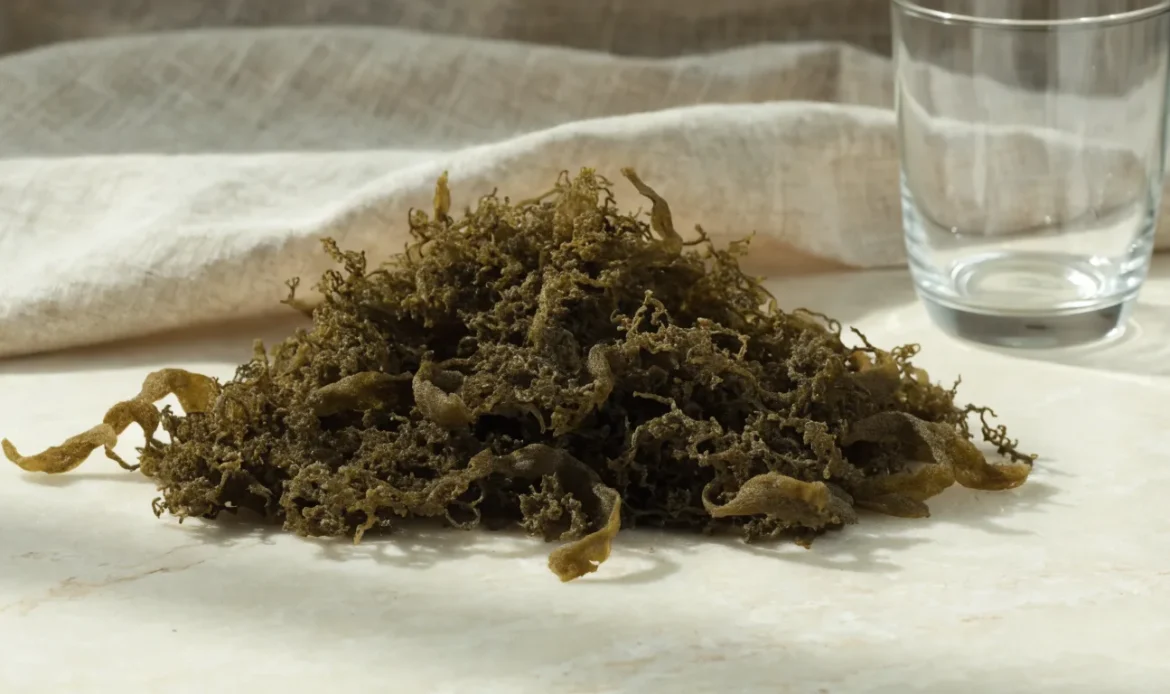
Short answer: Seamoss green means sea moss that looks green. The green color comes from the plant’s pigments and from growing conditions. Color alone does not prove safety, species, or nutrition. Read on to learn what green can mean, what you can check, and how to decide which seamoss to buy or use.
What “seamoss green” means
Seamoss green is a simple, descriptive name. It tells you the sea moss appears green when you look at it. People use “seamoss green” to describe raw branches, dried strands, powders, or gels that show a green tone.
- The label “green” does not name a single species. Many seaweeds can look green.
- The color may change with drying, soaking, or cooking.
- Color is one clue. It is not a full test of quality or safety.
If your first question is “Is green seamoss better?” read the safety and buying sections below. Color is one part of the picture, not the whole picture.
Why seamoss can be green
Seaweeds carry different pigments. Those pigments affect color. The main points are:
- Chlorophyll gives green tones. It is the same green pigment found in many plants. Chlorophyll is common in seaweeds that grow near light.
- Other pigments can mix with chlorophyll. Carotenoids can add yellow or brown. Red pigments can override green in some species, so a seaweed may look red, purple, or brown.
- Light, water depth, and location affect pigment levels. Seaweed at shallow depth with more light often shows greener colors. Deeper water or different light can shift color.
- Surface growth or small attached algae can change appearance. Tiny organisms or films can make a piece look greener or duller.
- Drying and storage change appearance. Freshly harvested seaweed may darken, fade, or shift color as it dries.
The Harvard T.H. Chan School of Public Health covers the wide range of seaweed types and the role of pigments in giving different colors [1].
What seamoss green might tell you — and what it cannot prove
What green suggests:
- The piece likely has chlorophyll or was exposed to light.
- It may have been harvested in shallower water or from a species that contains green pigments.
- It may have been dried or handled in a way that preserved green color.
What color alone cannot tell you:
- Exact species or strain. Different species can look similar.
- Safety from contaminants such as heavy metals or bacteria.
- Exact nutrient content or iodine level.
- Whether the product was harvested responsibly or legally.
To learn about safety risks that are not visible, see the Safety & Iodine section below. Scientific surveys show that iodine and other components can vary widely across seaweed products and that testing is needed to know levels [2][3][5].
Common seamoss formats and how color shows up in each
Seamoss green appears in several product formats. Each format gives different clues and different needs for checks.
- Raw / wet branches: These are closest to how the seaweed looked at harvest. Color may be vivid. Check smell, texture, and visible fouling. Raw pieces can be perishable.
- Dried whole: Drying concentrates solids and can darken or dull color. The green may look olive or brown-green.
- Dried powder or flakes: Color is mixed into a finer form. Powder color may look brighter or more muted depending on drying and milling.
- Gel: Gel is usually made by soaking and blending dried seamoss. The gel color reflects both original color and processing (how long it was soaked, water quality, blending heat).
- Capsules or tablets: Color is not visible, so you must rely on supplier information and labels.
Each format has different storage needs and different points for safety checks. For example, raw seamoss needs quick refrigeration, while dried seamoss needs dry, cool storage.
Safety and iodine: what to check and why
Seaweeds can hold high levels of iodine and other minerals. These can be helpful in diet in small amounts and can be risky in larger amounts. Important points:
- Iodine content varies a lot across seaweed species and batches. Some seaweeds have much more iodine than others [2][5].
- Surveys show large differences in iodine levels in seaweed and seaweed products. This means you cannot assume a product has a safe iodine level without testing or clear supplier data [3].
- Excess iodine can affect the thyroid. Scientific reviews explain the possible consequences of too much iodine and recommend caution with high-iodine foods [5].
- Supplements and products made from sea moss should disclose testing or provide guidance for safe serving sizes. Consumer guidance on supplements notes that product contents and safety vary and that buyers should look for testing or third-party review [4].
What to ask a seller or check on a product label:
- Does the product have a tested iodine value or a range?
- Has the product been tested for heavy metals and microbiological safety?
- Is there a safety or handling guide for the format you are buying?
- Is there a harvest date, batch number, or production date?
Even if a product looks clean and green, only testing or verified supplier data can confirm iodine and contaminant levels. Where data are lacking, use conservative serving sizes and consult a health professional about iodine if you have thyroid concerns.
References that support these statements include a public health overview of seaweed [1], a review on iodine and seaweed [2], a survey of iodine levels in products [3], a review of seaweed iodine risks [5], and consumer guidance about sea moss products [4].
How to inspect seamoss green before you buy
If you can see or touch the product before buying, check these things:
- Color and uniformity: Is the green even, or are there suspicious dark patches or white film? Uneven color can mean mixed lots or surface growth.
- Smell: Fresh seaweed has a sea or ocean smell. A strong rotten odor or sour smell is a red flag.
- Texture: Dried sea moss should feel dry and firm, not wet or slimy. Wet or slimy texture can indicate poor drying or spoilage.
- Visible debris: Look for sand, shells, or bits of other plants. Some debris is common, but heavy fouling or too many foreign bits reduces value.
- Packaging information: Look for harvest date, drying method (sun-dried, air-dried, oven-dried), batch number, and testing statements.
If you buy online, request photos of the actual batch and any lab reports for iodine or contaminants.
Practical decision checklist for buyers
Use this checklist when choosing seamoss green for personal use or for resale. It helps you ask the right questions and compare options.
| Decision point | Why it matters | Good sign to look for |
|---|---|---|
| Format needed | Different formats suit different uses (raw, dried, powder, gel) | Choose format that matches your intended use and storage ability |
| Visible color and appearance | Color tells you about pigments and handling but not safety | Even green/olive color without odd films; natural variation may exist |
| Smell and texture | Spoilage and poor drying give off-odors or sliminess | Mild ocean smell; dry strands for dried product |
| Supplier testing | Iodine and contaminants vary and can be high | Published lab results or test statements for iodine and heavy metals |
| Batch labeling | Traceability helps with recalls or questions | Batch number, harvest/pack date, and origin details (if available) |
| Storage & packaging | Proper packaging extends shelf life and protects quality | Sealed, moisture-proof packaging for dried products |
| Intended use and serving size | High-iodine products need smaller serving sizes | Clear serving guidance on the label or supplier info |
| Price transparency | Price can reflect quality, testing, and handling | Clear pricing and explanation of what’s included |
| Return or contact policy | If product is not as described you need recourse | Easy contact method and clear return terms |
Use the checklist to compare two or more products side by side. If a seller cannot answer basic questions about testing or batch labeling, consider choosing a different supplier or format.
Practical decision guide: choose a format
Below is a short guide to decide which seamoss green format fits your needs.
- I want simple, low-maintenance storage: Dried whole or powder is best. Dried forms store longer if kept dry and cool.
- I want ready-to-use product for smoothies or recipes: Gel can be quick to use, but check how it was made and how long it keeps.
- I want consistent dosing or supplements: Capsules or tablets hide color and need supplier testing info.
- I plan to rehydrate and cook: Raw or dried whole are good. Know how long to soak and rinse.
- I plan to resell in a shop or online: Choose formats that have clear labeling and testing documentation for customers.
Match the format to how you will use it and how much time you want to spend cleaning or preparing the product.
Preparing and cleaning seamoss green
If you buy raw or dried seamoss green, follow simple steps before use:
- Rinse in cool, clean water to remove sand, shells, and visible debris.
- For dried whole pieces, soak in fresh water until pliable. Change water if it becomes cloudy.
- Blanch or cook if your recipe calls for it. Heat will change color and texture.
- For gel, follow the supplier’s preparation instructions. If you make your own gel from dried seamoss, use clean water and blend until smooth.
Do not assume that rinsing removes chemical contaminants. Rinsing removes surface debris and reduces dirt and some microbes. Testing is needed to know about iodine and heavy metals.
Storage tips
- Dried seamoss: Store in a cool, dry place in sealed packaging. Moisture causes mold or spoilage.
- Dried powder: Keep in an airtight container and avoid humidity.
- Raw/wet seamoss: Keep refrigerated and use quickly. Check seller guidance on shelf life.
- Gel: Refrigerate and follow the supplier’s storage instructions. Gel often has a short fridge life.
If packaging gives a best-by date or storage instructions, follow them.
What questions to ask a supplier or seller
Ask these direct questions before buying seamoss green, especially in larger quantities or for resale:
- Which species or common name is this seamoss?
- Do you have lab tests for iodine and heavy metals for this batch?
- What is the harvest date and batch number?
- How was the seamoss dried and stored after harvest?
- Can you provide photos of the actual product (not stock photos)?
- Do you provide guidance on serving size and safety?
- If wholesale: do you offer Certificates of Analysis (COA) or third-party tests?
A transparent seller will answer these questions and provide documents when asked. If a seller refuses or cannot answer, that is a valid reason to pause the purchase.
Wholesale and retail differences
Buying wholesale changes some priorities:
- Volume: Larger lots make testing more cost-effective, but also increase risk if a batch is unsafe.
- Documentation: Wholesale buyers should require batch labeling and lab reports.
- Storage: Wholesale shipments require space and proper conditions.
- Pricing and contracts: Make sure agreements include return terms for unsafe lots.
If you are a business, ask for test results and traceability before committing to a large order. See our wholesale page for information on business purchases: /wholesale/.
If you are a consumer looking for individual packages, check the product listing and contact the seller for more details on testing: /shop/.
Where to learn more
For general information about seaweeds and their role in food, see our Learn section: /learn/. For product choices, visit our Shop: /shop/. If you have questions or need vendor details, contact us: /contact/.
We also recommend independent public health and scientific sources for safety and iodine guidance. Surveys and reviews show wide variability in iodine and the need for testing before making nutritional claims [2][3][5]. For general seaweed nutrition information, see Harvard’s overview [1]. For consumer advice on supplements and product safety, see Operation Supplement Safety [4].
Conclusion
Seamoss green means the sea moss looks green. The color comes from pigments and growing conditions. Color is useful to notice, but it is only one clue. It cannot tell you about iodine, heavy metals, or other safety factors. When buying, ask for batch info and test results. Use the checklist above to compare options, pick the right format, and ask the right safety questions. If you want to explore products or business buying, visit our pages: the Learn center (/learn/), Shop (/shop/), Wholesale (/wholesale/), and Contact (/contact/). Our home page is /.
Continue reading
Frequently asked questions
Is green seamoss the same as Irish moss?
Not necessarily. “Irish moss” is a common name used for some red seaweed species. Many plants and products that people call “seamoss” can be green, red, brown, or mixed. Color alone does not reliably identify species.
Does green color mean higher nutrients?
Color can reflect pigment types like chlorophyll, but it does not reliably tell you about nutrient levels such as iodine, minerals, or micronutrients. Lab testing is the only way to know nutrient or contaminant levels.
How can I tell if seamoss green is fresh or spoiled?
Look for mild ocean smell, not sour or rotten odor. Dried seamoss should be dry and not slimy. Fresh wet seamoss should smell like the sea and feel firm. If you see mold, heavy slime, or strong bad smells, do not use it.
Is it safe to eat raw seamoss green?
Raw seaweed can be eaten, but safety depends on harvest, handling, and local water quality. For any product, check seller guidance and testing for contaminants. Rinsing removes surface debris but not dissolved contaminants.
Should I worry about iodine in seamoss green?
Iodine levels vary widely among seaweeds and products. Some seaweeds contain high iodine amounts. If you have thyroid conditions or are taking iodine-sensitive medications, consult a health professional before adding seaweed products to your diet. Public reviews and surveys show wide variability in iodine; testing is needed for product-specific guidance [2][3][5].
What documents should I ask for when buying seamoss green in bulk?
Ask for batch numbers, harvest or packing date, Certificates of Analysis (COA) for iodine and heavy metals, test reports, and storage/handling information. For wholesale purchases, test reports and traceability are important.
References
- [1] Harvard T.H. Chan School of Public Health, “Seaweed.” https://nutritionsource.hsph.harvard.edu/seaweed/
- [2] Smyth PPA. “Iodine, Seaweed, and the Thyroid.” European Thyroid Journal, 2021. https://pmc.ncbi.nlm.nih.gov/articles/PMC8077470/
- [3] Food Standards Australia New Zealand, “Survey of iodine levels in seaweed and seaweed containing products,” updated 2025. https://www.foodstandards.gov.au/science-data/monitoring-safety/surveyofiodinelevels
- [4] Operation Supplement Safety, “Sea Moss in Dietary Supplements.” https://www.opss.org/article/sea-moss-dietary-supplements
- [5] Blikra MJ et al. “Consequences of acute and long-term excessive iodine intake: A literature review focusing on seaweed as a potential dietary iodine source.” 2024. https://doi.org/10.1111/1541-4337.70037