
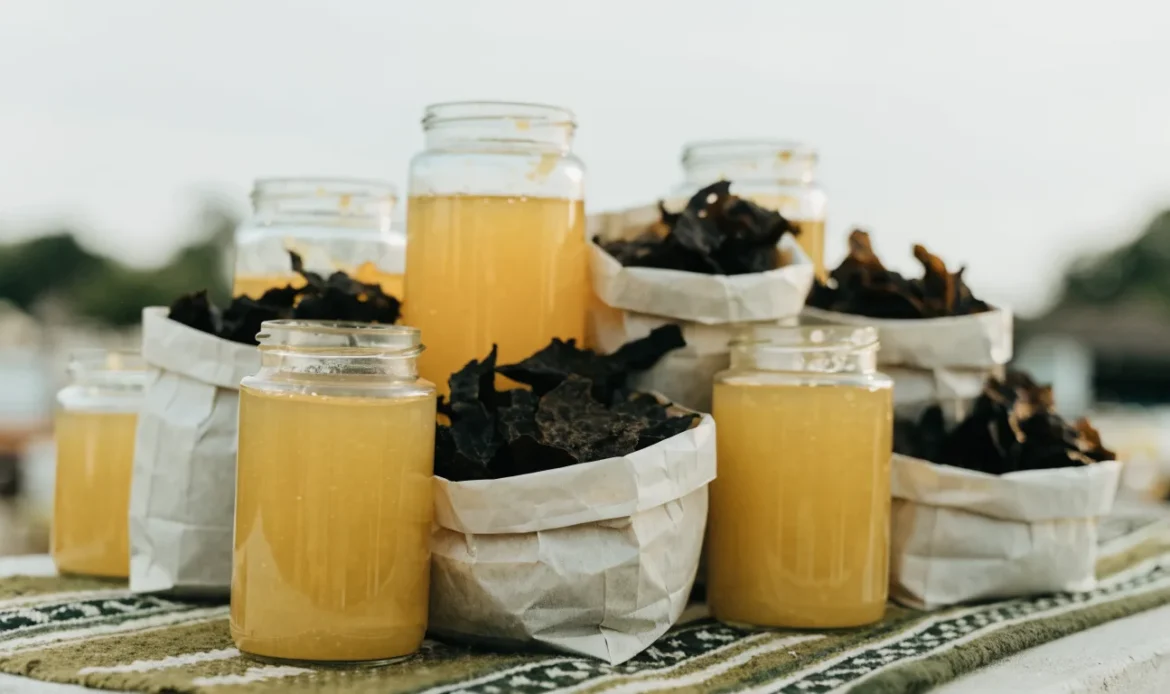
Short answer: Look nearby at local Caribbean or health food markets, natural stores, farmers markets, and trusted online sellers that ship to your area. Ask sellers about the form (raw, dried, gel, powder), how the product was handled, and whether they share testing or sourcing information. Use a simple checklist before you buy.
This page first gives a quick plan for finding sea moss near you. Then it explains the main product formats. It lists what you can check in person or online. It notes what science says about safety issues to consider. Finally, it gives a clear decision checklist you can use at a shop or on a product page.
Why this matters right away
- Sea moss products come in many forms. They are handled differently.
- Product safety and content can vary by harvest and processing.
- Some nutrients in seaweed can vary widely. That means checking sources and testing helps.
Where to look for “sea moss near me”
- Local Caribbean markets and specialty grocers
- These stores often stock sea moss in raw, dried, or gel forms. Staff may know local suppliers.
- Ask the staff where they get the product. Ask if they can show packaging or batch info.
- Natural food stores and co-ops
- Health-food stores can carry dry or powdered sea moss and pre-made gels.
- They may be able to point to brands that provide more sourcing or lab details.
- Farmers markets and pop-up vendors
- Small vendors sometimes sell hand-made gel or dried sea moss.
- This is an opportunity to ask direct questions about how the product was harvested and processed.
- Online sellers that ship to your area
- Many retailers sell dried, powdered, or gel forms online.
- Online listings let you read labels and customer feedback. Look for sellers who list processing steps or lab tests.
- Wholesale channels and bulk suppliers
- If you need large amounts, check wholesale suppliers. Wholesale options are common for businesses and events.
- Wholesale pages may include a product range and contact info for larger orders.
- Local harvesters or seaweed farms (where available)
- In some regions, local harvesters or farms sell directly. This is less common near every city.
- If you find a harvester, ask about harvest timing and post-harvest handling.
What you can check right away (quick checklist)
- Is the product labeled with a form (raw, dried, gel, powder, capsule)?
- Is there a visible harvest or batch code on the package?
- Does the seller provide or cite lab testing, third-party or otherwise?
- How was the product stored (cool area, sealed container)?
- Can the seller describe where and how the sea moss was handled?
If the seller cannot answer these questions, treat the product as having unclear origin.
Why product form matters
H2: Main sea moss formats and what each means
H3: Raw (fresh) sea moss
- Fresh sea moss is often sold wet and soft.
- It can be made into gel at home by cleaning and blending.
- Fresh product needs cool storage and faster use than dried.
H3: Dried sea moss
- Dried sea moss is dehydrated and lasts longer than fresh.
- Dried sea moss must be soaked and cleaned before use.
- Drying method and time affect texture and rehydration.
H3: Sea moss gel
- Gel is sea moss that has been soaked and blended into a thick texture.
- Gel is ready to use in foods and beverages.
- Gel is perishable and should be kept chilled or frozen.
H3: Powdered sea moss
- Powder is dried sea moss ground to a fine form.
- It can be added to smoothies or mixes.
- Powder may be easier to store than gel but check for added ingredients.
H3: Capsules and supplements
- Capsules present sea moss as a dose-controlled form.
- Supplements may include other ingredients. Read the label.
- Check for clear supplement facts and batch information.
What you can check for safety and variability
- Seaweed species and the area it grew in affect composition.
- Levels of some elements, like iodine, can vary widely by species and location [1][2][5].
- Public health guidance notes that seaweed is a potential source of iodine and other elements. This variability means personal intake can vary [1][2][5].
- Some regulatory bodies survey iodine and other levels in seaweed products and find wide variation across samples [3].
- Supplements and products labeled as sea moss may be used as food or dietary supplements. If used as a supplement, confirm labeling and any safety information [4].
What that means for a buyer
- No single visual check can tell you exact nutrient levels or contaminants.
- The most useful information is transparency: harvest area, species, processing steps, and test reports.
- Ask sellers for third-party testing or certificates if you need certainty about iodine or contaminants.
H2: How to evaluate sellers when searching “sea moss near me”
H3: In-person buying steps
- Ask where the sea moss came from. A clear answer is better than a vague one.
- Ask how the sea moss was cleaned and processed.
- Look at packaging for batch codes and dates.
- Check storage: gel should be chilled; dried should be sealed and dry.
- If the product is unpackaged, ask about return policy or refund in case of spoilage.
H3: Online buying steps
- Read the product description and the label images.
- Search the site for any lab reports or product analysis.
- Look for clear contact details and a return policy.
- If you need large amounts, contact the seller to ask about batch testing and shipping conditions.
H2: A practical decision guide (table)
| Form | What to check before buying | Best for | Storage note |
|---|---|---|---|
| Raw (fresh) | Where harvested; how long stored; refrigeration | Home gel-making; cooking soon after | Keep chilled; use quickly |
| Dried | Species name; drying method; rehydration steps | Long-term storage; homemade gels | Store sealed, dry |
| Gel (ready-made) | Ingredients list; refrigeration; batch info | Convenience; direct use in smoothies | Keep chilled or frozen |
| Powder | Ingredient purity; any additives; grind source | Easy mixing; baking or drinks | Keep sealed, dry |
| Capsules/supplements | Supplement facts; other ingredients; third-party testing | Dose control; travel | Store as label directs |
Use this table at the store or when reading product pages. Circle the form you want. Ask the seller the “What to check” items for that form.
H2: Questions to ask sellers (decision checklist)
- What species of seaweed is this? (Sea moss is a common name and can refer to different seaweeds.)
- Where was it harvested? (General region is a start.)
- Was the product tested? Can you show a lab report?
- Is there a batch number or date on the package?
- How was it processed and dried?
- Are there any added ingredients or preservatives?
- What is the storage recommendation?
- What is your return or refund policy if the product is spoiled?
Write these questions down and use them when you call or visit a seller.
H2: What science says about risks to check
H3: Iodine variability
- Seaweeds are a known source of iodine. The amount of iodine can differ a lot by species and harvest site [1][2][5].
- Because iodine can be high in some seaweeds, people who need to manage iodine intake should be cautious and seek testing information [2][5].
H3: Contaminants and heavy metals
- Seaweed can accumulate elements from water where it grows. Levels vary by location and species.
- Some regulatory groups monitor seaweed and find differences across products. Testing helps reveal levels in a given batch [3].
H3: Product labeling and supplement rules
- When sea moss is sold as a dietary supplement, it should follow labeling rules for supplements. Check the label for supplement facts and ingredient lists [4].
What you cannot tell by looking
- You cannot see the exact iodine content or contaminant levels just by looking at sea moss.
- Visual inspection can show spoilage, mold, or foreign objects. But it cannot confirm lab-level safety.
- Only a lab test can show specific levels for iodine, heavy metals, or microbes.
H2: How to prepare and store different forms (basic guidance)
- Dried: Rinse well and soak to rehydrate. Change water until clear. Then blend into a gel or cook as directed.
- Raw: Clean carefully in cool, fresh water. Remove sand and debris. Process soon after purchase.
- Gel: Keep chilled. Use or freeze in small portions if you will not use it in days.
- Powder: Store sealed and dry. Mix with liquids or add to recipes.
- Capsules: Store as the label advises.
Do not assume homemade or small-batch products are tested unless the seller says so. Ask.
H2: When to ask for lab results
- If you plan to consume sea moss frequently or in larger amounts, and you are concerned about iodine or contaminants, ask for lab data for the specific batch.
- If the seller cannot provide batch-level information, they may still provide general supplier testing or quality-control statements. That is better than no data.
H2: Buying sea moss for business or in bulk
- For wholesale or bulk needs, ask for product specifications and any available testing records.
- Ask about lot-to-lot variation: are there lab reports for multiple batches?
- Make sure shipping and storage for bulk orders match the product needs (temperature control for gel, dry sealed packaging for dried).
H2: Pricing and value pointers (how to compare without assumptions)
- Price varies by form, packaging, and supply chain. A lower price may reflect lower processing or no testing.
- Compare what is included: any added ingredients, whether it is raw or processed, and whether testing is reported.
H2: How to use this page right now
Step 1. Choose the form you want (raw, dried, gel, powder, capsules). Use the table above.
Step 2. Make a short list of local sellers: Caribbean markets, natural stores, farmers markets, or the store locator on retailer sites.
Step 3. Prepare the checklist questions and call or visit sellers.
Step 4. If you want testing or batch data, ask for it before buying large quantities.
Step 5. Keep package info and receipts in case you need to check batch info later.
Continue reading
Frequently asked questions
What should I check first?
Start with the product or ingredient label, the source information, and whether the seller can answer clear questions.
Is this a replacement for professional advice?
No. Use this article as general education. Ask a qualified professional for personal medical, legal, or food-safety guidance.
Where can I learn more?
Use the Zen Wholesalers Learning Library to compare related guides and choose a useful next question.
References
- [1] Harvard T.H. Chan School of Public Health, “Seaweed.” https://nutritionsource.hsph.harvard.edu/seaweed/
- [2] Smyth PPA. “Iodine, Seaweed, and the Thyroid.” European Thyroid Journal, 2021. https://pmc.ncbi.nlm.nih.gov/articles/PMC8077470/
- [3] Food Standards Australia New Zealand, “Survey of iodine levels in seaweed and seaweed containing products,” updated 2025. https://www.foodstandards.gov.au/science-data/monitoring-safety/surveyofiodinelevels
- [4] Operation Supplement Safety, “Sea Moss in Dietary Supplements.” https://www.opss.org/article/sea-moss-dietary-supplements
- [5] Blikra MJ et al. “Consequences of acute and long-term excessive iodine intake: A literature review focusing on seaweed as a potential dietary iodine source.” 2024. https://doi.org/10.1111/1541-4337.70037