
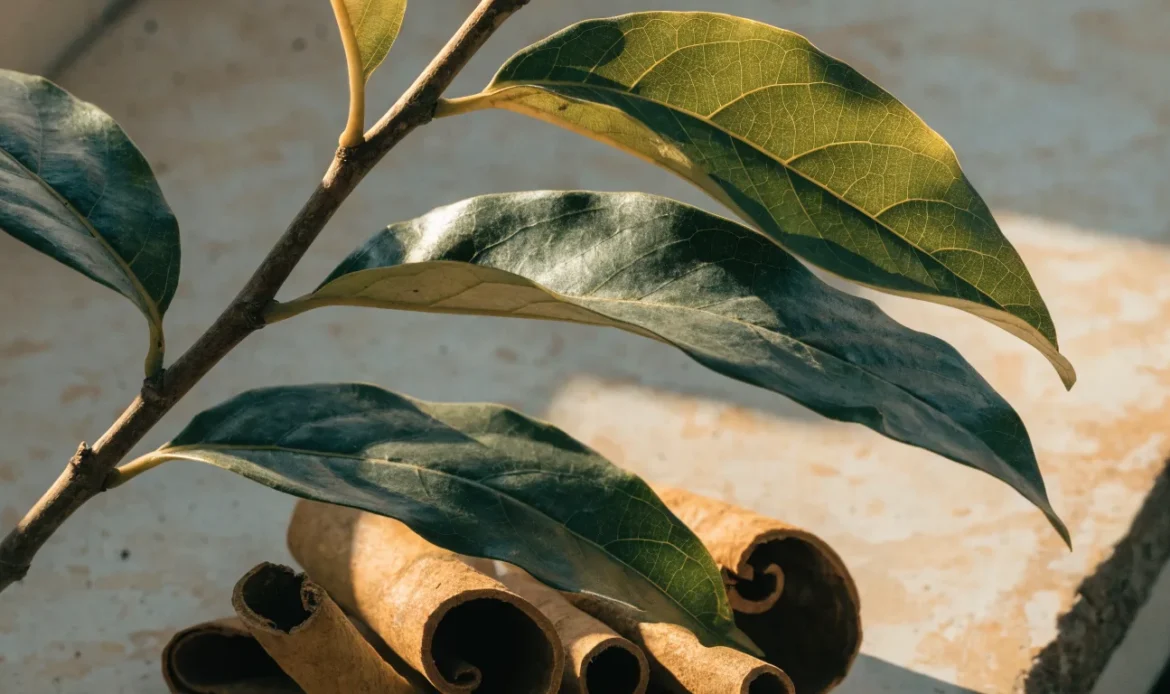
Short answer: Cinnamon leaf is the aromatic leaf from certain Cinnamomum trees. It has a green, warm aroma and is used in cooking, teas, and botanical blends. It is not the same as cinnamon bark, and you should choose the form and source that match your recipe and safety needs.
What this article covers
- What cinnamon leaf is and how it differs from cinnamon bark.
- Common forms and cooking uses, with Caribbean context.
- How to pick, test, and store cinnamon leaf.
- A practical decision guide to choose the right format.
- How cinnamon leaf relates to sea moss and other botanical products we sell.
- A short checklist you can use when buying.
What is cinnamon leaf?
Cinnamon leaf is the leaf of trees in the genus Cinnamomum. People use the leaf for its aroma and flavour. In cooking, the leaf adds warm, slightly spicy and green notes. In some places, the leaf is used whole, bruised, or made into an infusion.
Botanically, leaves come from species such as Cinnamomum verum (often called “true cinnamon” or Ceylon) and Cinnamomum cassia (often called cassia). Leaves can have different scent profiles depending on species, climate, and harvest time. Sellers should list the botanical name when they can.
Important distinction: cinnamon leaf is a plant leaf. Cinnamon bark comes from the tree’s inner bark. Both are from the same genus, but they are different plant parts and are used differently in recipes.
Botanical ID and common varieties
- Genus: Cinnamomum.
- Leaf vs bark: leaves are thin and green. Bark is rolled, brown, and woody.
- Variety note: “Ceylon” or “true cinnamon” usually refers to C. verum. “Cassia” usually refers to other species like C. cassia or C. aromaticum. Labels can be mixed. If you need a specific variety, ask the seller for the botanical name.
What to check on a label or from your seller:
- Botanical name (Latin name) if available.
- Form (whole leaf, crushed, ground, oil, extract).
- Harvest or packing date, if the seller provides it.
- Any testing or certificates the seller can share.
If a label only says “cinnamon,” it may not tell you whether you have leaf or bark, or which species it is. Ask for more detail before you buy.
How cinnamon leaf differs from cinnamon bark
- Flavour: Leaves usually give a fresher, greener taste. Bark gives deeper, sweeter spice notes.
- Use: Leaves are often used whole for infusions and slow cooking. Bark is more common in baking and ground spice mixes.
- Volatile oils: Leaves and bark contain different ratios of aromatic compounds. This makes each better suited to certain recipes.
- Forms sold: Sellers commonly sell dried whole leaves, crushed leaf, ground leaf powder, and leaf essential oil. Bark is sold as quills, chips, or powder.
Do not assume a product labeled “cinnamon” is leaf or bark. If a recipe calls for “cinnamon leaf,” use that leaf form. If it asks for ground cinnamon, bark-based powders are most common.
Culinary uses — with Caribbean context
Cinnamon leaf fits well in many Caribbean kitchens. Here are common uses:
- Steeped in teas and hot beverages.
- Simmered in rice dishes or stews for a warm background note.
- Added to spice blends for jerk, curries, and masalas.
- Used in syrups and mulled drinks.
- Paired with coconut, allspice, nutmeg, and citrus.
Tips for cooking:
- Use whole leaves in long, slow-cooked dishes. They release aroma slowly.
- Crush or bruise leaves to release more aroma quickly.
- Remove whole leaves before serving, like bay leaves.
- When using ground leaf, add it later in cooking to preserve aroma.
Cultural note: In Caribbean kitchens, cooks often balance cinnamon leaf with other warm spices. It is valued for its gentle, green warmth rather than the sweet strength of ground bark.
Forms you can buy and when to use each
H3: Common formats
- Whole dried leaf — best for stewing and infusion. Easy to remove.
- Crushed or chipped leaf — faster aroma release. Good for teas and short simmers.
- Ground leaf powder — useful where texture must be smooth. Use sparingly to avoid overpowering dishes.
- Essential oil (leaf oil) — highly concentrated. Not directly interchangeable with dried leaf. Use only in small, properly measured amounts and only if labelled for food use.
- Tinctures or extracts — made with solvents. Check whether the extract is intended for culinary or aromatic use.
H3: Practical notes
- Essential oils are concentrated and can be hazardous if misused. Only use oils designed for food and follow strict dilution guidance.
- Ground leaf can clump in humid climates. Store it in an airtight container away from heat and light.
- Whole leaves can last longer and are easier to inspect visually for quality.
Decision guide: Which form to buy?
Use this table to pick the right format for your need.
| Need or use | Best format | Why | What to check before buying |
|---|---|---|---|
| Long simmered stews, rice, or broths | Whole dried leaf | Slow, steady aroma; easy to remove | Clean, intact leaves; clear label with botanical name if possible |
| Quick infusions or teas | Crushed leaf or chipped | Releases aroma faster | No excessive dust; pleasant fresh scent |
| Baking or ground spice blends | Ground leaf powder | Even distribution in dry mixes | Fine texture; no lumps; check packaging date if possible |
| Aromatic extracts or concentrated flavour | Leaf essential oil or extract | Strong flavour in small amounts | Food-grade label; supplier usage guidance |
| Wholesale or bulk use | Whole leaf or crushed bulk | Easier to store and inspect | Packaging and lot info; ask about sample and shelf handling |
Use the table to match form, then work through the checklist below before purchase.
Practical buying checklist
- Ask the seller: what is the botanical (Latin) name?
- Confirm the product form: whole, crushed, ground, oil, or extract.
- Smell the product if you can. It should smell fresh and warm, not musty.
- Look at the leaves: they should be whole or uniformly crushed, not full of stems or foreign matter.
- Ask for packing or harvest date when available. Freshness matters for aroma.
- For oils or extracts, ask if they are labelled food-grade and for usage instructions.
- For large or repeat orders, request a sample first.
- If you are concerned about contaminants, ask for testing documentation or a supplier statement on testing.
- Keep the receipt and batch number; this helps trace a product if you need to raise a concern.
Storage and shelf life (practical guidance)
- Store cinnamon leaf in a cool, dry place. Keep it in an airtight container.
- Avoid direct light and heat. These reduce aroma over time.
- Whole leaves keep their scent longer than ground powder.
- If you store oils, keep them tightly sealed and away from heat.
- For bulk orders, plan to rotate stock and use older lots first.
Do not rely on a specific numerical shelf-life unless the seller provides testing or stability data. Ask the supplier for storage recommendations for their specific product.
Safety notes and what sellers can and cannot prove
- Cinnamon leaf is a food ingredient and a botanical. It is not a medicine. Do not accept claims that it cures or prevents disease.
- Some cinnamon species and products can contain natural compounds like coumarin. Cassia bark, in particular, is often higher in coumarin than C. verum (true cinnamon). If coumarin exposure matters for you, ask your seller for species or testing details. Sellers cannot prove low coumarin without lab results.
- Essential oils are concentrated. Do not ingest oils unless the product is explicitly labelled as food-grade and you follow the supplier’s instructions. Even with labelled oils, follow safety guidance and use small amounts.
- If you plan to combine cinnamon leaf with sea moss or other botanical supplements, note they are separate botanicals with separate sourcing and testing needs. Sea moss can carry notable levels of iodine and other elements; check reliable sources on safe seaweed use and iodine if you use seaweed products. See References for further reading on seaweed and iodine. [1][2][3][4][5]
How cinnamon leaf and sea moss are different (short, clear comparison)
- Source: Cinnamon leaf = tree leaves (Cinnamomum). Sea moss = marine algae/seaweed.
- Use: Cinnamon leaf = spice/aroma for food and infusions. Sea moss = culinary gel, food ingredient, and botanical supplement.
- Safety and testing: Seaweed can vary in iodine and mineral content and may need different testing than dried leaves. If you buy both from the same vendor, ask for separate product details for each item. For seaweed safety and iodine guidance, see References [1]–[5].
If you are a buyer at scale, ask the supplier for product-specific test reports rather than assuming similar handling for all botanicals.
Buying for wholesale or retail
If you are buying cinnamon leaf in quantity:
- Request a sample before placing a large order.
- Ask for packaging options, minimum order sizes, and storage recommendations.
- Confirm traceability details the supplier can provide: batch or lot number, packing date, and any testing they do.
- For long-term supply, ask about lead times and how the supplier manages quality changes across seasons.
If you are interested in wholesale options, check our wholesale page for contact steps: Wholesale (/wholesale/). For product listings, see our botanical shop: Caribbean Botanicals (/shop/caribbean-botanicals/).
Simple recipe ideas (no medical claims)
- Cinnamon leaf tea: Simmer 1–2 whole leaves in water for 8–12 minutes. Strain and sweeten if you like.
- Rice or coconut rice: Add a bruised cinnamon leaf to the pot while cooking; remove before serving.
- Spice syrup: Simmer leaves with sugar and water to make a syrup for cocktails or desserts. Remove leaves before bottling.
- Sea moss gel infusion (culinary use): After preparing sea moss gel for culinary use, you can steep one crushed cinnamon leaf in warmed gel to impart flavour. Do not assume health benefits; this is for flavour only.
When trying a new form (oil or extract), test a very small amount first to learn how strong the flavour is.
Quality checks you can do at home
- Smell test: Aroma should be warm, green, and pleasant. Musty or moldy smell is a red flag.
- Visual check: Leaves should be free of obvious foreign matter. Powder should be free-flowing and not clumped with visible moisture.
- Small cooking test: Use a small amount in a simple infusion to evaluate flavour and strength. This tells you if you need whole vs ground forms for your recipe.
If a seller will not answer basic questions about botanical names, form, or packing, consider a different source.
Practical decision checklist (copyable)
- Do I need slow-release aroma? → choose whole leaf.
- Do I need fast infusion or strong tea? → choose crushed leaf.
- Do I need even texture in baking? → choose ground powder.
- Do I need concentrated flavour in a small dose? → consider food-grade leaf oil (only with supplier instructions).
- Is botanical name provided? → If no, ask.
- Is the aroma fresh? → If no, ask for a sample.
- Is the product for retail or wholesale? → Ask for lot information and sample.
- Will I combine with sea moss or supplements? → Request product-specific safety and testing documents for each botanical.
Next steps — where to look and who to contact
- Browse our botanical collection to see current forms and pack sizes: Caribbean Botanicals.
- If you want to buy sea moss or learn how botanicals differ, visit our sea moss and education pages: Shop and Learn.
- For wholesale inquiries or a sample request, see Wholesale or contact us directly: Contact.
- If you just want to explore other products on our site, start at the homepage: [/].
Conclusion
Cinnamon leaf is a useful, aromatic botanical. It is different from cinnamon bark. Choose the form that matches your recipe: whole for long simmers, crushed for fast infusions, ground for even mixes, and oils only when food-grade and used carefully. Ask sellers for botanical names and packing information. Treat cinnamon leaf and sea moss as separate products with different safety and testing needs. Use the checklist and decision table above to buy with confidence.
Frequently asked questions
Is cinnamon leaf the same as cinnamon bark?
No. Cinnamon leaf is the tree’s leaf. Bark is the tree’s inner bark. They have different flavours and uses.
Can I substitute cinnamon leaf for ground cinnamon in baking?
Not directly. Ground cinnamon usually comes from bark and has a sweeter, stronger profile. You can use ground leaf, but start with a smaller amount and adjust to taste.
Are cinnamon leaf oils safe to cook with?
Only use oils labelled food-grade and follow the supplier’s dilution guidance. Oils are highly concentrated; a tiny amount can be very strong. If unsure, use dried leaf instead.
Should I worry about contaminants in cinnamon leaf?
Like any dried botanical, quality varies. Ask sellers about their handling and testing. For specific contaminants or compounds like coumarin, ask for species information or lab results.
How should I store cinnamon leaf?
Keep it dry, cool, and in an airtight container away from light. Whole leaves retain aroma longer than powder.
Can I combine cinnamon leaf with sea moss?
Yes for culinary flavouring. Treat each product separately for sourcing, storage, and testing. Sea moss has separate considerations, such as variable iodine content. See References for seaweed safety notes. [1][2][3][4][5]
References
- [1] Harvard T.H. Chan School of Public Health, “Seaweed.” https://nutritionsource.hsph.harvard.edu/seaweed/
- [2] Smyth PPA. “Iodine, Seaweed, and the Thyroid.” European Thyroid Journal, 2021. https://pmc.ncbi.nlm.nih.gov/articles/PMC8077470/
- [3] Food Standards Australia New Zealand, “Survey of iodine levels in seaweed and seaweed containing products,” updated 2025. https://www.foodstandards.gov.au/science-data/monitoring-safety/surveyofiodinelevels
- [4] Operation Supplement Safety, “Sea Moss in Dietary Supplements.” https://www.opss.org/article/sea-moss-dietary-supplements
- [5] Blikra MJ et al. “Consequences of acute and long-term excessive iodine intake: A literature review focusing on seaweed as a potential dietary iodine source.” 2024. https://doi.org/10.1111/1541-4337.70037