
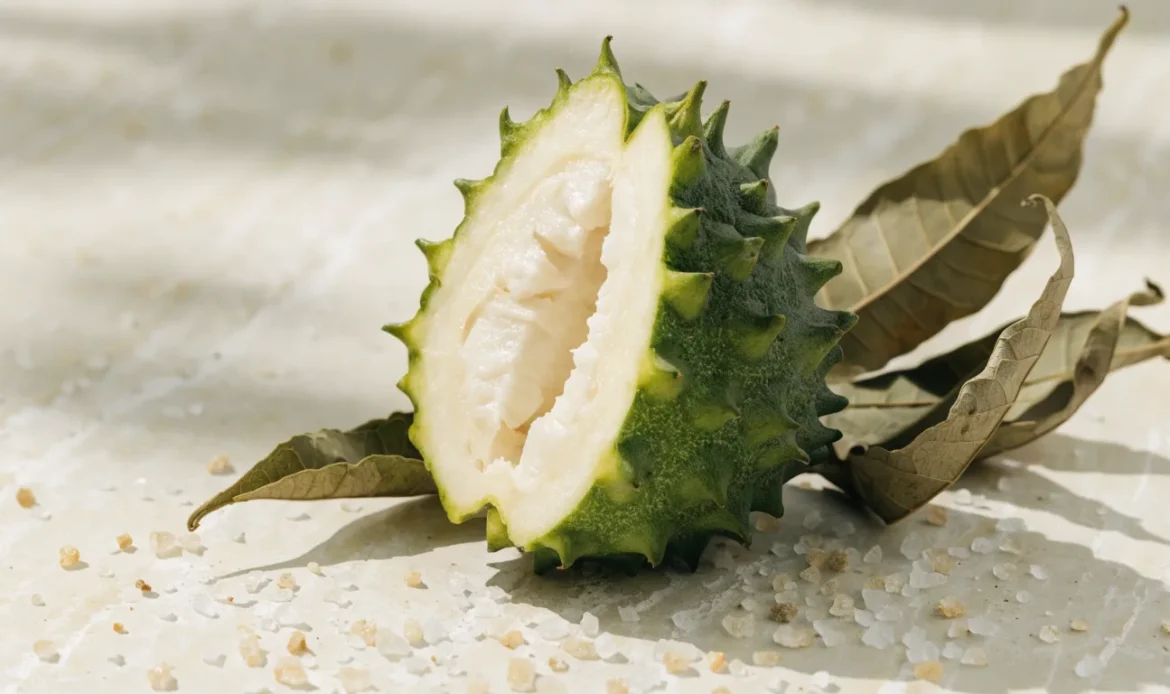
Short answer: You can usually buy graviola (also called soursop or guanábana) as fresh fruit in tropical markets and specialty produce stores in warm U.S. cities. If fresh is hard to find, frozen fruit pulp and canned or frozen packs are widely available online and at some grocery retailers. Check seller shipping methods, labeling, and return policies before you buy.
What graviola (soursop) is — quick ID
Graviola is the common name for the tropical fruit of Annona muricata. The fruit is large, green, and soft when ripe. In different places it is called soursop, guanábana, or guyabano. The tree and its fruit belong to the custard apple family (Annonaceae). Fresh fruit is perishable and is most common where the tree grows. Frozen pulp and packaged puree are popular ways to buy it outside tropical regions.
Main buying options
1) Fresh whole fruit — where to look
- Local tropical, Caribbean, Latin American, or Southeast Asian produce markets in cities with large immigrant communities can carry fresh graviola seasonally. Call ahead before visiting.
- Farmers’ markets in southern states or U.S. territories sometimes offer fresh fruit when local growers harvest.
- Specialty importers and some online shops arrange cold-shipped fresh fruit to the contiguous U.S., but availability is limited and seasonal. (soursopstore.com)
When buying fresh, ask the vendor when it was picked and how it was shipped. Fresh fruit can bruise and ripen quickly in transit, so vendors who ship fresh usually use fast courier services and tell you when it will arrive.
2) Frozen pulp or puree — the most reliable alternative
- Many shoppers outside tropical areas prefer frozen soursop pulp. It is often sold in single-serving packs or larger frozen blocks. Well-known brands and specialty importers sell frozen pulp online and through some grocery channels. (soursopstore.com)
- Major retailers and grocery delivery services sometimes list frozen soursop pulp in the frozen section or as stocked items online. If you plan to use the fruit in smoothies, desserts, or recipes, frozen pulp is convenient and easier to ship safely. (target.com)
If you buy frozen pulp, check how the seller ships (dry ice or insulated cold pack), transit time recommendations, and whether they replace thawed shipments.
3) Canned or jarred fruit pulp
- Some brands sell soursop pulp in cans or aseptic packs. These are shelf-stable until opened and work well for recipes when fresh fruit is not available. Look in the international or Latin aisle of well-stocked supermarkets, or order online. (goya.com)
4) Powdered, dried, or leaf products (not whole fruit)
- You may find dried graviola leaves, powders, or extracts marketed separately from the fruit. These are different products for teas, supplements, or cooking ingredients. They are not the same as fresh fruit or frozen pulp. If you specifically want fruit for eating or cooking, check the product label carefully. (herbco.com)
Legal and import notes buyers should check
- Fresh fruit import rules can limit what ships into the U.S. with some countries. Some regulatory documents note restrictions or approvals that affect where fresh fruit can come from. Import permissions change over time, so if you plan to order fresh fruit from abroad, confirm the seller’s ability to export to your state and ask about customs clearance. (downloads.regulations.gov)
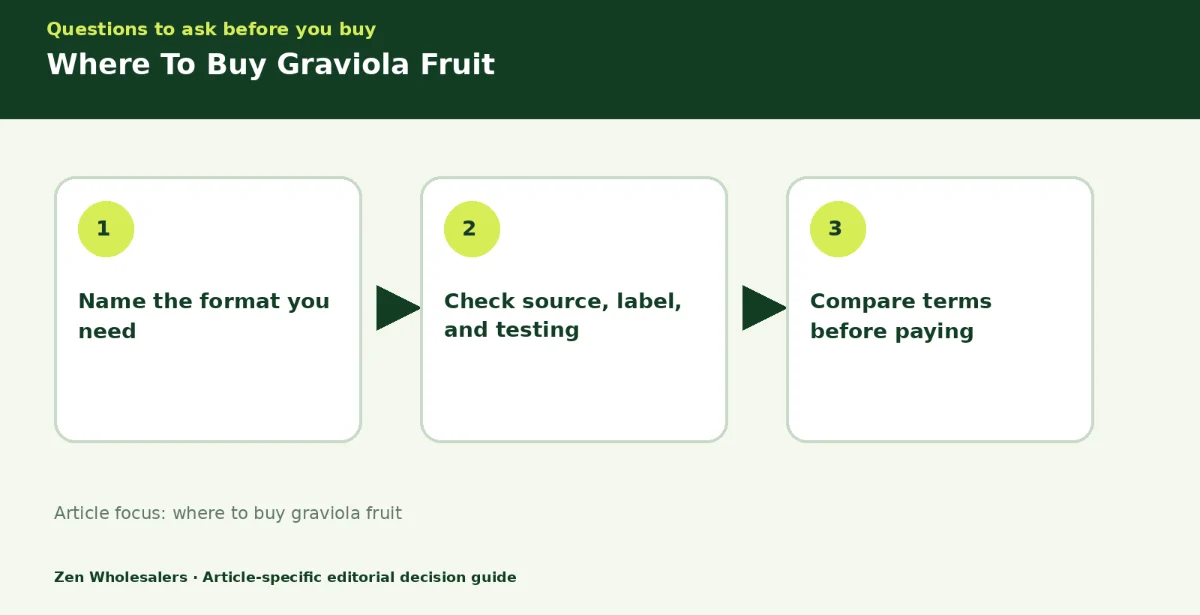
How to choose the right product and seller — practical steps
Here are clear checks to make before you buy fresh or shipped graviola fruit.
- Product type: fresh whole fruit, frozen pulp, canned pulp, or dried product? Choose the type that fits your recipe and shipping tolerance.
- Shipping method: does the seller use refrigerated shipping, ice packs, or overnight services for fresh fruit or frozen pulp?
- Origin and date: does the label or product page state harvest date, packing date, or country/region of origin?
- Return or refund policy: what happens if the fruit arrives thawed, damaged, or past prime?
- Storage guidance: seller should list how to store on receipt and suggested use-by timing.
- Food-safety info: for packaged products, look for manufacturing and best-practice handling statements.
- Reviews & photos: read buyer photos and recent reviews, and prefer sellers who answer questions quickly.
These checks reduce risk when ordering perishable tropical fruit.
Decision guide: fresh vs frozen vs canned vs dried
| Product type | Where to find | Best if you need | Shipping & handling to watch for | What to check on the product page |
|---|---|---|---|---|
| Fresh whole fruit | Local tropical/Caribbean markets; seasonal online importers | Eating ripe fruit, local recipes, fresh presentation | Fast shipping; insulated transit recommended; short shelf life | Harvest/pack date, shipping transit time, return policy |
| Frozen pulp/puree | Online specialty shops; some grocery chains and frozen brands | Smoothies, ice cream, sauces, predictable flavor year-round | Frozen-pack shipping; choose 2-day or overnight if available | Brand, ingredient list (100% fruit?), pack size, thaw instructions |
| Canned/aseptic pulp | Grocery international aisle; online stores | Pantry storage, cooking or desserts when frozen/fresh unavailable | Shelf-stable; no cold ship needed | Expiry date, ingredient list, pack size |
| Dried leaf/powder | Herb suppliers, online botanical shops | Teas or recipes calling for leaf products (not the fruit) | Regular mail OK | Product use notes; distinguish leaves/powder from fruit |
(Do not assume any item is organic, tested, or certified unless the seller lists a specific certification.)
How sellers commonly package and ship
- Frozen pulp: shipped in insulated boxes with cold packs or dry ice. Sellers often advise choosing only fast shipping options to keep product frozen. (soursopstore.com)
- Fresh fruit: shipped quickly and may be limited to certain states due to perishability and import rules. Ask the seller about courier cutoffs and delivery windows. (soursopstore.com)
- Canned/aseptic: shipped like other pantry goods, with standard mail or parcel services.
Culinary and cultural context (how people use graviola)
- In Caribbean, Latin American, and some Asian cuisines, ripe graviola flesh is eaten fresh, mixed with milk or sugar, or blended into drinks and desserts.
- Frozen or canned pulp is a common base for smoothies, ice cream, sorbets, juices, and sauces. Using pulp removes the need to remove many seeds and speeds prep.
- Recipes vary by country and household. If you want region-specific recipes, look for cookbooks or community recipe sites from Caribbean and Latin American food traditions.
Botanical ID and safety notes — not medical advice
- The edible fruit of Annona muricata is distinct from herbal or seaweed products. If you also buy sea moss or other marine botanicals, don’t confuse them. Sea moss is a type of seaweed and has different handling, storage, and food-safety considerations. (en.wikipedia.org)
- If you see products labeled as “graviola leaf,” “leaf powder,” or “extract,” understand those are different from the fruit. Labels should clearly state which plant part is used.
- This article does not address medical uses. If you have health questions related to any botanical product, consult a qualified health professional.
Why mention sea moss here?
Some shoppers who explore Caribbean botanicals buy both graviola and sea moss. The two are unrelated botanically: graviola is a fruit tree; sea moss is a marine alga. Sea moss products require different safety checks (for example, iodine content and sourcing), so keep purchases separate and read product info carefully. For general seaweed guidance see the nutrition and safety references.
(For seaweed and sea moss safety information, see reference entries listed below. These discuss iodine and labeling considerations for seaweed products.)
Practical checklist before you click “buy”
- [ ] Product type confirmed: fresh / frozen pulp / canned / dried.
- [ ] Seller lists shipping method and estimated transit time.
- [ ] Seller provides origin or packing date for product.
- [ ] Return/refund policy for perishable shipments is clear.
- [ ] Customer reviews are recent and include photos.
- [ ] Storage instructions and recommended use-by date on receipt are provided.
- [ ] If ordering frozen: choose fast shipping and confirm the seller’s packing method.
- [ ] If ordering fresh internationally: confirm customs and import permissions.
Use this quick checklist each time you order perishable tropical fruit.
Where to search (channels and tips)
- Local: Call tropical produce markets or Latin/Caribbean grocery stores in your city. Use the common alternative names graviola, soursop, guanábana when asking.
- National grocery or delivery: Search frozen-pulp sections of national grocery platforms and grocery delivery services; some list brands and pack sizes online. (instacart.com)
- Specialty online sellers: Many sellers focus on frozen tropical pulps and sometimes ship fresh during certain seasons. Read their shipping notes closely. (soursopstore.com)
- Wholesale or bulk: If you need larger volumes for food service, look for fruit pulp distributors or frozen pulp suppliers that list soursop on their product catalogs. (foodsalesforce.com)
How to store and use on arrival
- Fresh whole fruit: use while ripe. If not used immediately, refrigerate and use within a few days. Ripe fruit is soft to the touch.
- Frozen pulp: keep frozen until ready to use. Thaw in the refrigerator if you need to blend or cook. Follow seller thaw guidance.
- Canned pulp: store unopened cans at room temperature. After opening, refrigerate and use within days per label guidance.
Helpful internal links
- Browse our Caribbean botanicals collection: /shop/caribbean-botanicals/
- Learn more about botanical products and safety tips: /learn/
- See our shop and product categories: /shop/
- For bulk orders or questions about suppliers: /wholesale/
- Contact us with buying questions: /contact/
- Back to our homepage: Home
Conclusion
If you want graviola fruit now, frozen pulp and canned packs are the most reliable sources for shoppers outside tropical regions. Fresh fruit is possible to find locally in some U.S. cities or by ordering from specialty importers, but it needs fast, insulated shipping and clear vendor policies. Use the decision table and checklist above each time you buy. If you need help locating a trusted seller or selecting types of products for recipes, contact a local specialty market or an online pulp supplier and ask about shipping, packing, and return policies.
Frequently asked questions
Can I buy fresh graviola fruit online and have it shipped to any U.S. state?
Not always. Fresh tropical fruit is perishable and subject to import or interstate shipping limits. Some sellers only ship to certain states and use fast couriers. Confirm the seller’s shipping area and ask about customs if the fruit comes from abroad.
Is frozen soursop pulp the same as fresh fruit?
Frozen pulp is made from ripe fruit and keeps much of the flavor and texture useful for cooking and smoothies. It is not identical to eating a just-picked whole fruit, but it is a reliable and convenient substitute for most recipes.
Where in a supermarket would I look for soursop?
Check the frozen fruit aisle for pulps and the international or Latin grocery aisle for canned or aseptic packs. Some specialty produce counters may carry fresh fruit seasonally.
Are graviola leaves the same as the fruit?
No. Leaves, powders, or extracts are different parts of the plant. They are used for very different purposes than the fresh fruit or pulp. Read labels to be sure you are buying the fruit product.
Can I find bulk or wholesale graviola pulp?
Yes. Fruit-pulp suppliers and frozen produce distributors list soursop pulp in some product catalogs. If you need larger volumes, contact a distributor directly to discuss pack sizes and shipping.
References
- SoursopStore. “Frozen soursop pulp.” https://soursopstore.com/products/frozen-soursop-pulp
- SoursopStore. “Buy Soursop Fruit.” https://soursopstore.com/pages/buy-soursop-fruit
- Goya Foods. “Soursop Fruit Pulp.” https://www.goya.com/en/products/soursop-fruit-pulp/
- Target product listings for soursop fruit pulp and frozen items. https://www.target.com
- Instacart listings for frozen soursop and national grocery availability. https://www.instacart.com
- APHIS Economic Effects Assessment: Importation of Soursop Fruit from Mexico (discussion of import authorizations). https://downloads.regulations.gov/APHIS-2019-0013-0004/content.pdf
- Commercial Soursop Guide (industry overview and pulp trade). https://irp.cdn-website.com/0d675165/files/uploaded/Commercial-Soursop-Guide-EN.pdf
- Frozen pulps catalog and supplier listings (trade catalogs). https://www.foodsalesforce.com/wp-content/uploads/2025/01/Frozen-Pulps.pdf
- Harvard T.H. Chan School of Public Health, “Seaweed.” https://nutritionsource.hsph.harvard.edu/seaweed/ [Reference bank entry].
- Smyth PPA. “Iodine, Seaweed, and the Thyroid.” European Thyroid Journal, 2021. https://pmc.ncbi.nlm.nih.gov/articles/PMC8077470/ [Reference bank entry].
- Food Standards Australia New Zealand, “Survey of iodine levels in seaweed and seaweed containing products,” updated 2025. https://www.foodstandards.gov.au/science-data/monitoring-safety/surveyofiodinelevels [Reference bank entry].
- Operation Supplement Safety, “Sea Moss in Dietary Supplements.” https://www.opss.org/article/sea-moss-dietary-supplements [Reference bank entry].
- Blikra MJ et al., “Consequences of acute and long-term excessive iodine intake…,” 2024. https://doi.org/10.1111/1541-4337.70037 [Reference bank entry].