
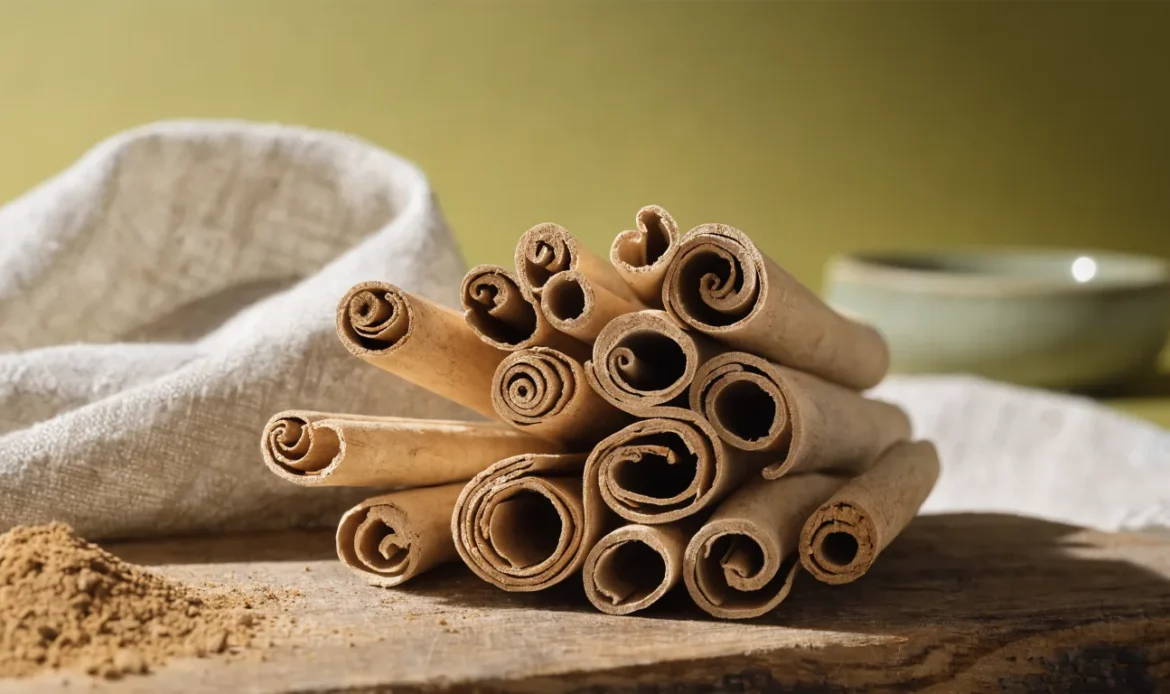
Short answer first: You can buy Ceylon cinnamon from specialty spice shops, some health-food stores, trusted online retailers, and wholesalers that import botanical spices. Look for the botanical name Cinnamomum verum (or C. zeylanicum) on the label, clear origin information, and a seller who shows images of whole quills if you want sticks. For Caribbean buyers, check specialty Caribbean botanicals and spices, or ask a wholesaler about small-sample orders before you buy in bulk.
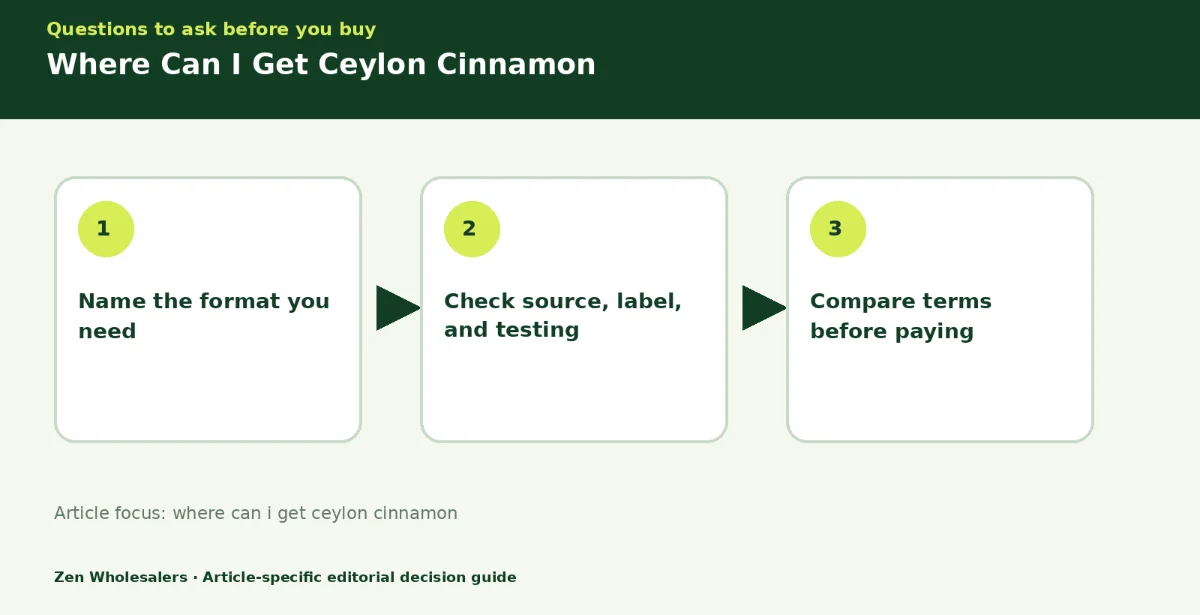
Why this guide: many pages sell “cinnamon.” This article explains how to find real Ceylon cinnamon, what to check on labels, which forms to prefer for different uses, where to look for retail or wholesale supplies, and how to make a confident next decision.
What is “Ceylon” cinnamon?
- The name “Ceylon cinnamon” usually refers to the species Cinnamomum verum (also written C. zeylanicum).
- It is botanically different from common “cassia” cinnamon, which comes from other Cinnamomum species.
- Sellers and labels sometimes use “true cinnamon,” “Ceylon,” or the botanical name. Use the botanical name to be clear.
Note: calling it “Ceylon” links it historically to Sri Lanka, where the tree is native and widely cultivated. That is a common sourcing origin, but some small producers outside Sri Lanka also grow C. verum.
Forms of Ceylon cinnamon you can buy
Choose a form based on how you will use it:
- Whole quills (sticks or rolls): Long, layered quills. Best if you want to simmer spice in drinks, stews, or syrups. Easier to inspect visually.
- Broken quills: Shorter pieces of whole quill. Good for infusions or making your own grind.
- Ground powder: Convenient for baking and mixing into blends. Harder to verify visually.
- Oil or extract: Concentrated flavor for small uses in baking or flavoring; buy from reputable suppliers for consistent labeling.
- Blends with other spices: May include Ceylon but often mixed—check the ingredient list.
How to tell Ceylon cinnamon from cassia (what to check)
When you shop, look for clear clues on packaging and product pages. No single label proves authenticity, but the following checks reduce uncertainty:
- Botanical name: Look for “Cinnamomum verum” or “C. zeylanicum.” If the label only says “cinnamon” with no species, it could be cassia.
- Country or region of origin: Sri Lanka is a common origin for Ceylon cinnamon. Sellers may also list province, farm, or cooperative.
- Visual cues for sticks: Ceylon quills are often thinner and more layered. Cassia sticks are usually thicker, harder, and single-layered. Photos help.
- Aroma descriptions and tasting notes: Sellers often describe aroma as delicate, sweet, or floral for Ceylon. Use these descriptions as one data point.
- Packaging and lot info: Look for batch numbers, harvest dates, or images of sealed packaging. These do not guarantee quality but show transparency.
- Ask the seller: Reputable sellers will answer questions about origin, harvest, and processing. If a seller refuses basic details, be cautious.
What labels cannot prove: a seller’s claim of “Ceylon” without botanical name or origin is weaker. Only laboratory testing proves species with certainty. Small buyers can rely on label transparency, good photos, and seller responsiveness.
Where to buy Ceylon cinnamon (retail options)
- Specialty spice shops and spice merchants
- Pros: Staff often know spices. You can inspect whole quills. Some offer small sample sizes.
- What to ask: botanical name, origin, how the cinnamon was stored, and whether it was ground on-site.
- Health-food and natural-food stores
- Pros: Some carry higher-grade spices and organic lines.
- What to check: ingredient label and supplier name. Ask staff for the brand’s sourcing info.
- Ethnic and Caribbean grocers
- Pros: They sometimes carry whole quills and regional varieties that mainstream stores do not.
- What to do: Compare quills visually and smell them where possible.
- Online specialty retailers
- Pros: Wide selection and access to imported Ceylon cinnamon. Product pages often include photos and descriptions.
- What to watch: Clear product photos, botanical name, origin, and return policy.
- Marketplaces (large online marketplaces)
- Pros: Many sellers and price points.
- Watchpoints: Vet the seller’s reviews, ask for botanical name, and avoid listings with vague labels or fake-looking photos.
- Direct from importers or cooperatives
- Pros: Better traceability and sometimes small-batch or single-origin lots.
- How to find: Look for specialty importers of Asian spices or contact a wholesaler and ask about sample orders.
If you want to buy from Zen Wholesalers: see our Caribbean botanicals section for spices and related items Caribbean Botanicals (/shop/caribbean-botanicals/).
Where to buy Ceylon cinnamon (wholesale and bulk)
If you need larger amounts for a cafe, food product, or retail shelf:
- Contact spice wholesalers or botanical importers who list Cinnamomum verum in their catalog. Ask for a product sheet.
- Ask for small samples or sample-sized lots before committing to large quantities.
- Request information on packing, lot size, shipping, and lead times.
- Confirm customs paperwork if importing into your country.
If you want to explore commercial options, our wholesale team can discuss minimums and samples. See Wholesale (/wholesale/) or Contact (/contact/) to start a conversation.
Practical differences: sticks vs powder, ground freshness, and storage
- Whole quills keep their aroma longer than ground powder. Ground powder loses aroma faster after grinding.
- If you want the freshest flavor, buy whole quills and grind them just before use, or buy smaller ground packages with a fast turnover.
- Store in a cool, dark place in an airtight container. Avoid moisture and bright light.
- If buying online, inspect the product photos for moisture damage, mold, or clumping.
How to evaluate a seller and product page
Here is a short buyer checklist to use when comparing sellers. Use it for both retail and wholesale decisions.
Buying checklist
- Does the product list “Cinnamomum verum” or “Ceylon” clearly? (Yes/No)
- Is the country or origin listed? (Sri Lanka preferred as common origin)
- Are there clear photos of whole quills or product packaging? (Yes/No)
- Is the seller reachable by email or phone and responsive to questions? (Yes/No)
- Is there a return or sample policy for your first purchase? (Yes/No)
- For bulk buyers: can the seller provide a sample lot or certificate of analysis on request? (Yes/No)
- Do reviews or third-party mentions back up seller claims? (Yes/No)
If several answers are “No,” ask more questions or choose a different seller.
Comparison table: Ceylon vs Cassia and Common Product Forms
| Feature | Ceylon (C. verum) | Cassia (common types) |
|---|---|---|
| Typical label clue | “Cinnamomum verum”, “Ceylon”, or “true cinnamon” | Often labeled simply “cinnamon” or “cassia” |
| Typical stick appearance | Thinner, many thin layers | Thicker, single or fewer layers |
| Typical flavor note | Delicate, sweet, floral (seller descriptions vary) | Stronger, spicier, bolder |
| Good for | Light desserts, beverages, recipes where subtlety is wanted | Bold baking, strong spice blends |
| Ground vs sticks | Whole sticks preserve aroma longer; ground is convenient | Same tradeoffs apply |
Notes: This table gives general differences buyers use to decide. It does not replace species-level testing. Visual and aroma checks can help but are not foolproof.
Culinary and cultural context (how cooks use Ceylon cinnamon)
- In many recipes, Ceylon cinnamon is preferred when a gentle, sweet cinnamon flavor is desired.
- Whole quills are commonly used to infuse liquids: teas, syrups, rice dishes, and stews.
- Ground Ceylon is used in baking and spice blends when a lighter cinnamon note is wanted.
- In Caribbean kitchens, cooks may use imported or locally traded varieties depending on availability. Ask local spice vendors about their stock.
Recipes do not require a certification to taste good. If a recipe calls for “cinnamon,” the choice between Ceylon and cassia is a flavor decision.
Questions you can ask a seller (short list)
- What is the botanical name on this product?
- Where was this lot grown and processed?
- Do you sell whole quills or only ground powder? Can I see photos of the quills?
- Do you offer small sample sizes before a bulk buy?
- How is the spice packaged and how long ago was it harvested or ground?
Good sellers will answer directly or point to documentation. If they dodge these questions, ask elsewhere.
Safety and labeling — a note about sea moss and other botanicals
Cinnamon is a tree bark spice. It is botanically and commercially separate from sea moss and seaweed products. If you buy both spices and seaweed products from a seller, treat them as distinct items.
When buying seaweed or sea moss, there are specific safety considerations related to iodine and mineral content. Reliable sources discuss iodine in seaweed and the need to follow label guidance for consumption. For reputable overviews and safety discussions on seaweed and sea-moss products, see the References below. (These sources are about seaweed and are included to help readers avoid confusing cinnamon information with sea-moss safety information.)
How to store and use Ceylon cinnamon at home
- Keep whole quills in an airtight container in a cool, dark pantry.
- Keep ground cinnamon in a sealed jar and use within months for best aroma.
- Grind whole quills with a spice grinder or mortar and pestle for fresh powder.
- Label jars with purchase or grind date so you can track freshness.
Buying from Zen Wholesalers: what to expect
- If you browse our Caribbean botanicals section, you will find spices and plant ingredients curated for culinary use. See: Caribbean Botanicals.
- For bulk needs or business inquiries, you can reach our wholesale team here: Wholesale.
- For general shopping, visit our main Shop or the site home page Home.
- If you need help or samples, please Contact.
We do not claim that any single product is superior without clear testing. We provide photos and descriptions so you can decide.
Decision guide: Should you buy Ceylon sticks, powder, or bulk?
- If you are a home cook who values aroma: buy whole quills. Grind as needed.
- If you bake often and want convenience: buy small, fresh ground packages from a shop with quick turnover.
- If you run a café or make products commercially: request samples, ask for lot info, and start with a small bulk order to test aroma and customer response.
- If origin traceability matters to you: choose sellers who list farm or cooperative information and who answer traceability questions.
Conclusion
Finding Ceylon cinnamon means looking beyond a simple “cinnamon” label. Ask for the botanical name Cinnamomum verum, inspect photos of whole quills when possible, and choose a seller who provides clear origin and packaging details. For cooks, whole quills often give the best aroma over time. For businesses, ask for samples and traceability before ordering bulk. If you need help sourcing or want to explore Caribbean spice options, visit our Caribbean Botanicals (/shop/caribbean-botanicals/), browse the main Shop (/shop/), check wholesale options Wholesale (/wholesale/), or reach out to our team Contact (/contact/). Learn more about related botanicals in our education area Learn (/learn/).
Frequently asked questions
How can I be sure the cinnamon I buy is real Ceylon?
Look for the botanical name Cinnamomum verum (or C. zeylanicum), clear origin info (often Sri Lanka), and product photos of whole quills. Ask the seller for samples or more information if you need confirmation. Visual checks help, but only lab testing proves species with certainty.
Is Ceylon cinnamon the same as “true cinnamon”?
The terms are often used together. “True cinnamon” commonly refers to Cinnamomum verum, which many sellers call Ceylon cinnamon. Still, check the botanical name to be sure.
Can I use Ceylon cinnamon in the same recipes as cassia?
Yes. Use Ceylon when you want a lighter, sweeter cinnamon note. Use cassia when you want a stronger, spicier flavor. Recipe ratios may be adjusted to taste.
Where can I buy small samples before a bulk purchase?
Specialty spice shops, some online retailers, and reputable wholesalers often offer sample or small-pack options. Ask the seller directly for a sample or small trial bag before placing a large order.
Are there safety issues I should know about when buying botanical spices?
For spices like cinnamon, watch for proper storage and avoid signs of moisture or mold. If you also buy seaweed or sea moss, consult reliable sources on mineral and iodine content; seaweed products have different safety considerations (see References).
Is price a good indicator of authenticity?
Price alone is not a reliable indicator. Extremely low prices can be a red flag for mixed or mislabelled product. Look for label clarity, good photos, and seller transparency as stronger indicators.
References
- [1] Harvard T.H. Chan School of Public Health, “Seaweed.” https://nutritionsource.hsph.harvard.edu/seaweed/
- [2] Smyth PPA. “Iodine, Seaweed, and the Thyroid.” European Thyroid Journal, 2021. https://pmc.ncbi.nlm.nih.gov/articles/PMC8077470/
- [3] Food Standards Australia New Zealand, “Survey of iodine levels in seaweed and seaweed containing products,” updated 2025. https://www.foodstandards.gov.au/science-data/monitoring-safety/surveyofiodinelevels
- [4] Operation Supplement Safety, “Sea Moss in Dietary Supplements.” https://www.opss.org/article/sea-moss-dietary-supplements
- [5] Blikra MJ et al. “Consequences of acute and long-term excessive iodine intake: A literature review focusing on seaweed as a potential dietary iodine source.” 2024. https://doi.org/10.1111/1541-4337.70037