
Short answer up front: There is no strong proof that sea moss by itself makes people lose weight. Sea moss is a nutrient-rich seaweed that may change appetite, digestion, or water balance for some people. But the research is small. Use sea moss as food, not as a magic weight-loss fix.
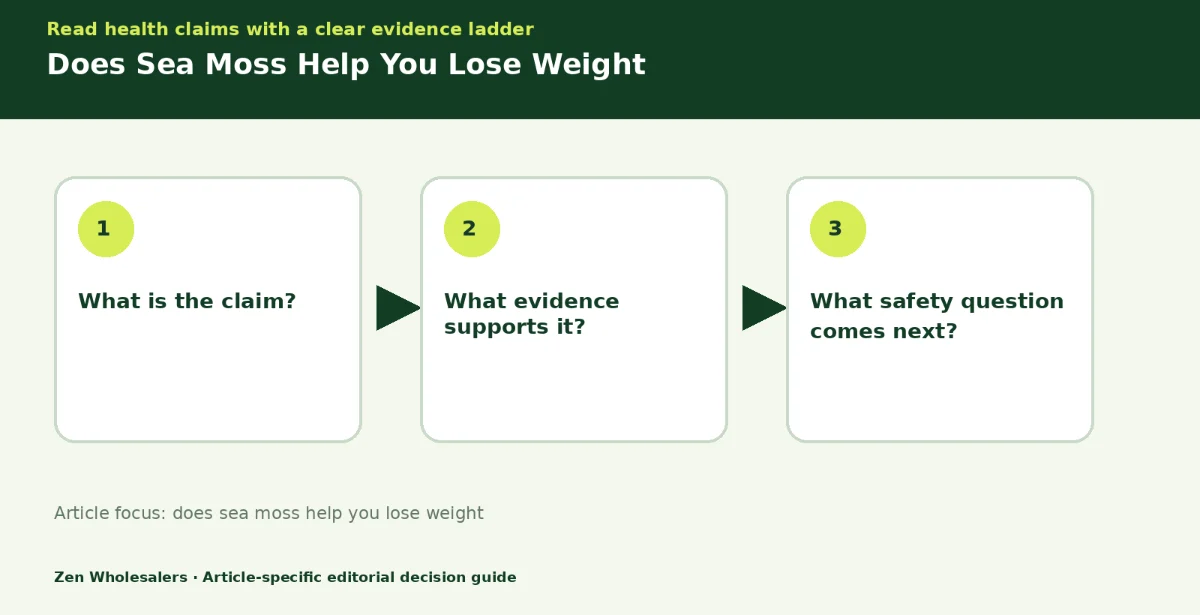
Why this article is useful
- You’ll get a clear short answer first.
- Then you’ll see what science says, what is still uncertain, and what to check if you decide to try it.
- You’ll find a practical decision checklist and safety steps.
How to read the evidence
Some claims about sea moss and weight loss come from food facts, tradition, or early lab studies. That is not the same as proof in people. We separate:
- Food composition facts.
- Small studies or lab work.
- Traditional use and user reports.
- Clinical proof (large human trials).
We list what is known and what is not. We also cover safety, because sea moss can contain lots of iodine and other minerals. [1][2][5][4]
What sea moss is — food facts
Sea moss (often called seamoss) is a type of red or brown seaweed. People eat it as food or use it in supplements and gels. It contains:
- Fiber and complex carbohydrates.
- Minerals like iodine, calcium, and potassium.
- Small amounts of vitamins and protein. [1]
These facts come from food and nutrition research on seaweed. The exact nutrients depend on the species and where it grew. [1]
What the research actually shows about weight loss
Short summary: evidence is limited and mixed.
- There are very few high-quality human trials that test sea moss for weight loss. Most evidence is early-stage: lab tests, animal studies, or small, short human studies. These types of studies can suggest ideas but cannot prove sea moss causes weight loss in people.
- Some lab and animal studies show seaweed compounds may affect fat cells, digestion enzymes, or gut bacteria. Those effects might influence weight over time, but trials in people are needed to confirm this.
- Reports from users and small trials sometimes show small weight changes. These changes often come with other factors like a lower-calorie diet, more exercise, or different products used at the same time.
Bottom line: Sea moss might help some body processes that relate to weight. But there is not enough clinical proof to say sea moss makes people lose weight on its own.
How sea moss might influence weight-related factors
Here are plausible ways people think sea moss could help. Each is a possible mechanism, not a proven weight-loss method.
- Fiber and fullness. Sea moss has soluble fiber that can add bulk. That may help some people feel fuller after a meal. Feeling full can reduce total calories eaten. This effect is plausible but small and depends on amount and how it is eaten. [1]
- Digestive support. Some seaweed fibers can feed gut bacteria. Changes in gut bacteria have been linked to body weight in research. But the link is complex. We do not know if eating sea moss alone will change gut bacteria enough to affect weight.
- Reduced calorie density. Sea moss gel is low in calories and can thicken foods and drinks. If you use a sea moss gel to replace higher-calorie ingredients, total calories may drop. The weight change would come from eating fewer calories, not from a special “fat-burning” property.
- Thyroid and iodine. Seaweed can be high in iodine. Iodine affects the thyroid gland, which controls metabolism. Too much iodine can harm the thyroid for some people. That could indirectly affect weight. This is a safety concern rather than a proven weight-loss benefit. [2][5]
- Water balance. Sea minerals may affect fluid balance in rare cases. Temporary weight changes from water loss or gain are not the same as fat loss.
Remember: Plausible mechanisms do not equal proof. Most promising ideas need bigger human trials.
Sea moss forms people use
People use sea moss in several forms. How you use it affects results and safety.
- Whole dried seaweed. Can be added to soups or boiled. Nutrient levels vary by species and harvest site.
- Sea moss gel. Made by soaking and blending. Popular in drinks and smoothies.
- Powders and capsules. These are processed products. Quality and concentration vary a lot.
- Mixed supplements. Some products combine sea moss with other herbs or fibers.
Product form matters. Powders and capsules can concentrate minerals. That may raise the risk of too much iodine or other minerals. Operation Supplement Safety warns consumers that supplement content and quality can vary. [4]
Practical checklist: Should you try sea moss for weight support?
Use this checklist to decide. Tick each box you can answer honestly.
- [ ] My main goal is to improve my overall diet, not to find a quick fix.
- [ ] I understand sea moss is a food with limited clinical proof for weight loss.
- [ ] I do not have known thyroid disease, or I have discussed supplements with my clinician.
- [ ] I will use sea moss to replace higher-calorie ingredients, not add it on top of my usual intake.
- [ ] I will buy from a brand with clear sourcing and testing (look for batch testing or lab results).
- [ ] I will watch for gut upset, changes in energy, or other new symptoms after starting.
- [ ] I will not rely on images like “before and after” as medical proof.
If you checked most boxes, sea moss might be worth trying as a food. If you checked few boxes, wait and get more information or ask a clinician.
How to use sea moss sensibly (without dosing)
Do this if you want to add sea moss to your food plan:
- Use food forms. Add small amounts of sea moss gel to a smoothie or soup as a thickener, replacing higher-calorie ingredients.
- Count calories if weight loss is your goal. Weight change follows long-term calorie balance. Using sea moss to lower calories can help, but it must be part of a consistent plan.
- Prefer whole food over concentrated supplements when possible. Whole foods are less likely to deliver very high iodine doses at once.
- Pay attention to how your body reacts. Stop if you get stomach pain, unusual tiredness, or other new symptoms.
Do not use sea moss as a sole strategy for weight loss. It is one tool among many.
What to check on labels and when buying
Check these items before you buy a sea moss product:
- Source and species: Where was it harvested? Which seaweed species is it?
- Lab testing: Does the product show third-party testing for heavy metals, microbes, or mineral levels?
- Ingredient list: Is it pure sea moss or mixed with sweeteners or other herbs?
- Serving size: How much is in a serving?
- Claims: Avoid products that promise rapid weight loss or cures.
Operation Supplement Safety recommends care with sea moss supplements, because labeling and quality vary across products. [4]
Sea moss “weight loss before and after” photos — how to judge them
Before-and-after photos are common online. Use caution:
- Photos do not prove cause. People often change diet, exercise, and other habits at the same time.
- Lighting, posture, clothes, and time of day can change how bodies look.
- Small short-term weight changes can be water loss, not fat loss.
Trust controlled studies more than photos. Right now, good large trials are missing.
Safety and when to ask a clinician
Sea moss is food, but it can be risky for some people. Key safety issues:
- Iodine content: Seaweed can carry high iodine. Too much iodine can lead to thyroid problems in some people. If you have thyroid disease, are pregnant, or take thyroid medicines, talk with your clinician before using sea moss. [2][5]
- Excess minerals and contamination: Seaweed can absorb heavy metals or other pollutants from water. Quality and testing matter. [4]
- Too much of a good thing: High intake of iodine can cause acute or long-term thyroid problems for some people. Watch intake from all sources (food plus supplements). [5]
- Supplements vs whole food: Supplements may concentrate minerals. Be more cautious with powders and capsules. [4]
When to ask a clinician:
- You have a known thyroid condition.
- You are pregnant, breastfeeding, or trying to get pregnant.
- You take thyroid medication or other prescription drugs.
- You plan to use concentrated seaweed supplements long term.
- You have symptoms like extreme fatigue, rapid heart rate, unexpected weight change, or prolonged digestive upset after starting a product.
If you see any of those signs, stop the product and seek medical advice.
Evidence strength ladder (quick view)
- Strong proof for weight loss: None.
- Moderate suggestion from small human studies: Limited or none.
- Mechanistic and animal/lab evidence: Some support for effects on digestion, fat cells, or gut bacteria.
- Food-level evidence: Sea moss adds fiber and minerals. That can help with satiety or recipe swaps.
- Safety evidence: Clear concern about iodine and product quality. [1][2][4][5]
How to judge claims and marketing
Marketers use words like “detox,” “fat burner,” or “melt fat” for quick sales. These claims are not proven. Ask:
- Is the claim backed by a human trial published in a scientific journal?
- Does the company post third-party lab tests?
- Are the results realistic and tied to diet and activity change?
If answers are weak or missing, treat the claim with caution.
Alternate ways to support weight loss
Sea moss is one small option. Other proven steps include:
- Eat a balanced, lower-calorie diet that you can keep long term.
- Move more each week with activities you like.
- Get enough sleep and manage stress.
- Work with a clinician, registered dietitian, or qualified coach for a plan that fits you.
Sea moss can be part of a healthier food pattern. It is not a replacement for these core habits.
Natural conclusion
Sea moss is a food with real nutrients. It may help with fullness or be a low-calorie way to thicken foods. But current evidence does not prove sea moss will make you lose fat by itself. If you try sea moss, use it as part of a balanced diet, watch your overall calorie intake, and be mindful of iodine and product quality. Ask a clinician if you have thyroid issues, are pregnant, or take thyroid medicines.
If you want to learn more about sea moss benefits, our other guides can help. Find more on benefits, product options, and how we source our seaweed:
- Home: Zen Wholesalers home
- Learn about benefits: Sea moss benefits
- Learning hub: Learn more
- Shop sea moss products: Shop sea moss
- Wholesale options: Wholesale
If you have questions about orders or sourcing, contact our team via our site contact page.
Frequently asked questions
Does sea moss make you lose weight quickly?
No. There is no strong evidence that sea moss causes fast weight loss. Any quick change is likely water loss or a result of other diet changes.
Is sea moss gel good for weight loss?
Sea moss gel is low in calories and can thicken foods. If you use it to replace higher-calorie ingredients, it may help lower your total calories. That is a diet trick, not a proven fat-loss effect.
Can sea moss help with appetite control?
Sea moss contains soluble fiber, which can add bulk. For some people, that can help them feel fuller. The effect is usually modest and depends on how much is eaten. [1]
Are sea moss supplements safe?
Supplements can concentrate minerals. Quality and labeling vary. Look for third-party testing and avoid very large or unclear doses. If you have thyroid issues, check with a clinician first. [4][2]
Will iodine in sea moss affect my thyroid?
Seaweed can be high in iodine. Too much iodine can harm the thyroid in some people. If you have thyroid disease, are pregnant, or take thyroid medicine, speak with a clinician before using sea moss regularly. [2][5]
Where can I learn more about seaweed nutrition?
Reliable food and public health sources discuss seaweed nutrition, iodine, and safety. See expert nutrition resources for balanced information. [1]
References
- [1] Harvard T.H. Chan School of Public Health, “Seaweed.” https://nutritionsource.hsph.harvard.edu/seaweed/
- [2] Smyth PPA. “Iodine, Seaweed, and the Thyroid.” European Thyroid Journal, 2021. https://pmc.ncbi.nlm.nih.gov/articles/PMC8077470/
- [4] Operation Supplement Safety, “Sea Moss in Dietary Supplements.” https://www.opss.org/article/sea-moss-dietary-supplements
- [5] Blikra MJ et al. “Consequences of acute and long-term excessive iodine intake: A literature review focusing on seaweed as a potential dietary iodine source.” 2024. https://doi.org/10.1111/1541-4337.70037