
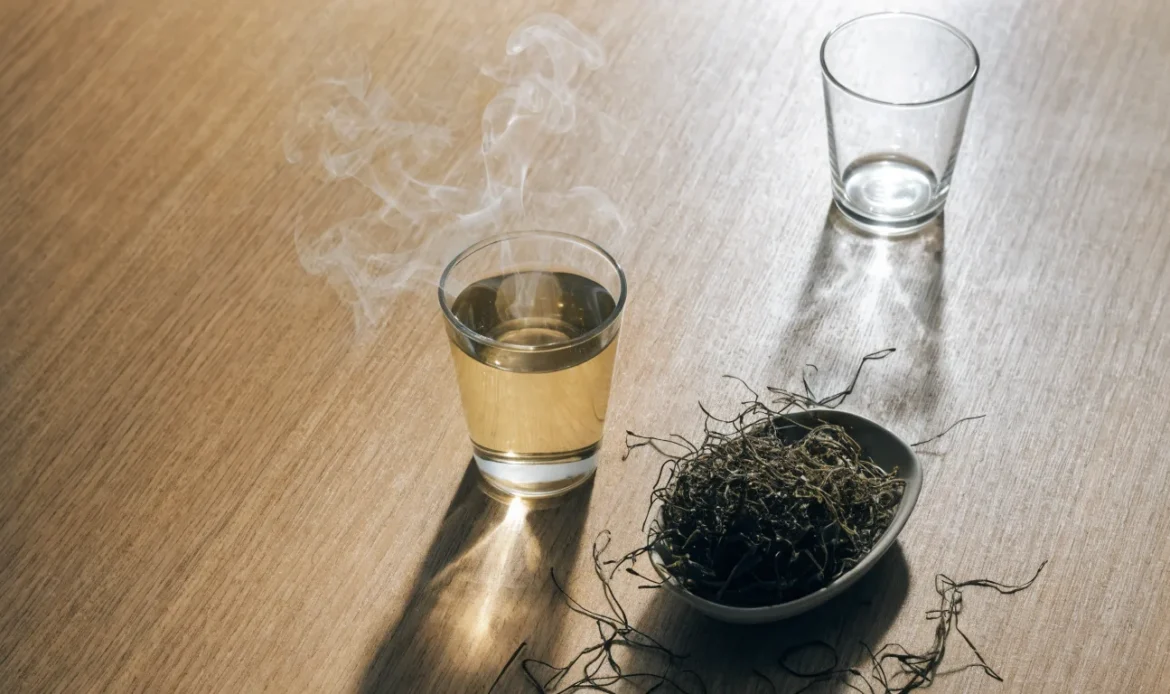
Short answer: Sea moss tea is a simple hot or cold drink made by steeping cleaned sea moss (dried, soaked, gel, or powder) in water or another liquid. It makes a mild, slightly ocean-like beverage you can flavor. Below you will find clear recipes, safety checks, and storage ideas so you can try it at home with confidence.
What is sea moss tea?
Sea moss tea is a beverage made by extracting flavor and soluble parts of sea moss into a liquid. People use different forms of sea moss:
- Dried sea moss: whole dried pieces that you soak first.
- Sea moss gel: blended, hydrated sea moss that is already smooth.
- Powdered sea moss: ground, dried sea moss that can be steeped or whisked in.
The tea can be hot or cold. You can make it plain or add herbs, citrus, spices, or sweeteners. The goal is to make a drink that tastes good to you while using a small amount of sea moss.
Note: Seaweed, as a group, is a natural source of some nutrients. Iodine levels and other mineral levels vary by species, harvest area, and processing. This makes it hard to predict the exact nutrient content of any single serving of sea moss tea [1][2].
Ingredients and tools
Basic ingredients:
- Sea moss (dried, gel, or powder)
- Water (or an infusion base like herbal tea, coconut water, or broth)
- Optional: citrus, ginger, cinnamon, honey, or other flavors
Useful tools:
- Fine mesh strainer or cheesecloth
- Glass or stainless pot
- Blender (if using gel or to smooth blends)
- Spoon and cups
- Clean bowl for soaking and rinsing
Buy sea moss from a source that shares how it was cleaned and handled. If you are buying packaged products, check the label and any available testing or quality information. If you have thyroid issues or take iodine-sensitive medicines, talk with a health professional before adding sea moss regularly. Seaweed can contain variable iodine levels, which may matter for people taking thyroid medicines [2][5].
How to make sea moss tea: Step-by-step recipes
Below are reproducible methods. Choose the one that fits the form of sea moss you have.
Note on ratios and times: These are general starting points. Adjust water and steep time for taste.
Recipe A — From dried sea moss (clear method)
- Rinse: Place dried sea moss in a bowl. Rinse under cool running water. Rub gently to remove sand or debris.
- Soak: Cover the sea moss with fresh water. Let it soften until pliable. Drain and rinse again.
- Chop: Cut or tear the soaked pieces into small bits so they release flavor more evenly.
- Boil: Put sea moss and fresh water in a pot. Use about 1–2 cups of water per handful of soaked sea moss. Bring to a gentle boil, then lower to a simmer.
- Simmer: Simmer for 10–20 minutes, watching the pot. The water will pick up color and body.
- Strain: Remove from heat and strain into a cup using a fine mesh strainer or cheesecloth.
- Flavor: Add citrus, ginger, honey, or spices as you like. Serve hot or chill for cold tea.
Tips:
- Use low heat to avoid foaming over.
- If you want a clearer drink, strain twice.
Recipe B — From sea moss gel
- Measure: Spoon 1–2 tablespoons of sea moss gel per cup of hot water.
- Warm: Heat water or herbal tea in a kettle or pot until hot but not boiling.
- Mix: Whisk the gel into the hot liquid until smooth. A blender works well for a foamy, even mix.
- Flavor: Add lemon, cinnamon, or sweetener. Serve hot or chilled.
Tip: Sea moss gel blends smoothly. It can make the drink slightly thicker than plain tea.
Recipe C — From powdered sea moss
- Stir: Add about 1 teaspoon of powdered sea moss to a cup of hot or cold liquid.
- Mix well: Use a whisk or blender to avoid clumps.
- Strain if needed: Some powders leave fine particles; you can strain for a clearer drink.
- Flavor and serve.
Powder is convenient for quick drinks. Check the package for any prep notes.
Cold brew/infused method
- Rinse and add sea moss pieces or powder to a jar.
- Cover with cold water or a cold tea infusion.
- Let sit in the fridge for several hours or overnight. (Cold extraction gives a softer taste.)
- Strain and flavor before serving.
Cold brewing produces a milder, less bitter cup than hot boiling.
Flavoring and recipe variations
Sea moss tea accepts many mix-ins. Try small amounts and build taste slowly.
- Citrus: Lemon or lime brightens the flavor.
- Ginger: Fresh slices add warmth and spice.
- Cinnamon: A stick during simmering gives aromatic notes.
- Herbal tea: Steep green tea, chamomile, or rooibos with sea moss.
- Sweeteners: Honey, agave, or maple syrup to taste.
- Coconut water or milk: Adds body and a tropical note.
- Fruit: Add slices of apple or pear to cool infusions.
Mix flavors to find what you like. Keep portions small so the sea moss taste doesn’t overpower the drink.
Food-safety checks and what you can verify
Sea moss can be safe to use if you take a few steps. Here is what you can check and what you cannot know from sight alone.
What you can check before use:
- Visual debris: Rinse off visible sand, shells, or dirt.
- Odor: Fresh sea moss has a mild, briny smell. Strong rotten or sour odors are a red flag.
- Supplier information: Look for how the product was cleaned and processed. Ask sellers about handling if the label lacks detail.
- Packaging date and storage: Prefer products that were stored dry and kept sealed.
What you cannot check visually:
- Mineral and iodine levels: These vary by species and location and cannot be seen. Iodine can be very high in some seaweeds. Studies and food-safety agencies note wide variation, so regular intake of seaweed can affect iodine consumption [2][3][5].
- Contaminants: Heavy metals, microbes, or chemical contaminants require lab testing to detect.
Practical steps to reduce risk:
- Rinse and soak dried sea moss before use.
- Buy from sellers who provide handling or testing information when possible.
- If using in large or frequent amounts, consult a health professional about iodine intake, especially if you have thyroid conditions or take related medicines.
Regulatory notes: Food-safety surveys have shown that iodine and other mineral levels in seaweed products can vary. Some food-safety agencies monitor these levels and encourage clear labeling [3]. Sea moss used in dietary supplements is treated differently than whole foods; some organizations advise caution when a product makes health claims or lacks transparent testing [4].
Substitutions and similar drinks
If you want the texture or mild body of sea moss without using it, try:
- Agar flakes steeped in hot liquid (from red algae species, used as a gelling agent).
- Irish moss (another common name for certain Chondrus species) — check labeling and species.
- Simple herbal teas if you just want a warm drink.
Remember: each substitute has its own flavor and properties. If iodine or other mineral intake is a concern, verify what the substitute contains or choose options with clear lab data.
Storage and reheating
Storage depends on the form you use.
General tips:
- Keep prepared tea covered in the fridge to slow changes in flavor and microbial growth.
- Check cooled tea before drinking. If it smells off, looks cloudy in an unexpected way, or shows mold, discard it.
- Sea moss gel stored in a clean, sealed container stays workable for a limited time in the fridge. If in doubt, smell and look for signs of spoilage.
- For longer storage of dried sea moss, keep it dry in a sealed container away from heat and light.
We do not provide fixed shelf-life numbers here. If you need exact storage times, consult food-safety authorities or product-specific guidance from the supplier.
Reheating:
- Gently reheat only what you will drink. Bring to a simmer, not a boil, if heating once removed from refrigeration.
- Reheat once only. Repeated heating and cooling can increase food-safety risk.
Decision guide: Which method should you use?
| Method | Best for | Ease | Flavor profile | Pros | Cons |
|---|---|---|---|---|---|
| Dried sea moss | Traditional, clear tea | Moderate | Mild, ocean-like | Long shelf life when dry; flexible prep | Requires soaking and rinsing |
| Sea moss gel | Quick mixing | Easy | Smooth, slightly thicker | Fast to blend; no soaking | Shorter refrigerated life |
| Powdered sea moss | Convenience | Very easy | Varies; can be gritty | Quick; easy portions | Check for additives; may need straining |
| Cold brew infusion | Mild taste | Easy | Soft, subtle | No heat needed; gentler flavor | Slower extraction time |
Use this table to pick a method that fits your schedule and taste.
Quick safety checklist before you brew
- Rinse and inspect dried sea moss for debris.
- Ask the seller about cleaning and handling if label info is missing.
- Avoid large or frequent servings without checking iodine intake if you have thyroid issues.
- Use clean tools and containers.
- Refrigerate prepared tea and check before drinking.
Conclusion
Sea moss tea is a flexible, simple drink you can make from dried sea moss, gel, or powder. Clean and prep sea moss carefully. Choose a method that fits your time and taste. Be mindful that seaweed’s iodine and mineral content can vary. If you plan to use sea moss often, especially if you have thyroid concerns or take related medicines, consult a health professional. For recipes, safety tips, and more resources, see our learning pages and shop links below.
Related pages:
- Learn recipes: [/learn/recipes/]
- Learn more about sea moss and safety: [/learn/]
- Browse our shop: [/shop/]
- Wholesale inquiries: [/wholesale/]
- Contact us: [/contact/]
- Home: [/]
Continue reading
Frequently asked questions
Is sea moss tea safe every day?
Safety depends on how much and how often you drink it. Seaweed can be high in iodine and other minerals. If you plan to drink sea moss tea daily, talk with a health professional, especially if you have thyroid issues or take related medications [2][5].
Can I use sea moss gel to make tea?
Yes. Sea moss gel mixes easily into hot or cold liquids. Use a spoonful per cup as a starting point and adjust for thickness and taste.
How do I clean dried sea moss?
Rinse under cool running water and rub gently to remove sand and debris. Soak it in fresh water until soft, then drain and rinse again before cooking or steeping.
Will boiling destroy nutrients?
Heat can change some components. Boiling extracts flavor and soluble parts but may alter delicate compounds. Because the nutrient content of seaweed varies, it’s hard to say exactly what changes occur in any single cup [1].
Can children drink sea moss tea?
Because of variable iodine and mineral content, consult a pediatrician before giving sea moss tea to young children. If a child drinks it, offer only small amounts and choose a mild preparation.
How can I check if a product was tested?
Look on packaging and the seller’s website for lab test results, certificates, or third-party testing mentions. If you can’t find information, ask the seller directly.
References
- [1] Harvard T.H. Chan School of Public Health, “Seaweed.” https://nutritionsource.hsph.harvard.edu/seaweed/
- [2] Smyth PPA. “Iodine, Seaweed, and the Thyroid.” European Thyroid Journal, 2021. https://pmc.ncbi.nlm.nih.gov/articles/PMC8077470/
- [3] Food Standards Australia New Zealand, “Survey of iodine levels in seaweed and seaweed containing products,” updated 2025. https://www.foodstandards.gov.au/science-data/monitoring-safety/surveyofiodinelevels
- [4] Operation Supplement Safety, “Sea Moss in Dietary Supplements.” https://www.opss.org/article/sea-moss-dietary-supplements
- [5] Blikra MJ et al. “Consequences of acute and long-term excessive iodine intake: A literature review focusing on seaweed as a potential dietary iodine source.” 2024. https://doi.org/10.1111/1541-4337.70037