
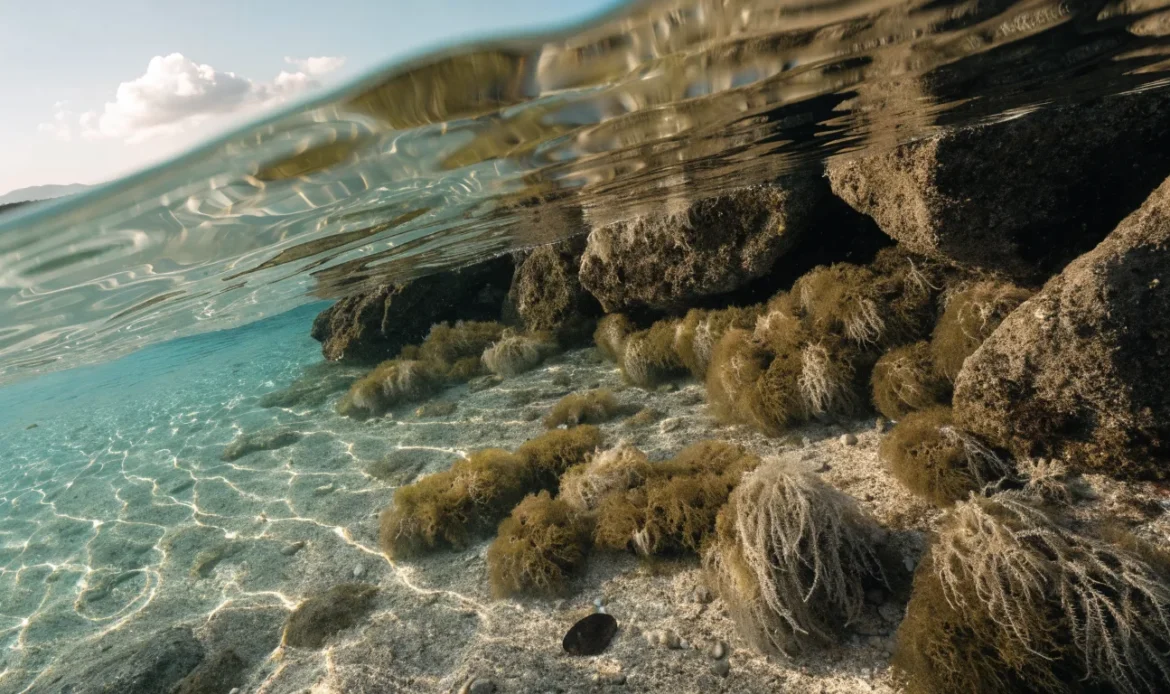
Short answer: Wild crafted seamoss means seaweed that was gathered from the natural shore or ocean environment rather than grown on a farm. It is usually minimally processed after harvest. Wild crafted seamoss can vary in color, texture, and mineral content because conditions in the wild vary by place and season.
This page answers that question first. Then it shows what you can check when you buy. It ends with a practical decision checklist and next steps.
What “wild crafted seamoss” means
“Wild crafted” is a market term. It usually signals three ideas:
- Harvested from the wild, not from a cultivated seaweed farm.
- Collected by hand or with small tools rather than industrially grown.
- Processed lightly after harvest (washed, dried, or packaged) rather than heavily refined.
The phrase does not prove anything about safety, nutrition, or sustainability on its own. Two batches labeled “wild crafted” can come from very different places and be handled very differently after harvest.
How wild crafted differs from farmed sea moss
Key differences to expect:
- Source control
- Farmed seaweed is grown in a controlled area on ropes or racks. The grower can usually record the exact plot and growing dates.
- Wild crafted seamoss comes from open water or shoreline areas. The exact harvest spot and sea conditions may be less controlled or documented.
- Consistency
- Farmed products tend to be more consistent in look and texture from batch to batch.
- Wild crafted seamoss often varies in color, size, and salt or mineral taste depending on tide, season, and location.
- Traceability and testing
- Farm operations sometimes maintain records and can arrange regular testing of water and product.
- Wild harvesters can also do testing and record keeping, but the degree of documentation varies a lot.
- Environmental and legal context
- Farms operate with permits and clear cultivation plans in many places.
- Wild harvesting may require permits and local knowledge to avoid protected species or restricted zones. Legal rules differ by region.
None of these differences are automatically better or worse. A responsibly managed wild harvest can be sustainable and safe. A poorly managed farmed operation can be risky. The label alone cannot tell you which is which.
What buyers can check — concrete questions to ask
When you consider wild crafted seamoss, ask suppliers for clear, simple information. Here are questions that matter and why:
- Where was it harvested? (place and region)
- Why: Different waters have different natural mineral and pollutant profiles.
- When was it harvested? (month and year, or harvest season)
- Why: Season affects appearance and composition.
- How was it harvested? (hand-harvested, collected from beach, mechanical)
- Why: Method affects the amount of debris and handling stress.
- How was it cleaned and dried? (rinsed, potable water, sun-dried, dehydrator)
- Why: Washing and drying methods affect microbial load and shelf stability.
- Do you have lab testing or a Certificate of Analysis (COA)? Which tests were run?
- Why: Tests can show levels of iodine, heavy metals, or microbes. A COA from an accredited lab is stronger evidence than a vendor claim.
- Is the product labeled with lot numbers and a harvest or packing date?
- Why: Lot info improves traceability if there is a problem.
- Do you get photos of the product and packaging before purchase?
- Why: Photos show color, size, and whether packaging looks professional and sealed.
If a vendor declines to answer these basic questions, treat that as a warning sign.
Source-based caution: Seaweed can contain highly variable iodine and other trace elements. Reliable information on iodine and testing is available from nutrition and food-safety authorities. See References [1], [2], [3], [5].
Safety and common concerns
What you can check and what you cannot prove just from a label.
- Iodine variability
- What you can check: Ask for iodine test results or a COA. Labels rarely list iodine amounts unless the vendor has testing.
- What you cannot prove from the label alone: Exactly how much iodine a serving will deliver. Iodine content can vary widely by species, location, and season. See References [2] and [5].
- Contaminants (heavy metals, microbes, toxins)
- What you can check: Request testing for heavy metals (lead, arsenic, cadmium), and any microbiological or toxin screens the seller has done.
- What you cannot prove: Absence of contaminants unless the seller provides recent lab results tied to the lot you are buying.
- Freshness and spoilage
- What you can check: Photos, smell descriptions, packing date, and how the product was dried and stored.
- What you cannot prove: Internal microbial status without testing.
- Sustainability and legal harvest
- What you can check: Ask about harvest methods, permits, and whether local rules were followed.
- What you cannot prove from a single claim: That the harvest did not harm local habitats. Independent certification or local management plans give stronger evidence.
Practical rule: Favor sellers who share test results, harvest dates, and clear photos. Transparency reduces risk.
Formats of wild crafted seamoss and what to expect
Wild crafted seamoss can be sold in several formats. Each has different checks to do.
- Dried raw seaweed (loose)
- What to look for: Clean stalks or fronds, minimal debris, uniform dryness.
- Questions: Was it sun-dried or dehydrated? Any smell of mold or fermentation?
- Raw wet seamoss (fresh or refrigerated)
- What to look for: Clear, briny sea smell (not rotten). Vendor handling and storage must be fast and cold.
- Questions: How soon after harvest is it shipped? Is it vacuum packed?
- Powdered seamoss
- What to look for: Source and processing method. Powder concentrates material, so contaminants concentrate too.
- Questions: Was the powder tested after milling? Is it made only from seamoss or blended?
- Gel or prepared products
- What to look for: Ingredient list, water source for rinsing, preservatives if any.
- Questions: How long should the gel be refrigerated? Does the vendor recommend storage instructions?
- Capsules and supplements
- What to look for: Supplement facts panel and company testing records.
- Questions: Is the capsule made from seamoss only? Is dose per capsule specified?
Always ask whether any other ingredients were added. For powdered and encapsulated products, request a COA for the finished product lot.
Practical decision checklist
Use this checklist when you evaluate wild crafted seamoss. Mark “Yes” if the seller provides clear evidence.
| Question to ask the seller | Why it matters | Yes / No / N/A |
|---|---|---|
| Can you name the harvest location (region or bay)? | Location affects water quality and composition | |
| Do you list the harvest or packing date and lot number? | Helps trace a batch if issues arise | |
| Was the seamoss hand-harvested or mechanically collected? | Harvesting method affects debris and quality | |
| How was it cleaned (rinsed with potable water, multiple rinses)? | Washing reduces sand and surface debris | |
| How was it dried or stored during transit? | Drying method affects mold and shelf stability | |
| Can you provide a recent Certificate of Analysis (COA)? | COAs show lab tests for contaminants or iodine | |
| What tests were performed and which lab performed them? | Accredited labs add reliability | |
| What is the recommended storage method for this product? | Prevents spoilage after purchase | |
| Do you provide photos of the actual lot I will receive? | Visual check of color and size | |
| Do you follow local harvest rules and permits? | Legal compliance supports sustainable practice |
A batch with many “Yes” answers is easier to evaluate and manage. If many answers are “No” or “I don’t know,” consider a different supplier.
How to prepare and store wild crafted seamoss (practical tips)
These are practical handling steps. They are general and do not include exact time or temperature rules.
- Inspect before you use: Look and smell. Discard if there is a strong rotten odor or visible mold.
- Rinse thoroughly: Use clean, potable water until sand and debris are reduced.
- If making a gel or blended product, follow the vendor’s instructions for water ratio and handling.
- Keep perishable forms cold and seek vendor guidance on refrigeration or freezing.
- For dried products, store in a cool, dry place in a sealed container.
If you are unsure about safety for any batch, do not use it. Ask the seller for more details.
Things to watch for in vendor claims
Watch for vague or absolute language. Examples of claims to treat cautiously:
- “All natural” or “pure” without proof.
- “Iodine-free” — seaweed normally contains iodine; such claims should have test evidence.
- “Doctor-recommended” without explicit credentials or context.
- Grand health claims linking seamoss to cures or guaranteed results — these are inappropriate and often unsupported.
Ask vendors to show documentation for any specific health or lab claims.
Sustainability and ethical harvest
Sustainability depends on practice, not label. Ask these questions:
- How much of the local resource do you harvest and how often?
- Do you work with local managers or follow a harvest plan?
- Are protected species or habitats avoided?
- Are harvesters paid fairly?
Local rules and community management are important. A vendor who can explain local regulation and community practices is often a better choice.
When to request testing and what tests matter
Tests that can be useful for seaweed products:
- Iodine content (to understand variability).
- Heavy metals (lead, arsenic, cadmium, mercury).
- Microbial tests if product is sold raw or minimally processed.
- Specific toxin screens relevant to the region (some regions test for algal toxins).
A COA should show the lab name, date of test, and the lot number tied to your product. Accredited third-party labs are better than internal, unaccredited reports.
References and official bodies discuss seaweed testing and variability. See References [1], [2], [3], [4], and [5].
Decision guide — When to choose wild crafted seamoss
- Choose wild crafted seamoss if:
- You value natural variability and are comfortable with batch-to-batch differences.
- The seller provides clear harvest location, dates, and testing documentation.
- You want a product with minimal processing and the supplier shows responsible handling.
- Choose farmed seamoss if:
- You prefer more consistent appearance and documented growing conditions.
- The supplier provides robust traceability and regular testing.
Both options can be acceptable. The deciding factors are transparency and documented testing, not the label.
Next steps and useful links
If you want to learn more about seamoss and sourcing, start here:
- Visit our Learn hub: /learn/
- Browse products in our shop: /shop/
- For bulk or wholesale inquiries: /wholesale/
- Contact our team with specific product or testing questions: /contact/
- Return to our home page for more resources: /
Conclusion
Wild crafted seamoss describes seaweed gathered from the natural environment. The label alone does not guarantee safety, testing, or sustainability. The most useful steps you can take are to ask clear questions, request a lot-specific Certificate of Analysis, and review harvest and handling details. Use the checklist above to compare sellers. If a supplier can answer those questions and provide documentation, you can make a better-informed decision.
Continue reading
Frequently asked questions
Is wild crafted seamoss the same as “sea moss” from a farm?
Not necessarily. “Wild crafted” refers to harvest from the wild. Farmed sea moss is grown on ropes or racks. Both can be sold as “sea moss.” The difference is in source and often in traceability.
Is wild crafted seamoss safe to eat?
It can be safe if harvested and handled well. Ask for harvest details and testing. If a seller cannot show how the product was cleaned, dried, and tested, exercise caution.
How can I tell if wild crafted seamoss is fresh or spoiled?
Check for a normal briny sea smell versus a rotten odor. Look for visible mold or unusual sliminess. Ask the seller for packing dates and storage details.
Should I expect the same mineral content in wild crafted seamoss every time?
No. Mineral and iodine levels vary by location, season, and species. A lab test on a specific batch is the only way to know the content for that lot. See References [1] and [2].
Can testing prove that a seamoss product is free of heavy metals?
A current COA for the specific lot can show measured levels for tested contaminants. Absence of a public COA does not prove anything. Ask for recent, lot-specific test results.
Who should I contact if I need more help choosing seamoss?
Ask the seller for documentation. If you need help beyond that, contact a consumer protection agency or a food-safety lab for advice. You can also contact us for product or sourcing questions via our contact page.
References
- Harvard T.H. Chan School of Public Health, “Seaweed.” https://nutritionsource.hsph.harvard.edu/seaweed/
- Smyth PPA. “Iodine, Seaweed, and the Thyroid.” European Thyroid Journal, 2021. https://pmc.ncbi.nlm.nih.gov/articles/PMC8077470/
- Food Standards Australia New Zealand, “Survey of iodine levels in seaweed and seaweed containing products,” updated 2025. https://www.foodstandards.gov.au/science-data/monitoring-safety/surveyofiodinelevels
- Operation Supplement Safety, “Sea Moss in Dietary Supplements.” https://www.opss.org/article/sea-moss-dietary-supplements
- Blikra MJ et al. “Consequences of acute and long-term excessive iodine intake: A literature review focusing on seaweed as a potential dietary iodine source.” 2024. https://doi.org/10.1111/1541-4337.70037